
What Is a Telephone Entry System, and How Does It Work at a Gate?
A telephone entry system (TES) lets a visitor call a resident directly from the gate, so the resident can talk to them and decide whether to grant access — before anyone is let onto the property. That’s a real step up from a keypad or remote, which grant access purely on a known code or a pre-authorized device with no conversation at all.
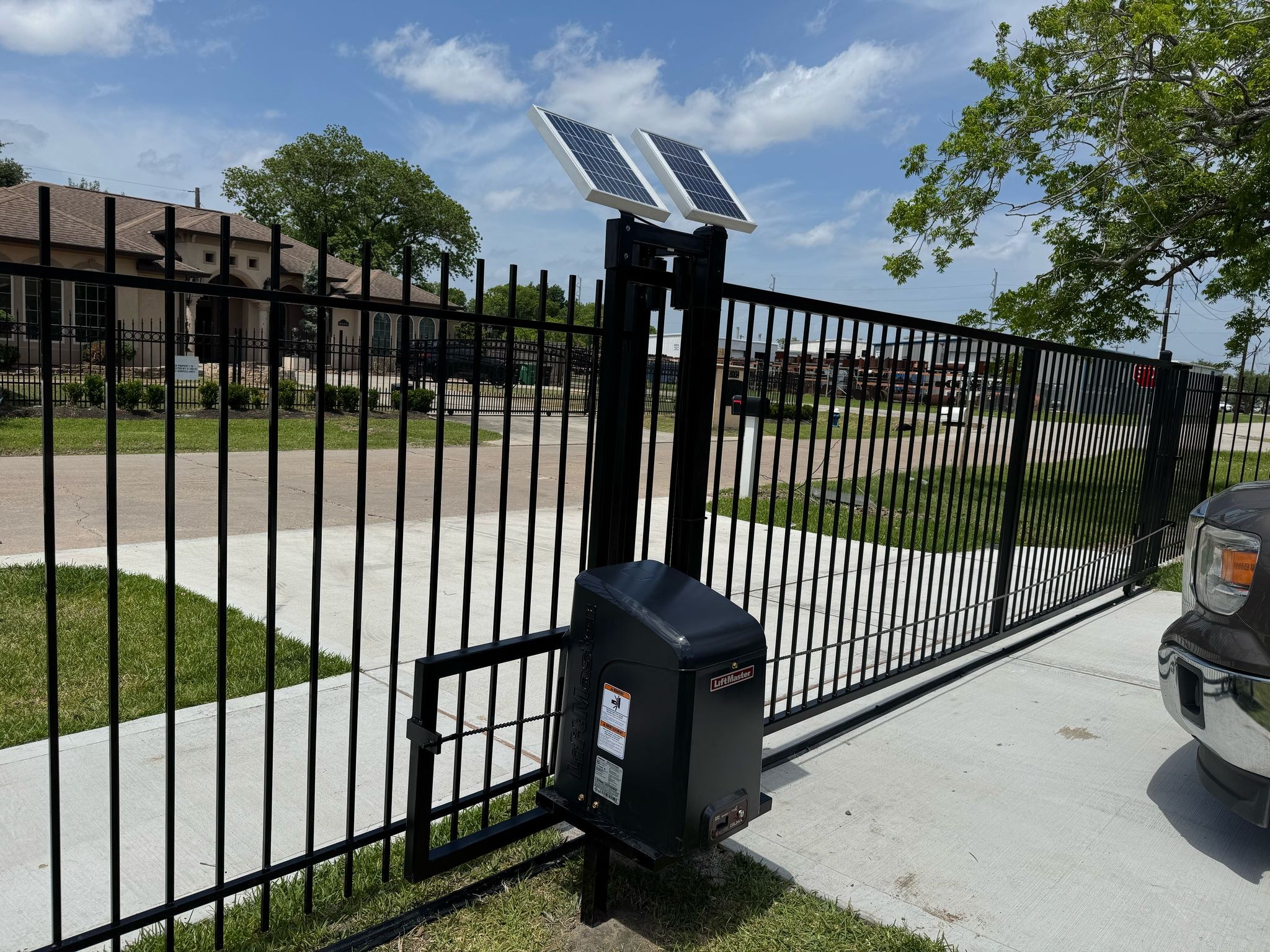
A telephone entry system is a gate access device that calls the resident so they can talk to a visitor and decide whether to let them in — it doesn’t rely on a code or device alone. A visitor at the gate selects a name or unit from a directory, or dials a code tied to that resident; the call connects to the resident’s phone (landline, cell, or app, depending on the system), and once they’re talking, the resident can grant access remotely, typically by pressing a button during the call. Code requires the call box itself to be mounted at least 6 feet from the gate, out of the gate’s reach, with a full view of the gate from where it’s used.
Sources: DASMA Technical Data Sheet 353 (rev. 1/25); DASMA #352, Automatic Vehicular Gate Operating Systems: Guidelines.
How a telephone entry system works
A visitor arrives at the gate and uses the entry panel to call the resident they’re visiting — either by selecting a name or unit from a directory, or by dialing a specific code tied to that resident. The call connects to the resident’s phone, and once the two parties are talking, the resident can grant access remotely, typically by pressing a button on their phone during the call, which signals the gate operator to open. For how that operator itself works day to day, see our automatic gate installation page.
Older vs. newer systems
Older-generation telephone entry systems were built around a home’s existing landline, ringing into the house’s phones the same way any incoming call would, with access granted by a touch-tone signal sent back through that same phone line. Newer systems have largely moved to cellular, ethernet, or Wi-Fi connectivity instead of requiring a dedicated landline, which means the resident’s call can reach a cell phone anywhere, rather than being tied to being home or near a landline handset. Many current systems also add a smartphone app layer, sometimes with video, turning the phone call into a richer video-intercom-style interaction — see our post on opening a gate with a smartphone.

Why the communication step matters
The core value of a telephone entry system versus a keypad or remote is that access isn’t purely code- or device-based — a genuine conversation happens before entry is granted, which is useful anywhere unexpected or infrequent visitors are common: delivery drivers, service providers, or guests who don’t have a code or remote of their own. This also creates a natural point where a resident can simply decline access to someone they don’t recognize or don’t want to let in, which a keypad code can’t offer once the code itself is known. DASMA’s installer guidelines treat any gate activation control — a TES call box included — the same way: it should be secured from unauthorized use, kept out of reach of the moving gate, and placed where the user has a full view of the gate while it operates.
Telephone entry system vs. keypad vs. remote
| Telephone entry system | Keypad | Remote | |
|---|---|---|---|
| How access is granted | Resident talks to the visitor, then grants access | Known code entered at the gate | Pre-authorized device in the vehicle |
| Works for unknown visitors | Yes — that is its main purpose | Only if they already have the code | No — device must be issued first |
| Resident has to be reachable | Yes, by landline, cell, or app | No | No |
| Best fit | Gated communities, multi-unit, regular unknown traffic | Household and pre-authorized visitors | Household and pre-authorized vehicles |
Source: general access-control distinction described on this page.
Does a telephone entry system fit your gate?
A quick way to think through whether the added communication step of a TES is worth it over a keypad or remote alone, based on who actually shows up at your gate.
Based on the general access-control distinction described on this page: a keypad/remote grants access by code or device alone, while a telephone entry system adds a real conversation before access is granted.
What Galveston customers say
5.091 Google reviews · read them all on Google
Very professional and friendly. Gotten automatic gates done and they are done to perfection! Thank you
We just installed iron gate and it looks amazing thank you very much mustang fencing .
had an excellent experience with mustang fencing From the initial consultation to the final installation, the team was professional, punctual, and attentive to detail. They helped me choose the perfect fence style to match my property and ensured everything was installed with precision. The quality of materials is top-notch, and the fence has completely transformed the look and security of my home. I highly recommend mustang services to anyone looking for reliable and high-quality fencing services!
Reviews shown word for word from the Mustang Fencing Services Google Business Profile (Galveston), captured 2026-10-12.
Questions we get about this
Does a telephone entry system need a landline?
How is a telephone entry system different from a keypad?
Can a telephone entry system include video?
How far from the gate does the call box need to be?
Sources
Checked October 15, 2026. Rules change, so confirm with the City before you build.
- DASMA Technical Data Sheet 353 (rev. 1/25) — Reprints UL 325 7th-ed. tables, including the 6-foot minimum setback for gate activation controls and the full-view requirement for continuous-pressure controls.
- DASMA #352, Automatic Vehicular Gate Operating Systems: Guidelines for Specifiers, Designers, Dealers, Installers and End Users — Installer guidance to secure controls from unauthorized use, keep them out of reach of the gate, and locate them with a full view of gate operation.
Thinking about a telephone entry system?
We’ll walk through whether a TES, a keypad, or a remote fits how visitors actually reach your gate, and install the call box where code requires it relative to the gate.