
What Should I Inspect on My Fence After a Hurricane or Tropical Storm?
Wind and wind-driven debris damage a fence in ways that aren’t always obvious from the driveway. Walk the full fence line, check the spots that take the most load first, and photograph anything that looks off before you start repairs.
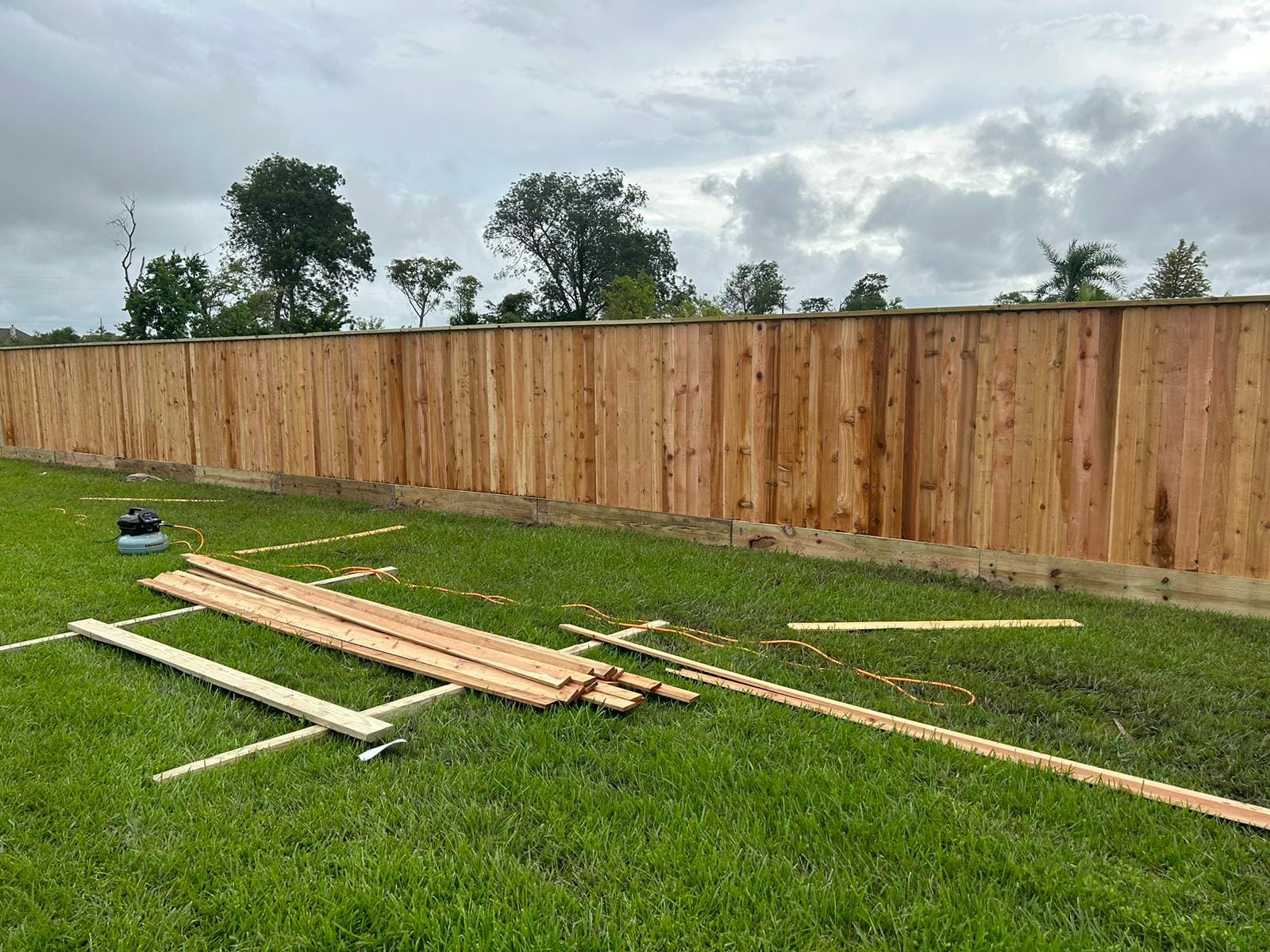
Start with a full perimeter walk from more than one angle. Then check the spots that carry the most wind load: post bases (a post that doesn’t stand firm when pushed means the footing has let go, not just cosmetic lean), mid-panel boards and hardware, and gate hinge posts, which take the most load because the gate is the one moving, hinged part of the fence. Photograph damage before repairing. Separately: a storm repair to an existing fence does not need a TDI windstorm inspection (WPI-8), though the City’s normal fence permit rules still apply if you rebuild.
Sources: TDI, “Home repairs that don’t require a windstorm inspection” (6/11/2021) and “What you need to know about windstorm inspections” (5/8/2026); City of Galveston Fence Permit Application (Rev. 03/2023); CLFMI Wind Load Guide WLG 2445.
Start with a full perimeter walk
Before anything else, walk the entire fence line and look at it from multiple angles, not just from the house or the street. Photograph anything that looks even slightly off — that documentation matters if a repair becomes an insurance conversation. A fence that’s inspected and lightly repaired right after a storm holds up far better through the rest of hurricane season than one left alone until a problem becomes obvious.
Post-storm fence walk-through
Walk the full fence line from more than one angle, not just from the street. Check off what you’ve confirmed so far; anything still unchecked is what to look at next.
Gates are the one moving part on a fence, so a gate that won’t latch is a security/safety item worth treating as urgent; uneven panels or loose hardware are usually fine to schedule. This tool only tracks your own checklist — it doesn’t diagnose damage or estimate repair cost.
What to actually check
- Post lean. A post that doesn’t stand straight and firm when you push on it is a sign the footing has been compromised by wind load or saturated soil — not just a cosmetic tilt.
- Panels and boards. Look for sections pulling away from posts, panels that sit unevenly next to their neighbors, or boards that have visibly shifted. These often mean hardware failure even when the wood itself looks fine.
- Hardware. Inspect nails, screws, brackets and metal fasteners. High wind can loosen fasteners even when nothing visibly breaks.
- Wood-specific damage. Wood is vulnerable to wind-driven rain intrusion. Check for splintering, and check post and picket bases for the soft, dark wood that signals rot starting from storm moisture. See making a wood fence more hurricane-resistant.
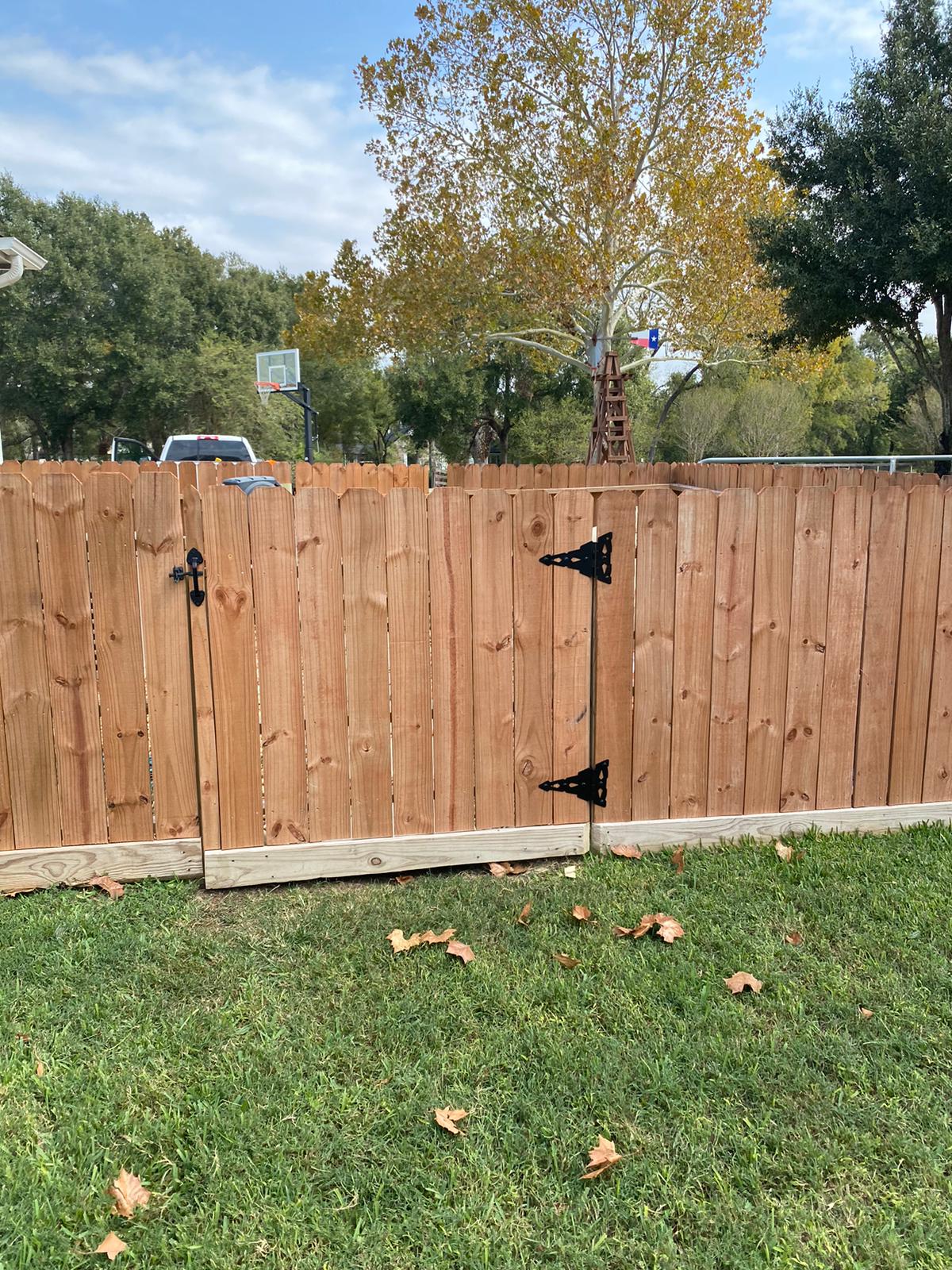
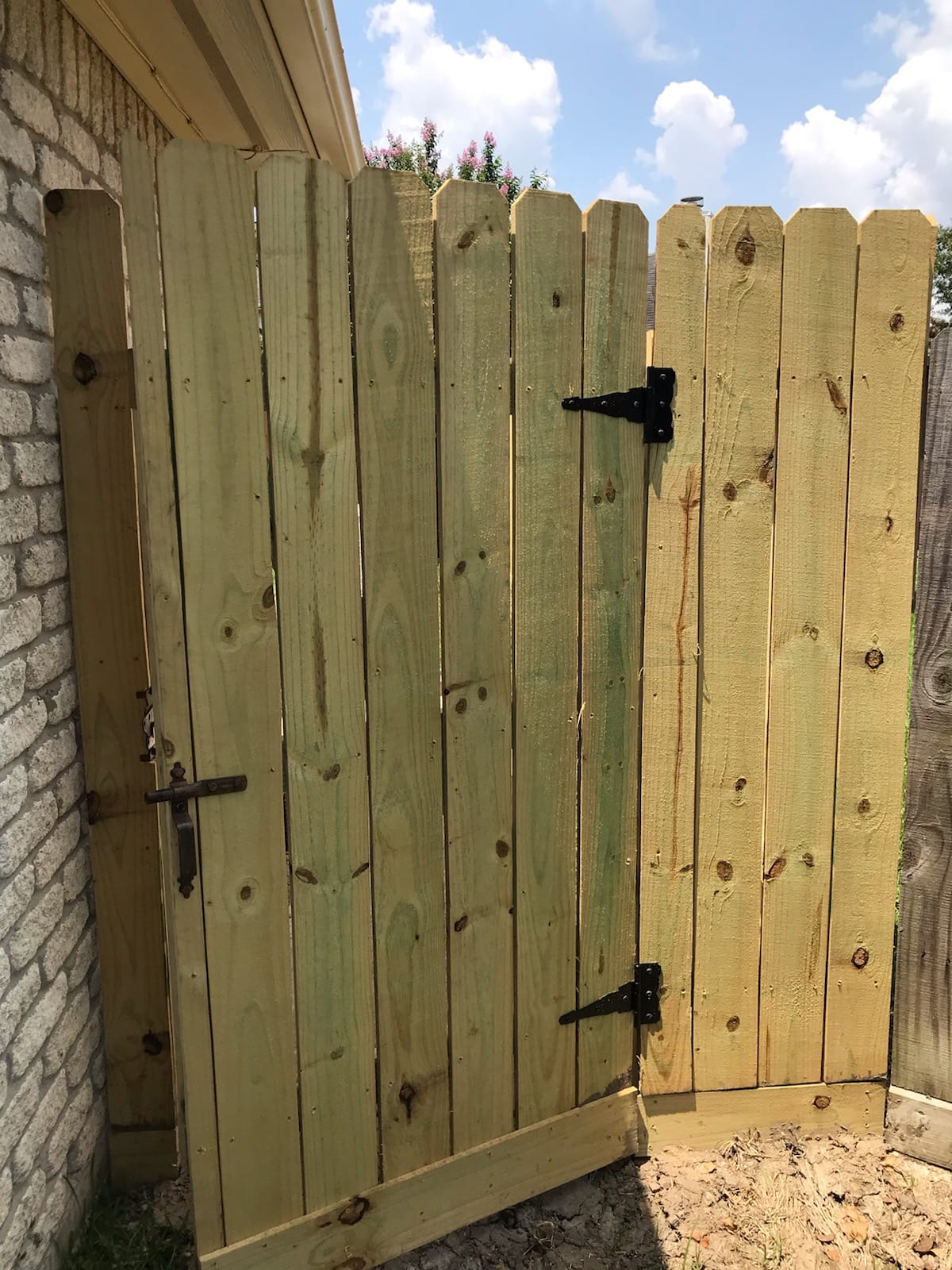
- Gates, specifically. A gate is a sail on hinges, so it takes the brunt of wind. It may no longer latch, may have sagged, or may have stressed its hinge post in ways that aren’t visible without a close look. See whether driveway gates need to be wind-rated on Galveston Island.
Does storm repair work need extra inspection or a permit?
| Project | Needs a TDI windstorm inspection (WPI-8)? | City permit? |
|---|---|---|
| Repair or replace an existing fence after a storm | No — TDI lists “fence repairs” / “repairs or replacement of fences” among projects that don’t require one | Fences not over 7 ft are exempt from a building permit (Ord. 23-012 R105.2) |
| Automated driveway gate construction/replacement | Not on TDI’s no-inspection list either way | Must meet ASTM F2200 and use a UL 325-listed operator (2021 IRC Appendix AO) |
| Building a brand-new fence where none stood before | TDI’s no-inspection pages address repair/replacement, not new construction — ask TDI at 800-248-6032 | If within 1,000 ft of mean high tide, the fence permit form sends a site plan to the coastal division |
TDI, “Home repairs that don’t require a windstorm inspection” (6/11/2021) and “What you need to know about windstorm inspections” (5/8/2026); City of Galveston Ordinance No. 23-012; City of Galveston Fence Permit Application (Rev. 03/2023); 2021 IRC Appendix AO.
After the checklist
If the walk-through turns up real damage, read hurricane-ready fencing in Galveston for how post spacing, footings and panel choice affect the next storm, and will my fence survive a hurricane? for what usually fails first. We give a written price after a free on-site estimate; financing is available through the providers on our financing page, subject to credit approval.
What Galveston customers say
5.091 Google reviews · read them all on Google
Fenomenal job, really nice guy. Contacted them after hurricane knocked down my fence facing the street and got it done really quickly.
Seems to have helped out a after hurricane beryl we all appreciate it thank you!
Excellent work. They came in handy after the hurricane hit our backyard. Friendly people too.
Reviews shown word for word from the Mustang Fencing Services Google Business Profile (Galveston), captured 2026-10-19.
Questions we get about this
Does my fence need a windstorm inspection (WPI-8) after storm repairs?
Do I still need a City permit to repair or rebuild a fence after a storm?
What should I check on an automatic gate after a storm?
Should I photograph damage before repairing my fence?
Is a leaning fence post dangerous, or just cosmetic?
Does wind damage a solid fence differently than an open one?
Sources
Checked October 25, 2026. Rules change, so confirm with the City before you build.
- Texas Department of Insurance, Home repairs that don’t require a windstorm inspection — “Fence repairs” listed among projects not requiring a WPI-8. Page updated 6/11/2021.
- Texas Department of Insurance, What you need to know about windstorm inspections — “Repairs or replacement of fences” don’t require an inspection; certificate is a condition of a TWIA policy. Page updated 5/8/2026.
- City of Galveston Fence Permit Application (Rev. 03/2023) — within 1,000 ft of mean high tide: site plan to the coastal division.
- City of Galveston Ordinance No. 23-012 (2021 IRC adoption) — R105.2 fences not over 7 ft exempt from a building permit; adopts 2021 IRC Appendix AO (automatic vehicular gates).
- Chain Link Fence Manufacturers Institute, Wind Load Guide (WLG 2445), January 2018 — force applied at 0.55H, resisted by the footing; solid panel Cf1 = 1 vs. #9 ga 1¾ in. mesh Cf1 = 6.4.
- 2021 International Residential Code, Appendix AO, Automatic Vehicular Gates — AO103.1–103.2: automated gates must meet ASTM F2200 and use UL 325-listed operators.
Think your fence took storm damage?
We’ll walk the fence line with you, call out what’s urgent vs. what can be scheduled, and give a written price after a free on-site estimate. Free estimates across Galveston County.