
Straight answers from a local fence and gate contractor serving Galveston and Brazoria Counties.
Staining frequency is one of those questions where the generic national answer needs a real adjustment for our climate, since humidity and sun exposure both accelerate how quickly a finish wears out.
The general guideline — and why coastal conditions shift it
Most sources recommend restaining a wood fence every 2 to 5 years depending on climate, stain type, and sun/moisture exposure. In a humid, near-coastal climate like Galveston County’s — with near-constant humidity, heavy seasonal rain, and salt air — that interval sits at the shorter end, generally closer to every 2 to 3 years rather than the longer 4-to-5-year window that a drier climate might allow.
How to tell it’s time, rather than guessing
A simple water-bead test tells you more than a calendar does: splash a little water on the wood. If it beads up on the surface, the existing finish is still doing its job. If the water soaks in quickly, the wood’s protection has worn through and it’s time to reapply.
The best time of year to do it
The ideal window is generally late spring or early fall, when temperatures sit in a moderate 50-90°F range and humidity is relatively low — conditions that let the stain cure evenly rather than drying too fast in extreme heat or staying tacky in high humidity. On the Gulf Coast, that often means targeting a stretch in April-May or October-November, avoiding both the peak summer humidity and heat and the wetter, storm-prone late-summer months. Planning around a forecasted week without rain is more important than hitting an exact calendar date — humidity and unexpected rain can cause streaking or uneven drying regardless of season.
New fence considerations
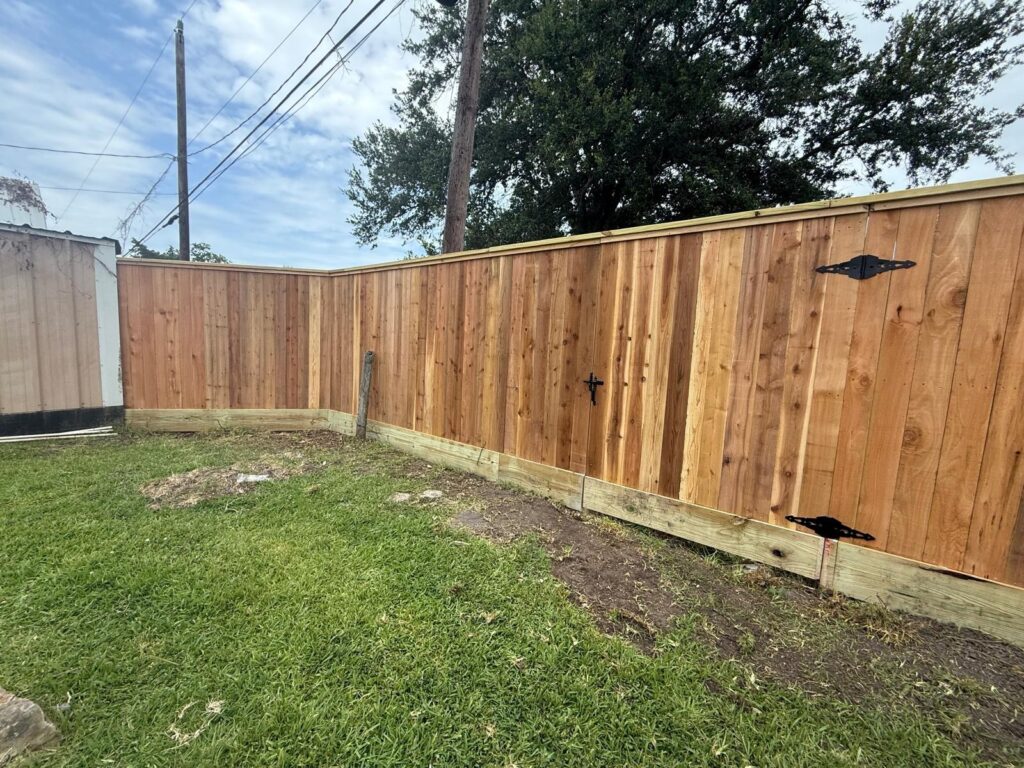
If you’ve just had a new wood fence installed, give it time to dry out and let its pores reopen before staining — generally about one full season. A fence installed in spring is often best left until fall before its first staining; see our related post on staining new pressure-treated fencing specifically for timing details on freshly treated lumber.
Keeping it simple
Set a reminder for every 2 years rather than waiting for visible fading, since by the time graying is obvious, the wood has often already lost some of its moisture protection. A little routine maintenance stretches the life of a cedar or pine fence considerably in this climate. See our wood fence and coastal fence durability pages for more on maintaining wood fencing here.
Related Questions
Can I stain my fence in the summer here?
Does a darker stain last longer than a lighter one?
What happens if I skip staining for several years?
Ready for a real number for your property? Request a free on-site estimate from Mustang Fencing Services.