
How Can I Make My Wood Fence More Hurricane-Resistant?
Galveston Island sits in TDI’s highest legacy windstorm zone — structures here were required to resist a 130 mph gust under the 2008–2020 rule, and today’s construction follows a site-specific wind speed instead of one flat number. Either way, a wood fence’s weak point in high wind is almost always the posts and footings, not the boards. Here are the specific choices — post depth, spacing, fasteners, panel style, gates — that make the real difference.
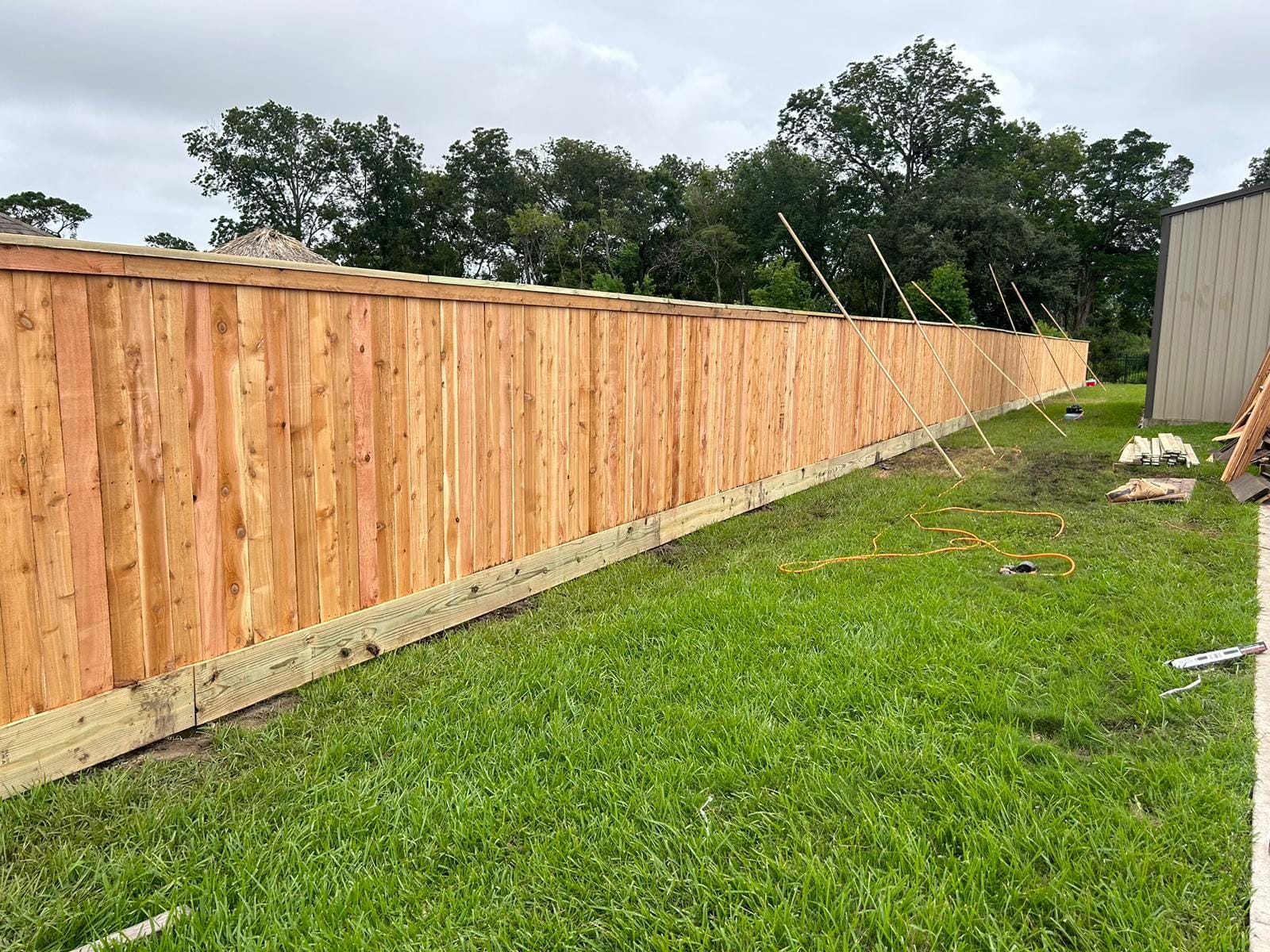
The post and footing matter more than the boards. Set posts deep enough (roughly a third of the post’s total length, more at gates and corners), use ring-shank or screw fasteners instead of smooth nails, and consider a gapped or shadowbox panel instead of a fully solid one — a smaller solid face means less load transferred to the posts in a gust. None of this is a substitute for a pre-hurricane-season walk of the fence line looking for rot or loose hardware.
Sources: Texas Department of Insurance windstorm program (28 TAC §5.4011; tdi.texas.gov/wind); City of Galveston Ordinance No. 23-012.
Why this is a location-specific question
The same wood fence built the same way performs differently here than it would further inland. Under the Texas Department of Insurance’s windstorm program, structures seaward of the intracoastal canal — Galveston Island included — were required to resist a 130 mph three-second gust for anything built or repaired between January 2008 and August 2020. Current construction (since April 2026) follows the 2024 International Residential/Building Code instead, which uses a site-specific wind speed from the ASCE 7 standard rather than one flat zone number. Either way, a fence itself isn’t covered by TDI’s windstorm certificate (fence repair/replacement is explicitly listed as exempt) — building one to hold up better is a durability choice, not a certification requirement.
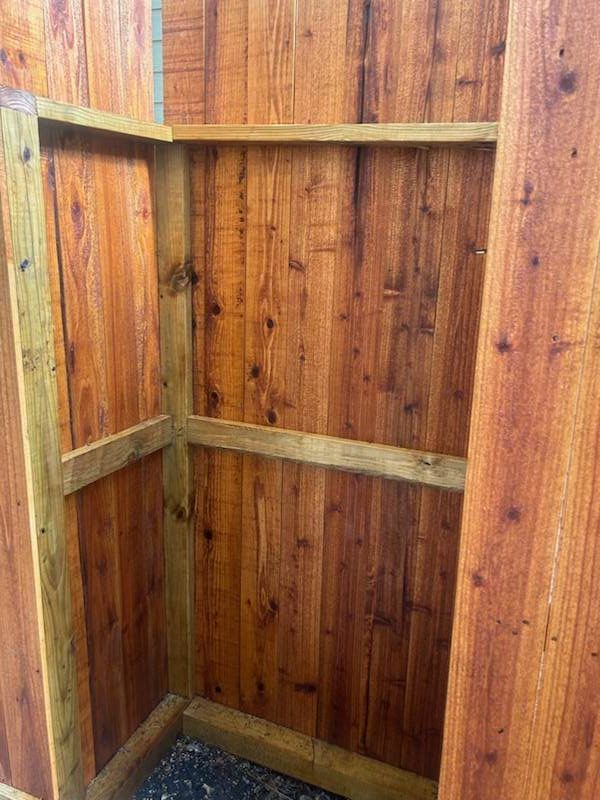
Let wind pass through instead of fighting it
A fully solid fence face acts like a sail — the entire gust loads up against the posts and footings. A design with small gaps between boards, or an alternating shadowbox pattern, lets a portion of that wind pass through instead of loading the full force onto the structure. This is one practical reason some coastal homeowners choose a shadowbox or gapped board-on-board design over a fully solid privacy fence. Reinforce the connection points too: ring-shank or spiral-threaded nails and rust-resistant screws hold better under repeated wind flex than smooth nails, and steel brackets where rails meet posts add strength at the joints that typically fail first.
Rough post-count check for a wood fence run
Enter the fence run length and the post spacing you’re planning. This only does the arithmetic on your two numbers — it is not an engineering calculation and doesn’t replace your installer’s own layout or a permit drawing.
Arithmetic only (run ÷ spacing, rounded up, +1 end post). Gate posts and corner posts typically need deeper or wider footings than this count assumes — see the diagram above.
Where to focus reinforcement
| Component | What helps | Why |
|---|---|---|
| Line posts | Concrete footing, roughly 1/3 of post length deep | Posts fail before boards in most wind damage |
| Gate & corner posts | Deeper or wider footing than a line post | Carry extra load from gate weight and panel changes in direction |
| Fasteners | Ring-shank/spiral nails or rust-resistant screws | Hold better than smooth nails as boards flex in gusts |
| Panel style | Gapped or shadowbox vs. fully solid | Smaller solid face area sheds some wind instead of catching all of it |
| Gates | Heavy-duty hinges (often 3 per gate), secure latch, anti-lift protection | Gates swing and are often the first failure point |
What customers say
5.091 Google reviews · read them all on Google
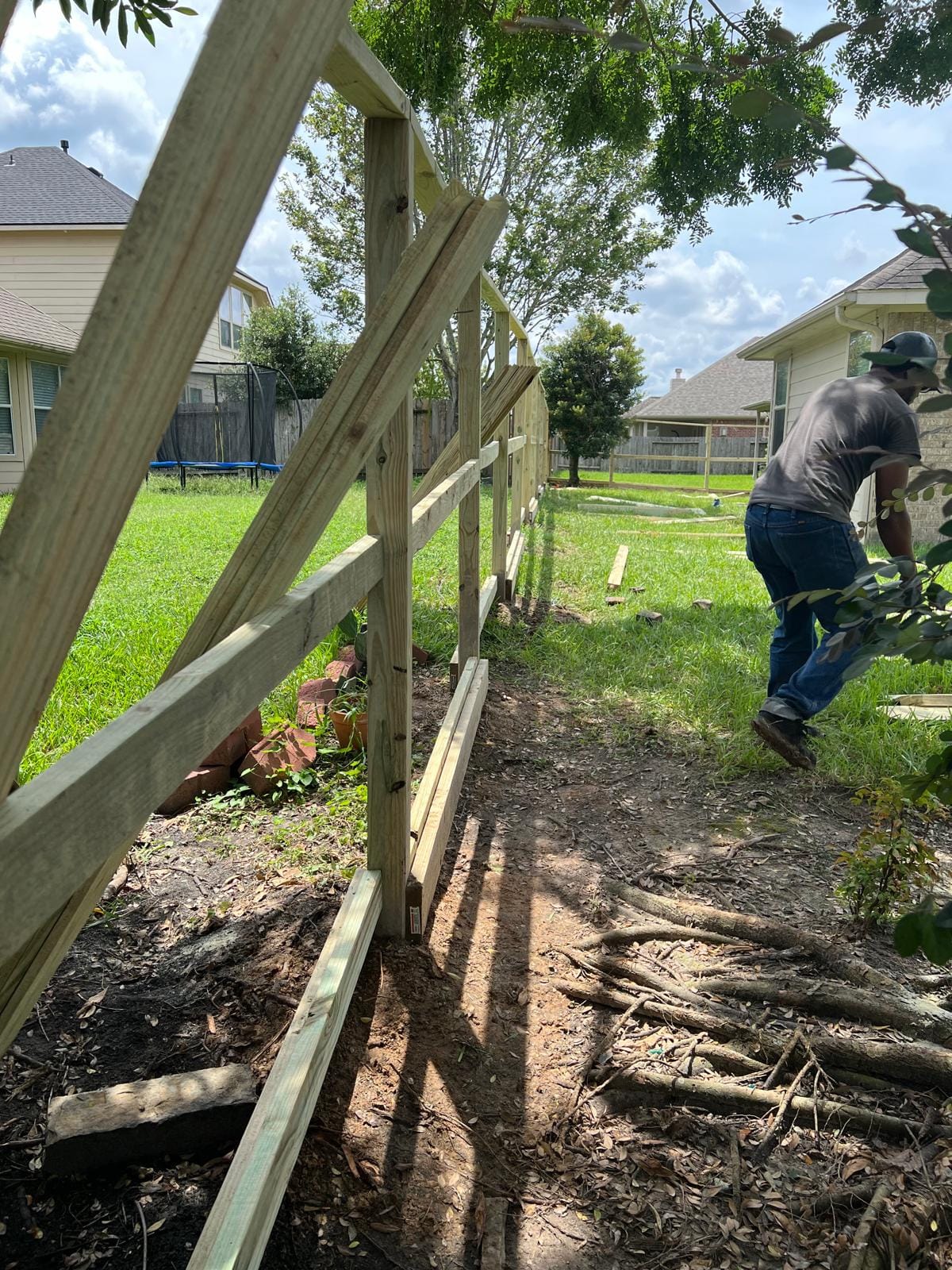
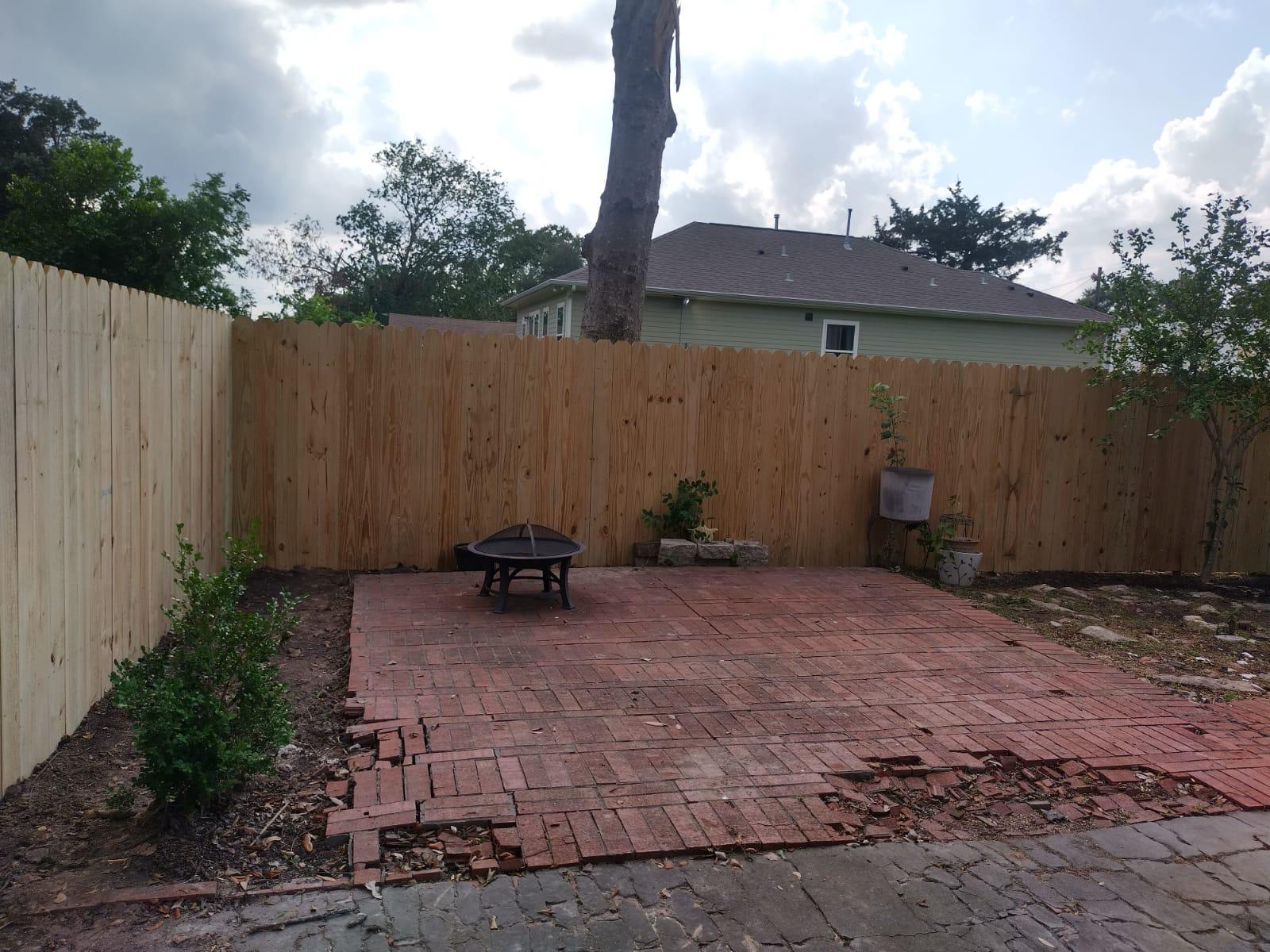
True professionalism is very rare in this day and age, these guys live upto their word and deliver on their service! Our fence was down in the July storm and these guys came and gave a reasonable quote, after confirming I received a time line and they delivered! Will recommend them to everyone I know who needs fencing done.
Seems to have helped out a after hurricane beryl we all appreciate it thank you!
Excellent work. They came in handy after the hurricane hit our backyard. Friendly people too.
Reviews shown word for word from the Mustang Fencing Services Google Business Profile (Galveston), captured 2026-10-19.
Questions we get about this
What part of a wood fence fails first in a hurricane?
How deep should a wood fence post be set for wind resistance?
Does a solid privacy fence or a gapped design hold up better in wind?
Does my wood fence need a windstorm inspection certificate?
What design wind speed does Galveston use for fences?
Sources
Checked October 21, 2026. Rules change, so confirm with the City before you build.
- Texas Department of Insurance, Windstorm Program — Adopted Building Codes — Current (2024 IRC/IBC) windstorm construction requirement and site-specific ASCE 7 wind-speed determination.
- TDI Galveston County windstorm zone map — Legacy (2006 code era) zone classification: Galveston Island in the 130 mph “Seaward” zone.
- TDI windstorm inspection program, general info — Fence repair/replacement listed among items not requiring a WPI-8 windstorm inspection certificate.
Planning a new wood fence before storm season?
We’ll talk through post spacing, footing depth and panel style for your specific yard. Get a free estimate to start.