
How many times a day can a solar gate opener open and close?
There is no single safe number. Galveston falls in the gate maker’s “Zone 2” sun band, and the maker’s own table pairs panel watts, battery size and the standby draw of whatever accessories are installed into a real cycles-per-day rating — anywhere from about 21 to 146 in that zone. Here is the full table, what pushes a site up or down it, and how to size for a gate that opens more than the average driveway.
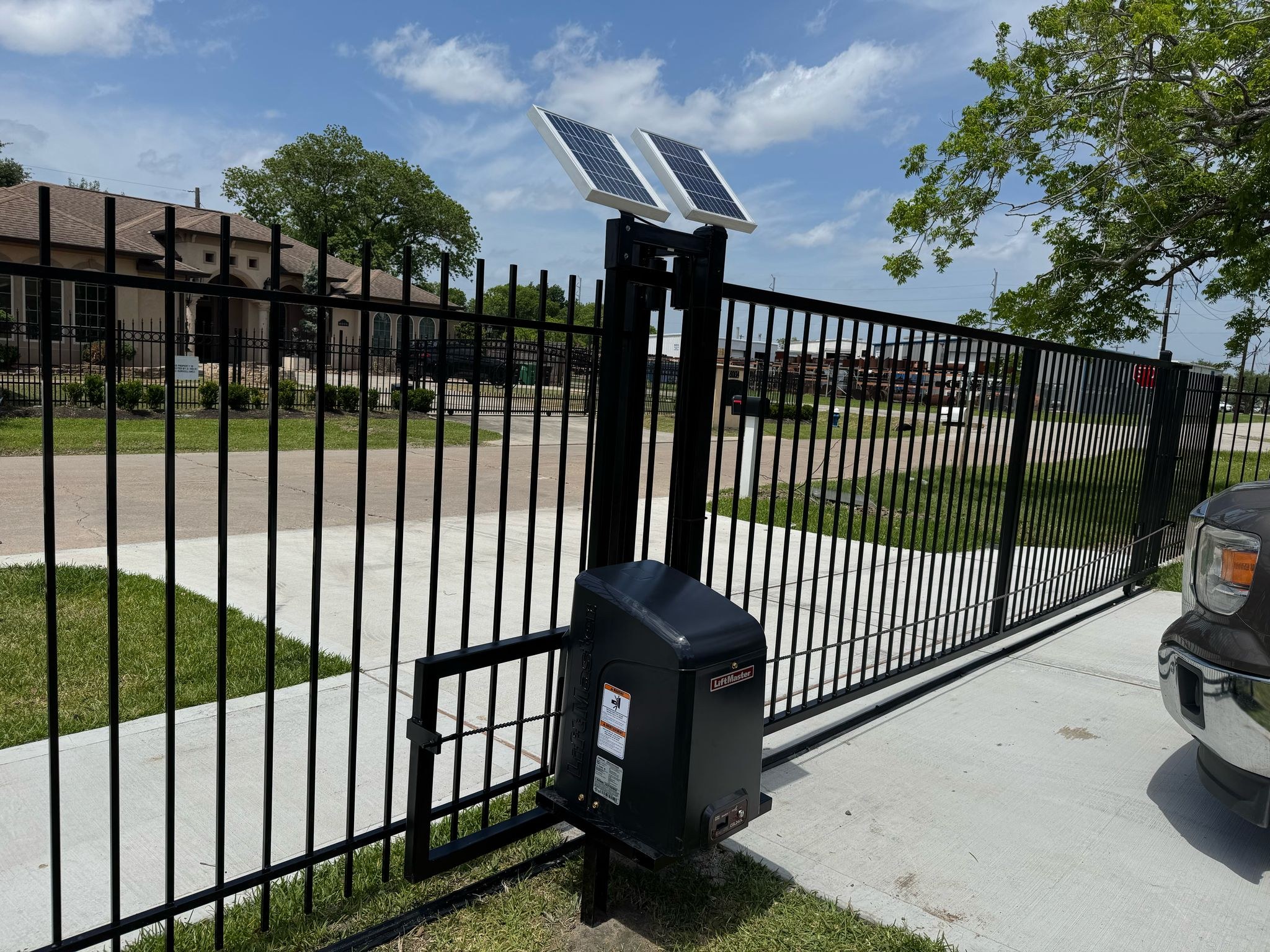
It depends on the hardware, not the weather alone. The LiftMaster CSW24UL manual’s solar appendix publishes a table, not a flat figure, because the real ceiling comes from four things together: panel watts, battery amp-hours, sun zone, and the standby draw of the control board and its accessories, which runs 24 hours a day whether the gate moves or not. Galveston sits in the maker’s Zone 2 (about 4 hours of sun a day). In that zone’s column, listed setups range from about 21 cycles a day (a small 20 W panel, two 7 Ah batteries, with an expansion board and a loop detector) up to 146 (a 60 W panel, two 33 Ah batteries, bare control board). A gate that needs more than the table’s largest listed setup supports is better served by a mains-powered operator with solar kept as backup. Mustang Fencing Services sizes the panel and battery bank to your real daily traffic, not a rule of thumb.
Source: LiftMaster CSW24UL installation manual, solar appendix p.48, Zone 2 column (the Texas Gulf coast zone on the maker’s map).
What counts as one cycle, and why there is no single number
One cycle is one full open-and-close round trip — a vehicle entering, with the gate opening and then closing behind it, is one cycle. A second vehicle leaving later is a separate cycle. The maker calls its own cycles-per-day ratings “approximations” that “vary based on gate construction, installation, and temperature,” which is why the manual prints a table instead of a single figure.
The table’s four variables: panel watts (20, 40 or 60, built from 10 W panels in series), battery size (the standard 7 Ah pair, or 33 Ah with an extra tray), sun zone (Galveston is Zone 2), and standby draw — the control board plus whatever remotes, a myQ device, an expansion board and loop detectors pull, around the clock, whether the gate is moving or not. For how those parts fit together and where the panel has to go, see how solar-powered gate openers work.
The maker’s cycles-per-day table, Zone 2 (Galveston)
| Standby draw | 20 W, 7 Ah | 20 W, 33 Ah | 40 W, 7 Ah | 40 W, 33 Ah | 60 W, 7 Ah | 60 W, 33 Ah |
|---|---|---|---|---|---|---|
| ≤ 5 mA | 34 | 40 | 65 | 92 | 81 | 146 |
| ≤ 15 mA | 30 | 36 | 60 | 87 | 76 | 140 |
| ≤ 20 mA | 28 | 33 | 58 | 84 | 73 | 137 |
| ≤ 100 mA | — | — | 21 | 44 | 34 | 92 |
LiftMaster CSW24UL installation manual, p.48, “Solar gate cycles per day,” Zone 2 column. “—” means the maker lists no rating for that combination at that draw.

Count your own cycles before you size anything
Count every full open-and-close the gate would see in a normal day: each vehicle entering is one cycle, each vehicle leaving is another, and a gate that doubles as a pedestrian entrance adds more on top. Guests, deliveries and multiple household vehicles all add up — use that real count, not a guess, against the table above or the checker below.
If your count lands above what the largest listed setup supports, a standard solar system is not the right fit. The realistic options at that point are a mains-powered operator with solar kept as backup, or accepting that the gate will occasionally run its batteries down on a string of cloudy days.
What is the smallest setup that clears your daily cycle count?
Set how many cycles a day you need (one cycle = one full open-and-close) and which accessories are installed. The checker reads the gate maker’s own Zone 2 table — Galveston’s zone — and names the smallest listed panel-and-battery combination that is rated to clear it.
Reads the LiftMaster CSW24UL installation manual’s solar appendix (pp. 47-48), Zone 2 column, two-battery-size table. Checks 20W, 40W and 60W panels in that order and stops at the first one the table rates for your cycle count. The manual calls these ratings approximations that vary with gate construction, installation and temperature.
What Galveston customers say
5.091 Google reviews · read them all on Google
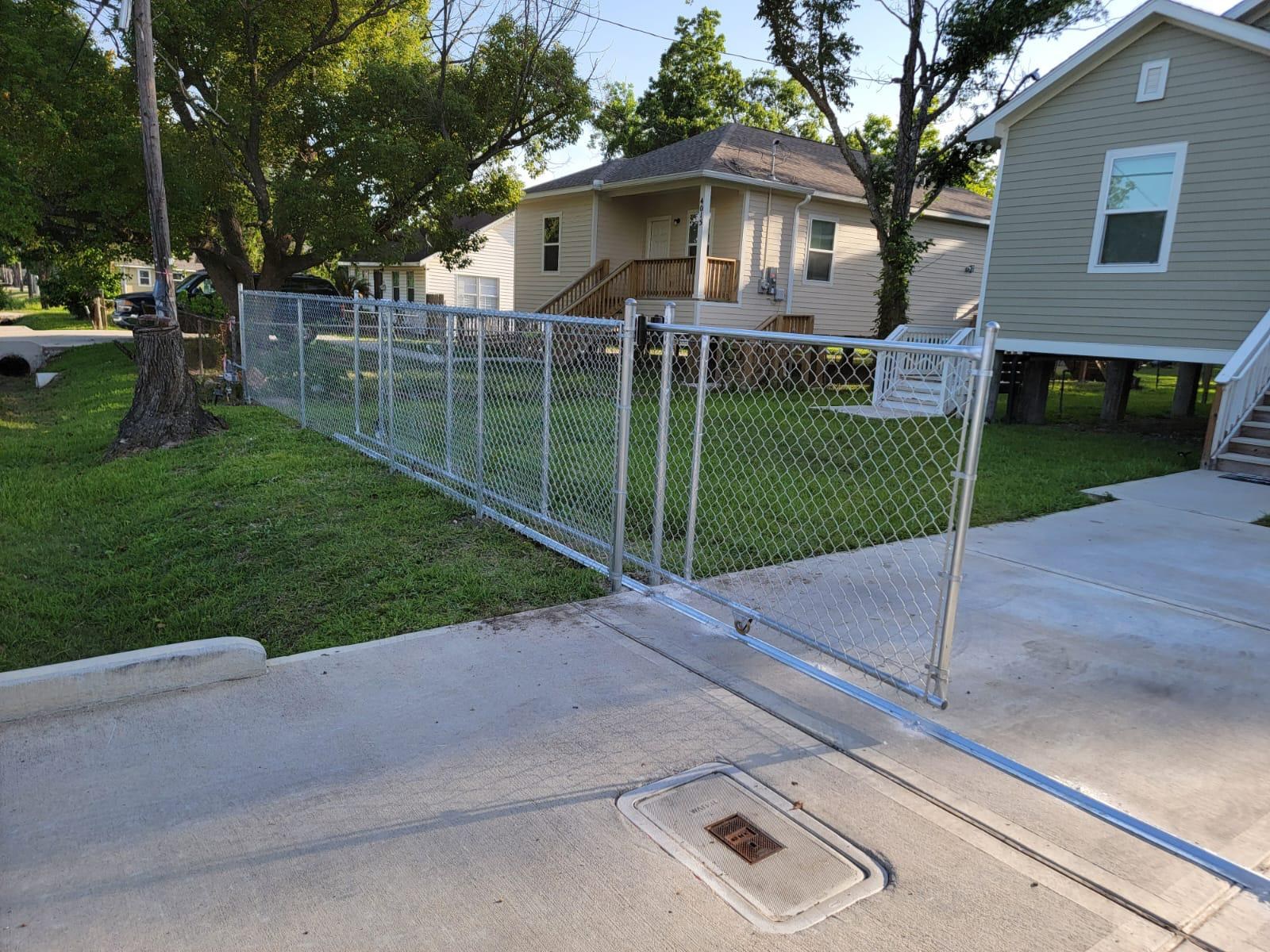
Very professional and friendly. Gotten automatic gates done and they are done to perfection! Thank you
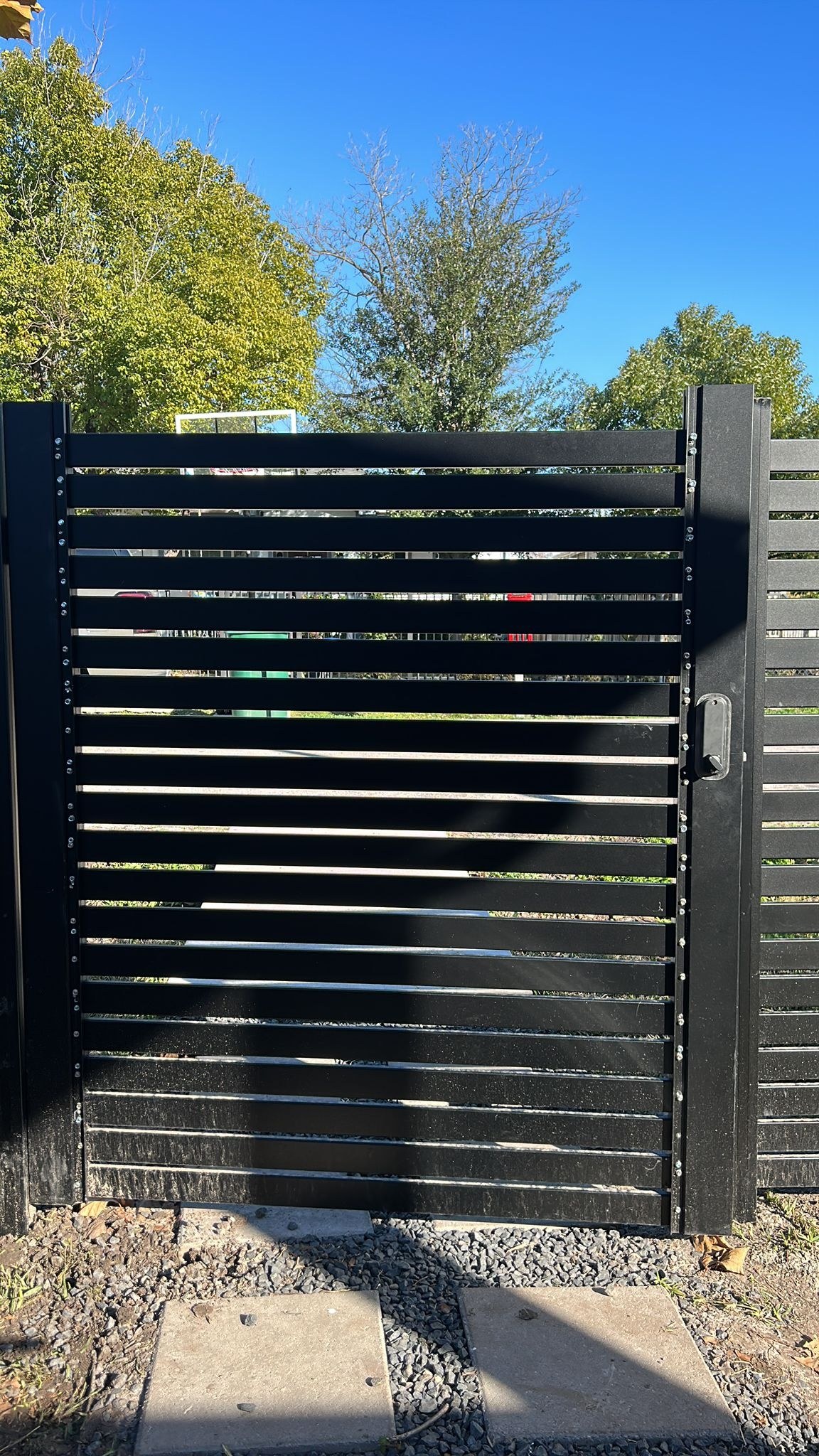
We just installed iron gate and it looks amazing thank you very much mustang fencing .
had an excellent experience with mustang fencing From the initial consultation to the final installation, the team was professional, punctual, and attentive to detail. They helped me choose the perfect fence style to match my property and ensured everything was installed with precision. The quality of materials is top-notch, and the fence has completely transformed the look and security of my home. I highly recommend mustang services to anyone looking for reliable and high-quality fencing services!
Reviews shown word for word from the Mustang Fencing Services Google Business Profile (Galveston), captured 2026-10-12.
Questions we get about this
How many times a day can a solar gate opener open and close?
What counts as one cycle?
How do I size a solar gate opener for a lot of daily traffic?
Does Galveston’s climate affect the cycle count?
Do older batteries reduce how many cycles a solar gate can handle?
What if my gate needs more cycles than the table rates?
Sources
Checked October 15, 2026. Rules change, so confirm with the City before you build.
- LiftMaster CSW24UL Installation Manual (Chamberlain Group) — Solar requirements, zones and map (p.47); standby current add-up and the solar gate cycles-per-day table (p.48), Zone 2 column used throughout this page; note on battery degradation over time.
Thinking about how your gate will actually get used?
We’ll count your real daily traffic, match the panel and battery to it with margin to spare, and put it on a written quote. Free on-site estimates across Galveston County.