
Solar-Powered Automatic Gate Installation — No Electricity Needed
A solar-powered gate operator runs on its own panel and battery, so there is no trenching, conduit or utility hookup needed to power a driveway or ranch gate. Here is who it suits, how to size the panel and battery to your gate, and how to protect the electronics from salt air on the coast.
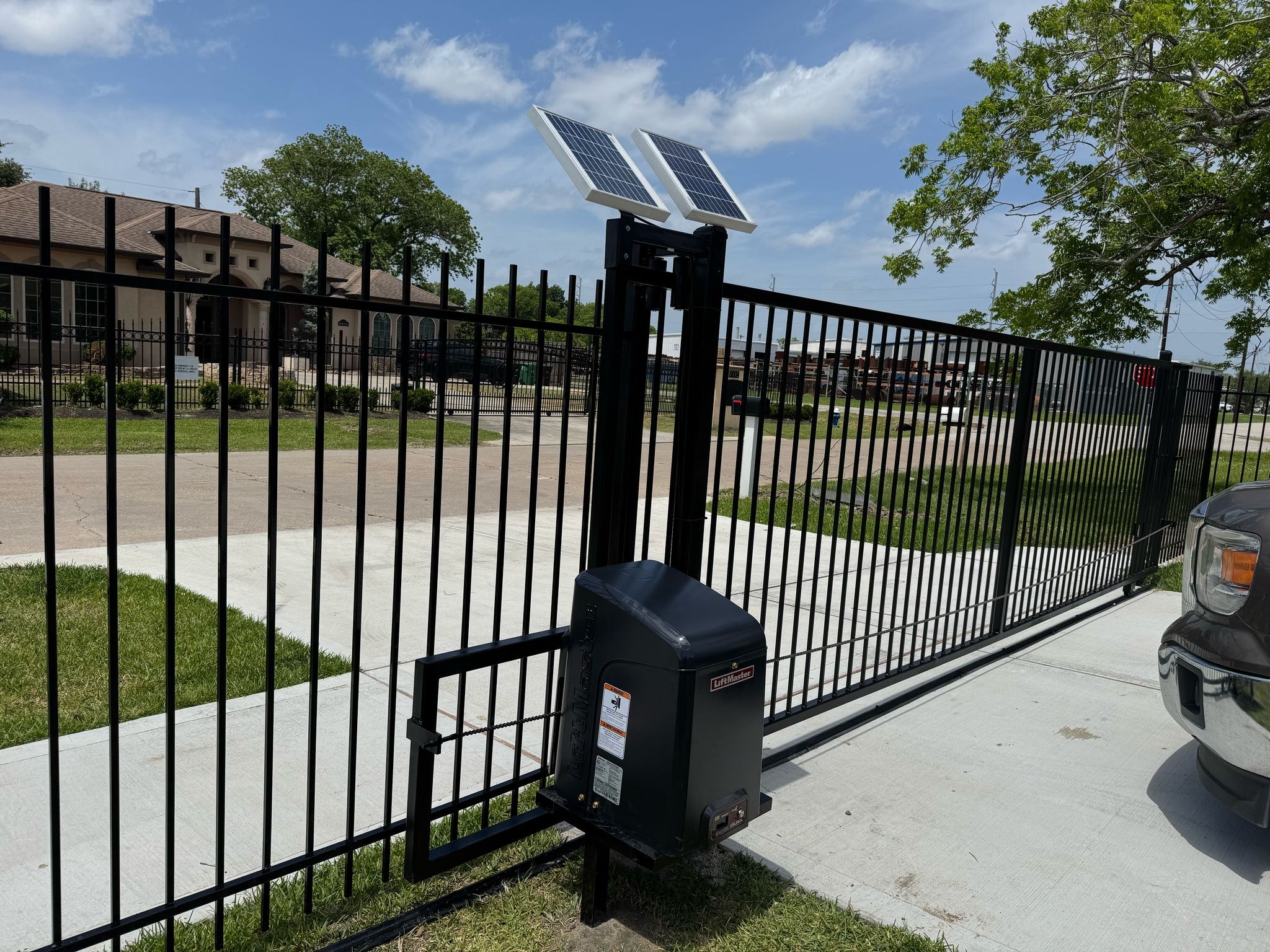
Yes — a solar-powered gate opener lets you automate a driveway or ranch entrance with no electrical service run to it at all. A solar kit charges its own batteries from a panel in daylight; the batteries run the operator day and night, so there is no trenching, conduit or utility hookup needed at the gate. On the Gulf Coast, the gate maker’s own solar zone map puts Galveston in Zone 2 — about 4 hours of usable sun a day — so the panel and battery need sizing with margin for cloudy stretches, and any enclosure near the water should be rated for salt air, not just rain. Mustang Fencing Services installs and sizes solar automatic gates across Galveston County, matching the panel, battery bank and enclosure to your gate and how often it’s used.
Sources: LiftMaster CSW24UL installation manual, solar appendix pp.47–49; NEMA, Enclosure Types (Nov. 2005).
Who a solar gate is for
A solar-powered operator is the way to automate a gate when running electrical service out to it would be the expensive part of the job — common across Galveston County on:
- Rural and ranch entrances, where the gate sits a long way down the driveway from the house or the nearest power line.
- Waterfront and island lots, where trenching across a long drive or a bulkhead area adds cost and disruption.
- A gate you’re automating for the first time, new or as a retrofit onto an existing swing or slide gate, provided the gate and its hardware are solid enough to carry a motor.
Everything about an automated gate’s safety requirements is the same whether it runs on solar or grid power — see automatic gate installation for the UL 325 / ASTM F2200 rules every operator has to meet. For how the panel, battery and control board work together, see how solar-powered gate openers work. If a flood-prone lot also needs the electronics kept above a target flood elevation, see gate operators in a flood zone.
Solar, cloudy stretches and hurricane season on the coast
On the gate maker’s own solar zone map, the Texas Gulf coast — including Galveston — sits in Zone 2, rated for about 4 hours of usable sun a day, one step down from the 6-hour “ideal” Zone 1 further inland. The same manual cautions that local weather can call for more panels than the stated minimum, and that panels “cannot be installed in areas that experience long periods of heavy fog, lake effect snow, or rain” — which is why sizing for a run of cloudy days, not an average day, matters more here than it would further from the coast.
A solar gate’s other advantage shows up when the power is actually out: because it runs on its own stored battery rather than the grid, it keeps opening and closing on demand through a grid outage — worth having during hurricane season, whether for an evacuation, a delivery, or simply not being stuck swinging a heavy gate by hand. That advantage still depends on the battery having a charge going into the outage, which is the same sizing question answered below.
See how solar-powered gate openers work for the full cycles-per-day math behind the panel and battery choice.
Hours of sun per day, by the maker’s solar zone
The gate maker’s zones rate how much usable sun a location gets for solar sizing.
What size solar setup does your gate need?
Say how many times a day the gate needs to open and close, and which accessories share its battery bank. This checks the gate maker’s own Zone 2 table — the Texas Gulf Coast’s sun zone — and recommends the smallest panel and battery pairing that covers it. Planning aid only; a free on-site estimate confirms the exact parts for your gate.
Sizing table: LiftMaster CSW24UL installation manual, solar appendix (pp.47–48), Zone 2 (the manual’s map places the Texas Gulf coast, including Galveston, in Zone 2). The checker rounds your accessory draw up to the table’s next row and checks each panel/battery pairing in increasing order, recommending the smallest one that meets your need. A blank cell in the maker’s table means that pairing has no rating at that draw — other operators have their own tables. NEMA enclosure types: NEMA, Enclosure Types (Nov. 2005); anchor guidance: FEMA P-348 (2nd ed., 2017).
Which gate style pairs with solar
| Gate style | How solar pairs with it | Good fit when… | Watch for |
|---|---|---|---|
| Swing gate (single or double leaf) | An arm or underground operator, run off the same 24 V battery bank a slide gate uses | Clear swing room and no power line nearby | Still needs its own UL 325 entrapment protection — see automatic gate installation |
| Slide gate (cantilever or V-track) | A track or cantilever operator wired to the solar battery bank instead of grid power | Wide openings, ranch entrances, or a gate far down a long driveway | The track or overhang path still needs to stay clear of sand, shell and storm debris |
| Existing manual gate (retrofit) | Adding a solar operator and battery bank to a gate that already swings or slides | The gate, posts and hinges are already solid enough to carry a motor | A gate that sags or binds gets fixed first, solar or not |
LiftMaster CSW24UL/CSL24UL installation manuals (solar-compatible swing and slide operators); UL 325 7th ed. entrapment-protection requirements apply the same way whether the operator runs on solar or grid power.

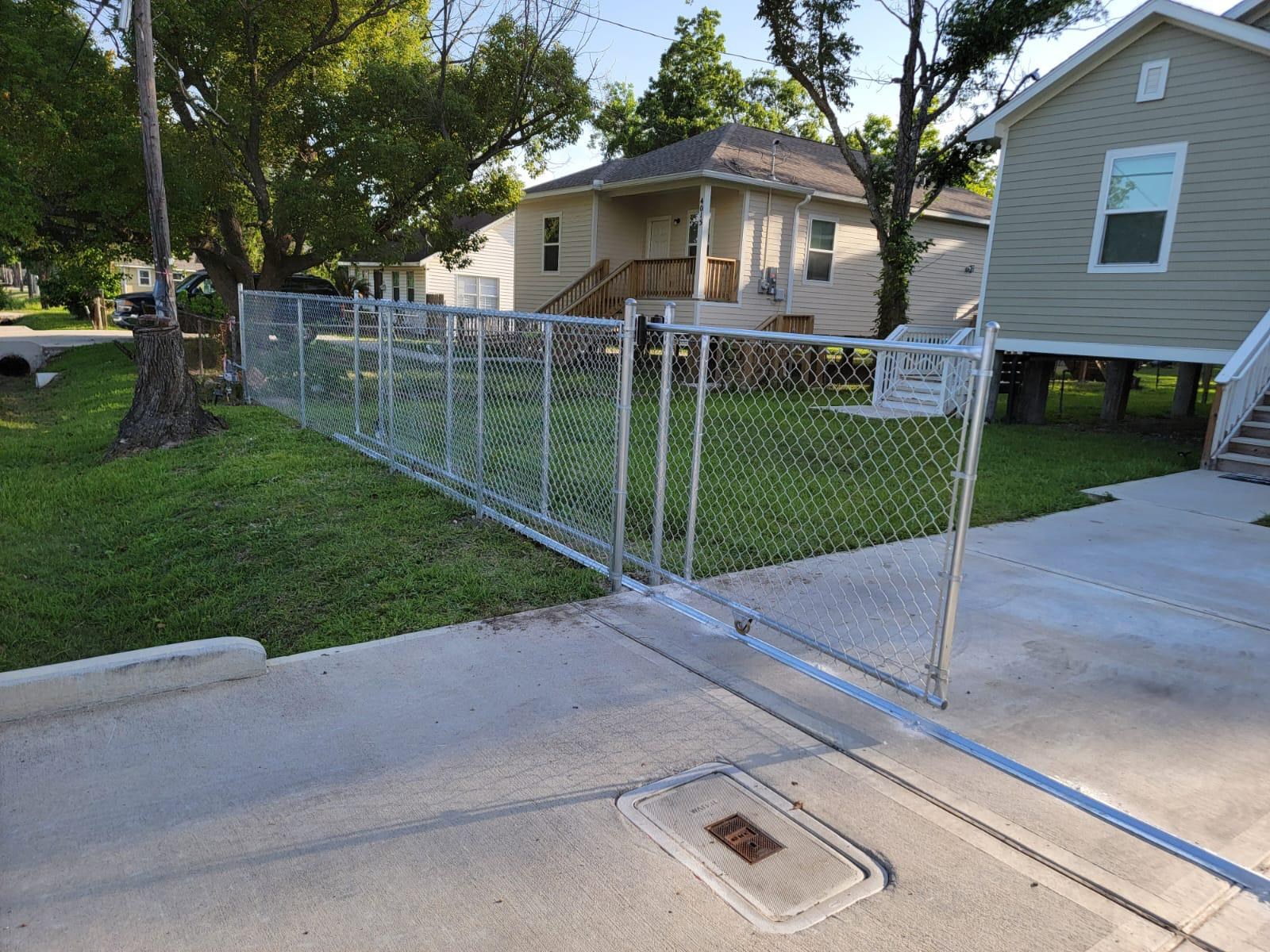
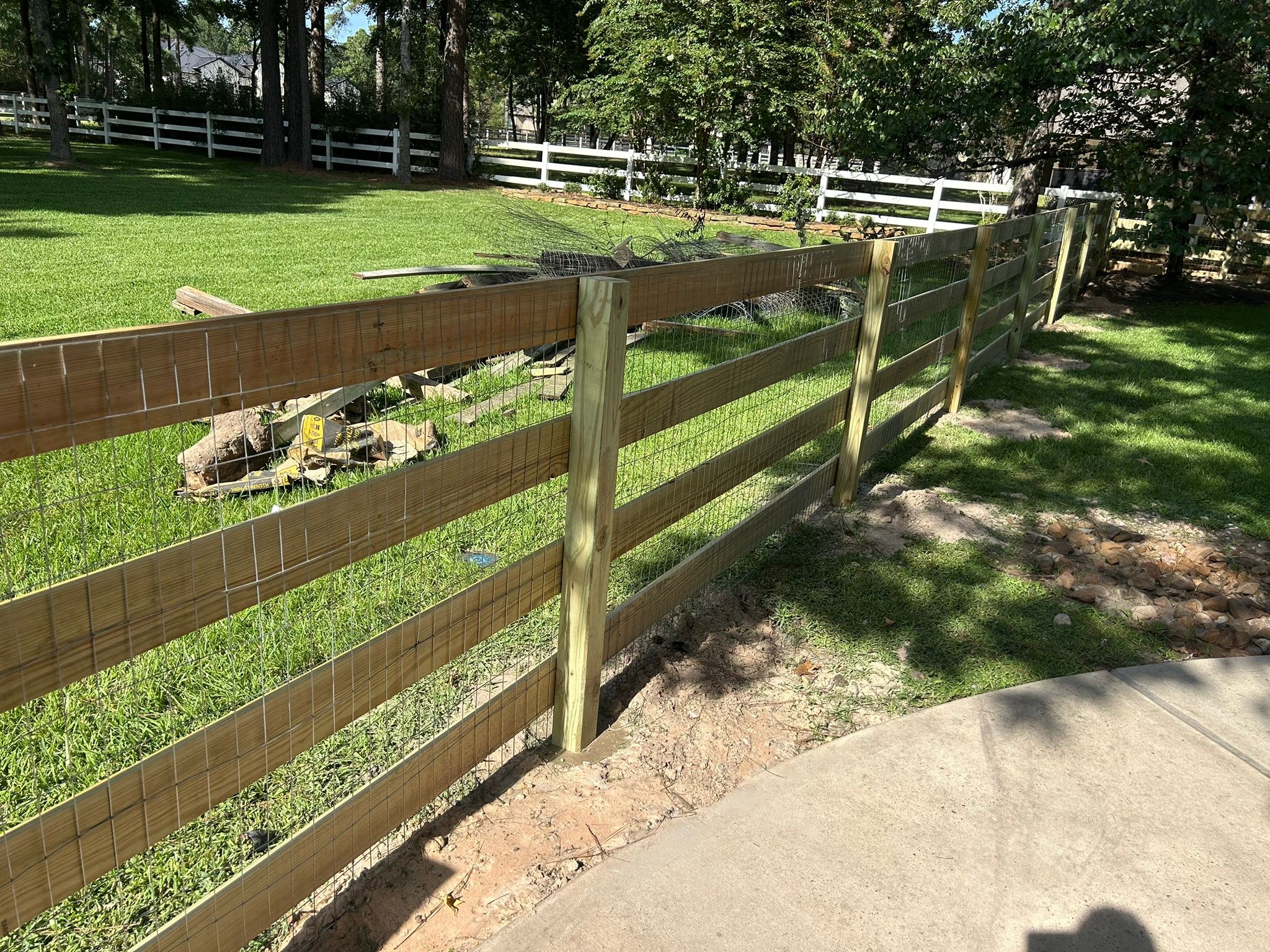
What Galveston customers say
5.091 Google reviews · read them all on Google
We just installed iron gate and it looks amazing thank you very much mustang fencing .
Very professional and friendly. Gotten automatic gates done and they are done to perfection! Thank you
Excellent work. They came in handy after the hurricane hit our backyard. Friendly people too.
Reviews shown word for word from the Mustang Fencing Services Google Business Profile (Galveston), captured 2026-10-05.
Questions we get about this
Can I get an automatic gate if there is no power run to my driveway?
Do solar gate openers work through Galveston’s cloudy, humid stretches?
What happens to a solar gate during a hurricane or power outage?
Can solar be added to a gate I already have?
How do you protect a solar gate’s electronics from salt air?
What size solar panel and battery does my gate need?
Sources
Checked October 11, 2026. Rules change, so confirm with the City before you build.
- LiftMaster CSW24UL Installation Manual (Chamberlain Group) — Solar panel/battery requirements and zones (p.47); standby-current and cycles-per-day tables (p.48) used for the sizing tool.
- NEMA, Enclosure Types (November 2005) — Type 4X definition: corrosion-resistant protection against rain, splashing and hose-directed water, used for the salt-air enclosure guidance.
- FEMA P-348, Protecting Building Utility Systems From Flood Damage (2nd ed., 2017) — Recommends stainless steel or hot-dip galvanized anchors and straps to resist salt spray.
Thinking about a solar gate?
We’ll look at your gate, how far it sits from power, and how it’s used, then size the panel, battery and enclosure to fit — on a free on-site estimate across Galveston County.