
Installing a 4′ Galvanized Chain Link Fence in Galveston, Texas
A straightforward, rust-resistant chain-link fence to define a property line and keep pets in. Here’s that fence in photos, plus how corner posts and tension wire keep a chain-link run tight and reinforced, and how galvanized steel actually performs in a coastal atmosphere.
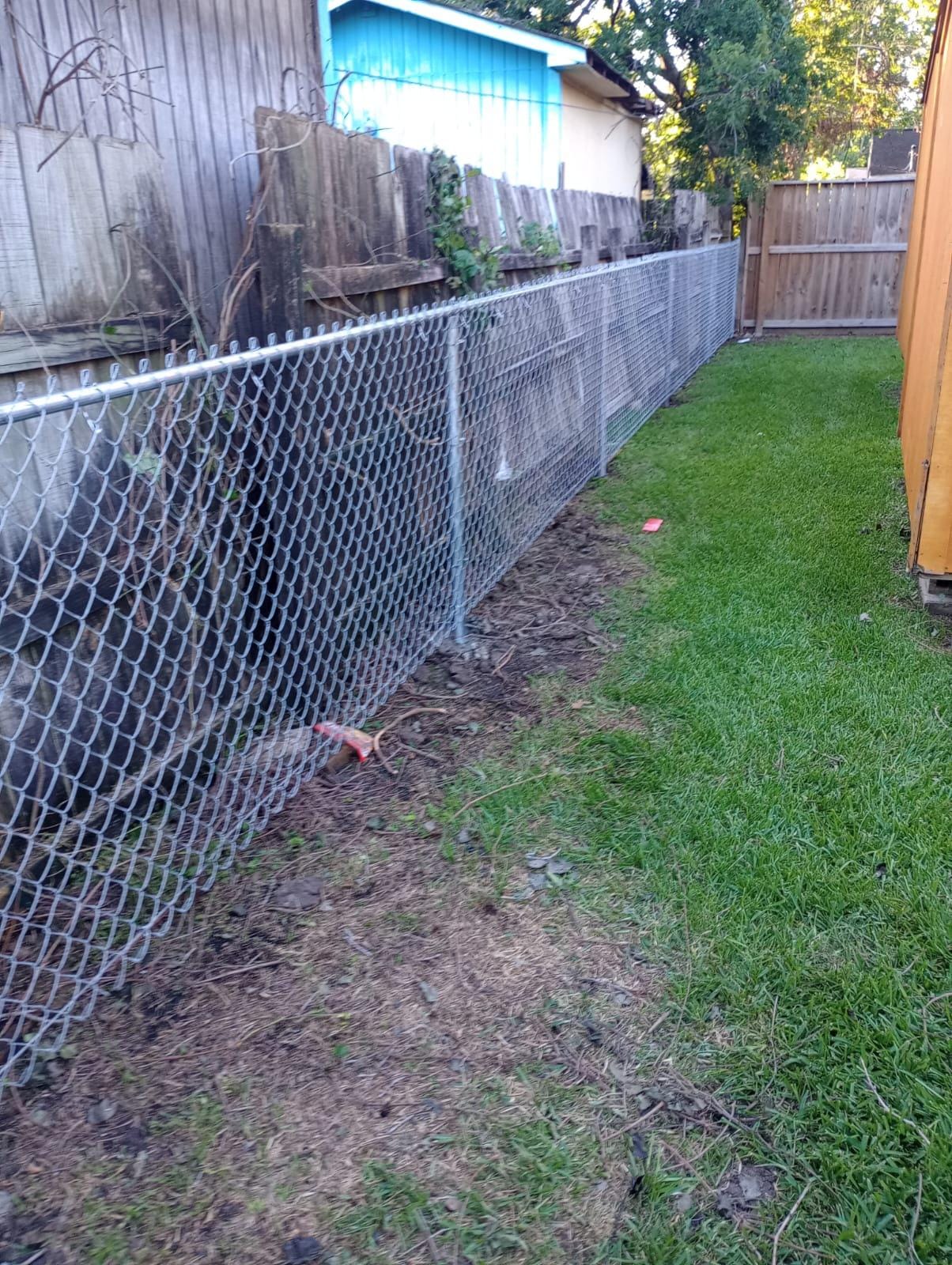
This Galveston job was a 4-foot-high galvanized chain link fence, chosen for rust resistance and cost-effectiveness, built to define the property boundary and keep pets contained. The crew set the posts deep, pulled the fabric tight and even, and reinforced the corners — which on a chain-link fence is a specific hardware job: separately rated corner/end posts, a braced truss rod, and a tension wire running the length of the bottom edge.
Sources: Chain Link Fence Manufacturers Institute (CLFMI); ASTM A392; American Galvanizers Association.
The job: a 4-foot galvanized chain-link run
This Galveston property needed a straightforward fencing solution: a 4-foot-high galvanized chain link fence to define the property boundary and keep pets safely contained, without an overly heavy or intrusive look. Galvanized chain link was the material call — it’s both resilient to rust and more cost-effective than most alternatives, and well suited to Galveston’s salt air, wind and humidity.
During installation, the crew set the posts deep for stability, pulled the chain-link fabric tight and evenly along the run, and reinforced the corners while keeping every connection secure. Those three things — post depth, fabric tension and corner strength — are the parts of a chain-link job that determine whether it stays tight for years or starts sagging.
Why corners get different hardware than the rest of the run
“Reinforced corners” isn’t just extra effort — on a chain-link fence it’s a different part of the specification. Industry guidance for specifying chain link fence treats line posts (the regularly spaced posts along a straight run) and end, corner and pull posts as separate categories, each sized to its own job: line posts mainly hold the fabric up, while corner, end and pull posts anchor the direction changes and have to resist the pull of the whole tensioned run.
Corner and end posts are typically braced with a truss rod assembly — per the CLFMI specification, a 3/8-inch steel rod with a pressed-steel tightener, rated to withstand a tension of 2,000 lb. That’s the hardware doing the work behind a corner that stays square instead of leaning under tension.
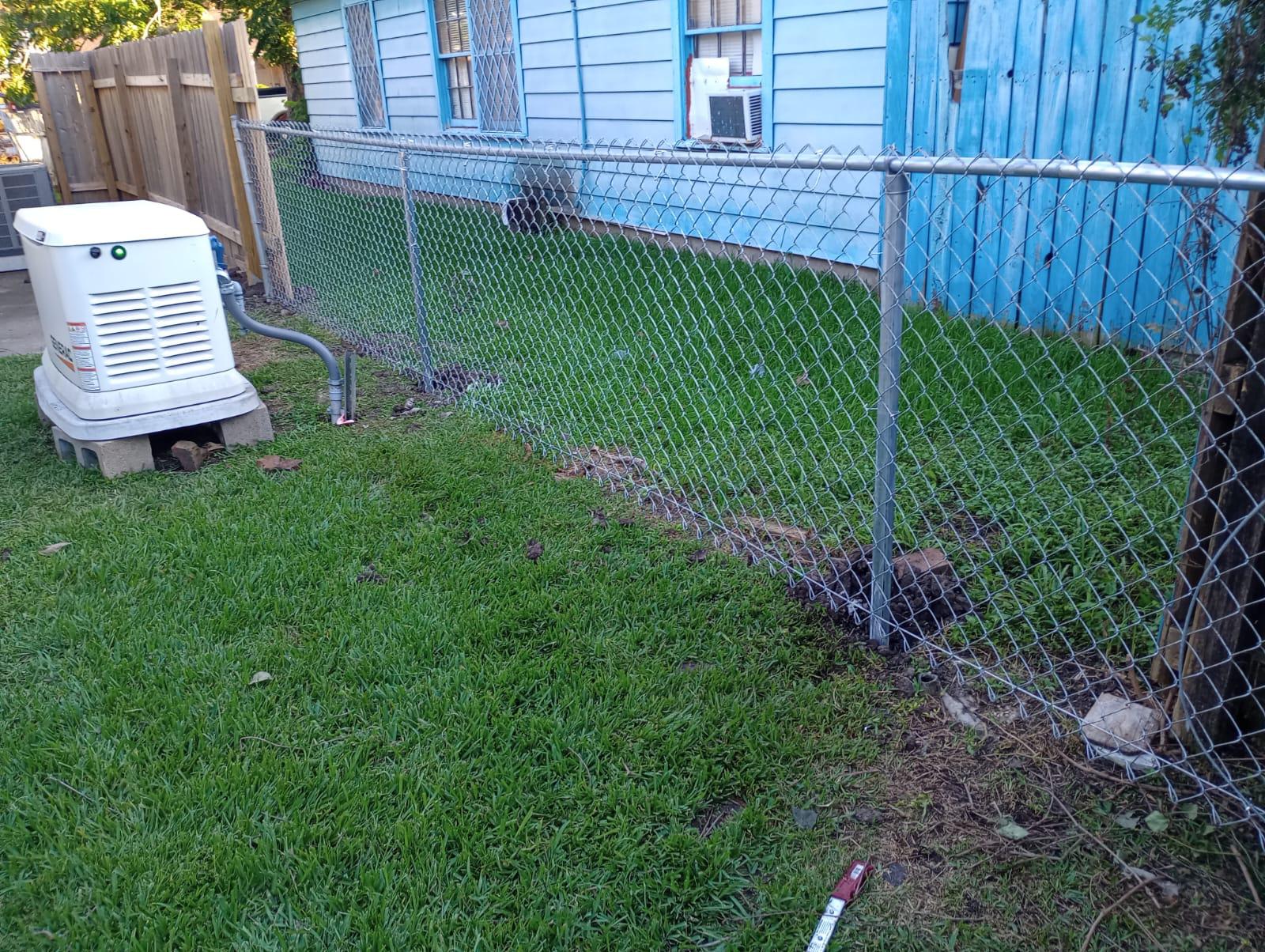
Keeping the fabric pulled tight and even
A chain-link fence that sags or ripples usually traces back to tension, not the fabric itself. Along the bottom edge, the CLFMI specification calls for a metallic-coated steel tension wire — 7-gauge, with its coating matched to the fabric’s own coating so the two age at the same rate. That wire, plus properly tensioned fabric at installation, is what keeps a run looking tight and even years later instead of loosening into waves.
The fabric itself is also a specified product, not just “chain link”: ASTM A392 covers zinc-coated steel chain-link fabric and sets requirements for mesh size, wire gauge, fabric height, the finish on the top and bottom edge (selvage), zinc coating weight, and breaking strength.
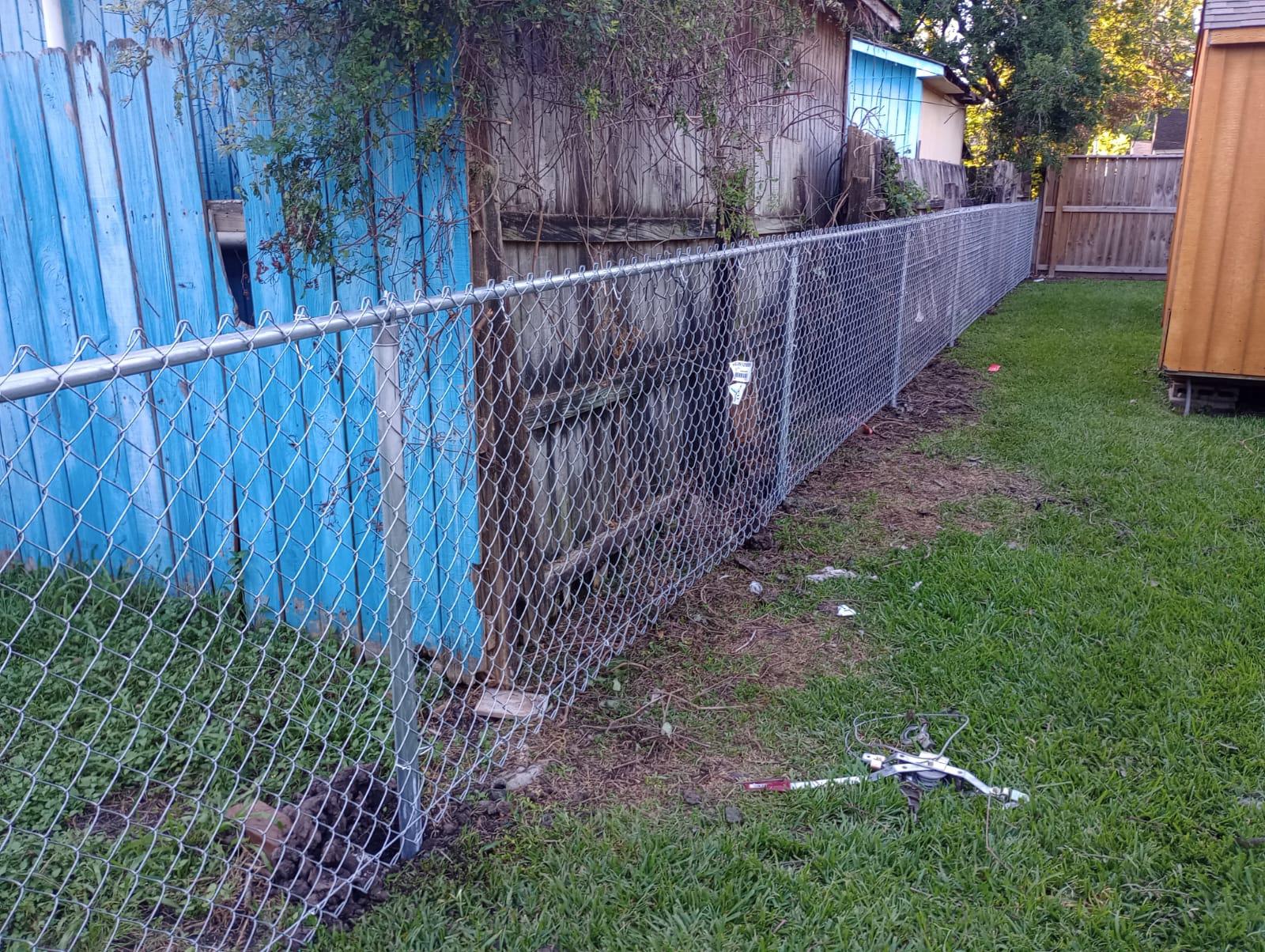
Why galvanized steel was the call for a coastal property
Rust resistance was a specific reason Kathy chose galvanized chain link, and it holds up under research. Per the American Galvanizers Association, coastal corrosion of a galvanized coating depends on several factors — “prevailing wind direction, type and density of corrosive fumes and pollutants, amount of sea spray, number of wetting and drying cycles, and the duration of exposure to moisture” — but even accounting for all of that, “actual observed [corrosion] rates rarely exceed 0.3 mils per year.”
The posts set in the ground benefit too: in coarse, sandy soil like much of Galveston’s, the AGA notes that soil “permit[s] free circulation of air, and the process of corrosion may closely resemble atmospheric corrosion” — generally a milder environment for galvanized steel than dense, waterlogged clay.
What a chain-link fabric spec actually covers
ASTM A392 is the standard zinc-coated chain-link fabric is specified against. Pick a spec item to see what it controls. General reference only — it doesn’t state what was used on any specific job.
ASTM A392-11a(2022), Standard Specification for Zinc-Coated Steel Chain-Link Fence Fabric (abstract): fabric is specified for mesh size, wire size, fabric height, selvage, zinc coating weight (Class 1 or Class 2), and breaking strength; the top and bottom are knuckled or twisted.
What customers say on Google
5.091 Google reviews · read them all on Google
chainlink fence installation by mustang fencing, looks really great, thanks.
Mustang’s team installed iron fence for me and did an absolutely incredible job! I would recommend this company to anyone I know!
had an excellent experience with mustang fencing From the initial consultation to the final installation, the team was professional, punctual, and attentive to detail. They helped me choose the perfect fence style to match my property and ensured everything was installed with precision. The quality of materials is top-notch, and the fence has completely transformed the look and security of my home. I highly recommend mustang services to anyone looking for reliable and high-quality fencing services!
Reviews shown word for word from the Mustang Fencing Services Google Business Profile (Galveston), captured 2026-10-26.
Questions we get about this
What fence was installed on this job?
Why are corner posts different from the rest of the posts?
What keeps chain-link fabric from sagging over time?
Is galvanized steel a good choice for a coastal property?
Does this page state the exact wire gauge or mesh size used on this job?
Sources
Checked November 1, 2026. Rules change, so confirm with the City before you build.
- Chain Link Fence Manufacturers Institute, Guide for Specifying Commercial/Industrial Chain Link Fence (Section 32 31 13) — Specifies line posts separately from end/corner/pull posts, a truss-rod brace assembly at corners rated to 2,000 lb tension, galvanized tension and brace bands, and a coated steel tension wire along the fabric’s bottom edge.
- ASTM A392-11a(2022), Standard Specification for Zinc-Coated Steel Chain-Link Fence Fabric (abstract) — Defines what a chain-link fabric spec covers: mesh size, wire size, fabric height, selvage, zinc coating weight (Class 1 or 2), and breaking strength.
- American Galvanizers Association, “Performance of Galvanized Steel in Different Environments” (2012) — Explains what affects galvanized-coating corrosion in coastal atmospheres and in soil, and that observed atmospheric corrosion rates rarely exceed 0.3 mils per year.
Need a chain-link fence built for the coast?
We’ll walk the property, talk through post placement and fabric tensioning, and put it on a written quote.