
Will a Split Rail Fence Keep My Dog in the Yard?
Open rails are the whole point of a split rail or ranch rail fence, which is exactly why they don’t hold a dog on their own. Adding a wire-mesh backing, sized to the dog, is how it’s usually fixed — plus a buried barrier for a digger.
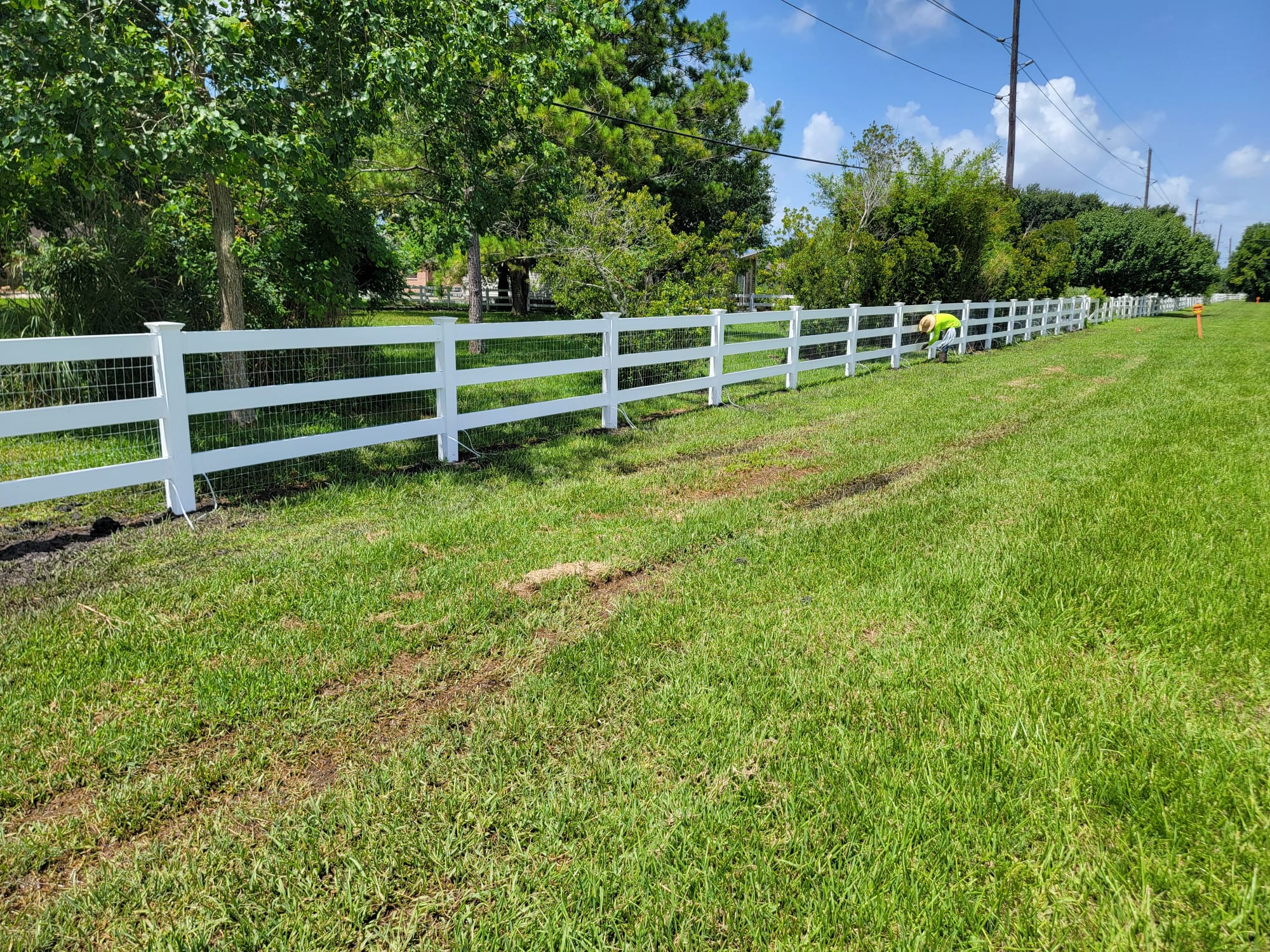
A split rail (or ranch rail) fence by itself will not reliably keep most dogs in the yard. The open rails are the style’s whole appeal — there’s nothing between them — so a dog that can fit through the gap, duck under the bottom rail, or squeeze past at a post isn’t held by the rails alone. The standard fix is a wire-mesh backing fastened to the inside face, sized to the dog (as small as 1-inch openings for toy breeds), plus a buried dig barrier if the dog digs. This keeps the open, see-through look of the fence while adding the containment it doesn’t have on its own.
Source: fencedecksupply.com dog-containment fencing specs (general industry guidance); City of Galveston LDR Divisions 2.500/2.600.
Why open rails don’t hold a dog
Split rail and ranch rail fencing uses two or three horizontal rails between posts with no boards, pickets or infill. That open structure is why people choose it — it marks a line or a pasture edge without blocking the view. It’s also exactly why it doesn’t contain most dogs: there’s a gap between each rail and the ground, and another gap between the rails themselves, both wide enough for a dog to get through, under, or past at the post.
A simple rule from general fencing-industry guidance: if a dog’s skull clears an opening, the rest of the dog is coming through it. A plain rail fence has openings far larger than that for almost any dog. See our ranch rail fencing guide for the style itself; this post is specifically about making one work for a dog.
Picking the mesh: size it to the dog
Not every dog needs the same mesh. General guidance from fencing suppliers sizes the opening to the dog:
- Puppies and toy breeds: about 1-inch openings, or line the bottom two feet with hardware cloth if the rest of the run uses a bigger mesh.
- Small dogs (under about 25 lb): 1-inch mesh is the safer call; standard 2-inch chain-link-style mesh can still let a small dog’s head and shoulders through.
- Medium and larger dogs (25 lb and up): standard 2-inch mesh is generally fine.
That “2-inch mesh” is the same woven wire fabric already used on standalone chain link fencing — not a special product. Mustang Fencing Services’ own chain link work uses that fabric in the gauges covered on our chain link gauge guide; the same material gets fastened to the inside of the rails here instead of standing on its own.
What mesh and dig barrier fits your dog?
A starting point based on general fencing-industry guidance for dog containment, not a code requirement — every dog is different.
Mesh opening and L-footer specs: fencedecksupply.com dog-containment fencing specs. Height guidance from the same source. Not a guarantee for any individual dog.
At a glance
| Dog size | Mesh opening | Notes |
|---|---|---|
| Toy / puppy | ~1 in | Smallest standard opening; check gate gaps too |
| Small, under 25 lb | 1 in (or hardware cloth strip) | Standard 2 in mesh can still let these through |
| Medium/large, 25 lb+ | 2 in (standard) | Same fabric used on standalone chain link fencing |
General industry guidance (fencedecksupply.com), not a code requirement. Confirm against your own dog’s build, not just its weight.
Adding mesh to an existing fence, or building new
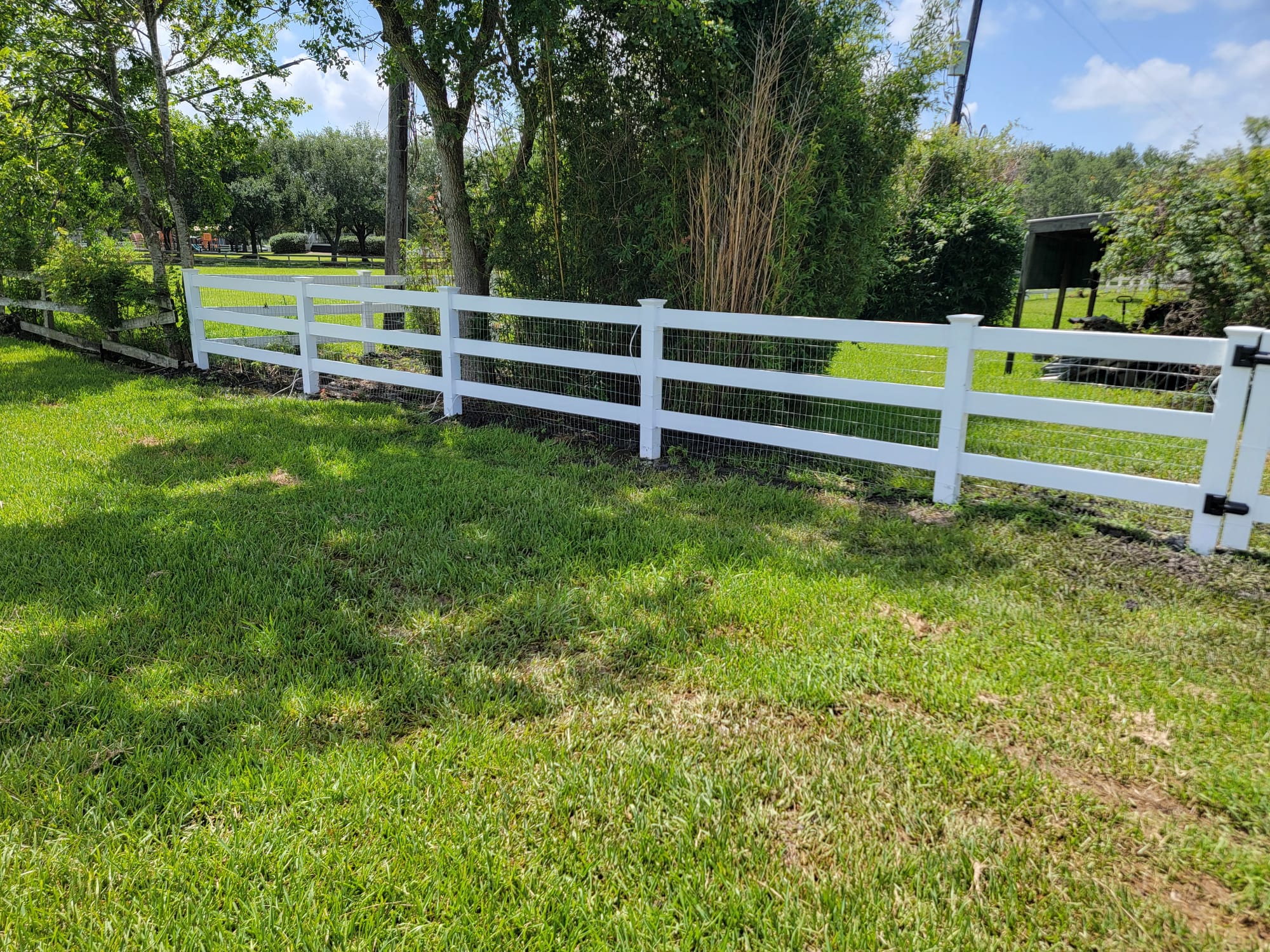
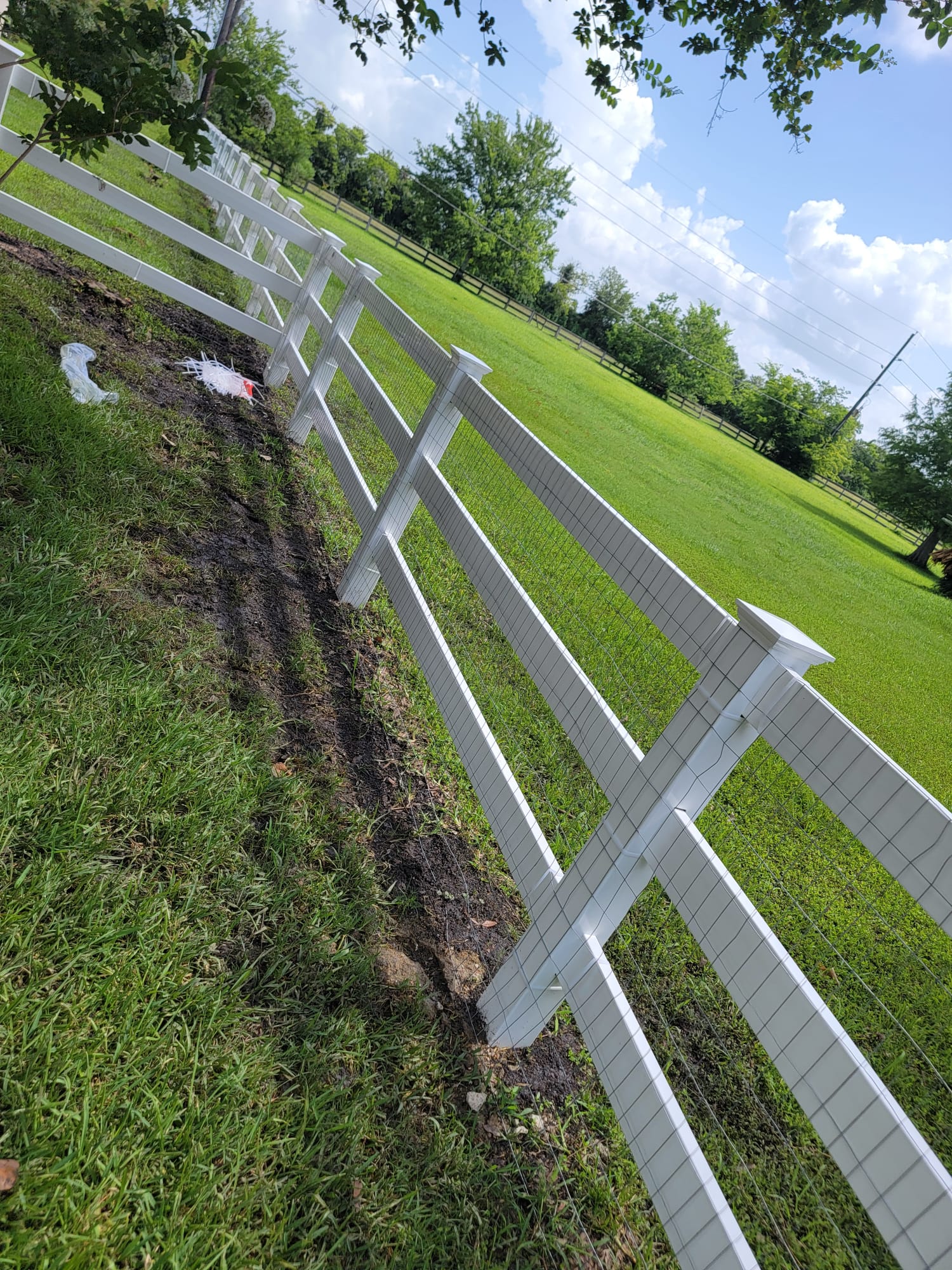
Wire mesh backing can usually be added to a split rail or ranch rail fence that’s already standing — it’s fastened to the inside face of the existing rails rather than requiring the fence to come down. That generally makes it a smaller add-on job than a full fence rebuild, though the exact scope depends on the fence’s condition and run length; a free on-site visit gives you a real number.
Building new, the mesh and any dig barrier get planned in from the start, which is usually the tidier result. Either way, a matching farm-style gate can get the same backing so the gate doesn’t become the one gap the dog finds.
What Galveston customers say
5.091 Google reviews · read them all on Google
I have hired Mustang fencing services to fix my backyard fencing. Good wood to used. I really like theirs work. Best of luck
Excellent work. They came in handy after the hurricane hit our backyard. Friendly people too.
I am so pleased with the fence!! Your solution was exactly the right one and the team did a highly professional job. Frankly, I was amazed at how clean the job site was at the completion of the project. Feel free to list me as a reference and a very happy customer. Thanks again and please let the men know That I appreciate their hard work and quality craftsmanship.
Reviews shown word for word from the Mustang Fencing Services Google Business Profile (Galveston), captured 2026-10-26.
Questions we get about this
Will a split rail fence keep my dog in the yard by itself?
What size wire mesh should I use for my dog?
How do I stop my dog from digging under a split rail fence with mesh?
Is wire-mesh backing allowed on a residential fence in Galveston?
Can mesh be added to an existing split rail fence, or do I need a new one?
Does wire mesh stop a dog from jumping the fence too?
Sources
Checked October 27, 2026. Rules change, so confirm with the City before you build.
- Fence & Deck Supply, Dog Containment Fencing: Height, Gap, and Dig-Proofing Specs by Breed Type — Minimum heights and max gap spacing by dog size, mesh opening recommendations, and L-footer/concrete-trench dig-barrier dimensions. General industry guidance, not a code standard.
- City of Galveston Land Development Regulations, §2.501 and §2.601 — Sec. 2.501 (residential: height only) and Sec. 2.601 (nonresidential/mixed-use: height plus the materials ban in 2.601.C, applicable per 2.601.A to nonresidential/mixed-use districts only).
Want a mesh backing added to your fence?
We’ll look at your rail fence, talk through what your dog actually needs, and give you a written estimate for the mesh and any dig barrier. Free on-site estimates across Galveston County.