
Straight answers from a local fence and gate contractor serving Galveston and Brazoria Counties.
Choosing fencing for livestock isn’t just about containment — the wrong material or design can seriously injure a horse or cow, so this question comes up constantly among landowners setting up or upgrading pasture fencing.
What makes a fence genuinely safe for horses
Horse fencing needs no sharp edges or protrusions, openings that are either small enough (roughly 2″x2″ or smaller) or large enough (roughly 6″x6″ or larger) that a hoof can’t get caught in between, and good visibility so a horse can clearly see the fence line and won’t run through it in a panic. A minimum height of about 4.5 to 5 feet is generally recommended to reliably contain horses. Cattle panels with rigid, welded 4″x4″ mesh are considered one of the safer options for adult horses — the smooth galvanized finish avoids sharp edges and the panels are highly visible.
What works well for cattle
Cattle are generally less prone to panic-related injury than horses and tolerate a wider range of fence types, including traditional barbed wire, woven wire, and rail fencing, provided the fence is sturdy enough to handle their weight and tendency to push against fence lines, especially at gates and corners.
The material to avoid for horses
Barbed wire is specifically dangerous for horses — it causes severe lacerations if a panicked or spooked horse comes into contact with it, and it should never be used in horse pastures even though it’s a perfectly common and functional choice for cattle-only fencing.
Best option for mixed horse-and-cattle pastures
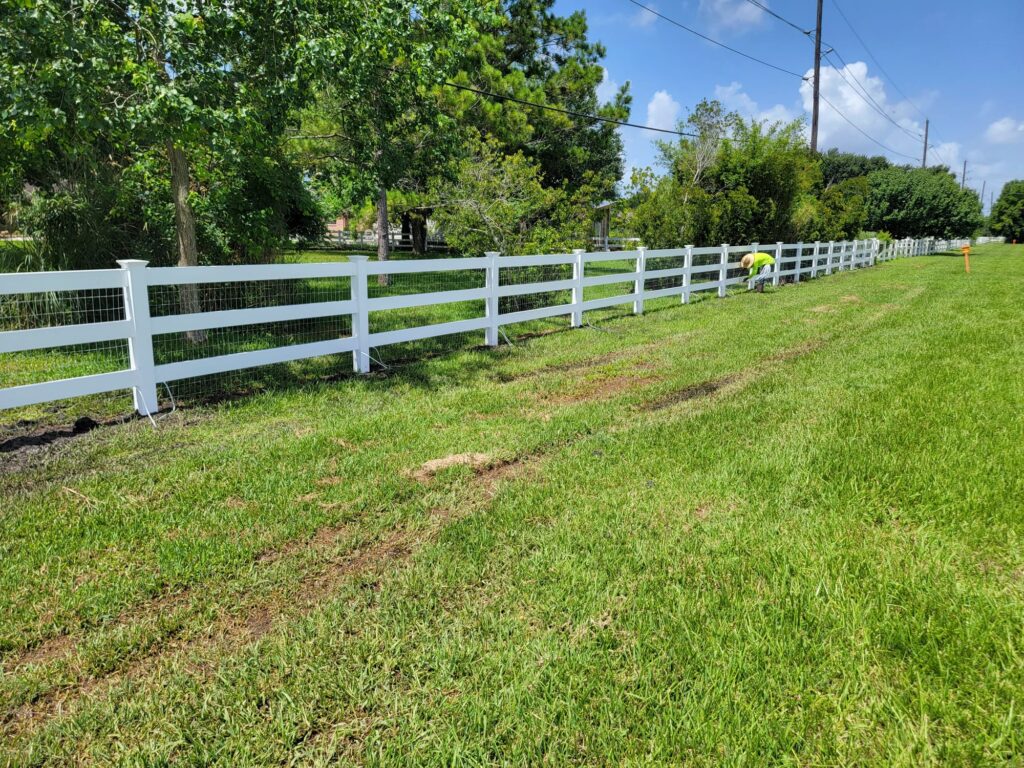
For properties running both horses and cattle in the same or adjoining pasture — common on mixed operations across rural Brazoria County — a smooth, high-density option (like HDPE rail fencing or coated wire) is often recommended, since it offers the strength needed to hold cattle while remaining smooth and visible enough to be safe for horses.
Bottom line for your property
If you’re running horses at all, prioritize visibility and hoof safety over cost savings — the wrong wire choice can lead to an expensive vet bill or worse. If it’s a cattle-only operation, you have more flexibility, and traditional ranch rail or wire fencing is a proven, economical choice. See our areas we service page for the rural communities we build livestock fencing in.
Related Questions
Is barbed wire ever appropriate near horses?
How tall does horse fencing need to be?
What’s the safest fence for foals specifically?
Ready for a real number for your property? Request a free on-site estimate from Mustang Fencing Services.