
What Is Composite Fencing Actually Made Of?
Composite boards are a blend, not a single material — wood fiber in a plastic matrix. Here is the actual ingredient mix, how that compares to solid wood and rigid vinyl, and what it has to do with the price.
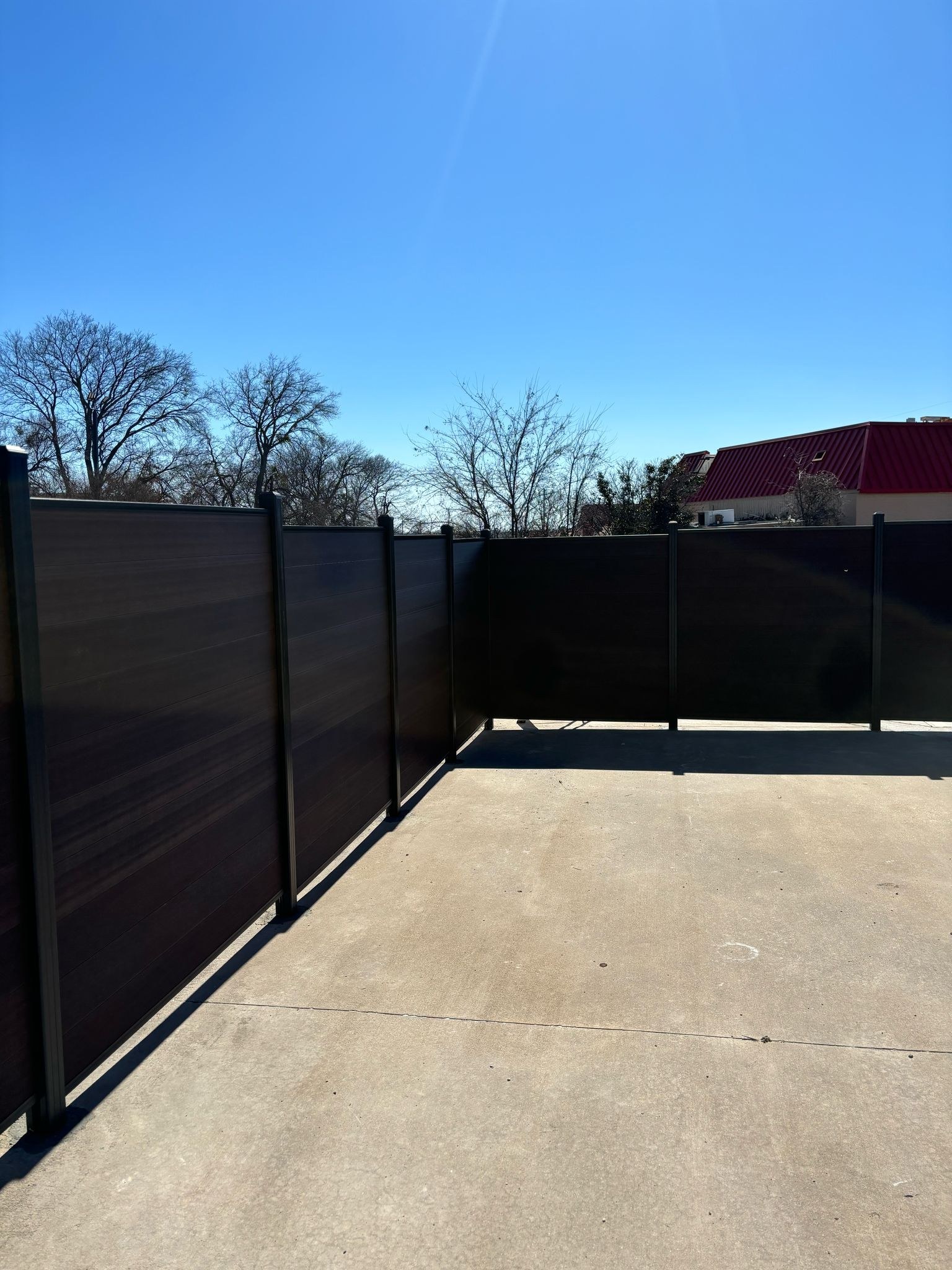
Composite fence boards are wood fiber or wood flour mixed into a plastic matrix — polyethylene, PVC or polypropylene — and pushed through a die (extruded) into a board shape. The USDA says the wood content usually runs less than 60% by weight. That blend lands the material between solid wood and plastic on strength and stiffness, and it resists decay and moisture-driven swelling better than solid wood does. It costs more than vinyl, which is a single extruded plastic with no wood in it at all — a simpler material to make.
Sources: USDA Forest Products Laboratory, Wood Handbook (FPL-GTR-282, 2021), Ch. 11, 12, 14, 16; Trex Fence Care.
The actual ingredient mix
A composite (wood-plastic composite, or WPC) board is manufactured by combining wood flour, fibers or particles with a thermoplastic — polyethylene, PVC or polypropylene — then extruding the mix through a die into a board profile. The plastic forms a continuous matrix; the wood acts as a reinforcement or filler inside it. The USDA Wood Handbook puts the wood (lignocellulosic) content at typically less than 60% by weight in commercially available composites.
Beyond that, formulas vary by brand: some manufacturers add inorganic fillers (glass, clay, minerals) alongside the wood, a coupling agent to bond the wood and plastic together, and a separate, more durable surface layer (a “cap”) for color and wear resistance. Because every formula is proprietary, the USDA’s own advice is to get exact design data from the manufacturer rather than assume one brand behaves like another.
How that mix behaves, mechanically
Mixing wood into plastic changes how the material performs, in measurable ways the USDA Wood Handbook lays out:
- Stiffness lands in the middle. Composite lumber is generally less stiff than solid wood, but stiffer than unfilled plastic.
- Adding wood changes density. In a study the Handbook cites (Stark & Rowlands 2003), plain polypropylene has a specific gravity of 0.90; adding 40% wood flour raised it to 1.05, and 40% wood fiber raised it to 1.03.
- There’s a tradeoff. The same study found that adding wood fiber or flour to polypropylene improved strength and stiffness, but reduced impact resistance compared with the unfilled plastic. A coupling agent (to bond the wood and plastic) improved mechanical properties further without changing the density.
- Moisture performance improves. Compared with solid wood, wood-plastic composites have better decay resistance and dimensional stability when exposed to moisture — part of why they’re marketed as low-maintenance.
Composite or vinyl: which fits your priorities?
A quick way to think about the tradeoff — not a quote.
Based on the tradeoffs on this page: composite looks more like wood but needs the twice-a-year cleaning routine and costs more than vinyl; vinyl has no wood content to feed mildew and is usually the lower-cost synthetic option, but looks less like real wood. Neither is a priced estimate — we give an exact number after an on-site visit. See composite vs vinyl for the fuller comparison.
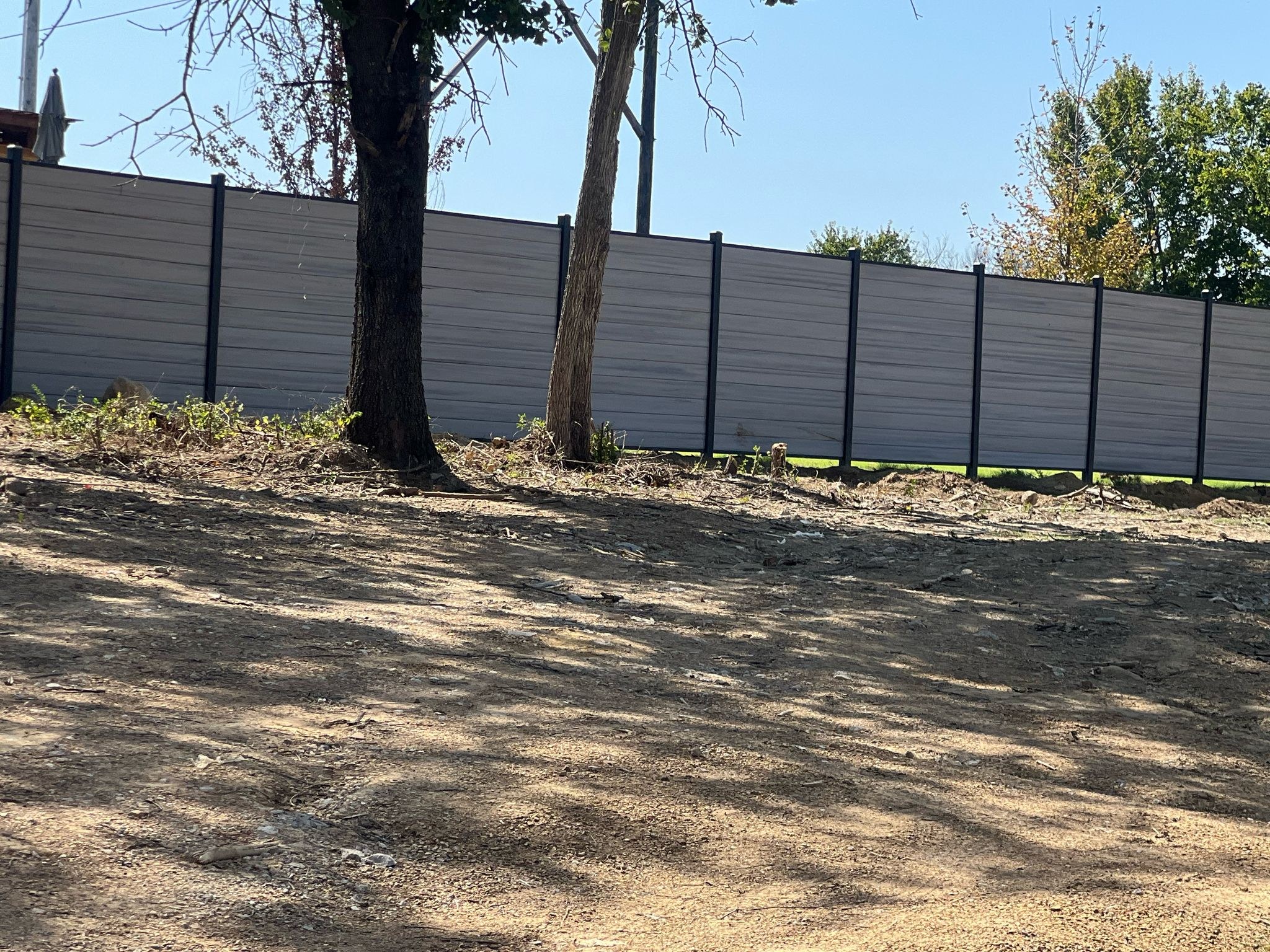
Does it really not rot — and can you change the color later?
Decay: composite resists decay better than solid wood, per the USDA, but it is not immune. Decay fungi can still form voids inside the material once moisture gets in through a crack in the surface, and humid air alone is enough to support some mold growth — which is why the cleaning schedule below matters more in Galveston’s climate than it would in a dry one.
Refinishing: composite is built to be cleaned, not painted or stained. The USDA notes that film-forming finishes (paint, solid-color stain) may have trouble adhering to WPC — if you want to apply one, test adhesion first with a tape pull-off test. Solvent-based penetrating stains are more likely to take than waterborne ones. If a board has a durable capped surface layer, it’s generally not meant to be refinished at all; check the manufacturer’s warranty before trying.
More on the cleaning routine and Gulf Coast humidity: composite fence fading and mold in a humid climate; for post spacing and the full install drawings, see composite fence installation.
What Galveston customers say
5.091 Google reviews · read them all on Google
had an excellent experience with mustang fencing From the initial consultation to the final installation, the team was professional, punctual, and attentive to detail. They helped me choose the perfect fence style to match my property and ensured everything was installed with precision. The quality of materials is top-notch, and the fence has completely transformed the look and security of my home. I highly recommend mustang services to anyone looking for reliable and high-quality fencing services!
White PVC fence. Beautifully done! Thanks Mustang it’s really looks perfect.
I am so pleased with the fence!! Your solution was exactly the right one and the team did a highly professional job. Frankly, I was amazed at how clean the job site was at the completion of the project. Feel free to list me as a reference and a very happy customer. Thanks again and please let the men know That I appreciate their hard work and quality craftsmanship.
Reviews shown word for word from the Mustang Fencing Services Google Business Profile (Galveston), captured 2026-10-12.
Questions we get about this
What is composite fencing actually made of?
Why does composite cost more than vinyl?
Is composite as strong as solid wood?
Does composite fencing really not rot?
Can I paint or restain a composite fence if I don’t like the color?
Is composite or vinyl better for Galveston’s humidity?
Sources
Checked October 16, 2026. Rules change, so confirm with the City before you build.
- USDA Forest Products Laboratory, Wood Handbook (FPL-GTR-282, 2021) — Ch. 11-12: WPC definition, wood content by weight, manufacturing by extrusion, stiffness vs. wood and plastic, Table 12-9 specific gravity data; Ch. 14: decay voids and mold in humid air; Ch. 16: finishing WPC, adhesion of film-forming finishes.
- Trex Fencing, Fence Care — Cleaning schedule for composite boards in humid climates (reused citation already vetted on the composite-fence service page).
- City of Galveston Land Development Regulations, Sec. 2.501 — Residential fence height rules, which apply the same regardless of fence material.
Deciding between composite, vinyl and wood?
We’ll walk your fence line, show you real samples of each material, and give you a written price for whichever you choose. Free on-site estimates across Galveston County.