
Does an aluminum fence rust in Galveston’s salt air?
No — not in the way steel or iron does, because rust is iron oxide and aluminum has no iron in it. What aluminum does instead is form its own thin, stable oxide layer the moment it meets air, and that layer is what actually faces the Gulf Coast’s salt. Here is the real chemistry, the real coating standard to ask for, and what can still go wrong even though rust itself can’t.
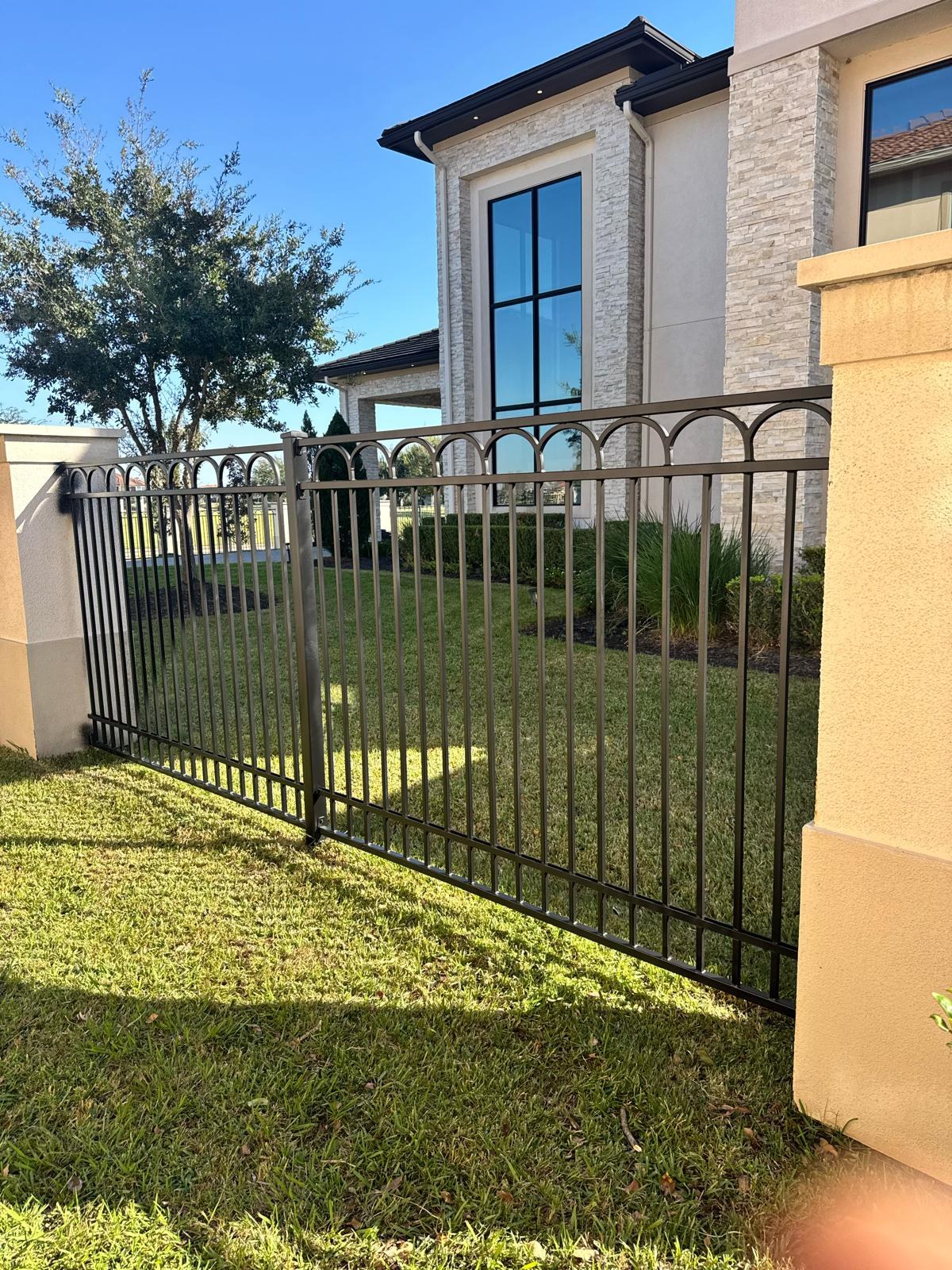
Rust is iron oxide, and it can only form on metals that contain iron. Aluminum doesn’t, so it is chemically incapable of rusting in the traditional sense. What happens instead: aluminum exposed to oxygen forms a thin layer of aluminum oxide almost immediately, and unlike rust, that layer is stable and tightly bonded — it blocks further oxygen and moisture from reaching the metal underneath instead of flaking off and exposing fresh surface. The powder-coat finish on top of that is a separate question, and it has a real standard behind it: the premium AAMA 2605 finish grade is tested to a 4,000-hour ASTM B117 salt-spray exposure with no more than a few blisters and a minimum scribe/cut-edge corrosion rating of 7. Ultra Aluminum’s manufacturer warranty backs its Powercoat finish for life against cracking, peeling or chipping even at coastal addresses — it just asks for cleaning every 3 months within about 1,500 ft of salt water, instead of twice a year further inland.
Sources: Ultra Aluminum Mfg. manufacturer warranty (lifetime Powercoat coverage); AAMA 2603/2604/2605 finish criteria (ASTM B117 salt-spray hours); Ameristar Montage residential warranty (steel comparison).
Why aluminum can’t rust the way steel does
Rust is a specific chemical compound — iron oxide — and it only forms where there is iron to react with oxygen. Aluminum fencing has no iron in it, so the reaction that produces rust simply has nothing to work with. That is not a marketing simplification; it is the actual chemistry, and it is the entire reason aluminum fencing exists as a rust-proof category rather than a rust-resistant one.
Aluminum does still react with oxygen — almost instantly, on any exposed surface. The difference is what that reaction produces: a thin, hard, tightly-bonded layer of aluminum oxide that clings to the metal instead of flaking away. The American Galvanizers Association’s own guidance on aluminum in contact with other metals notes that this oxide film also acts as “an insulating film on the surface of the aluminum,” which is part of why aluminum resists galvanic reactions with nearby metals too, not just plain oxidation.
Galvanic risk at the hardware, by what it’s paired with
| Paired with aluminum | Relative galvanic risk | Why |
|---|---|---|
| Stainless steel or aluminum-rated fasteners | Low | Minimal electrode-potential difference; this is what quality installers use for exactly this reason |
| Zinc-galvanized steel hardware | Low to moderate | AGA: zinc and aluminum sit close in electrode potential, so there is “only a slight chance of a reaction,” helped further by aluminum’s own insulating oxide film |
| Plain/uncoated steel or copper-alloy hardware | Higher | Larger electrode-potential gap; the AGA’s general fix for any dissimilar-metal pairing like this is a physical insulating barrier between the two metals |
American Galvanizers Association, “What happens when I put galvanized steel together with aluminum parts…” (electrode-potential-in-seawater table and galvanic-cell explanation).
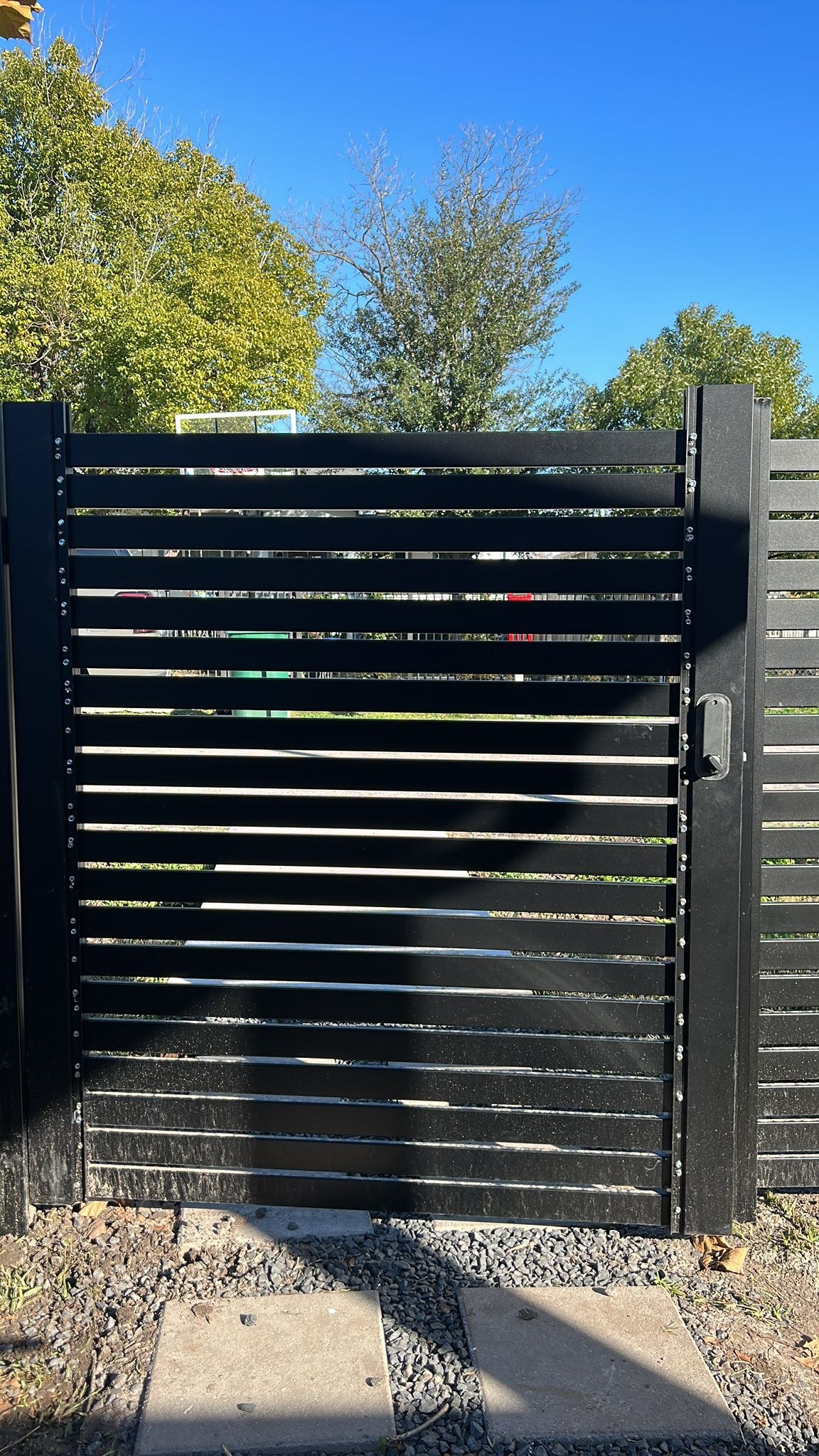
What can still happen, even though rust can’t
Powder-coat scratches. A gouge down to bare aluminum won’t rust — the exposed metal self-oxidizes on the spot — but it can leave a dull gray-white patch that looks different from the surrounding gloss finish until it’s touched up with matching powder-coat.
Chalking or fading. UV exposure over many years can dull a powder-coat finish’s sheen, especially on darker colors in direct Gulf Coast sun. This is a cosmetic finish issue, not a structural one — see the AAMA tiers above for what the finish itself is rated to withstand before it starts to show wear.
Salt residue buildup. Wind-blown salt can accumulate on the surface in coastal locations. It won’t corrode the aluminum, but it’s exactly what the cleaning schedule below exists to rinse off, since the manufacturer warranty’s coverage depends on following it. For how aluminum compares to wrought iron on hardware, weight and cost, see aluminum fence vs. wrought iron; for hurricane-specific wind performance, see aluminum fencing in Gulf Coast salt air and hurricane wind.
How often should an aluminum fence actually be rinsed?
Aluminum itself doesn’t need the cleaning — its finish does, to stay looking new. This follows the Ultra Aluminum manufacturer warranty’s own cleaning requirement, which varies by distance from salt water.
Reads the Ultra Aluminum Mfg. manufacturer warranty’s cleaning-guideline schedule: every 3 months within 1,500 ft of salt water, every 6 months beyond that, monthly with ice-melt exposure (whichever is most frequent applies). Follow your own fence maker’s published schedule if different.
What Galveston customers say
5.091 Google reviews · read them all on Google
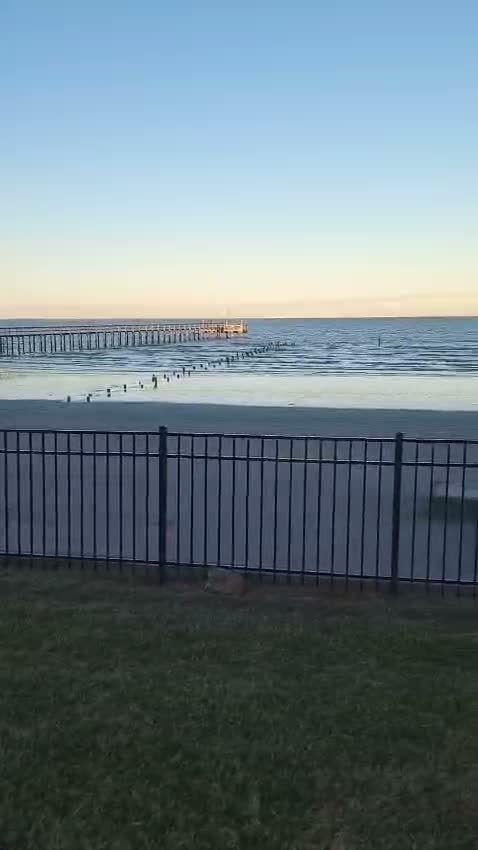
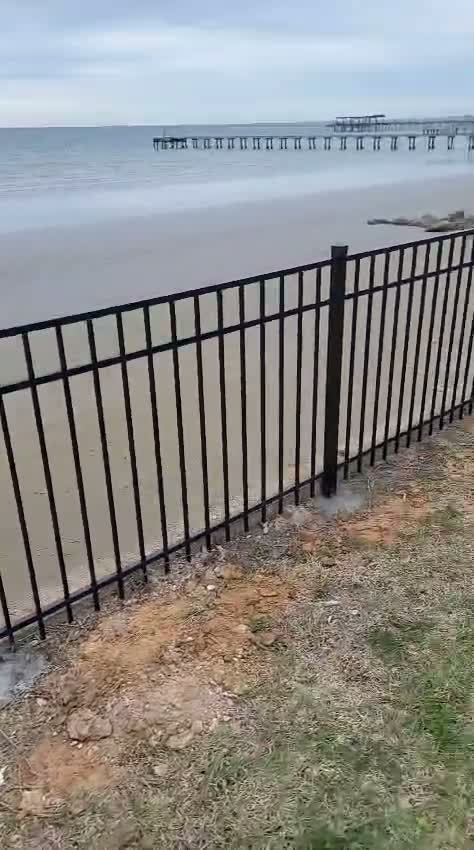
We just installed iron gate and it looks amazing thank you very much mustang fencing .
Mustang’s team installed iron fence for me and did an absolutely incredible job! I would recommend this company to anyone I know!
chainlink fence installation by mustang fencing, looks really great, thanks.
Reviews shown word for word from the Mustang Fencing Services Google Business Profile (Galveston), captured 2026-10-12.
Questions we get about this
Does aluminum fencing rust?
Can an aluminum fence be scratched down to bare metal?
What powder-coat finish grade should I ask for on a coastal aluminum fence?
Is there a galvanic corrosion risk between aluminum panels and the hardware holding them?
Does an aluminum fence need more maintenance near Galveston’s salt water?
Is aluminum’s coastal warranty advantage real, or just marketing?
Sources
Checked October 15, 2026. Rules change, so confirm with the City before you build.
- Ultra Aluminum Mfg. Limited Warranty (Lifetime Coverage) + Cleaning Guidelines — Lifetime Powercoat finish warranty against cracking/peeling/chipping; coastal cleaning schedule (3/6/1-month intervals); 10-year commercial warranty term.
- Ultra Aluminum 3-Part Specification — Die-cast accessory alloy requirement (A360.0 per ASTM B85) specified for corrosion resistance.
- AAMA 2603 / 2604 / 2605 Finish Criteria (reproduced reference, 2016) — ASTM B117 salt-spray exposure hours and blister/scribe-rating pass criteria by AAMA finish tier.
- American Galvanizers Association — galvanized steel in contact with aluminum — Electrode-potential table for metals in seawater; explanation of galvanic cells and aluminum’s own insulating oxide film.
- Ameristar Montage Residential Lifetime Limited Warranty (welded ornamental steel fence) — Used only as a labeled steel-fence contrast: warranty reduced to 5-year pro-rated within 1 mile of salt-water coastline.
Thinking about aluminum for a Galveston property?
We’ll walk your site, talk through finish grade and hardware, and put the real numbers on a written quote. Free on-site estimates across Galveston and Brazoria Counties.