
Aluminum Fence vs. Wrought Iron: Which Should You Choose?
Almost none of the “wrought iron” fencing sold today is actually wrought iron — it’s mild steel built to look the same way. Here is what each material really is, how Galveston’s coastline shows up in two real manufacturer warranties, and which one fits your property.
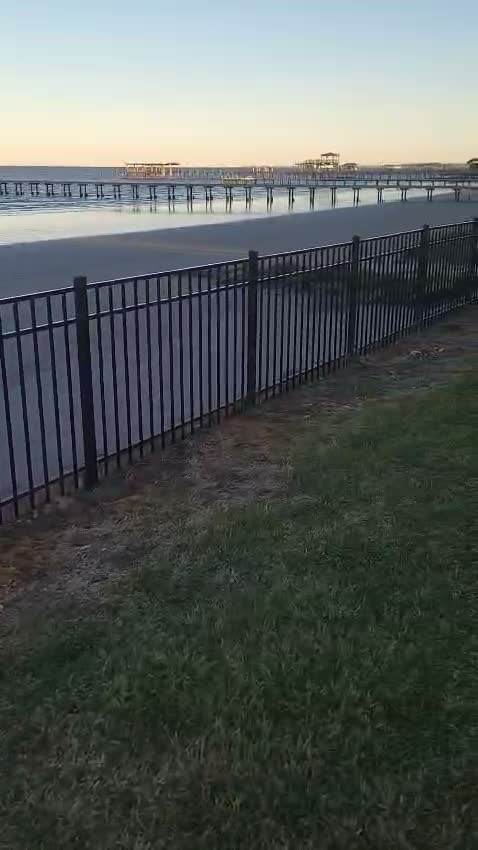
Almost none of the fencing sold today as “wrought iron” is actually wrought iron. The National Park Service’s guide to historic metals notes that very little true wrought iron is still produced, and nearly everything marketed under that name is mild steel shaped to look the same way. Real wrought iron is forged, nearly pure iron with under 0.035% carbon; mild steel runs 0.06–2% carbon. Aluminum fencing in the same styles has no iron at all, so it can’t rust, but it comes with its own coastal fine print. On Galveston’s coastline, both published warranties we reviewed treat “near salt water” as a real exclusion, not a footnote.
Sources: NPS, Metals in America’s Historic Buildings, Part II; Fortress Building Products Fencing Limited Warranty (2024-09-16); Ultra Aluminum warranty.
What “wrought iron” fencing actually is today
Fences, gates and railings have been a traditional use of wrought iron since the 1700s — the National Park Service’s guide to historic metals in American buildings traces ornamental wrought-iron fences and gates to 18th-century designs that spread from England to the American colonies. Genuine wrought iron is forged, not cast: nearly pure iron with under 0.035% carbon, carrying 1–4% silicate slag that gives it a fibrous, layered grain.
That material has mostly disappeared from production. The same NPS reference states plainly that “very little wrought iron is produced” today and “almost all that is sold as wrought iron is really mild steel.” In nearly every case, the picket in a modern “wrought iron” fence is welded mild steel built in a historic style, not the forged iron the name describes — a completely different product from an aluminum fence built in the same spear-top or scrollwork look. See iron fences for Mustang’s steel ornamental line and the full metal fence comparison for how all of these stack up.
What the aluminum alternative is built from
Aluminum fencing in matching finial, spear-top and scrollwork styles is covered by ASTM F2957, a standard that lists “aluminum wrought iron fence” among the trade names these systems are sold under. One published specification (Ultra Aluminum) calls for 6063-T5 alloy with a 35,000 psi minimum yield, 1″ pickets with a .062″ wall, 1⅝″ rails, and 2½″ posts with a .075″ wall set 71½″ on center; gate posts step up to 4″ or 6″ square.
The assembly method is the clearest construction difference from a welded steel panel. In that specification, pickets are fixed to the rails with stainless screws on one side only, and “welding the pickets to the rails is not permitted,” while gate frames are fully welded. Ornamental steel sold as wrought-iron style is typically welded at every picket instead, which is part of why it reads as heavier and more rigid. Ask to see both constructions before you decide — see our aluminum gates page for matching gate hardware.
Coastal warranty checker: aluminum vs. steel “wrought iron style”
Move the slider to roughly how far your property sits from salt water. You’ll see how two real, published warranties — one for ornamental steel, one for ornamental aluminum — treat that distance.
Steel: Fortress Building Products Fencing Limited Warranty (doc-02, 2024-09-16) §I(c) — coverage cut to 25% of the listed term under 1 mile from a salt water coastline, 50% from 1–10 miles, full term at 10+ miles. Aluminum: Ultra Aluminum’s published warranty requires cleaning every 3 months within 1,500 ft of salt water (6 months beyond), and separately excludes “extreme environmental conditions such as coastal installations” with no exact mileage given. A planning aid, not a quote — ask for the written warranty on the exact product you’re buying.
How distance from salt water changes a steel fence warranty
Share of a 20-year ornamental steel warranty that still applies, under one manufacturer’s own distance rule for a salt water coastline.
Rust, maintenance and the coastal fine print
Rust is iron oxide, so a steel “wrought iron style” fence can rust anywhere its finish is broken, and the published steel and aluminum warranties we reviewed lean on a similar escape clause: Fortress Building Products excludes “extreme environmental conditions” and requires “reasonable maintenance” to keep its steel fencing warranty valid, while Ultra Aluminum excludes “extreme environmental conditions such as coastal installations” outright. Neither document defines exactly where “extreme” starts beyond the distance and cleaning-interval rules above.
Aluminum has no iron to rust, but salt left on a chipped powder coat still attacks the metal underneath, and any steel hardware touching the fence (hinges, brackets) can corrode on its own. The American Galvanizers Association says galvanized steel in contact with aluminum has “only a slight chance of a reaction,” and that the safest practice is an insulating barrier between dissimilar metals — worth asking about on any gate where the two materials meet.
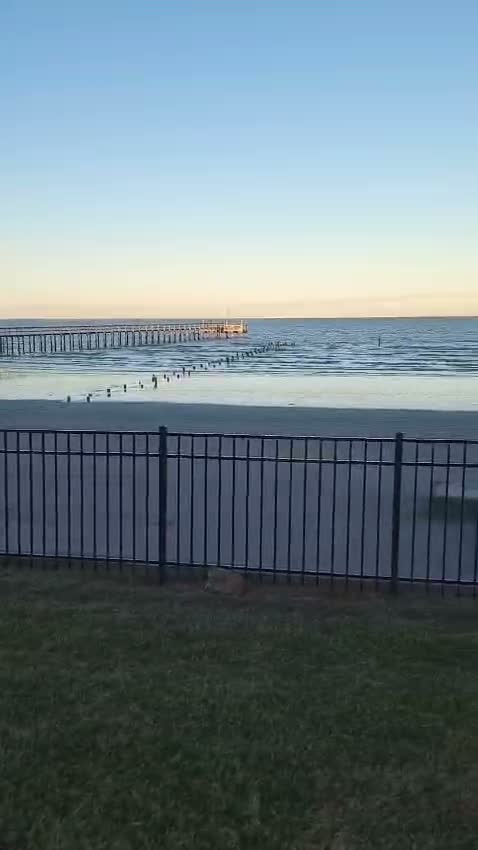
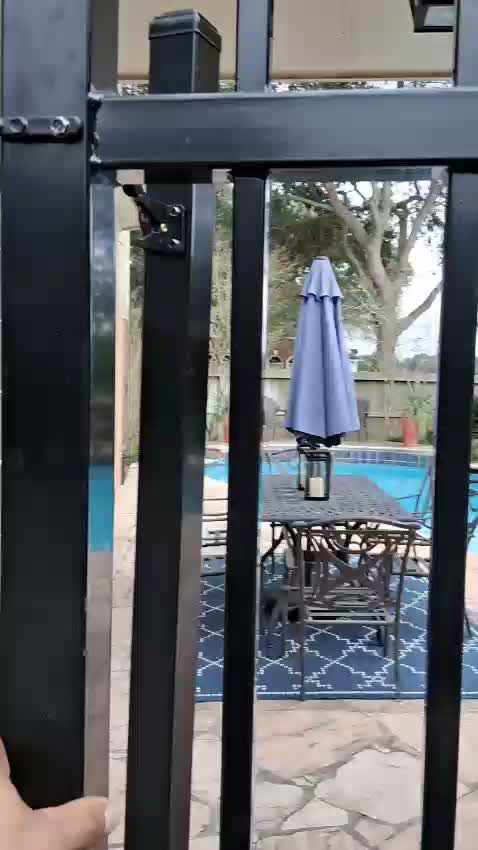
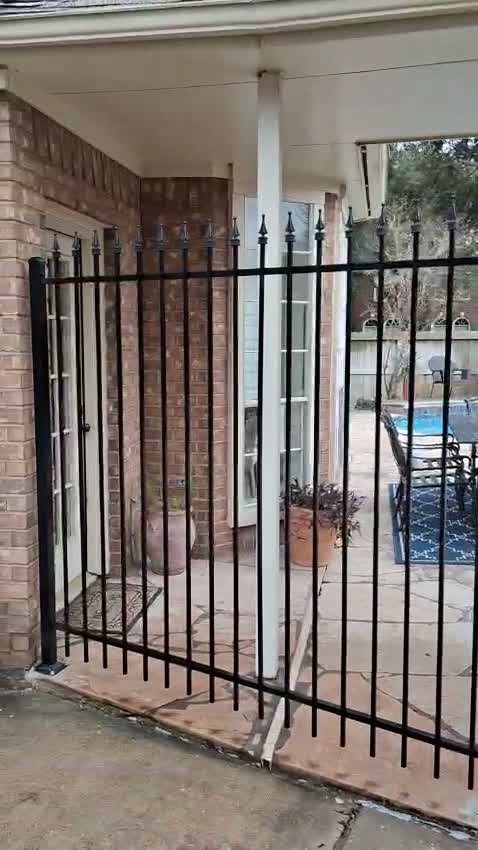
Strength, security and style
Steel and true wrought iron are generally harder to bend or push through than aluminum, which is a softer metal more prone to denting under a hard impact — a vehicle, a fallen limb — though that’s rarely a practical issue on a typical residential perimeter fence. When wrought-iron-style steel does eventually fail, it tends to show warning signs first (visible rust, bending) rather than failing all at once.
On style, the two are built to look the same. ASTM F2957’s own naming for aluminum systems — “aluminum wrought iron fence” — exists because extrusion and powder-coating now reproduce finials, spear tops, scrollwork and arched gates that read as traditional ironwork from the street. If you want the forged, hand-worked look and are prepared for the repainting and rust treatment that goes with it, a steel or iron-style fence is the closer match. If you want that same look with aluminum’s coastal care routine instead of steel’s, aluminum is usually the better fit.
Three metals, side by side
| What it actually is | Carbon content | How a section is joined | One published coastal warranty rule | |
|---|---|---|---|---|
| Aluminum (“wrought iron style”) | 6063-T5 aluminum alloy; no iron (Ultra Aluminum spec; ASTM F2957) | 0% — no iron to rust | Pickets screwed to rails; gate frames welded (Ultra Aluminum spec) | Excludes coastal installations outright; cleaning every 3 months within 1,500 ft of salt water (Ultra Aluminum warranty) |
| Modern “wrought iron” (almost always mild steel) | Low-carbon steel, welded (NPS) | 0.06–2% | Typically welded at every picket | 20-year steel line drops to 25% of its term under 1 mile from salt water, 50% from 1–10 miles (Fortress warranty) |
| True (historic) wrought iron | Forged iron with 1–4% slag inclusions (NPS) | Under 0.035% | Hand- or machine-forged, not welded the same way | Not a current commercial product (NPS); 19th-century ironwork survives only where it has been maintained |
Sources: NPS, Metals in America’s Historic Buildings, Part II; Ultra Aluminum 3-part specification and warranty; ASTM F2957 abstract; Fortress Building Products Fencing Limited Warranty (doc-02, 2024-09-16).
What moves the cost, without guessing a number
We give a written price after a free on-site visit, because length, height, gate count, style complexity (a plain flat-top vs. scrollwork and finials) and site conditions move it for both materials. The bigger difference between aluminum and wrought-iron-style steel shows up after installation, not at the estimate: a steel fence that needs repainting or rust treatment on the coast carries an ongoing cost that a no-rust aluminum fence mostly avoids, and the warranty terms above show why the coast cuts both ways. For typical aluminum numbers, see aluminum fence cost per foot. Financing is available through the providers on our financing page, subject to credit approval.
What Galveston customers say
5.091 Google reviews · read them all on Google
We just installed iron gate and it looks amazing thank you very much mustang fencing .
Mustang’s team installed iron fence for me and did an absolutely incredible job! I would recommend this company to anyone I know!
had an excellent experience with mustang fencing From the initial consultation to the final installation, the team was professional, punctual, and attentive to detail. They helped me choose the perfect fence style to match my property and ensured everything was installed with precision. The quality of materials is top-notch, and the fence has completely transformed the look and security of my home. I highly recommend mustang services to anyone looking for reliable and high-quality fencing services!
Reviews shown word for word from the Mustang Fencing Services Google Business Profile (Galveston), captured 2026-10-12.
Questions we get about this
Is a "wrought iron" fence actually wrought iron?
Does aluminum fencing really look like wrought iron?
Which holds up better near Galveston’s salt water?
Is steel or aluminum stronger?
Will either material rust?
Do you install both?
Sources
Checked October 13, 2026. Rules change, so confirm with the City before you build.
- National Park Service, Metals in America’s Historic Buildings, Part II (Ch. 7, Iron and Iron Alloys) — wrought iron carbon content and forging; “almost all that is sold as wrought iron is really mild steel”; historic use in fences and gates.
- National Park Service, Preservation Brief 27: The Maintenance and Repair of Architectural Cast Iron — carbon content and relative corrosion resistance of cast iron, wrought iron and steel.
- Ultra Aluminum fence, rail and gate specification (Section 32 31 19) — 6063-T5 alloy; picket, rail and post sizes; 71½″ post spacing; screwed pickets, welded gate frames.
- Ultra Aluminum warranty — coastal installations excluded; cleaning every 3 months within 1,500 ft of salt water, every 6 months beyond.
- Fortress Building Products Fencing Limited Warranty (doc-02, 2024-09-16) — 20/10/1-year steel fencing terms, cut to 25% within 1 mile of a salt water coastline and 50% from 1–10 miles.
- ASTM F2957 (abstract) — ornamental aluminum fence systems, including “aluminum wrought iron fence.”
- American Galvanizers Association, Galvanized Steel with Aluminum Parts — slight chance of reaction between galvanized steel and aluminum; insulate dissimilar metals.
- City of Galveston Land Development Regulations, §2.501 — fence height limits: 4 ft solid or 5 ft if ≥60% transparent in front yards; up to 8 ft side/rear.
Want to see both in person before you decide?
We’ll bring samples of both finishes, show you the published warranty for the exact product, and give you a written price. Free on-site estimates across Galveston County.