
Does Vinyl Fencing Hold Up in Galveston’s Salt Air and Humidity?
Near-constant humidity, salt-laden air and intense UV at the same time make the coast a tougher test than an inland yard. Here’s exactly which failure modes vinyl avoids, where it still shows wear, and the maintenance routine that keeps it looking right — sourced to the material’s own spec and a manufacturer’s published cleaning guidance, not a sales pitch.
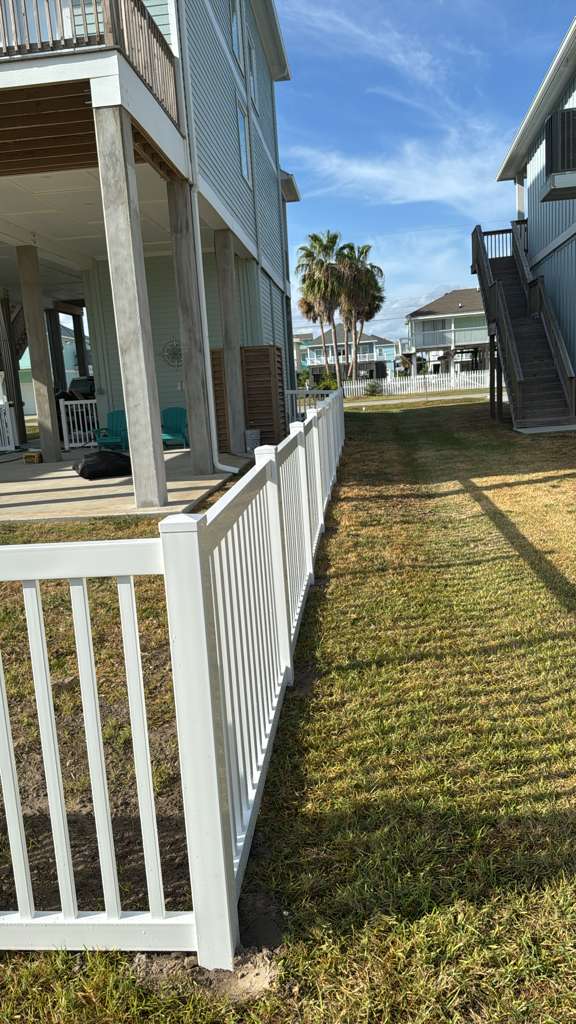
Vinyl resists the two failure modes that hit other materials hardest here: it doesn’t rust like metal and doesn’t absorb moisture and rot like wood. Rigid PVC fence profiles (defined by ASTM F964) are a non-metallic, non-porous plastic, so salt in the air has nothing to corrode and humidity has nothing to soak into. That doesn’t make it maintenance-free — salt residue that isn’t rinsed off can dull the surface over time, and UV exposure is a factor everywhere on the Gulf Coast. Facts below, sourced to the material spec and a manufacturer’s own cleaning guidance, not marketing copy.
Sources: ASTM F964-13 (Standard Specification for Rigid PVC Exterior Profiles Used for Fencing and Railing), astm.org (retrieved Sept. 26, 2026); Illusions Fence FAQ, illusionsfence.com (retrieved Sept. 26, 2026); American Galvanizers Association, “Performance of Galvanized Steel in Different Environments” (retrieved Sept. 25, 2026).
Why this is one of the few places material really decides the comparison
Galveston Island and the surrounding coastal communities deal with a combination most inland properties don’t: near-constant humidity, salt-laden air, and intense summer UV, all at once. Vinyl’s non-porous, non-corrosive surface is a real advantage here — unlike metal, which can corrode from salt exposure, and unlike wood, which absorbs moisture and is more prone to rot and warping in sustained humidity. Drawing VF-1 lines up what each material is actually up against.
Where it still shows wear
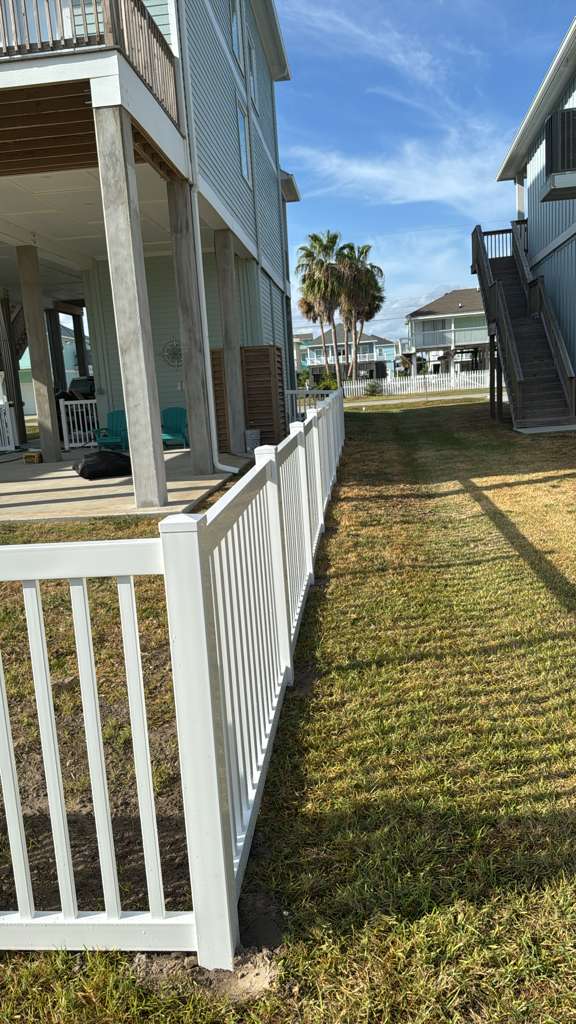
Coastal conditions aren’t zero-effect. Salt residue that isn’t periodically rinsed away can build up and contribute to a duller, hazier surface over the years — not structural damage the way corrosion would be on metal, but a visible change. UV intensity is constant everywhere on the Gulf Coast, not just at the waterline, so it affects inland vinyl fencing too. Choosing a higher-grade product and keeping up a simple rinse routine are the two levers that actually matter.
What’s a sensible rinse-down routine for my coastal vinyl fence?
Answer two questions about your property to see a general rinse-down guide and the cleaning method the manufacturer recommends. This isn’t a lab-tested schedule — it’s general guidance based on distance from the water.
General guidance only, not a tested interval: salt deposition is highest closest to open water and with direct spray exposure. Cleaning method: Illusions Fence FAQ, “How do I clean my Illusions vinyl fence?” (illusionsfence.com, retrieved Sept. 26, 2026) — a non-abrasive, car-wash-type soap with a soft cloth or brush; the manufacturer warns the wrong cleaner or washer can damage the surface.
What else affects how a coastal vinyl fence looks and lasts
| Factor | What it affects | Ask your installer |
|---|---|---|
| Distance from the water | How much salt residue accumulates between rinses | A rinse schedule suited to your specific lot |
| Panel material grade | Dimensional tolerances and weatherability tested under ASTM F964 | Whether the product meets F964 |
| Maintenance routine | Surface haze and appearance over time | A simple rinse + non-abrasive soap routine |
| Wind bracing / post spacing | Structural performance in Gulf-Coast wind, which F964 does not test | A wind-rated install method for your location |
ASTM F964-13; Illusions Fence FAQ.
What customers say
5.091 Google reviews · read them all on Google
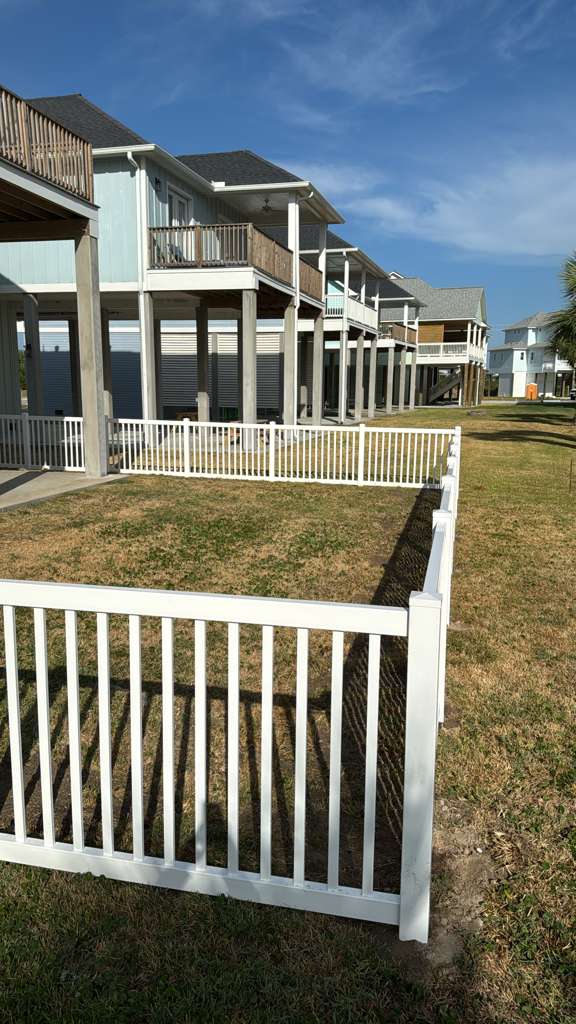
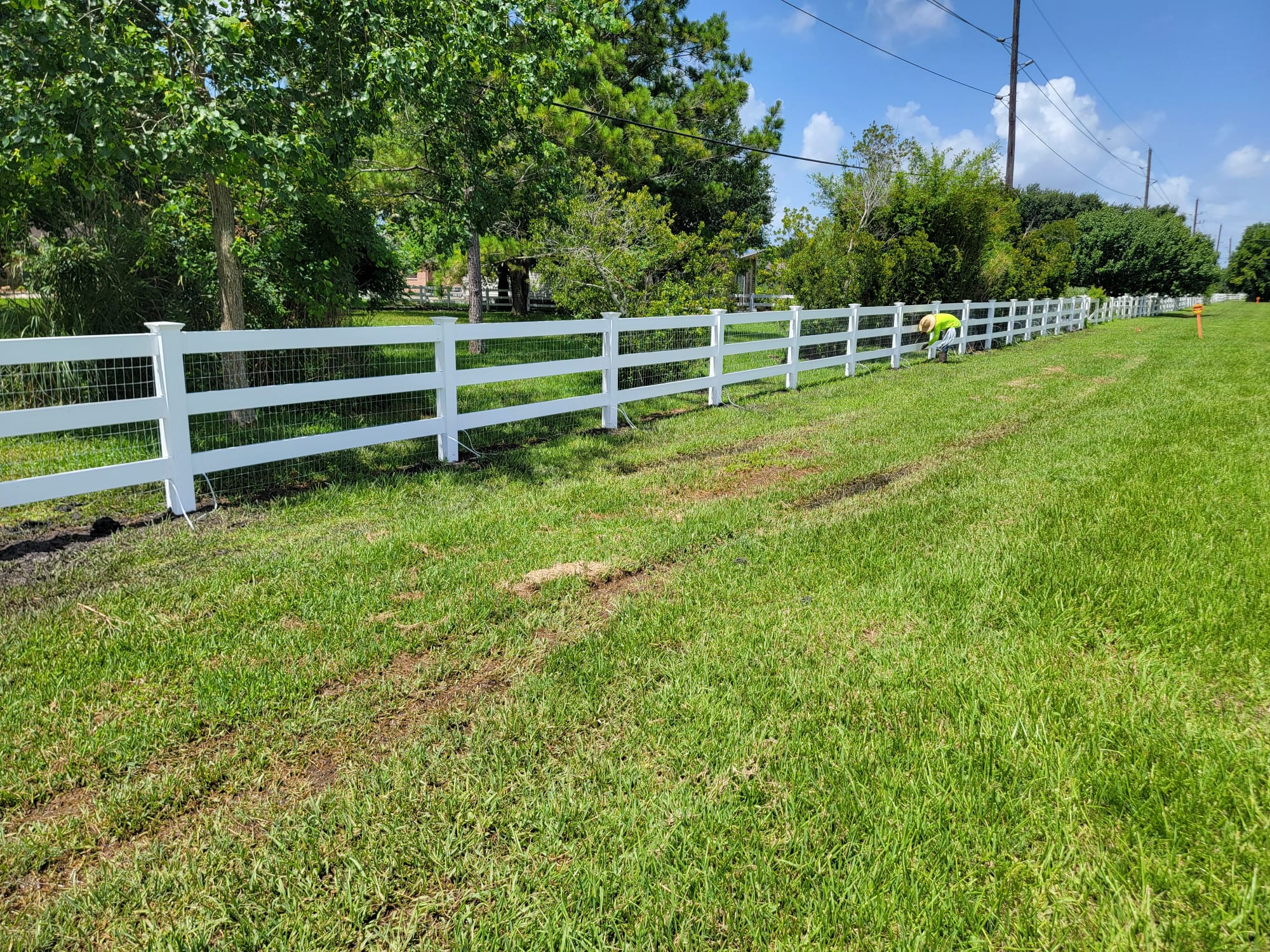
White PVC fence. Beautifully done! Thanks Mustang it’s really looks perfect.
had an excellent experience with mustang fencing From the initial consultation to the final installation, the team was professional, punctual, and attentive to detail. They helped me choose the perfect fence style to match my property and ensured everything was installed with precision. The quality of materials is top-notch, and the fence has completely transformed the look and security of my home. I highly recommend mustang services to anyone looking for reliable and high-quality fencing services!
I am so pleased with the fence!! Your solution was exactly the right one and the team did a highly professional job. Frankly, I was amazed at how clean the job site was at the completion of the project. Feel free to list me as a reference and a very happy customer. Thanks again and please let the men know That I appreciate their hard work and quality craftsmanship.
Reviews shown word for word from the Mustang Fencing Services Google Business Profile (Galveston), captured 2026-10-19.
Questions we get about this
Does vinyl fencing rust near the coast?
Will humidity make a vinyl fence rot or warp?
How often should I rinse a vinyl fence near the beach?
What should I clean a vinyl fence with?
Does a vinyl fence need a special wind rating on the coast?
Sources
Checked October 21, 2026. Rules change, so confirm with the City before you build.
- ASTM F964-13, Standard Specification for Rigid PVC Exterior Profiles Used for Fencing and Railing — Defines PVC fence profiles as a non-metallic plastic material; Note 2 states windload/loadbearing characteristics are not addressed by this spec.
- Illusions Vinyl Fence, FAQ: “How do I clean my Illusions vinyl fence?” — Manufacturer cleaning guidance: a non-abrasive, car-wash-type soap with a soft cloth or brush; warns the wrong cleaner/washer can damage the surface.
- American Galvanizers Association, “Performance of Galvanized Steel in Different Environments” — Marine-atmosphere corrosion is chloride-driven; galvanizing forms a protective patina that slows but does not eliminate it — used for the metal side of the comparison drawing.
Want a straight answer for your property?
We’ll look at your lot’s distance from the water and recommend a vinyl product grade and maintenance routine that actually fits it — no invented numbers, just a real on-site estimate.