
Is a Composite Gate Worth the Extra Cost Over Wood?
Composite doesn’t get stained or painted, and a good composite gate hangs on a steel frame. A wood gate can be lovely, but its finish wears out on a schedule the U.S. Forest Products Laboratory has measured. Here’s what each one asks of you, what the warranty expects, and a planner that checks your two quotes against the upkeep you’d skip.
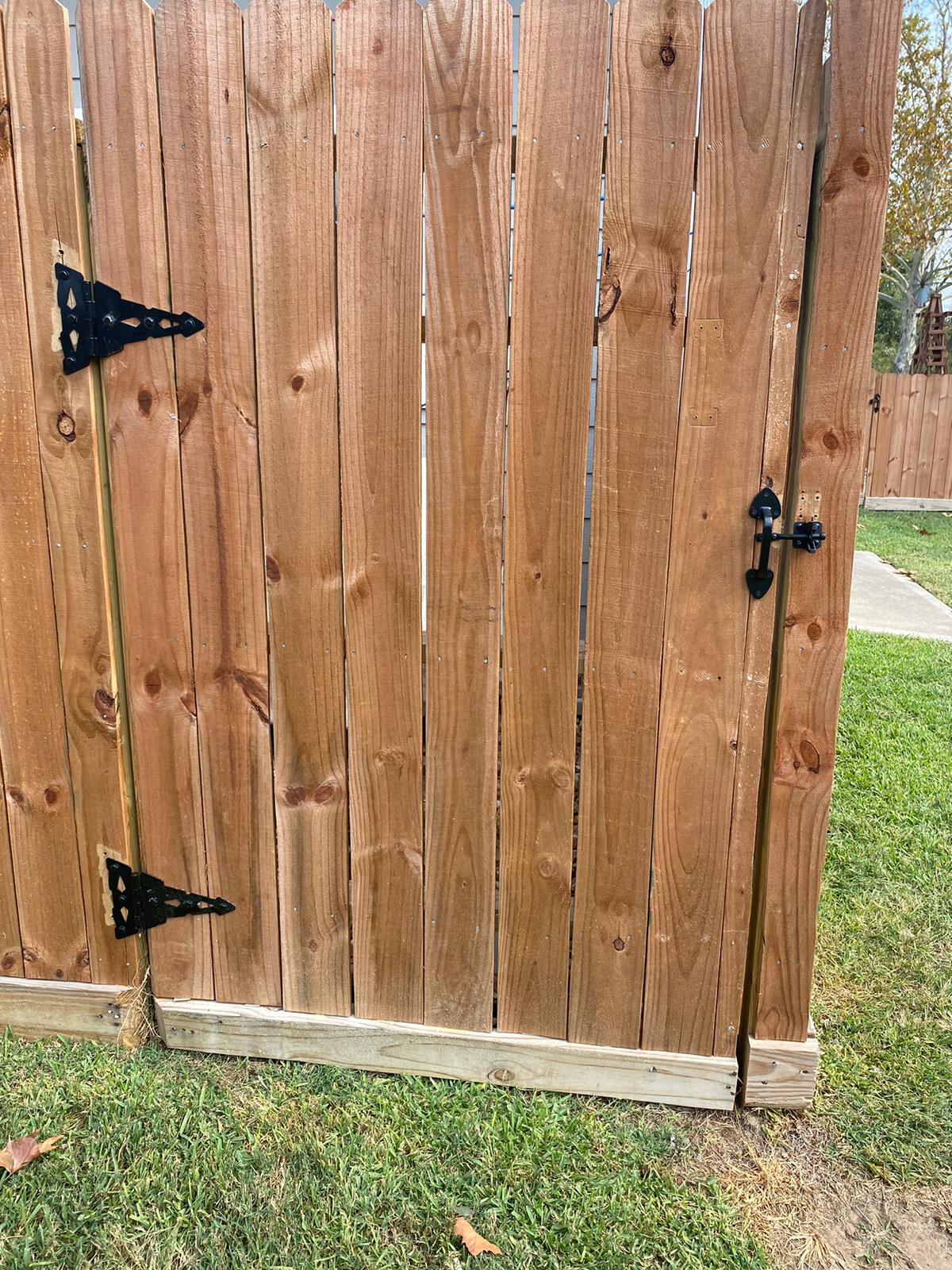
Usually yes, if you’ll keep the gate long enough to skip several refinishing rounds, and if the composite gate has a real steel frame. Trex says its composite needs no staining or painting, just a clean in spring and fall, and it backs its gates with a 25-year limited residential warranty against defects, fading and staining. A wood gate’s finish wears out on a cycle. For semitransparent stain on smooth pine, the Forest Products Laboratory puts it at 2–3 years. On that schedule, 15 years means 5 to 7 more rounds. Composite is “considerably less stiff than solid wood”, which is why a good composite gate is built around a welded galvanized steel frame. Check that frame before you compare prices. Put your two quotes in the planner below to see where your break-even falls.
Sources: USDA Forest Products Laboratory, Wood Handbook FPL-GTR-282 (2021), chapters 11, 12, 14 and 16; Trex Fencing gate page and care guide; Trex Seclusions gate installation guide. Read September 27, 2026.
What you’re paying for with composite
“Composite” here means wood-plastic composite. The Forest Products Laboratory’s Wood Handbook describes it as plastic in a continuous matrix, with wood fiber or flour as the filler, “typically less than 60% by weight”. Trex says its fencing is made from 95% recycled material, reclaimed wood fiber and recycled plastic film. The plastic is what keeps water out of the wood. Compared with solid lumber, the handbook says composites have “better decay resistance and dimensional stability when exposed to moisture”.
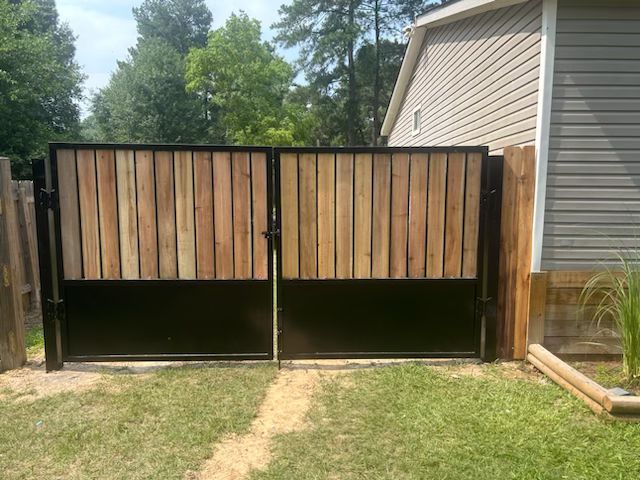
The same page gives the catch: most composites are “considerably less stiff than solid wood”. A composite board can’t carry a gate the way a wood rail and brace can. So a well-made composite gate is really a steel gate with a composite skin. Trex builds its Seclusions gate around “a welded internal 1¼″ square galvanized steel frame”, and its Horizons gate on a powder-coated galvanized steel frame, with stainless components offered for coastal installations. The kits also come with an anti-sag cable and steel stiffeners for the hinge post.
That changes the question. You aren’t comparing boards with boards. You’re comparing a finished steel-framed gate that needs washing with a wood gate that needs a new coat every few years. See composite gate installation for opening sizes and how the frame is hung, and what composite fencing is made of for the material itself.
The upkeep gap, in years
This is where composite earns its price, so it’s worth counting instead of guessing. The Wood Handbook’s Table 16-2 lists how long exterior finishes last on different wood surfaces:
- Smooth, flat-grain pine: semitransparent stain 2–3 years (the table rates it “low” for this surface), solid-color stain 6–8, paint 6–10.
- Saw-textured pine: semitransparent stain 4–7 years, solid-color stain 8–10, paint 8–12. Rough surfaces hold more finish.
- Cedar: semitransparent stain 2–4 years smooth, 4–8 saw-textured. Paint lasts up to 15–20 years on saw-textured cedar.
Those figures are for siding at an average U.S. location, and the handbook adds that “expected life depends on climate and exposure”. A gate isn’t listed. It faces the weather on both sides and gets handled every day, and a Galveston gate gets full sun and wet air. So read the table as a best case. The handbook also says mildew on the surface “usually indicates the need for refinishing”, and that’s a common sight on the coast.
Leaving wood bare isn’t free either. In the laboratory’s outdoor tests, the soft earlywood of Southern Pine wore away about 0.3 mm in 4 years and 0.7 mm in 10. The wood weathers grey and rough. And wood only decays when it gets wet enough, above about 30% moisture. The handbook says that happens when wood is “in contact with wet ground”, which is why the bottom of a wood gate and its posts go first.
Composite’s side of the ledger is short. Trex’s care guide says to clean it just after installation, then “on a semi-annual basis — typically spring and fall”, with soap, water and a soft-bristle brush. Proper care is a condition of the warranty. For how the two materials weather side by side, see composite vs vinyl and composite fading and mold in humid weather. For wood care, see fence staining and sealing.
Refinishing rounds in 20 years, at the short end of each service life
Rounds after the first coat = 20 ÷ shortest published life, rounded down. Composite: Trex says no staining or painting
Sag, weight and the posts
Every gate hangs off one post, so the hinge side decides how long it stays square. The composite gate kits deal with that head-on. The Trex Seclusions gate guide has a steel stiffener slid into the hinge post, and posts set in holes “30” deep (or to frost line) by 12” wide”, 2–3 days before the gate is hung so the concrete can cure. The hinges go about 6 in from the top and bottom. If the hinge post isn’t tied to a fence panel, the guide calls for a heavier stiffener or a concrete-filled post.
The same guide warns that, “due to weather and temperature changes, periodic hinge adjustment may be necessary” to keep the latch lined up. So composite isn’t set-and-forget at the hinges. It’s a wrench and a few minutes, not a sanding and staining weekend. A wood gate relies on its brace running the right way and on hinges and screws sized for the leaf. Wood posts at the ground line are the part most exposed to wet soil.
Either way, ask your estimate to spell out the post size, footing size and hinge model. See how much weight gate hinges can hold and how much gap to leave under a gate.
Composite vs wood gate: what each asks of you
| Question | Composite gate (Trex kit) | Wood gate | Source |
|---|---|---|---|
| What carries the load | Welded 1¼ in galvanized steel frame inside; anti-sag cable | Wood rails and a diagonal brace | Trex gate page |
| Finish | None needed; can be painted (test first) | Semitransparent stain 2–8 yrs, paint 6–20 yrs, by surface | Trex care; USDA Table 16-2 |
| Routine care | Soap, water, soft brush, spring and fall | Clean, then refinish on the cycle; mildew signals it’s due | Trex care; USDA ch. 16 |
| Rot | Better decay resistance than wood; fungi can still attack fibers if water gets in through cracks | Decays when wetted above ~30% moisture, e.g. wet ground | USDA ch. 12, 14 |
| Things that void the warranty | Pressure washer over 1,500 psi or closer than 12 in; sanding | Depends on the lumber and finish | Trex care guide |
| Hinges over time | Periodic adjustment for weather and temperature | Tighten and adjust as the wood moves | Trex gate guide |
| Warranty | 25-year limited residential: defects, fading, staining | Varies by supplier | Trex gate page |
Worth it? Count the refinishing, then check the break-even
Pick how long you expect to keep the gate and what a wood gate would be built and finished with. The planner counts the refinishing rounds a wood gate would need at the service lives the U.S. Forest Products Laboratory publishes, next to the composite care routine. If you have two written quotes, type them in, with what a refinish costs you, to see whether the upkeep you’d skip covers the difference. We don’t publish prices; every dollar figure comes from you.
Service lives from USDA Forest Products Laboratory, Wood Handbook (2021) Table 16-2, which is written for siding at an average U.S. location, and “expected life depends on climate and exposure”. A fence gate isn’t listed, so treat these as the closest published reference; full Gulf sun and humidity can shorten them. Rounds are counted after the first coat. Composite care from the Trex Fencing care guide and gate page. Read September 27, 2026.
Weighing composite against another gate material?
We’ll measure the opening and the posts, then quote the gate you’re considering, side by side. Free on-site estimates across Galveston County.
When composite is worth it, and when it isn’t
Composite makes the most sense when:
- You’ll keep the gate a long time. The refinishing you skip adds up with the years. Over five years there may only be one or two rounds to save; over fifteen it can be five or more.
- It has to match a composite fence. Trex gates use the same pickets and cap rail as the fence, in the same colors and in 6 ft and 8 ft heights.
- You don’t want a refinishing job on your calendar. A finish that’s left too long lets water in, and that’s where the trouble starts.
Wood makes more sense when:
- The budget is tight today and you don’t mind doing the finishing yourself.
- You want a look composite doesn’t come in, such as a custom shape or a natural cedar tone you’re happy to keep up.
- You may replace the gate within a few years anyway.
Also consider an aluminum gate or a vinyl gate. Read the warranty for the coast carefully. One aluminum maker’s limited warranty, sold as lifetime coverage, excludes “extreme environmental conditions such as coastal installations”. It requires cleaning every 3 months within 1,500 ft of salt water. If wood is the choice, see the wood gate options.
The Galveston angle: sun, salt and wet ground
Three local conditions push the math toward composite, and one pushes back:
- Humidity and mildew. On wood, mildew shortens the time until the next coat. Composite isn’t immune either. Trex says mold doesn’t feed on the composite itself, but on “grass clippings, pollen, and debris” that settle on it, “in warm, humid climates”. The fix is spring and fall cleaning and trimming back plants that shade the gate.
- Wet ground. Gates near downspouts, sprinklers or low spots keep their bottom edge wet. That’s the condition in which wood decays.
- Salt air. The composite doesn’t rust, but the frame and hardware are metal. Look for galvanized or powder-coated frames and stainless hardware; Trex offers stainless components for coastal installations on its Horizons gate.
- Heat. Composite moves with temperature. That’s why the gate guide expects occasional hinge adjustment. Plan for it rather than being surprised by a latch that stops catching.
A gate is part of the fence, so the City’s fence rules apply to it too. In a pool barrier, it must meet the pool code whatever it’s made of. See fences and gates on Galveston Island and coastal fence durability.
What Galveston customers say
5.091 Google reviews · read them all on Google
Very professional and friendly. Gotten automatic gates done and they are done to perfection! Thank you
Excellent service and quality! Professional, on time, and great craftsmanship. Highly recommend!
Absolutely loved my fence once i saw the finished product. No hassle, no rude interactions, and no inconveniences everything was just perfect. One of the best fencing companies in Texas
Reviews shown word for word from the Mustang Fencing Services Google Business Profile (Galveston), captured 2026-10-05.
Questions we get about this
Is a composite gate worth it over wood?
How long does a composite gate last?
Do composite gates sag?
Can I pressure wash a composite gate?
Will a composite gate get moldy in Galveston humidity?
Can a composite gate be painted or stained?
Sources
Checked September 27, 2026. Rules change, so confirm with the City before you build.
- USDA Forest Products Laboratory, Wood Handbook: Wood as an Engineering Material (FPL-GTR-282, 2021) — Table 16-2 finish service lives; Table 16-1 erosion of bare wood; ch. 11–12 wood-plastic composites (under 60% wood, less stiff than wood, better decay resistance); ch. 14 decay above fiber saturation; ch. 16 finishing composites.
- Trex Fencing, Gates — Welded internal 1¼ in square galvanized steel frame; anti-sag cable; hinge post stiffeners; stainless components for coastal installations (Horizons); 6 and 8 ft; 95% recycled; 25-year limited residential warranty (defects, fading, staining).
- Trex Fencing, Fence Care — No staining or painting; clean after install, then spring and fall; mold on organic debris in humid climates; pressure washing over 1,500 psi or within 12 in and sanding void the warranty; can be painted.
- Trex Seclusions Gate Installation Guide (single, ©2013) — Steel post stiffener in the hinge post; holes 30 in deep by 12 in wide; posts set 2–3 days ahead; hinges about 6 in from top and bottom; periodic hinge adjustment for weather and temperature.
- Ultra Aluminum, warranty (limited lifetime) and cleaning guidelines — Excludes extreme environmental conditions such as coastal installations; cleaning every 3 months within 1,500 ft of salt water.
Weighing composite against wood for your gate?
We’ll measure the opening, look at the posts and the ground under the swing, and quote the gate you’re considering, with the frame, hinge post and hardware written out, so you can compare like with like. Free on-site estimates across Galveston County.