
Construction Site Fencing in Galveston County: Temporary Panel vs. Chain Link
Two ways to fence an active job site, and they earn their wind resistance differently. A freestanding temporary panel rests on a ballast foot with no footing; a post-set chain link fence gets its rating from an embedded concrete footing. Here is how job duration, Gulf Coast wind exposure and basic site security should change which one you pick — with a checker for your site.
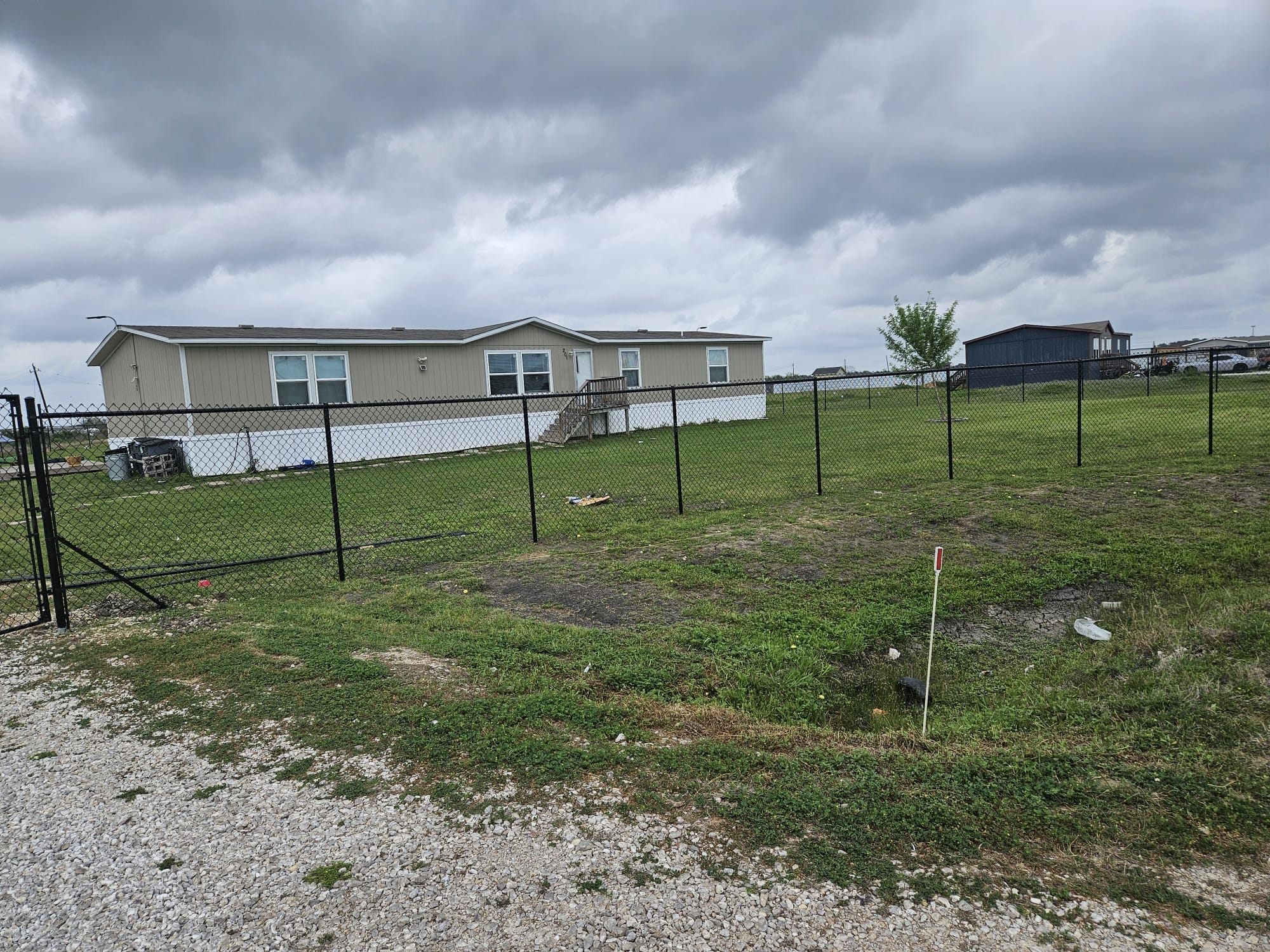
Job duration is the first filter. A short-run job commonly uses a freestanding temporary panel on a ballast foot; a job running months or longer more often gets a post-set chain link fence with posts in a concrete footing. The two earn wind resistance differently: CLFMI’s wind-load guide gives open 2-inch, #9-gauge chain link fabric a wind coefficient of 6.4 against 1 for a solid panel — and its post-spacing tables assume a footing 24 in. plus 3 in. for every foot of fence height over 4 ft (ASTM F567), which a ballast-foot panel simply does not have. On wind speed, the state’s windstorm program once published a flat 130 mph figure naming Galveston; current code sends you to a site-specific lookup instead. And neither the City’s fence permit form nor the fence code sections we reviewed carve out a “temporary” or “construction” category at all.
Sources: CLFMI Chain Link Fence Wind Load Guide (WLG 2445); Texas Department of Insurance windstorm zone map and adopted-codes page; City of Galveston Fence Permit Application (Rev. 03/2023); City of Galveston LDR §2.501/§2.601; Ordinance No. 23-012 (2021 IRC amendment).
Temporary panel or post-set chain link: what actually differs
Both are common sights around an active job site, and both can be chain link — the difference is how each one stands up. A freestanding temporary panel is a self-standing modular section, usually clamped to its neighbors in a run, held up by rubber or concrete ballast feet resting on grade. Nothing goes in the ground, so it goes up and comes down fast and can be moved as the job progresses.
A post-set chain link fence uses line posts driven or set into the ground, typically in a concrete footing, with fabric, top rail and tension wire strung between them the same way a permanent chain link fence is built. It takes longer to install and remove, but — as the next section covers — it is the version the published wind-load tables are actually built for.
We checked the City of Galveston’s Fence Permit Application (Rev. 03/2023) and the LDR fence sections (§2.501, §2.601) for a separate “temporary” or “construction” fence category. Neither uses either word. That means the usual rules — height, material, barbed wire — apply to a job-site fence the same way they apply to any other fence, for however long it stands.
Temporary panel vs. post-set chain link, at a glance
| Factor | Freestanding temporary panel | Post-set chain link |
|---|---|---|
| How it stands | Ballast feet resting on grade; clamped panel-to-panel | Line posts set in a concrete footing |
| Published wind rating | None found in the sources we reviewed | CLFMI WLG 2445 rates post size/spacing by wind speed and height |
| Typical job-duration fit | Days to a few weeks | Several months or longer |
| Teardown | Unclamp and lift out | Pull posts and break out footings |
CLFMI Chain Link Fence Wind Load Guide (WLG 2445); general industry description of freestanding panel systems (no published standard for a rated wind speed was found for a ballast-foot panel in the sources reviewed).
Wind loading on the coast: why the footing matters
CLFMI’s Wind Load Guide builds its post-spacing tables on a specific assumption: “posts are considered to be embedded in the ground surface… all posts are considered to be embedded in concrete, minimum 2,500 psi, air-entrained.” The guide treats the post as a vertical cantilever, fixed at its base to that footing — wind hits the fabric, and the load transfers down the post into the ground. A temporary panel on a ballast foot has no equivalent fixed base, which is exactly why none of the sources we reviewed publish a wind rating for one.
On raw wind speed, the Texas Department of Insurance’s legacy windstorm map (for construction under the 2006-era code, 2008 to before Sept. 2020) named Galveston in its “SEAWARD” zone at a 130 mph 3-second-gust design wind speed — the highest of the three Galveston County zones on that map. TDI’s current rule no longer publishes a flat per-zone figure; it points applicants to the ASCE 7 Hazard Tool for a site-specific number under the 2024 codes. CLFMI’s own Exposure categories back up why that matters on the coast: Exposure D is defined as “flat, unobstructed areas and water surfaces… in hurricane-prone regions” — a description that fits a lot of open Galveston County shoreline and fill lots.
One honest gap: TDI’s windstorm-inspection FAQ lists “repairs or replacement of fences” as not requiring a WPI-8 windstorm inspection. It does not say whether a brand-new job-site fence is treated the same way. If a project’s windstorm certification is tied to the fence for any reason, confirm that with TDI or Development Services directly rather than assuming the repair/replacement exemption covers new construction.
CLFMI wind exposure categories (Cf2)
| Category | Description | Fits |
|---|---|---|
| B | Urban/suburban areas, wooded areas or terrain with obstructions the size of single-family homes or larger | Most in-town lots |
| C | Open terrain with scattered obstructions generally under 30 ft | Cleared lots, open yards |
| D | Flat, unobstructed areas and water surfaces in hurricane-prone regions | Open coastal or waterfront sites |
CLFMI Chain Link Fence Wind Load Guide (WLG 2445), Table 10 definitions.
Wind-load coefficient (Cf1) by fabric style
Higher means lighter wind load per post — an open mesh lets wind pass through instead of catching the full force the way a solid panel does. Multiplies directly into CLFMI’s recommended post spacing.
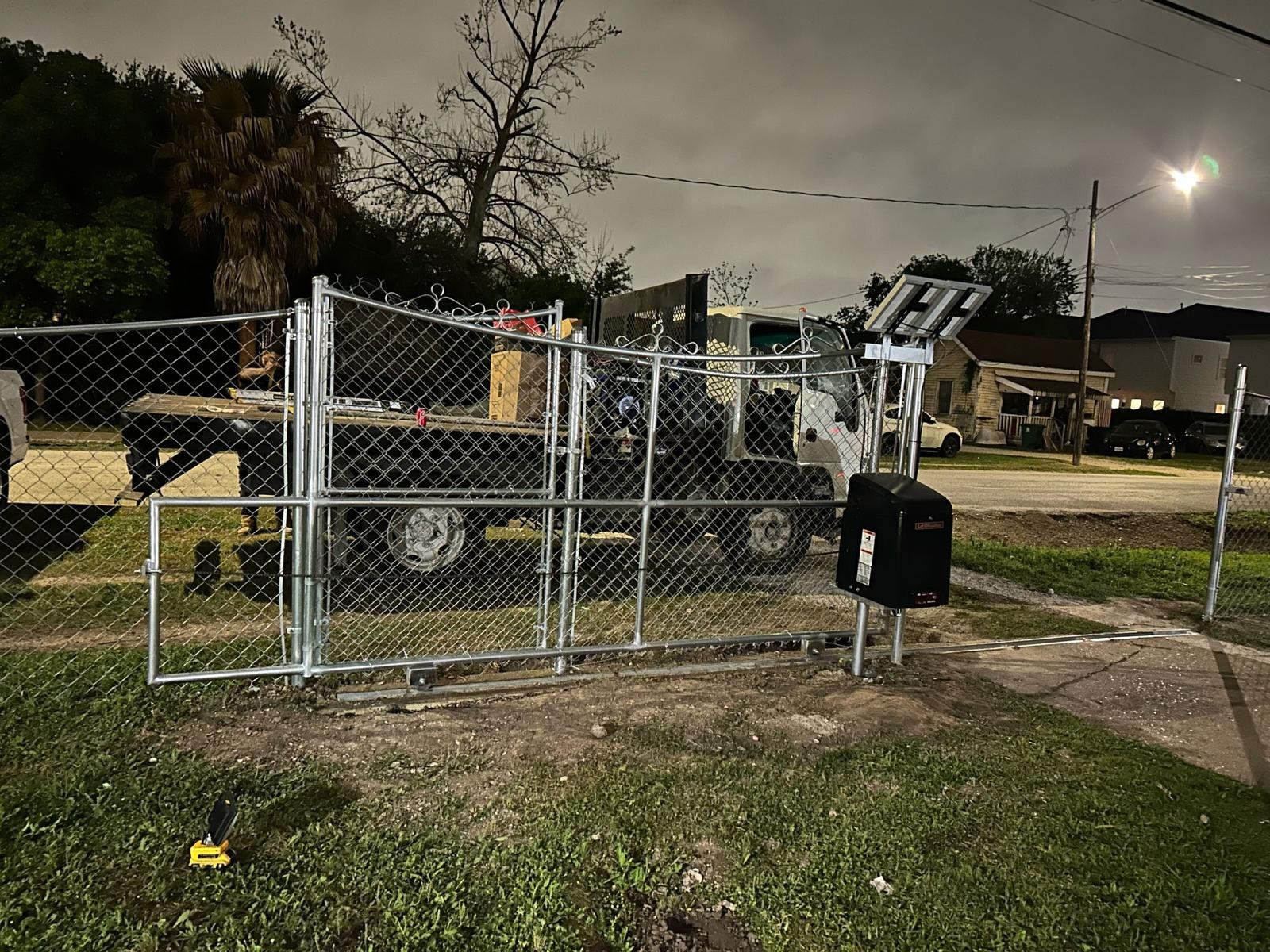
Site-security basics for an active job site
Police-department CPTED (Crime Prevention Through Environmental Design) material frames fencing as one of three basic tools, alongside lighting and layout. Two principles apply directly to a job site:
- Natural access control — the City of Everett, WA Police Department describes it plainly: “The fence sends the message that there is only one access point and users must seek permission to enter.” One controlled, lit gate beats several informal openings in a perimeter.
- Natural surveillance — the same source notes: “Access control devices should not overshadow the importance of surveillance… Wrought iron or chain link fences are good examples.” An open-mesh fence lets passersby, neighbors and the crew itself see into the site; a solid privacy screen that hides stored materials from the street also hides an intruder once they’re already inside.
That is a genuine trade-off, not a reason to pick one product over the other automatically. ASTM’s own scope language for chain link security fencing (F2611-23, product-page text) frames the goal as fencing “intended to substantially increase the difficulty to penetrate, thereby… increasing intrusion delay time” — a different job than simply screening a site from view. Decide which problem matters more for a given job: concealing valuable material, or keeping sightlines open so people notice someone who shouldn’t be there.
Apache Junction, AZ Police Department’s CPTED summary adds the third relevant principle, territorial reinforcement: “defined property lines and clear distinctions between private and public spaces” signal the site is actively managed, which on its own discourages casual trespassing.
Which fencing approach fits your Galveston County job site?
Pick the job’s duration, how exposed the site is to wind, and whether anything stays on site overnight. This checker applies CLFMI’s wind-load methodology (WLG 2445) and CPTED’s access-control and natural-surveillance principles — it is not a permit decision or an engineered wind design.
Wind basis: CLFMI Chain Link Fence Wind Load Guide (WLG 2445). Security basis: CPTED natural-surveillance and access-control principles (City of Everett WA PD; Apache Junction AZ PD). Permit basis: City of Galveston Fence Permit Application (Rev. 03/2023) and LDR §2.501/§2.601. A checklist, not an engineered design or a permit decision.
Fencing a job site in Galveston County?
We measure the site, talk through temporary panel vs. chain link for the duration and location, and quote on site — free.
Permits: the same rules, no separate construction-fence form
Since neither the fence permit application nor the LDR fence sections name a temporary or construction category, a job-site fence in the City of Galveston runs into the same checkpoints any other fence does:
- Height. Up to 8 feet for a nonresidential or mixed-use fence, or 12 feet around a tennis court (LDR §2.601.B) — chain link is named in neither the approved nor the prohibited materials list in §2.601.C, so ask Development Services directly for a street-visible site.
- Barbed or razor wire. Restricted to specific uses — public utility, protective care, correctional, industrial, agricultural, or required by federal/state law — when the fence is visible from a public street (§2.601.C.1-C.2). The permit form asks Yes/No plus a reason.
- Survey, not the sample site plan. Commercial applicants use a property survey showing the fence location; the form’s sample site plan is marked residential-only.
- Three location questions. Historic District or Landmark, Cedar Lawn Neighborhood Conservation District, and within 1,000 ft of the Mean High Tide line (site plan to the Coastal Resources Division) all add a step if they apply.
- Separate building-permit exemption. The City’s 2021 IRC/IBC amendment (Ordinance No. 23-012), R105.2, exempts “fences not over 7 feet” from a building permit. That’s a different permit than the Planning fence permit above — our reading is the fence permit application still applies regardless of height.
Our full breakdown of the commercial permit paperwork, including the barbed-wire reason field and the height/material checker, is on our commercial chain link fence guide. Development Services, Planning and Development Division: (409) 797-3660, 3015 Market, Galveston, TX 77550.
What Galveston customers say
5.091 Google reviews · read them all on Google
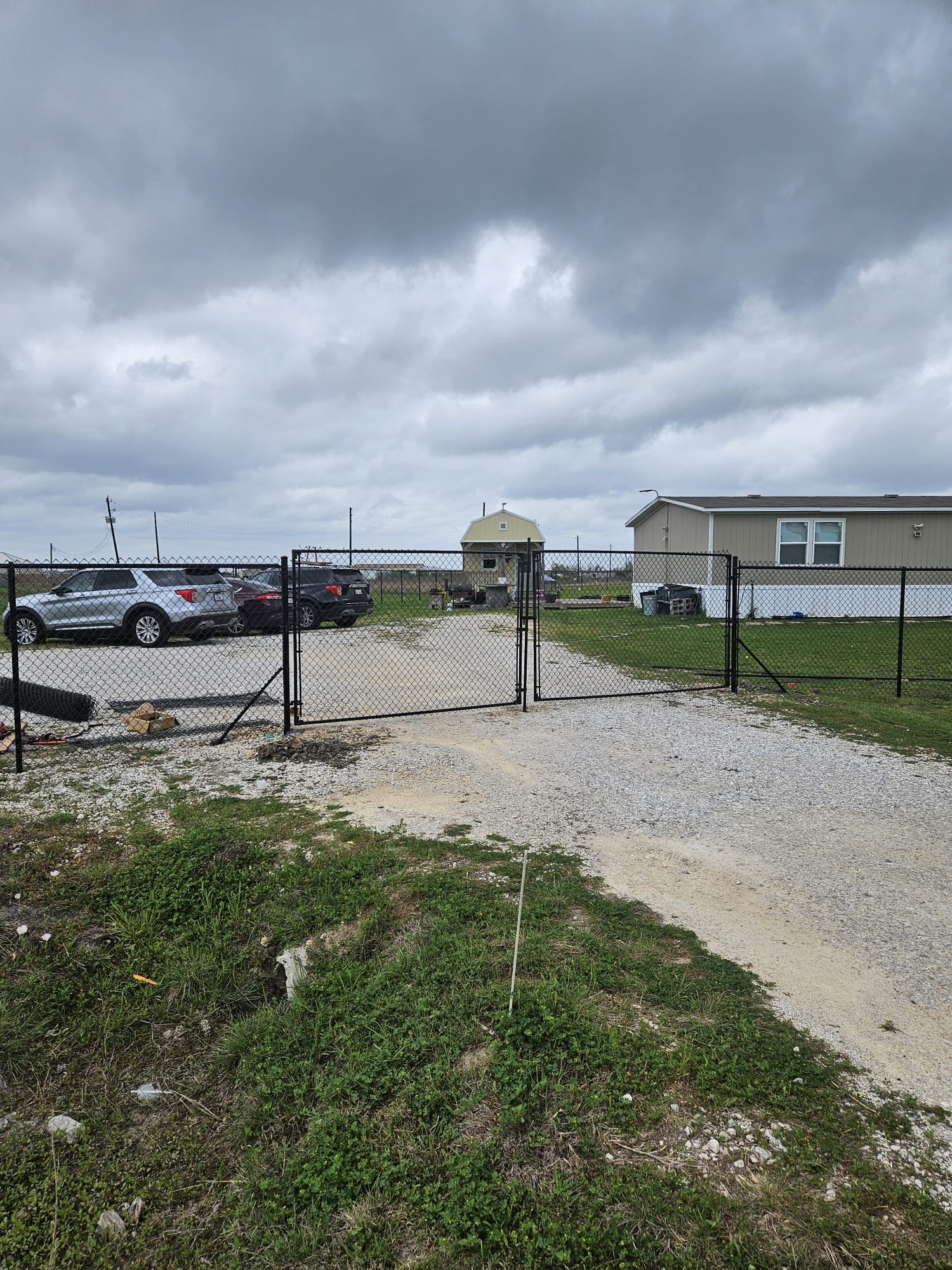
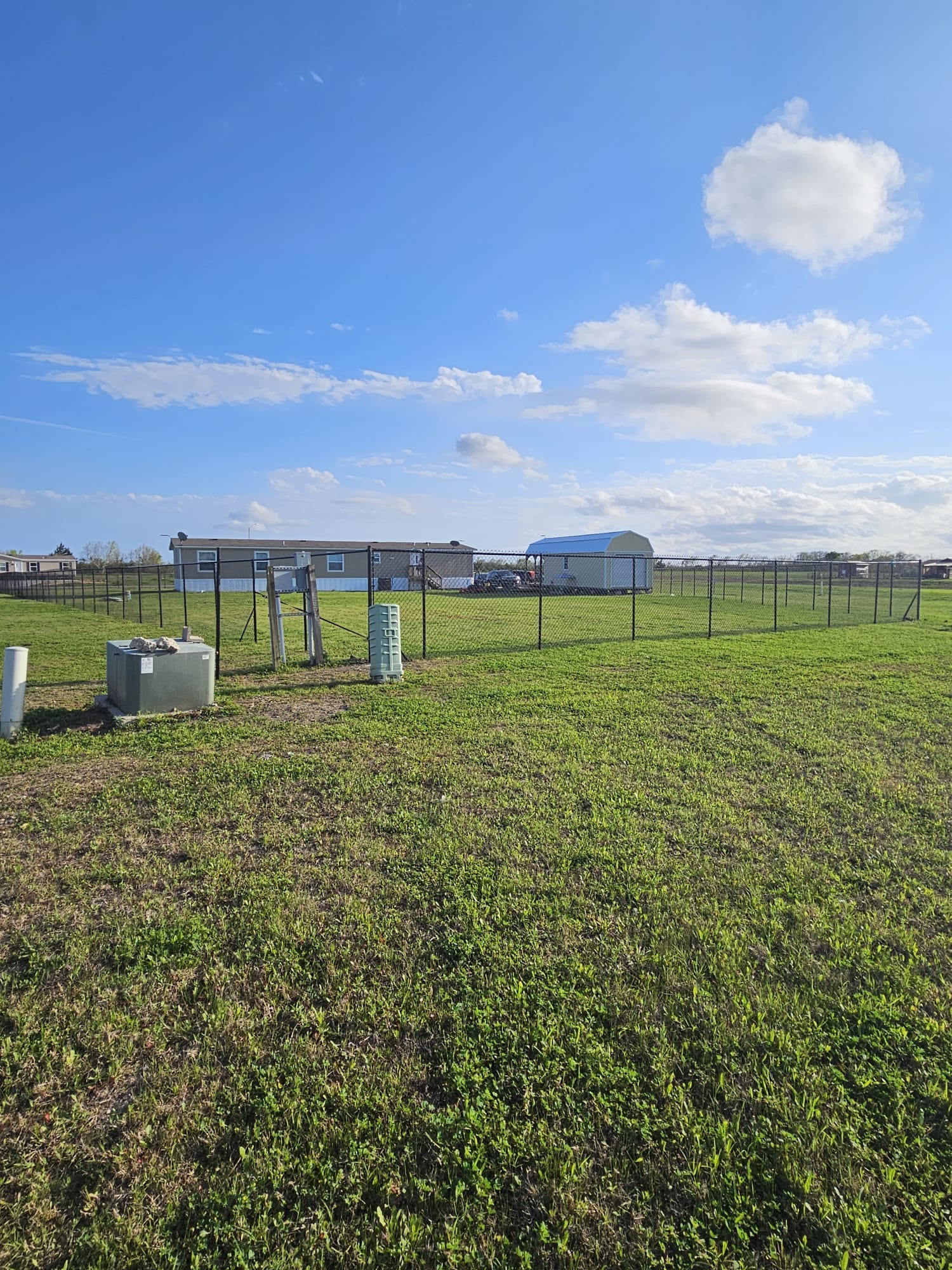
chainlink fence installation by mustang fencing, looks really great, thanks.
Very professional and friendly. Gotten automatic gates done and they are done to perfection! Thank you
I am so pleased with the fence!! Your solution was exactly the right one and the team did a highly professional job. Frankly, I was amazed at how clean the job site was at the completion of the project. Feel free to list me as a reference and a very happy customer. Thanks again and please let the men know That I appreciate their hard work and quality craftsmanship.
Reviews shown word for word from the Mustang Fencing Services Google Business Profile (Galveston), captured 2026-10-12.
Questions we get about this
Temporary fence panel or chain link for a construction site in Galveston County?
Is there a separate construction-site fence permit in Galveston?
What wind speed should a job-site fence in Galveston County be built for?
Does a temporary fence panel have a wind rating?
Should a construction site fence be solid or see-through?
Is barbed wire allowed on a construction-site fence in Galveston?
Sources
Checked October 15, 2026. Rules change, so confirm with the City before you build.
- Chain Link Fence Manufacturers Institute, Chain Link Fence Wind Load Guide (WLG 2445), updated Jan. 2018 — Post-spacing methodology, Cf1/Cf2/Cf3 tables and worked examples, and the ASTM F567 footing-depth formula.
- Texas Department of Insurance, Galveston County windstorm zone map — Legacy 130 mph 3-second-gust “Seaward” zone design wind speed naming Galveston (2006-code era).
- Texas Department of Insurance, Adopted Building Codes page — Current rule directs site-specific wind speed lookups via the ASCE 7 Hazard Tool; no flat per-zone mph figure published.
- Texas Department of Insurance, “What you need to know about windstorm inspections” — “Repairs or replacement of fences” listed as not requiring a WPI-8 inspection; new construction not addressed.
- City of Galveston, Fence Permit Application (Rev. 03/2023) — Checked for “temporary”/”construction” language (none found); survey, height, material and barbed-wire fields.
- City of Galveston Land Development Regulations, §2.501/§2.601 — Nonresidential height cap, approved/prohibited materials, barbed-wire exception; checked for a temporary-fence carve-out (none found).
- City of Everett, WA Police Department, “Crime Prevention Through Environmental Design” — Natural-access-control and natural-surveillance quotes applied to fencing.
- City of Apache Junction, AZ Police Department, “CPTED” — Territorial-reinforcement principle quote.
- ASTM F2611-23, “Standard Guide for Design and Construction of Chain Link Security Fencing” (scope/abstract, product page) — Framing quote on the purpose of security-grade chain link fencing.
Ready to fence your job site?
We’ll walk the site, talk through temporary panel vs. chain link, wind exposure and security basics, and give you a written price. Free on-site estimates across Galveston County.