
Straight answers from a local fence and gate contractor serving Galveston and Brazoria Counties.
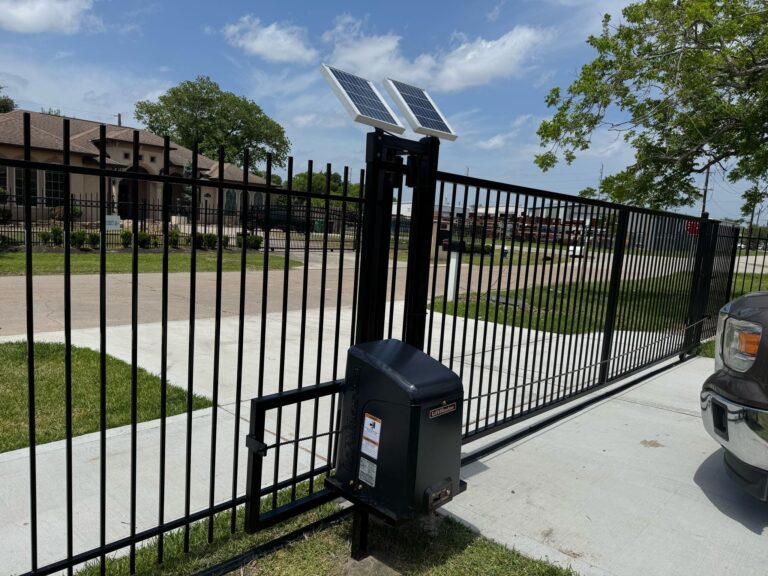
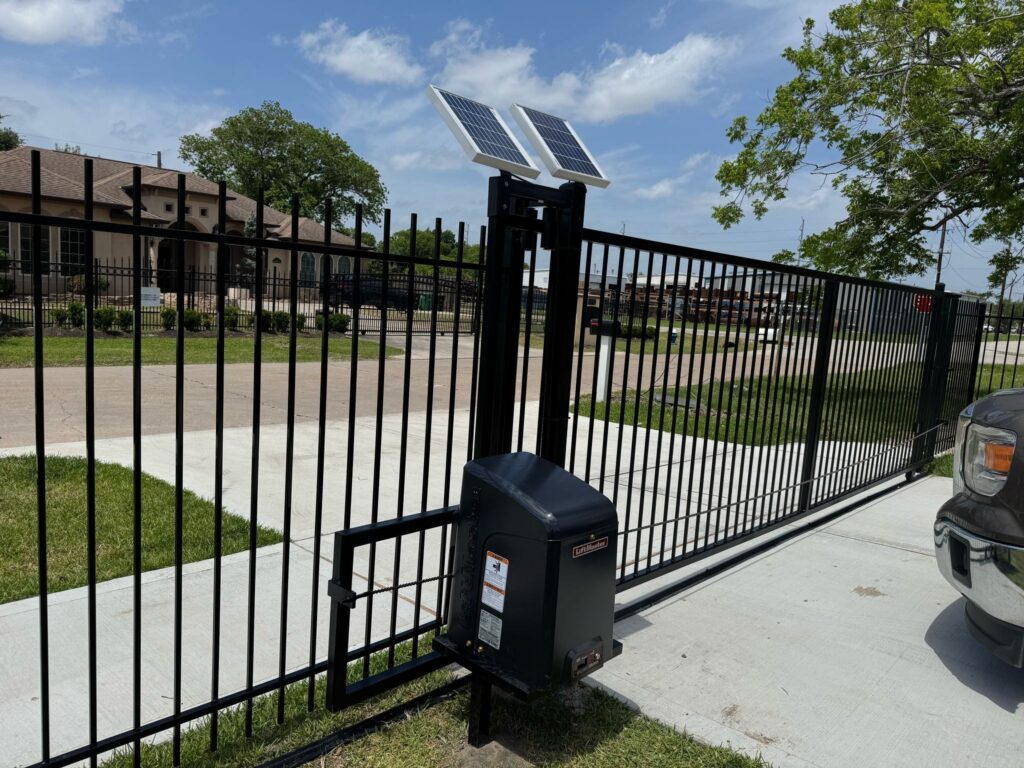
Most residential automatic gate operators should be professionally serviced about once a year, while commercial gates — which typically cycle far more often — are generally serviced closer to every six months. If a gate is used unusually heavily (more than roughly 50 cycles a day), even more frequent service, sometimes quarterly, is the standard recommendation.
What a service visit typically covers
A proper maintenance visit isn’t just “does it open and close” — it includes checking and lubricating moving parts (hinges, chains, belts, racks, and rollers — white lithium grease is a common choice for hinges and pivot points), inspecting cables and mechanical connections for wear, testing the safety systems (photo-eye sensors and auto-reverse function) to confirm they’re actually functioning and not just present, and, on systems with battery backup, testing the battery under load to confirm it will actually perform during an outage rather than assuming it will because it’s still connected.
What owners can check between professional visits
A few simple checks don’t require a technician and are worth doing every couple of months: a visual look for obvious wear or damage on visible cables, hinges, and hardware; listening for new or unusual noises during operation; and confirming the safety reversal still works by testing that the gate stops and reverses if something interrupts the sensor beam while closing. Lubrication of moving parts is also something that benefits from attention roughly every three to six months depending on usage and exposure to the elements, and a periodic hose-down to clear dust, pollen, and debris buildup helps prevent grit from working into moving parts.
Why coastal conditions raise the stakes
Salt air, humidity, and blowing sand accelerate corrosion and wear on outdoor mechanical and electrical equipment faster than they would in a drier, inland climate — hinges, chains, and exposed hardware on a Galveston-area gate are simply working against a harsher environment than the same equipment installed further inland. That’s a real argument for leaning toward the more frequent end of any service interval recommendation, rather than assuming a once-a-year visit that might be adequate elsewhere is automatically enough here.
Skipping maintenance has real costs
A gate operator that isn’t maintained doesn’t usually fail all at once — it tends to develop small issues (a stiffening hinge, a slightly misaligned sensor, a battery that’s quietly losing capacity) that compound into bigger, more expensive failures or, worse, a safety system that’s no longer actually functioning the way it’s supposed to. Routine maintenance is genuinely one of the cheaper parts of owning an automatic gate relative to the cost of a major repair or full operator replacement. If it’s been a while since your gate or operator was last checked, reach out to discuss service and maintenance options for your existing system.
Related Questions
How often should a residential gate operator be serviced?
Do commercial gates need more frequent service than residential ones?
Does coastal weather affect how often a gate needs service?
Ready for a real number for your property? Request a free on-site estimate from Mustang Fencing Services.
Pingback: UL 325 & ASTM F2200 Explained: Automatic Gate Safety Rules