
Gate Openers on a Flood-Prone Island: Where the Motor, Controls and Batteries Belong
An automatic gate puts a motor, a circuit board and batteries where the driveway meets the street, which is often the lowest point of the lot. That doesn’t have to be a problem. Here’s how to decide where each part of the operator goes, using the City’s flood code, FEMA’s utility guidance and the manufacturers’ manuals.
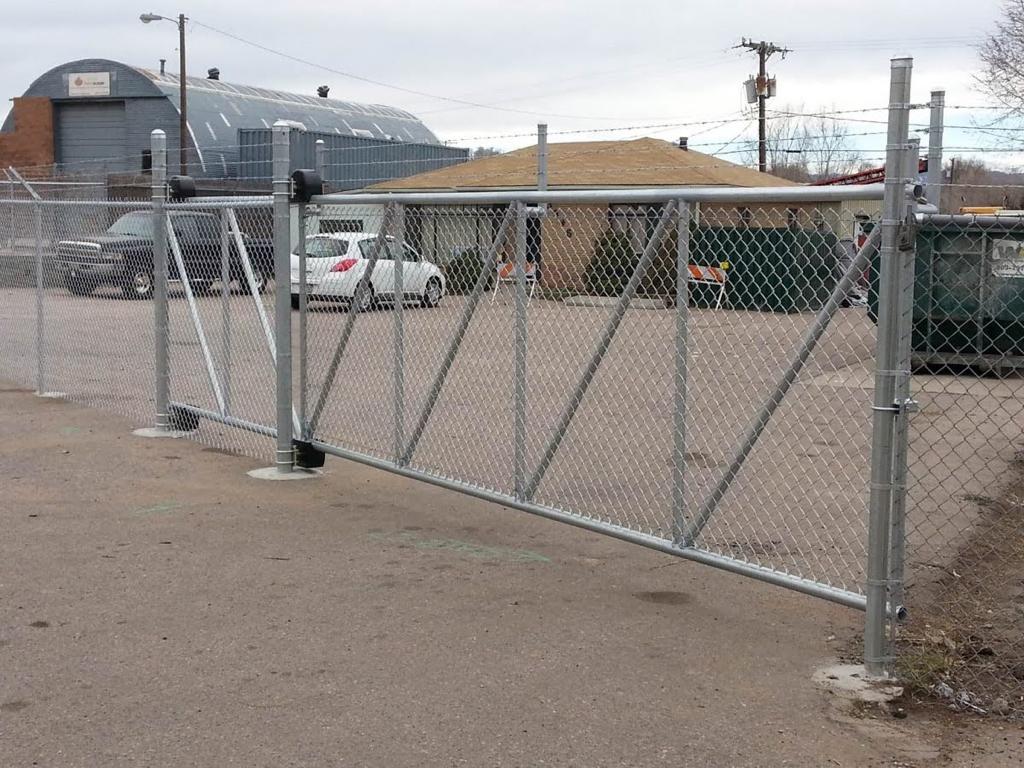
Keep the parts that can’t survive water above the flood level, and plan for the parts that can’t be raised to get wet. For new buildings in Galveston’s mapped flood zones, the City requires electrical equipment to sit at least 18 inches above the base flood elevation (BFE). That’s the sensible target for a gate’s control board, batteries, radio receiver and surge protection too. The motor can sit lower, because NEMA’s flood guidance says motors may be reconditioned, while circuit boards, batteries and surge devices that have been under water should be replaced. If a box has to stay low, only NEMA Type 6 or 6P enclosures are rated for submersion.
Sources: City of Galveston Code Sec. 10-81 as codified in the March 27, 2025 council packet; LiftMaster CSW24UL manual; NEMA Enclosure Types; NEMA GD 1-2019; NOAA NHC Tropical Cyclone Report, Hurricane Ike.
Why the island changes the operator decision
Inland, the main question about a gate operator is how close it goes to the gate. On Galveston Island and the bay shore, there’s a second question: how high? An automatic gate puts a motor, a circuit board, batteries and a radio receiver at the edge of the lot, usually where the driveway slopes down to the street. Three kinds of water can reach that spot.
- Rain and street flooding. The City notes that during Hurricane Harvey in 2017, the Strand flooded “when water backed up in the streets.” It doesn’t take a hurricane for a driveway apron to sit in water for a few hours.
- Storm surge from the bay side. NOAA’s National Hurricane Center report on Hurricane Ike (2008) says the seawall spared much of the city from Gulf surge and waves, “however the city was still inundated by surge when water rose on the north side of the island from Galveston Bay.” The highest inundation, at least 10 feet, was on the bay side of the island. The water also came early: storm tides near Galveston were running close to 8 feet some 6 to 8 hours before landfall.
- Salt. NEMA’s guide to water-damaged electrical equipment warns that “ocean water and salt spray can be particularly damaging due to the corrosive and conductive nature of the saltwater residue.” FEMA says the same about electrical conductors.
No pad height beats a 10-foot surge. So the goal isn’t to make a gate flood-proof. It’s to keep the expensive, water-intolerant parts above the floods that happen often, and to make the rest quick to recover after the rare big one.
Your three numbers: flood zone, BFE and ground elevation
FEMA’s flood maps sort land into zones. Areas that the 1-percent-annual-chance flood (the “base flood,” or 100-year flood) would cover are Special Flood Hazard Areas, labeled A, AE, V, VE and similar. V and VE zones are coastal high hazard areas, which the City’s ordinance describes as subject to “high velocity wave action from storms.” Zone X (shaded) is the band between the base flood and the 0.2-percent-annual-chance flood, and unshaded X is outside both. The City of Galveston uses FEMA maps dated August 15, 2019.
The base flood elevation (BFE) is the height the base flood’s water reaches. It’s an elevation, not a depth. To know how deep water would stand at your gate, you need a second number: the ground elevation at the gate, on the same datum. Both are usually on an elevation certificate, and a survey can supply the ground figure. Subtract, and you have the base-flood depth at the gate. Add the City’s 18 inches, and you have the height the electronics should clear.
Here’s an example with round numbers, not a real address: a BFE of 12 feet and a driveway apron at 9 feet means about 3 feet of water at the base flood. The electronics would need to be at least 4½ feet above the ground. That’s well above a standard operator pad, and it’s why the layout in sheet S-1 matters.
Choosing the operator style for a low lot
The operator style decides what can be raised. Before you settle on a gate design, look at where each type keeps its electronics.
| Operator style | Where the electronics sit | Flood exposure | What to ask |
|---|---|---|---|
| Slide operator on a pad | Usually in the operator housing, on the pad beside the gate | The whole unit sits at driveway level. LiftMaster’s slide manual calls for a reinforced concrete pad by the gate’s roller; its swing manual sets the pad 6″ above ground and “tall enough to avoid possible flooding.” | How high can the pad go? Can the board and batteries be mounted in a separate, higher enclosure on this model? |
| Swing-arm operator | In or near the arm, which mounts at gate height on the post or column | Depends on the gate’s height and where the control box goes | Is the control box part of the arm, or a separate box that can be mounted higher? |
| Underground swing operator | Motor in a buried foundation box; control board in a separate enclosure | The motor is below grade by design. FAAC’s 770 manual requires a second conduit “to drain rain water from the box to the nearest drain.” | Where does the drain go, and does that drain back up in a storm? Where will the board enclosure be mounted? |
| Solar-powered operator | Batteries and board in the operator housing; panel on a post | Batteries sit wherever the operator sits (LiftMaster fits its 33AH solar batteries in the operator enclosure) | Can the operator sit higher, or the batteries be housed separately? See solar gate installation. |
From the LiftMaster CSW24UL and CSL24UL installation manuals and the FAAC 770 24V manual (Rev. 02, June 2012). Models differ, so check the manual for the operator you’re quoted.
The split layout: motor at the gate, brains up high
The layout that works best on a low lot separates what can take water from what can’t. The motor and gearbox have to sit at the gate, because they move it. The control board, batteries, radio receiver and surge protector don’t. Where the operator model allows it, they can go in a separate enclosure mounted on a post or against a structure, at or above BFE + 18 inches, with conduit running down to the motor. The underground FAAC 770 is built this way: its control board comes on a panel sized for a separate 16 × 14 inch enclosure.
FEMA’s guide to protecting building utility systems (FEMA P-348) adds details that carry straight over to a gate circuit:
- Put junction boxes above the flood elevation, so wiring below them can be pulled out and replaced.
- Run wiring in conduit. It’s easier to clean after a flood, and damaged conductors can be replaced without digging.
- Feed anything below the flood level from its own GFCI-protected branch circuit, and mark the breaker clearly so it can be shut off when water is coming.
- On the coast, use stainless steel or hot-dip galvanized anchors and straps to resist salt spray.
Sheet S-2 shows that layout on a slide gate. It also shows the grounding step both operator makers call for. LiftMaster says to “install the earth ground rod within 3 feet (.9 m) of the operator” because an ungrounded operator is “more susceptible to lightning and surge damage,” and FAAC recommends a surge suppressor on top of that. For how the gate itself should be built and protected, see UL 325 and ASTM F2200 explained.
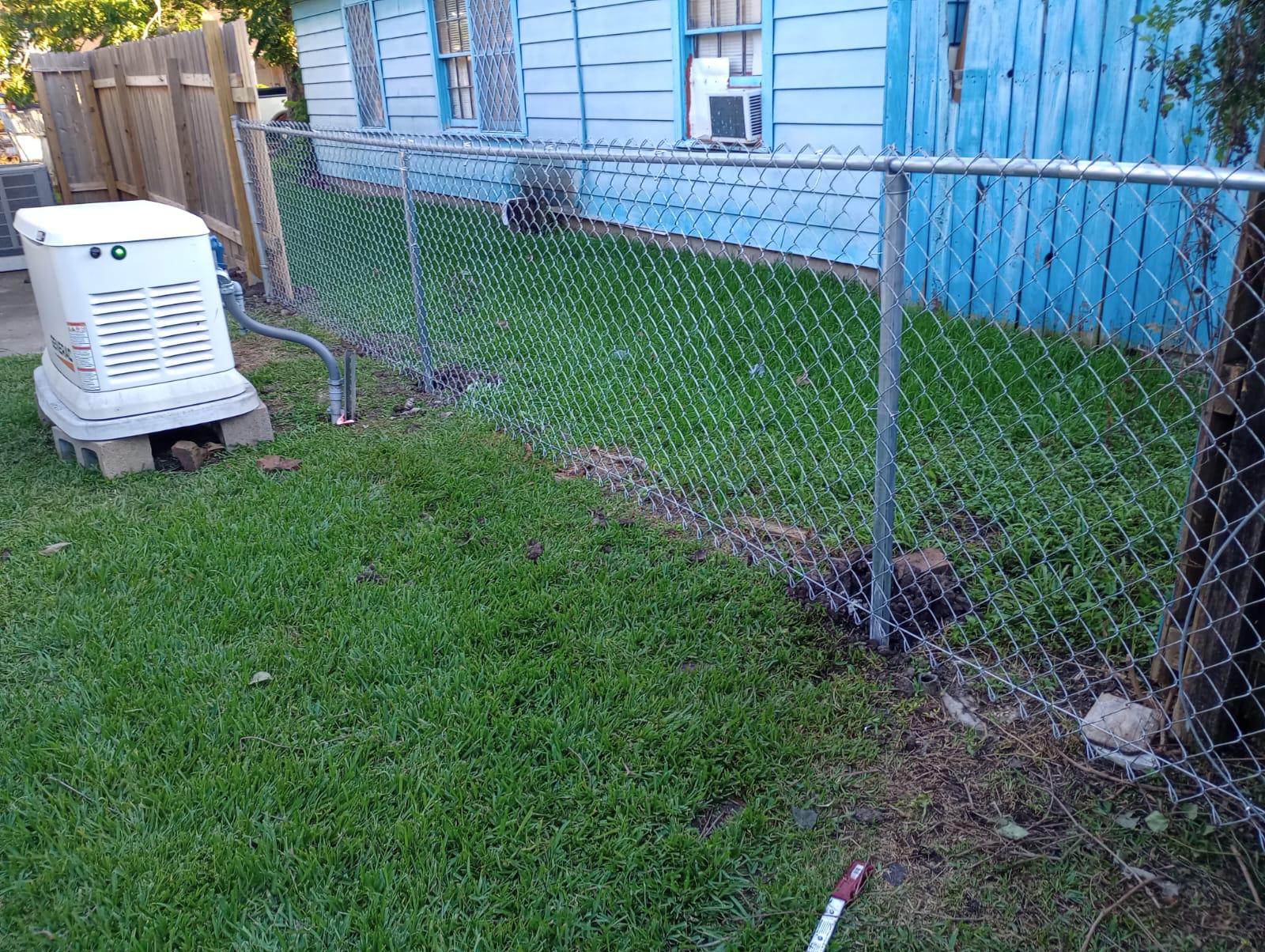
Six inches, eighteen inches, and what Ike did
Heights in inches. The first comes from an operator manual and the second from the City code. The Ike figures are NOAA estimates with different reference points: surge and storm tide are water levels, and inundation is water depth above the ground.
Enclosure ratings: 3R, 4X, 6 and 6P
Every outdoor gate enclosure keeps out rain. Only a few are rated for what happens in a flood. NEMA’s enclosure type definitions are the plain-language way to tell them apart. FEMA P-348 puts it directly: “Only National Electrical Manufacturers Association (NEMA) Type 6 and 6P enclosures are listed for protection from submersion.” It also cautions that equipment merely “suitable for wet locations can still be damaged if submerged in floodwater.”
| NEMA type | Water it’s rated to keep out | Extra corrosion protection | Where it fits on a gate |
|---|---|---|---|
| 3R | Rain, sleet, snow | No | A control box well above any flood level, out of spray |
| 4 | Rain, splashing and hose-directed water | No | A box that gets hosed down or sprayed |
| 4X | Rain, splashing and hose-directed water | Yes | A high box exposed to salt air and wind-driven rain |
| 6 | Hose-directed water and occasional temporary submersion at a limited depth | No | A box that can’t be raised above occasional flooding |
| 6P | Hose-directed water and prolonged submersion at a limited depth | Yes | A box that has to live low on a salt-water site |
NEMA Enclosure Types (NEMA, November 2005, from NEMA 250-2003). Operator makers may use the IEC IP code instead. FAAC lists the 770 motor as IP 67. In that code, the first digit rates protection against solids (6 means no dust gets in) and the second rates protection against liquids on a 0–9 scale, with the test conditions set out in IEC 60529.
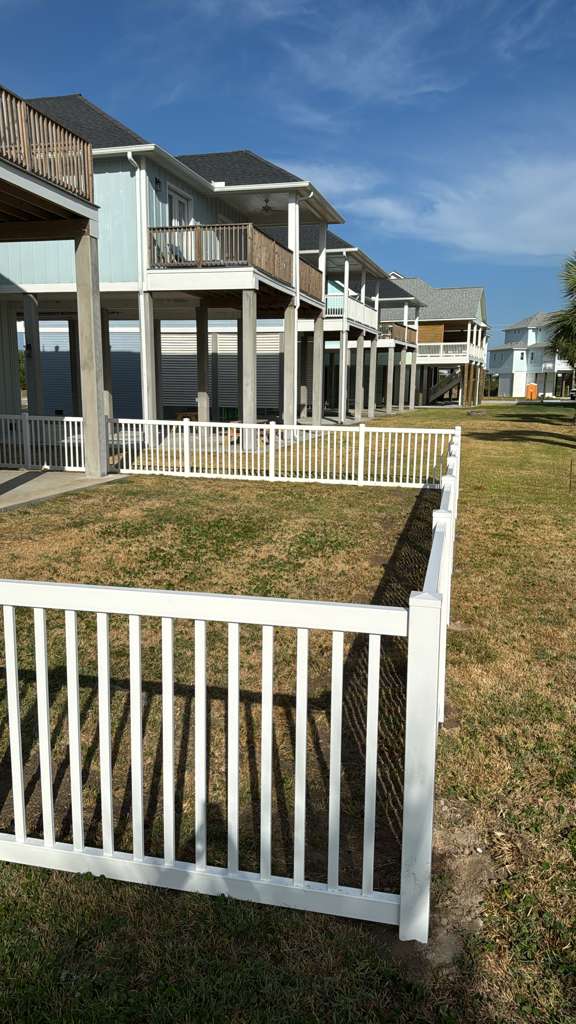
V zones and gates under raised houses
On lots mapped VE, the City’s ordinance adds a rule about the space under an elevated house. It must be “either free of obstruction or constructed with non-supporting breakaway walls, open wood lattice-work, or insect screening intended to collapse under wind and water loads,” and enclosures there can be used “solely for parking of vehicles, building access or storage.” Owners sign a non-conversion agreement that’s filed with the deed.
For a gate, that means two things. Don’t assume a control box or a gate panel can be fixed to the house’s pilings or the under-house enclosure. And check with the Floodplain Administrator before building anything solid between the pilings. Fences and gates out at the property line are a separate question, covered on our Galveston Island fences and gates page. For wind loads on gates and fences, see storm and hurricane-ready fencing.
How high should the gate electronics sit?
Enter the numbers from your elevation certificate or survey. The planner works out how deep base-flood water would stand at the gate, and how high the control board, batteries and surge protection need to be to clear it by the same 18 inches the City requires for building equipment.
Planning aid only. The sliders start on example values, not on any real address, so replace them with yours. BFE and ground elevation must use the same datum (elevation certificates use NAVD 88). For zone X or an unknown zone, the planner adds the same 18 inches to the highest water you enter. That’s our assumption, not a code rule. The City’s Floodplain Administrator decides what applies to your project.
Batteries, power loss and the storm setting
Battery backup is what keeps a gate working when the power is out, and big storms on the coast knock out power. After Ike, the U.S. Department of Energy estimated that 2.6 million customers lost power in Texas and Louisiana. The batteries are also the part most likely to sit low, because on many operators, including the LiftMaster models cited here, they live inside the operator housing.
- Height. Batteries that have been under water go on NEMA GD 1’s replace list. GD 1 also notes that “salt water may increase the corrosion rate when compared to fresh water.”
- Age. LiftMaster’s manual says “for best performance, the batteries should be replaced every 3 years.” If you’re in storm country, it’s worth knowing when yours were installed.
- The power-failure setting. Many operators let you choose how the gate behaves on battery. LiftMaster’s AC FAIL option can open the gate about 15 seconds after AC power fails and keep it open until power returns. Its low-battery option can make the gate open and stay open, or stay closed. With its optional backup battery installed, FAAC’s 770 board can open the gate one minute after a power failure and hold it open. Decide which one you want before hurricane season: an open gate lets you and emergency crews in, and a closed one keeps the property secured.
For what happens during an ordinary outage and how to open a gate by hand, read automatic gates and power outages. For choosing between power types, see AC vs DC gate operators.
What to ask for in a quote
When you get prices for an electric gate or an automatic gate on a flood-prone lot, bring your elevation certificate or survey, and ask every installer the same questions:
- What is the operator model, and where are its control board, batteries and receiver: in the operator housing or in a separate enclosure?
- How high will the pad or mount be, and how does that compare with the BFE + 18″ at the gate?
- What NEMA type (or IP rating) is each enclosure that sits below that height?
- Where do the conduit, junction box and disconnect go, and is the circuit for anything low on its own GFCI breaker?
- Where is the ground rod, and what surge protection is included?
- How will the gate be set to behave on battery when the power fails?
- For an underground operator: where does the foundation box drain to?
For the gate itself, see driveway gates, sliding gate installation and swing gate installation. To see finished gate work on the island, look at an iron and pine gate project in Galveston.
What Galveston customers say
They did an excellent job installing our new gate everything looks clean, sturdy, and professionally finished. The team was on time, easy to work with, and made sure everything was working properly before they left. Great service and quality workmanship!
Exceptional Service from Mustang Fencing Services – Highly Recommended! We recently had the pleasure of engaging team of Mustang Fencing Services to repair our backyard fence after the damage caused by Hurricane Beryl. From start to finish, they exceeded our expectations. They handled the entire process with professionalism and care, from thoroughly cleaning up debris to installing a brand-new fence with precision. The team was prompt, efficient, and attentive to detail, ensuring that the final product was both sturdy and aesthetically pleasing. The before-and-after transformation speaks volumes about their craftsmanship and dedication to quality. We couldn’t be more satisfied with the result, and we highly recommend Mustang Fencing Services for anyone in need of reliable and professional fencing work. Thank you to the entire team for a job well done!
Mustang fencing services did a fantastic job on my wooden fence and their pricing was really affordable. The whole process of building this was smooth, fast and the fence looks great too in my backyard. I’m really happy with their work and would definitely recommend them.
Reviews shown word for word from the Mustang Fencing Services Google Business Profile (Galveston), captured 2026-09-25.
Questions we get about this
How high should a gate opener be in a flood zone?
Is a NEMA 4X enclosure waterproof enough for a flood?
Can an underground gate opener work on Galveston Island?
What should be replaced after a gate operator floods?
Do I need a permit to install a gate operator in a Galveston flood zone?
Should my automatic gate open or stay closed when the power goes out?
Where do I find my base flood elevation?
Sources
Checked September 25, 2026. Rules change, so confirm with the City before you build.
- City of Galveston, Ord. 25-011 council packet (March 27, 2025), with the codified Chapter 10, Article VIII, Sec. 10-81 — Sec. 10-81(a)(4): electrical equipment and other service facilities at least 18″ above BFE; FIRM dated August 15, 2019.
- City of Galveston Flood Damage Prevention Ordinance, Ord. 18-032 (April 26, 2018) — definition of development; coastal high hazard (V zone) free-of-obstruction and breakaway-wall rules; enclosure use and non-conversion agreement.
- City of Galveston, Flood Protection Information — floodplain permits (grading and paving count); 18″ design elevation; Harvey flooding in the Strand; Development Services contact.
- FEMA, Flood Zones — Special Flood Hazard Areas, base flood, zone labels, shaded and unshaded Zone X.
- FEMA P-348, Protecting Building Utility Systems From Flood Damage (2nd ed., 2017) — only NEMA 6 and 6P listed for submersion; junction boxes above flood elevation; conduit; GFCI branch circuits; salt water and conductors; stainless or hot-dip galvanized anchors.
- NEMA, Enclosure Types (November 2005) — definitions of Types 3R, 4, 4X, 6 and 6P.
- NEMA GD 1-2019, Evaluating Water-Damaged Electrical Equipment — replace vs recondition table; salt water and batteries; re-energizing hazard.
- NOAA National Hurricane Center, Tropical Cyclone Report: Hurricane Ike (AL092008) — surge and inundation on Galveston Island, early water rise, bay-side flooding, 2.6 million customers without power.
- LiftMaster CSL24UL slide gate operator installation manual — reinforced concrete pad or post mount near the gate roller; ground rod within 3 ft; lightning and surge note.
- LiftMaster CSW24UL swing gate operator installation manual (2022) — pad “6 inches (15.2 cm) above the ground … tall enough to avoid possible flooding”; batteries every 3 years; AC FAIL and low-battery settings; 33AH solar batteries.
- FAAC 770 24V underground swing gate operator manual (Rev. 02, June 2012) — IP 67; drain conduit from the foundation box; separate 16 × 14″ control enclosure; surge suppressor; opening on power failure.
- IEC, Ingress Protection (IP) ratings — meaning of the two IP digits; test conditions in IEC 60529.
Planning an automatic gate on a low lot?
Bring your elevation certificate or survey to the estimate, and we’ll go through where the operator, controls and batteries can go on your lot. Free on-site estimates across Galveston Island and Galveston County.