
AC vs. DC Gate Operators: Which Is Right for My Property?
Neither motor type is simply “better.” DC operators are the practical default for most residential driveway gates because they run on a continuously recharged battery, while AC operators pull power directly from the grid and are generally specified for heavy, high-cycle commercial gates. The manufacturer manuals for the DC operators Mustang installs show exactly how that battery system is built, and what it does when the power goes out.
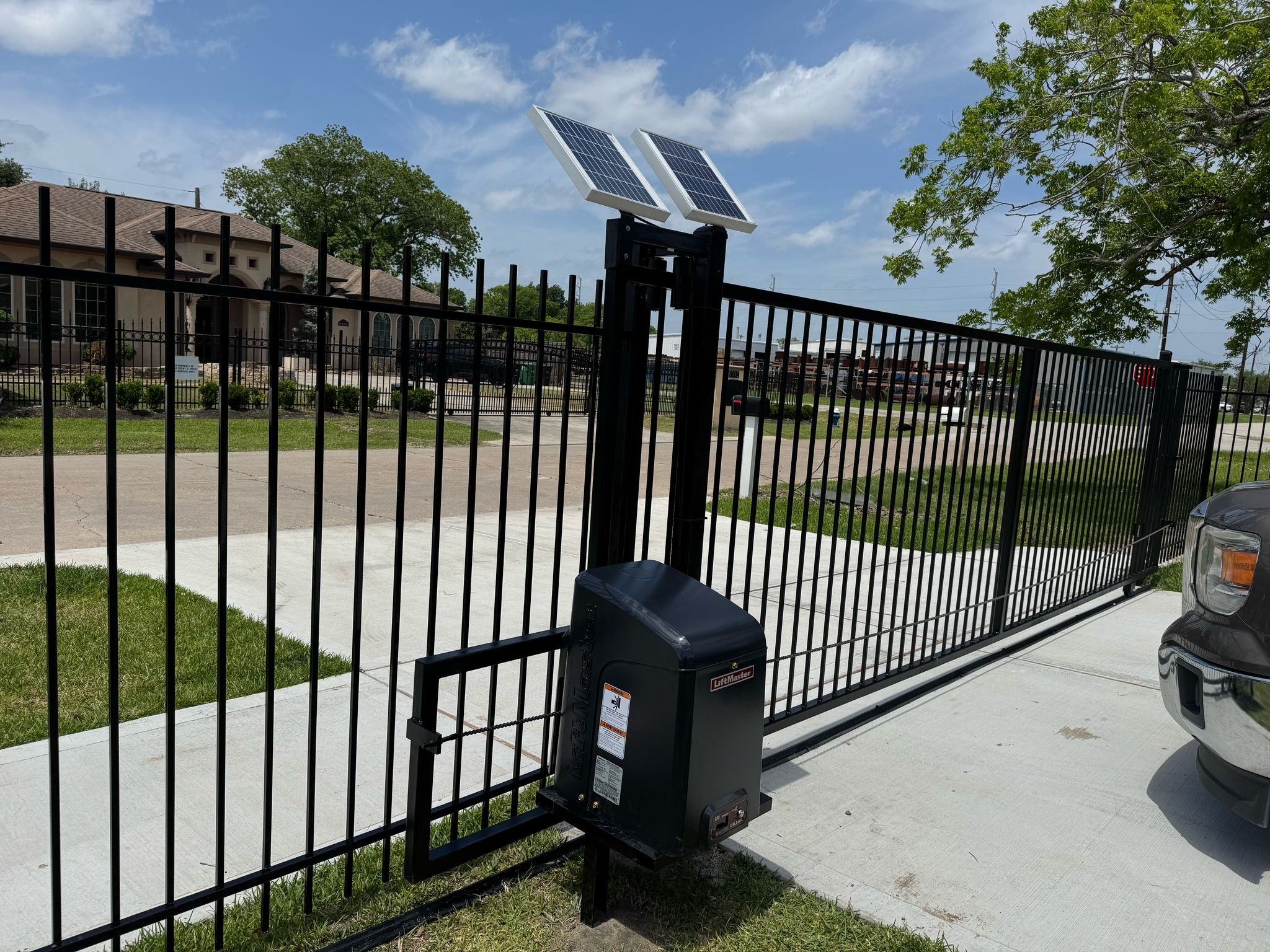
Neither operator type is strictly better — DC operators are the practical default for most residential driveway gates because they run on a battery that’s continuously recharged, while AC operators pull power directly from the grid and are generally specified for heavy, high-cycle commercial gates rated for continuous duty. The manufacturer manuals for the DC operators Mustang installs confirm the mechanics behind the outage advantage: a 24 Vdc system kept charged by a 120/240 Vac transformer or a 60-watt-max solar panel, with a dedicated backup battery and, on at least one board reviewed, an automatic-open function that triggers about a minute into a power failure.
Sources: LiftMaster CSL24UL installation manual; LiftMaster CSW24UL installation manual; FAAC 770 24Vdc manual.
What “AC” and “DC” actually describe
The label refers to the operator’s motor and power system, not to anything about the gate itself. An AC operator’s motor runs directly on incoming 120/240-volt alternating current from the grid. A DC operator’s motor runs on low-voltage direct current from a battery, with that battery kept charged by an AC transformer, a solar panel, or both. Both gate operator manuals reviewed for this page — LiftMaster’s CSL24UL and CSW24UL, and FAAC’s 770 — are themselves DC systems (the “24” and “24Vdc” in their model names refer to the 24-volt battery they run on), which is why the DC side of this comparison is grounded directly in manufacturer specifications below. The AC side reflects general industry guidance about continuous-duty motor sizing for commercial gates, since no AC-operator manual was available to cite directly.
Why DC operators handle power outages the way they do
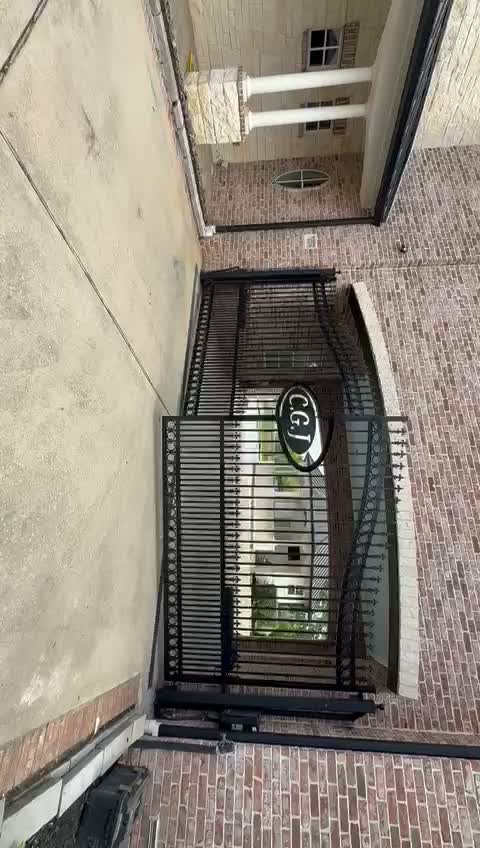
The outage advantage isn’t marketing — it’s built into how the system is wired. On the LiftMaster boards, the “AC Fail Open” switch is normally set to BATT, meaning the operator simply keeps running on battery power when AC fails. On the FAAC 770’s board, an automatic-opening-on-power-failure option, if active and a backup battery is installed, opens the gate about one minute into the outage and holds it open. Either way, the battery — not the wall power — is what the motor runs on day to day, so losing grid power doesn’t stop the gate the way it would stop a motor wired straight to the AC line.
Where AC operators still make sense
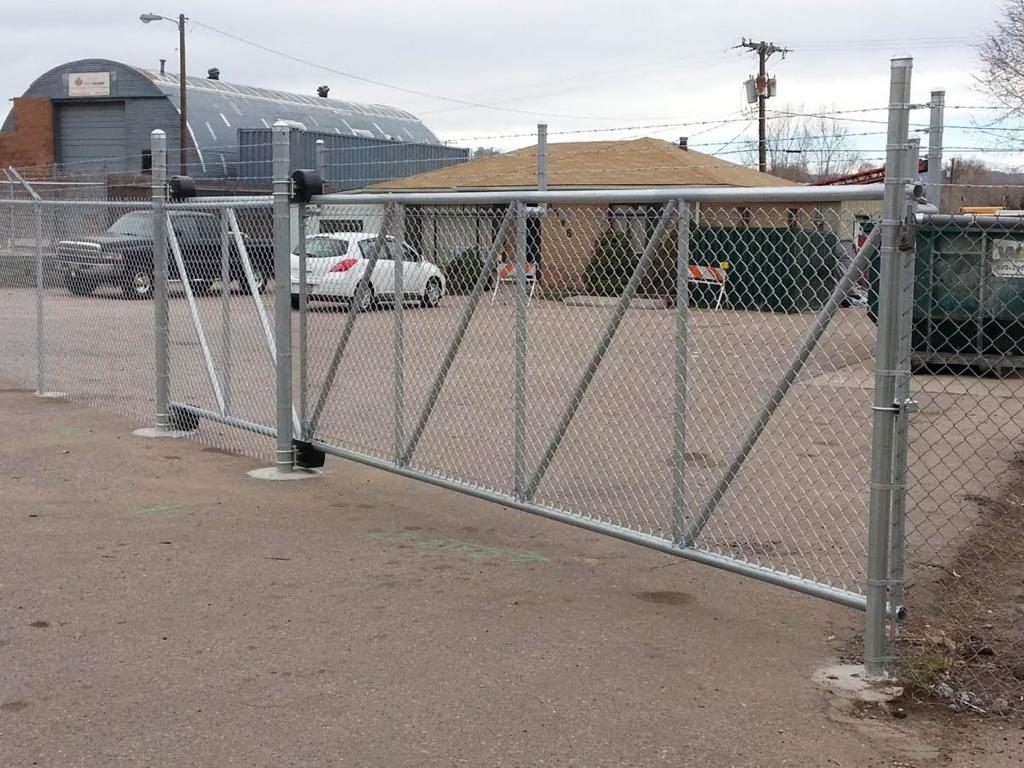
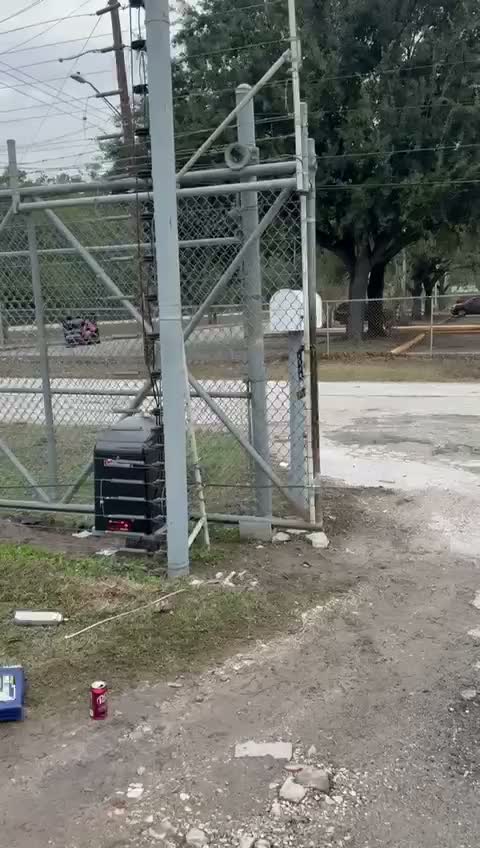
None of this makes AC operators obsolete. For gates that cycle dozens or hundreds of times a day — a self-storage facility, an apartment complex, an industrial entrance — a motor rated for continuous duty and running directly off grid power is the more common specification, as general industry guidance. AC systems can have battery backup added, but as a separate component rather than the standard built-in feature it is on the DC boards above. For a typical single-family driveway gate along the Gulf Coast, even a heavier wrought iron or steel gate, a DC operator is usually the practical choice — particularly given the built-in outage resilience during hurricane season.
AC vs. DC at a glance
| Item | DC operator | AC operator |
|---|---|---|
| Power source | 24 Vdc battery, charged by an AC transformer or solar panel (≤60W) | Direct 120/240 Vac grid power |
| Power-outage behavior | Battery keeps it running (‘AC Fail Open’ defaults to BATT); FAAC 770 can auto-open and hold the gate ~1 min in, if battery-equipped | Stops when grid power stops, unless a battery backup is added separately |
| Manual release if power is out | Backdrive switch (MANUAL) or a key release device lets the gate be pushed by hand | Depends on the specific operator — typically its own separate release mechanism |
| Typical duty rating | Sized for standard residential cycling | Often rated for continuous, high-cycle duty (general guidance) |
| Typical use | Single-family residential driveway gates | Commercial/high-traffic gates — apartment complexes, storage facilities, industrial entrances (general guidance) |
Sources: LiftMaster CSL24UL / CSW24UL installation manuals; FAAC 770 24Vdc manual (DC-specific rows). Duty-rating and typical-use rows are general industry guidance, not manual-sourced.
Which operator type usually fits your gate?
A general-guidance starting point based on how the gate is used — not a substitute for a site visit that looks at the gate’s actual weight, cycle count and site conditions.
General industry guidance on operator fit, plus the sourced fact that a DC operator’s battery backup (LiftMaster CSL24UL/CSW24UL) is built in, where an AC operator’s backup battery is a separate added component.
What Galveston customers say
5.091 Google reviews · read them all on Google
Very professional and friendly. Gotten automatic gates done and they are done to perfection! Thank you
We just installed iron gate and it looks amazing thank you very much mustang fencing .
Mustang’s team installed iron fence for me and did an absolutely incredible job! I would recommend this company to anyone I know!
Reviews shown word for word from the Mustang Fencing Services Google Business Profile (Galveston), captured 2026-10-12.
Questions we get about this
Do DC gate operators keep working during a power outage?
Can an AC gate operator have battery backup?
How is a DC operator’s battery charged?
Can a DC operator handle a heavy commercial gate?
What happens if a DC operator loses all power, including the battery?
Sources
Checked October 18, 2026. Rules change, so confirm with the City before you build.
- LiftMaster CSL24UL Slide Gate Operator Installation Manual — AC/DC power specifications, solar input rating, “AC Fail Open” and “Backdrive” switch settings, and battery backup wiring.
- LiftMaster CSW24UL Swing Gate Operator Installation Manual — Matching AC/DC power specifications and fail-safe switch settings for swing operators.
- FAAC 770 24Vdc Underground Swing Gate Operator Manual — Battery charge current, automatic-opening-on-power-failure behavior, and the key release device on the E024U board.
Choosing between AC and DC for your gate?
We’ll look at how the gate is actually used — cycle frequency, weight, and whether outage resilience matters to you — and recommend the operator type that fits, not just the one that sounds more advanced.