
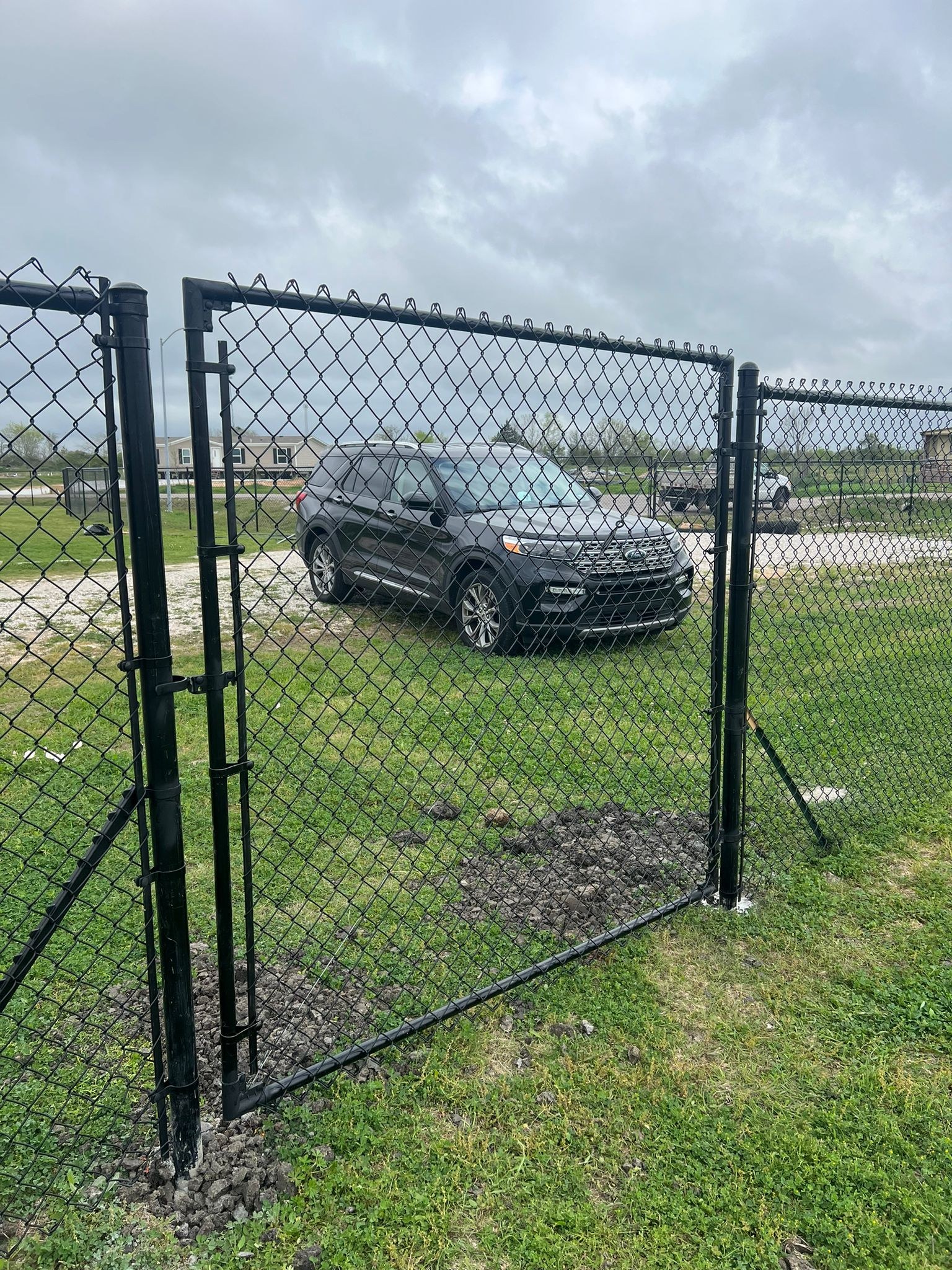
Commercial Chain Link Fence for Galveston County Businesses
Gauge, height, top options and what the permit application actually asks for. The City of Galveston caps nonresidential fences at 8 feet, restricts barbed and razor wire to specific uses, and asks commercial applicants for a survey, not the residential sample site plan. Here is what the code and the permit form say, with a checker for your site.
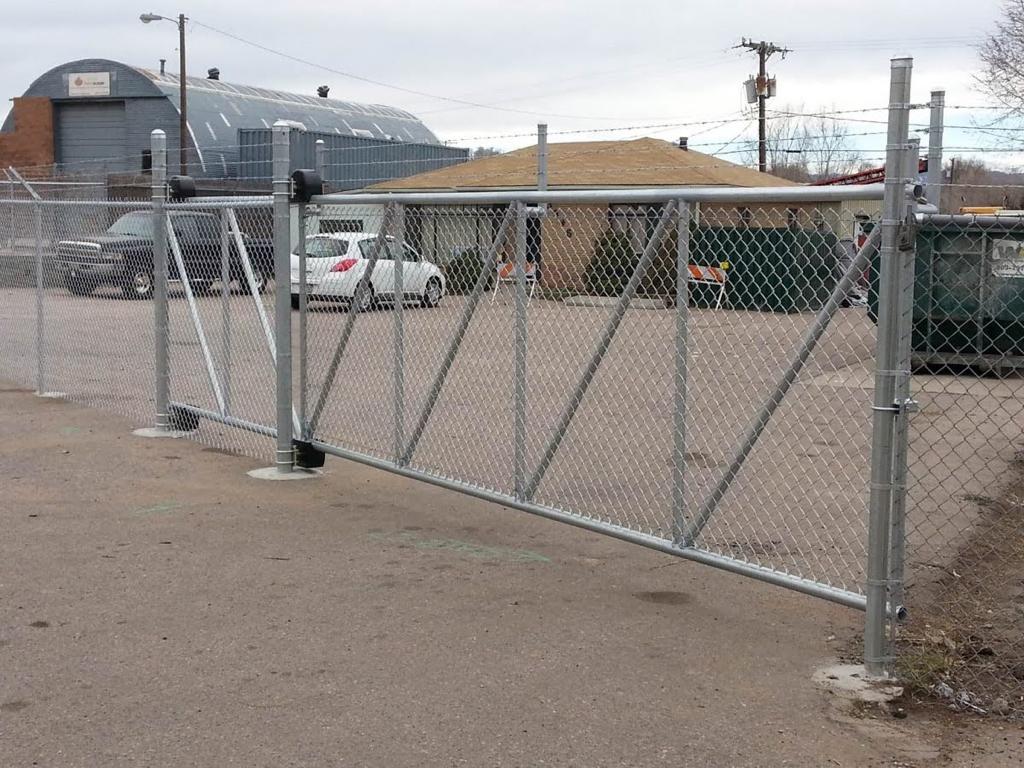
8 feet is the height cap for a nonresidential or mixed-use fence in the City of Galveston, or 12 feet around a tennis court (LDR §2.601.B). The industry’s commercial spec guide builds its post-sizing table on #9 gauge (0.148 in) fabric and calls #11 gauge, in standard 2-inch mesh, “generally not a commercial… mesh.” Barbed or razor wire on top is restricted to specific uses when the fence is visible from a public street. And the City’s fence permit form draws a hard line for commercial applicants: bring a survey showing the fence location, not the residential sample site plan.
Sources: City of Galveston Land Development Regulations §2.601; City of Galveston Fence Permit Application (Rev. 03/2023); CLFMI Guide for Specifying Commercial/Industrial Chain Link Fence, Section 32 31 13; Merchants Metals galvanized chain link fabric data sheet (ASTM A392 values).
What gauge counts as commercial chain link
Gauge is the thickness of the steel wire, and the scale runs backwards: a lower number is thicker wire. Per Merchants Metals’ data sheet (ASTM A392 values), #9 gauge is 0.148 inch and #11 gauge is 0.120 inch. The Chain Link Fence Manufacturers Institute’s (CLFMI) guide for specifying commercial, industrial and security chain link marks #11 fabric in standard 2-inch mesh as “generally not a commercial/ind./security mesh,” and its own line-post sizing table is built on 2-inch, #9 fabric. #6 gauge (0.192 in) is the heavier step up for higher-security sites.
Vinyl (polymer) coated fabric is specified the same way: the gauge refers to the steel core wire, not the finished coated wire. For the full gauge-by-gauge breakdown, strength numbers and coastal coating guidance, see our chain link gauge guide.
Commercial chain link gauge at a glance
| Gauge | Wire diameter | CLFMI commercial status |
|---|---|---|
| #6 | 0.192 in | Heavier-duty commercial/security option |
| #9 | 0.148 in | The gauge CLFMI’s commercial post table is built on |
| #11 | 0.120 in | “Generally not a commercial/ind./security mesh” in 2 in. mesh |
Merchants Metals, Zinc Coated Steel Chain Link Fence Fabric data sheet (ASTM A392 values); CLFMI Guide for Specifying Commercial/Industrial Chain Link Fence, Section 32 31 13, Table 1.
How tall a commercial chain link fence can be in Galveston
Inside City of Galveston limits, LDR §2.601.B caps a nonresidential or mixed-use fence or wall at 8 feet, with one named exception: 12 feet around a tennis court. That is the same ceiling whether the fence is chain link, ornamental metal or a solid screen — the height rule in §2.601 doesn’t change by material.
Galveston County has more than a dozen cities and unincorporated areas, and several — League City, Kemah, Dickinson, Santa Fe, La Marque, Hitchcock, Clear Lake Shores, Bacliff, San Leon — have their own fence ordinances we’ve researched on their own town pages. None of the extracts we reviewed for those pages spelled out a separate nonresidential height cap the way Galveston’s LDR does. If your business sits outside Galveston city limits, ask that city’s planning or building department for its commercial fence rule before ordering materials.
Where chain link fits in the City’s material list
LDR §2.601.C lists approved nonresidential materials by name: weather-resistant wood species, EPA-approved pressure-treated wood, painted wood, composite materials, ornamental wrought iron, powder-coated aluminum, brick and stone. Chain link is not on that list. It is also not on the section’s prohibited-materials list, which bars scrap lumber, plywood, sheet metal, corrugated metal, plastic or fiberglass sheets, barbed or razor wire outside the §2.601.C.2 exception, and welded wire or chicken wire — a different product from woven chain link fabric.
In plain terms: the ordinance text we reviewed neither names chain link as approved nor names it as prohibited. For a fence visible from a public street, ask Development Services directly whether chain link meets the “durable, high-quality materials used for commercial application” standard for your site before you order it. This is a reading of the published code, not a permit decision.
Top options: plain top rail, privacy slats, or barbed/razor wire
Most commercial chain link fences finish with a plain top rail and nothing else. Two common additions change the picture:
- Privacy slats woven into the mesh close most of the open sightline. CLFMI’s wind-load guide gives a slatted or screened panel a mesh wind coefficient near a solid panel (roughly 1, against about 6.4 for open mesh), so posts sized for open chain link may need to be larger or set closer together once slats go in.
- Barbed or razor wire on top is the most restricted option. Under LDR §2.601.C.1.b, it is a prohibited material on any fence visible from a public street, except as carved back out by §2.601.C.2 for fences enclosing a public utility building, protective care facility, correctional facility, industrial property, agricultural use, or where required by federal or state law. The City’s fence permit form asks directly: “Will Barbed Wire or Razor Wire be used: Yes / No,” with a required line to “state the reason.”
Top-of-fence options for commercial chain link
| Option | What it is | Allowed without a qualifying use? | Source |
|---|---|---|---|
| Plain top rail | Steel pipe along the top of the fabric, no topping | Yes | LDR §2.601 (no restriction on a plain top rail) |
| Privacy slats | Slats woven through the mesh, closing most sightlines | Yes, but posts may need resizing for wind load | CLFMI Wind Load Guide WLG 2445 |
| Barbed wire arm (Type I/II/III) | Steel arm carrying 3 or 6 strands of barbed wire | No, unless visible-from-street exception applies or not street-visible | LDR §2.601.C; CLFMI/ASTM F626 |
| Barbed tape (razor wire) | Coiled stainless steel tape on an arm or the fabric top | No, unless visible-from-street exception applies or not street-visible | LDR §2.601.C; CLFMI/ASTM F1910 |
City of Galveston LDR §2.601.C.1–C.2; CLFMI Guide for Specifying Commercial/Industrial Chain Link Fence, Section 32 31 13 (barbed wire and barbed tape sections); CLFMI Wind Load Guide WLG 2445.
Check a commercial chain link project against Galveston’s rules
Pick the property’s use, whether the fence will be visible from a public street, and the planned height. The checker applies City of Galveston LDR §2.601 and the City’s fence permit application. It is a checklist, not a permit decision — Development Services decides every application.
Height and materials: City of Galveston LDR §2.601 (and §2.501.B.4 for tennis courts). Permit fields: City of Galveston Fence Permit Application (Rev. 03/2023). A checklist built from those two documents, not a permit decision.
Specing a commercial chain link fence in Galveston County?
We measure the site, check the height and material questions against the City’s code, and quote on site — free.
Post sizing follows the height, not just the gauge
CLFMI’s commercial post table is built on 2-inch, #9 fabric, a 90 mph gust and open terrain (Exposure B), and the minimum line-post outside diameter rises with fence height:
Minimum commercial line post OD by fence height
ASTM F1043 Group IA Schedule 40 galvanized pipe, per CLFMI’s commercial post table. Terminal posts run about one size larger.
What the commercial fence permit application actually asks
The City of Galveston’s Fence Permit Application (Rev. 03/2023) treats commercial fences differently from residential ones in several places:
- Checkbox: Residential or Commercial. The form routes commercial applications to its own requirements from the first question.
- Survey, not the sample site plan. The form’s sample site plan page is stamped “COMMERCIAL FENCE MAY NOT USE THIS SITE PLAN” and “COMMERCIAL PROPERTIES USE SURVEY INDICATING FENCE LOCATION.” Have a current property survey ready before you apply.
- Value, height, material. The application asks for the value of the fence including labor and materials, the total fence height, and the fence material.
- Barbed or razor wire: Yes/No, plus a reason. If you check “Yes,” the form requires you to state the reason for using it — tie that reason to one of the §2.601.C.2 uses.
- Three location questions. Is the fence in a Historic District or a Historic Landmark (attach photos of any existing fence and the proposed design); is it in the Cedar Lawn Neighborhood Conservation District; and is it within 1,000 feet of the Mean High Tide line (email a site plan to the Coastal Resources Division).
- Certification. The applicant and the property owner sign, certifying the fence is erected and maintained in compliance with Articles 2.501 and 2.601 of the Land Development Regulations and does not violate deed restrictions.
Development Services, Planning and Development Division: (409) 797-3660, 3015 Market, Galveston, TX 77550. Confirm the current fee and processing time directly with them; our sources don’t list a fence permit fee schedule.
What Galveston customers say
5.091 Google reviews · read them all on Google
chainlink fence installation by mustang fencing, looks really great, thanks.
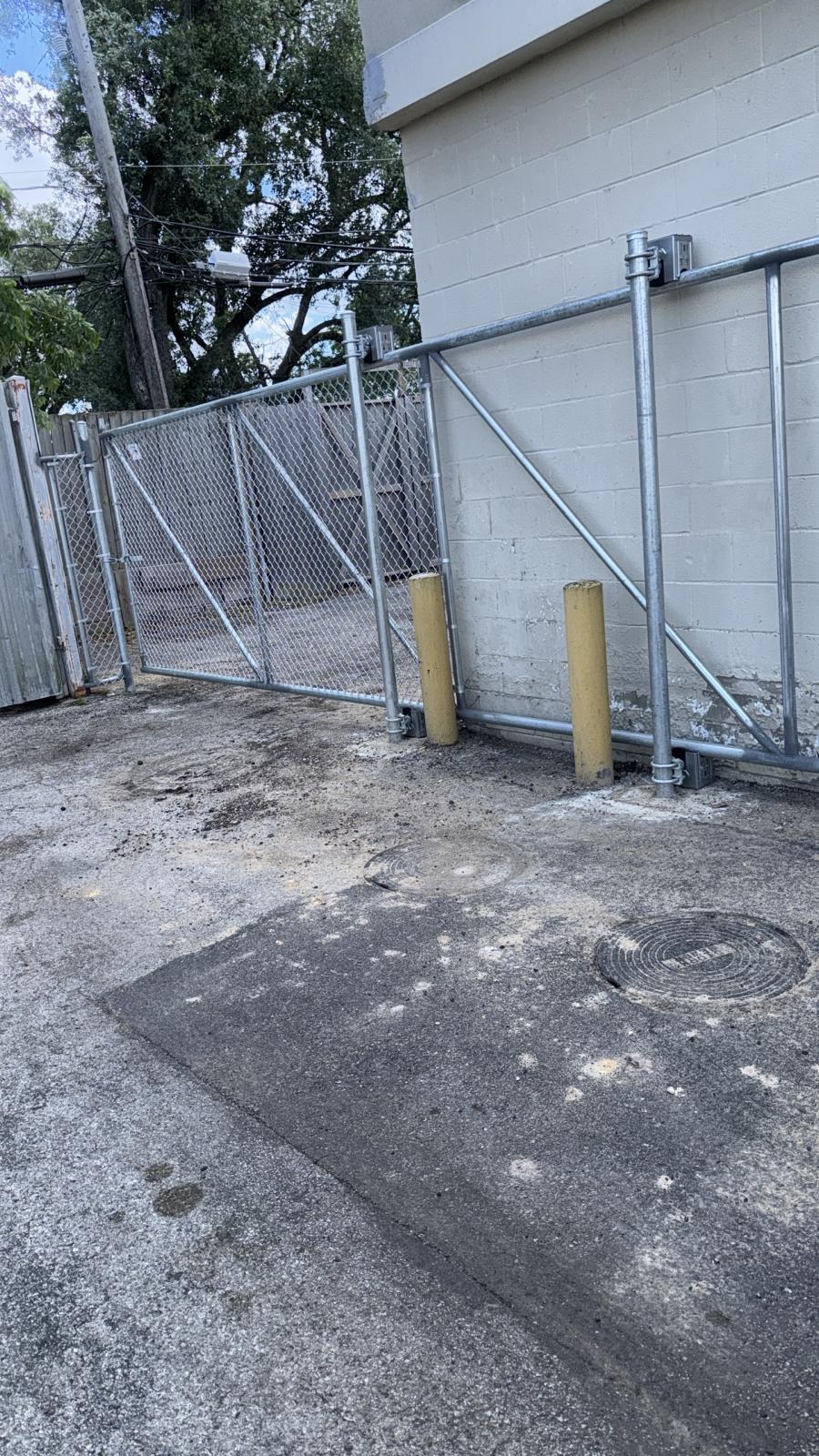
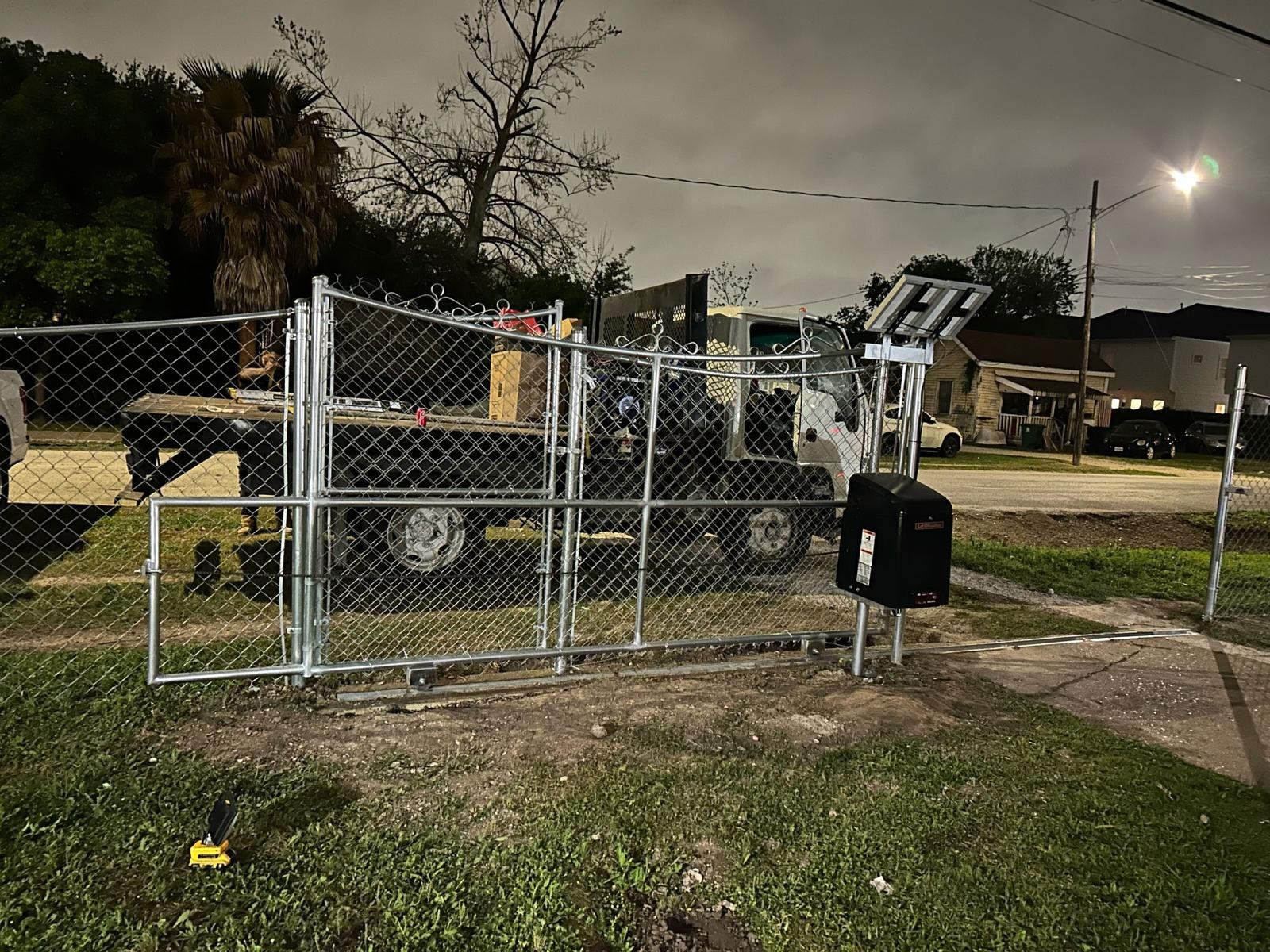
Very professional and friendly. Gotten automatic gates done and they are done to perfection! Thank you
had an excellent experience with mustang fencing From the initial consultation to the final installation, the team was professional, punctual, and attentive to detail. They helped me choose the perfect fence style to match my property and ensured everything was installed with precision. The quality of materials is top-notch, and the fence has completely transformed the look and security of my home. I highly recommend mustang services to anyone looking for reliable and high-quality fencing services!
Reviews shown word for word from the Mustang Fencing Services Google Business Profile (Galveston), captured 2026-10-12.
Questions we get about this
What height can a commercial chain link fence be in Galveston?
Is barbed or razor wire allowed on a commercial fence in Galveston?
What gauge is commercial chain link fence?
Does Galveston’s commercial fence permit need a survey?
Does a barbed wire arm count toward the 8-foot commercial height limit?
What are the barbed wire arm types on a commercial chain link fence?
Sources
Checked October 14, 2026. Rules change, so confirm with the City before you build.
- City of Galveston Land Development Regulations, Article 2, §2.601 (Supplemental Nonresidential and Mixed-Use Standards: Fences and Walls) and §2.501 (Supplemental Residential Standards: Fences and Walls) — Nonresidential height limits (8 ft, 12 ft tennis court), approved and prohibited materials, and the barbed/razor wire exception.
- City of Galveston, Fence Permit Application (Rev. 03/2023) — Residential/commercial routing; survey requirement for commercial fences; total height, material and barbed/razor wire fields; Historic District, Cedar Lawn NCD and Mean High Tide questions; owner/applicant certification.
- Chain Link Fence Manufacturers Institute, Guide for Specifying Commercial/Industrial Chain Link Fence, Section 32 31 13 — Fabric table (#11 generally not commercial); line post minimum sizes by height; barbed wire and barbed tape sections (ASTM F626, F1910).
- Merchants Metals, Zinc Coated (Galvanized) Steel Chain Link Fence Fabric, technical data sheet — ASTM A392 wire diameters for #6, #9 and #11 gauge fabric.
Ready to quote a commercial chain link fence?
We’ll walk the site, talk through height, top options and the permit paperwork, and give you a written price. Free on-site estimates for businesses across Galveston County.