
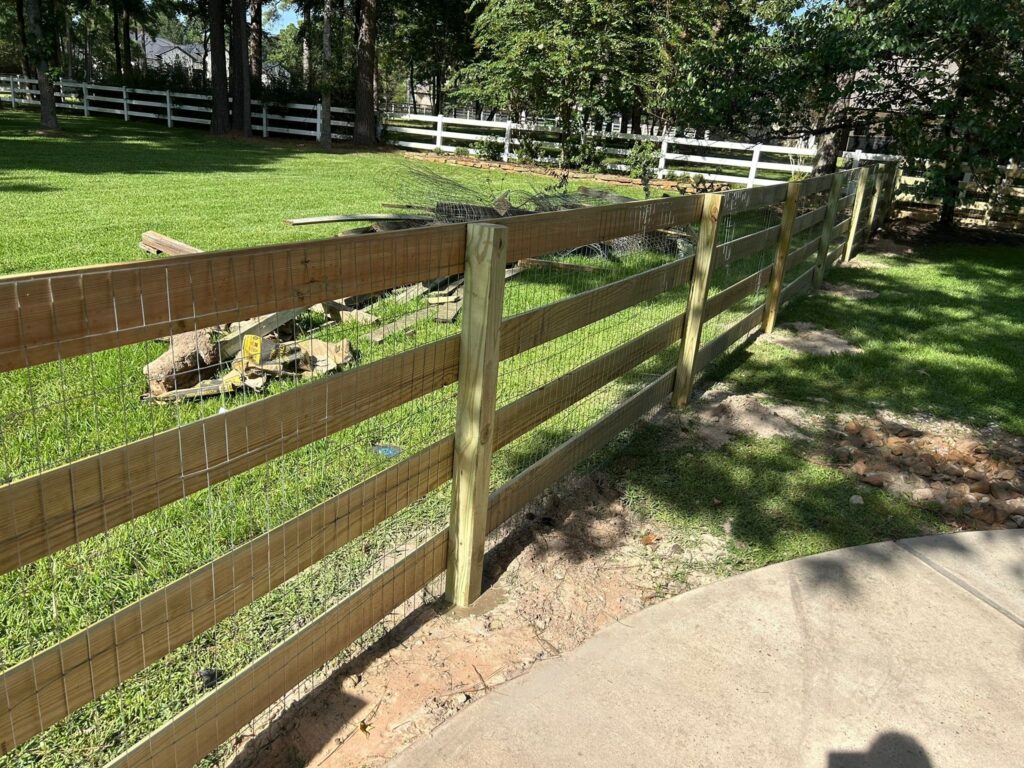
Straight answers from a local fence and gate contractor serving Galveston, Brazoria, and Chambers Counties.
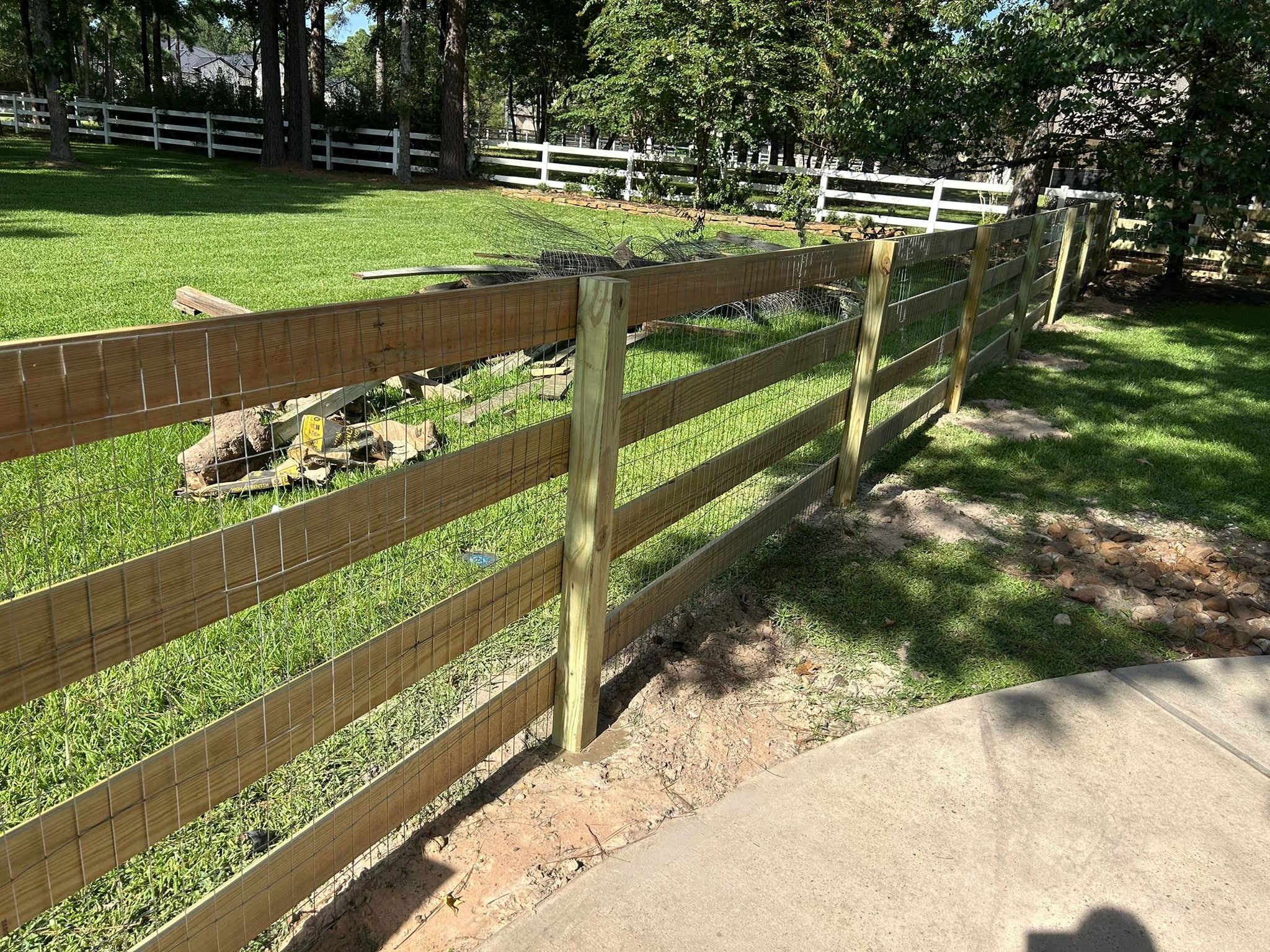
For most residential fences, full removal isn’t practical — but targeted prep helps
Taking down an entire fence line before every tropical storm or hurricane watch isn’t realistic for most homeowners, and it isn’t generally what’s recommended for standard residential fencing. Removing and reinstalling a full fence is a significant labor undertaking, and for most storms in the range a Galveston-area homeowner will actually experience in a given season, a well-anchored fence in a reasonable design is built to stay put. That said, there are specific, practical steps that genuinely reduce risk before a storm.
What’s actually worth doing before a storm
Secure or remove gate panels and lightweight sections, if your fence has a removable gate insert or lightweight decorative panel that isn’t permanently fastened — these are more vulnerable than the main fence line and easier to temporarily take down.
Clear the area around your fence of loose items — patio furniture, trash cans, planters, yard décor — since wind-borne debris (yours or a neighbor’s) is a more common cause of fence damage than wind pressure on the fence itself.
Trim overhanging tree limbs near the fence line well before storm season, since falling limbs are one of the most common causes of residential fence damage in coastal storms.
Inspect for existing weak points — leaning posts, loose panels, or visibly corroded hardware — and address them before hurricane season rather than during an active storm watch. A fence that’s already compromised is far more likely to fail in high wind.
When removal genuinely makes sense
A few specific situations are the exception to “leave it up”:
- Temporary or lightweight fencing (event fencing, some pool safety fencing not permanently anchored) that isn’t built for sustained wind load.
- Fence sections already damaged or destabilized from a prior storm, where leaving a compromised structure up risks it becoming the debris that damages something else.
- Specific manufacturer or installer guidance for certain gate or fence products designed with a storm-removal feature — ask your installer whether your specific product has this design consideration.
Bottom line
For the vast majority of well-installed residential fences, the better hurricane strategy is prevention (deep anchoring, corrosion-resistant hardware, sensible design) and pre-storm yard cleanup — not annual removal and reinstallation.
Related Questions
Should I remove my fence gate before a storm?
What should I do with my fence immediately after a hurricane?
Does trimming trees near my fence actually reduce storm damage?
Ready for a real number for your property? Request a free on-site estimate from Mustang Fencing Services.