
Industrial and Petrochemical-Area Perimeter Fencing in Texas City
Texas City sits in the middle of one of the Gulf Coast’s largest refining and petrochemical corridors, which makes perimeter fencing a different conversation than a backyard fence: height, mesh, barbed wire and gates all have a named standard behind them. Here’s what the city’s own ordinance allows, what the Department of Defense’s security fence spec actually says, and where a chain-link fence’s job ends.
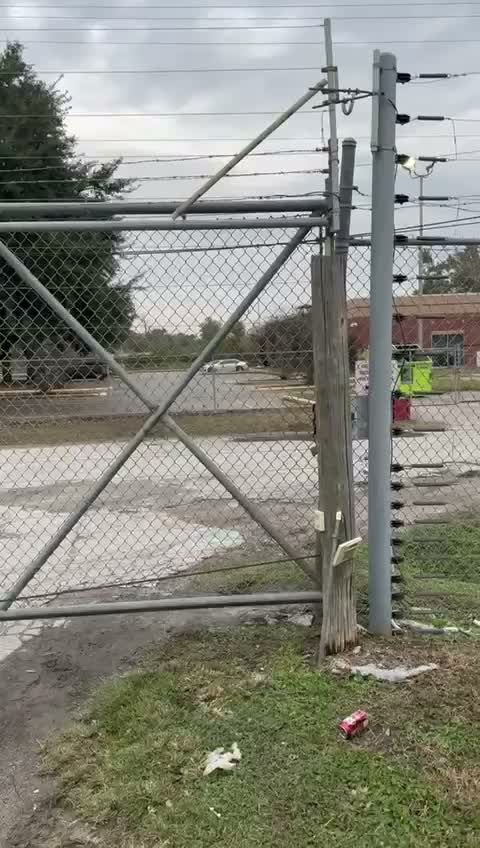
Texas City’s own fence ordinance caps most fences at 8 feet and allows barbed wire on commercial or industrial property only if its lowest strand sits at least 6½ feet above the ground. Neither number is arbitrary: the Department of Defense’s UFC 4-022-03 security fence standard — the document most “high-security chain link” quotes are written against — calls for 7 feet of fabric plus a 1-foot outrigger, exactly 8 feet, with the outrigger’s barbed wire riding well clear of 6½ feet. There is currently no separate federal rule forcing a specific fence spec at a chemical or industrial site: the program that once did, CFATS, lapsed in 2023 and Congress hasn’t restored it. That leaves the city ordinance as the legal floor, and a named industry standard like UFC 4-022-03 as the common language for anything above it.
Sources: City of Texas City Code of Ordinances §161.005; UFC 4-022-03, Security Fences and Gates (US DoD, Oct. 1, 2013); CISA, CFATS Laws and Regulations.
Why a fence is a different question here
Most of the fence questions on this site are about a backyard: height, material, who pays for it. Texas City is also home to a working stretch of Gulf Coast refining and petrochemical industry, and a fence around that kind of property is doing a different job — keeping people and vehicles out of a defined area, not just marking a property line. That changes three things: the fence has to meet the city’s own fence code like any other, barbed wire becomes a realistic option instead of a backyard no-no, and a buyer is likely to hear the phrase “high-security chain link” from a contractor without much explanation of what that means.
This page is about the fence and gate itself: what the city’s ordinance allows, what the named industry specification for a security-grade fence actually calls for, and where the fence’s job stops and a different specialty — stopping a vehicle, not just a person — starts.
What “security grade” means, compared with a standard commercial fence
There’s no single legal definition of “high-security chain link,” but there is a document most of those quotes are written against: UFC 4-022-03, Security Fences and Gates, a Unified Facilities Criteria standard the Department of Defense publishes for its own construction. It’s not a law that applies to a private Texas City site — but naming it gives you something concrete to hold a bid to, instead of taking “high-security” on faith.
| Feature | Typical standard commercial chain link | UFC 4-022-03 “security grade” |
|---|---|---|
| Fabric gauge | Often 11 or 11½ gage | 9-gage minimum |
| Mesh opening | Varies, sometimes larger | Not greater than 2 in per side |
| Fence height | 6 ft is common | 7 ft fabric minimum; 8 ft with the outrigger |
| Barbed wire | Optional, strand count varies | Minimum 3 strands, equally spaced, on an 18-in, 45° outrigger |
| Barbed wire spec | Not usually specified | ASTM A121: 12.5-gage twisted line wire, 4-point barbs on 5-in centers (standard grade) or 3-in centers (high-security grade) |
| Ground clearance | Varies | Fabric within 2 in of grade, anchored so it can’t be hand-lifted more than 5 in |
| Clear zones | Not specified | Example figures: ≈20 ft inner, ≈30 ft outer, when the site’s security plan calls for them |
UFC 4-022-03, Security Fences and Gates (US DoD, Oct. 1, 2013), §§2-2.1, 2-8, 2-9, 2-12.1; ASTM A121 as cited in UFC 4-022-03 §2-9.2.1.1. Gauge is also covered on our chain link gauge page.
Is there a federal rule for fencing at a chemical site?
Not right now. From 2007 until mid-2023, the Department of Homeland Security’s Chemical Facility Anti-Terrorism Standards (CFATS) program required high-risk chemical facilities to submit security plans, which commonly included perimeter measures like fencing. Congress let CFATS’s statutory authority expire on July 28, 2023, and the Cybersecurity and Infrastructure Security Agency (CISA) says it “cannot enforce compliance with the CFATS regulations” unless and until Congress reauthorizes the program. Bills to restore it have been introduced, but as of this review it has not come back.
That matters for a practical reason: whatever perimeter security a Texas City chemical or industrial site has today is a product of the company’s own risk program, its insurer’s requirements, or a client’s contract — not a federal fence mandate. The city’s own ordinance (above) is the actual legal floor for the fence itself.
The gate isn’t a vehicle barrier, and that’s worth saying plainly
A chain-link fence and a standard commercial gate — even an automated one — are built to control access, not to stop a moving vehicle. If a site genuinely needs to stop a vehicle at a specific point, that’s a named, tested category of its own: ASTM F2656 rates vehicle barriers by the size and speed of truck they stop, using ratings like K4/M30, K8/M40 and K12/M50 (roughly 30, 40 and 50 mph with a 15,000-lb test vehicle), plus a “penetration” rating for how far the vehicle’s bed moves past the barrier line. Sizing that correctly — including the standoff distance between the barrier and whatever it’s protecting — is an engineered calculation, not a fence contractor’s judgment call.
If that’s the actual need, say so up front and expect the fence/gate scope and the crash-rated-barrier scope to be two different conversations, possibly with two different specialists. For the gate itself — swing, slide, and the operator safety standards that apply either way — see our commercial gates page and UL 325 and ASTM F2200 explained.
Fence and barbed-wire heights, side by side
All figures in feet, from the two primary sources on this page.
Which fence spec fits this site?
Answer a few questions about the property. This checks your answers against the Texas City fence ordinance and against UFC 4-022-03, the named reference most “high-security chain link” quotes point back to. It names a starting point to discuss with a contractor — it is not a security assessment.
Starting point only, from the answers above. Zoning, material and insurer facts are yours to confirm; this doesn’t check them. UFC 4-022-03 is a Department of Defense design standard, not a Texas City ordinance or a law that applies to a private site — it’s cited here because it’s the specification most “security-grade chain link” quotes are written against, so you can compare a bid to a named document.
What to ask for in a quote
Whether the job is a standard commercial chain-link run or a security-grade upgrade, put these in writing before work starts:
- What wire gauge is the fabric, and what’s the mesh opening size?
- What total height, and does it include an outrigger? Does that total clear the Texas City ordinance’s 8-ft cap?
- If barbed wire is included: how many strands, on what centers, and how high is the lowest strand above grade? (6½ ft minimum on commercial/industrial property here.)
- How close to grade does the fabric run, and is it anchored against being lifted?
- Is any named standard (UFC 4-022-03, a specific ASTM number, an insurer’s own spec) being quoted to, or is “high-security” just a description?
- Does the site need a vehicle stopped at the gate, or just kept out? If the former, is a separate, engineered barrier scope in the quote or out of it?
For the fence and gate work itself, see commercial gates, chain link gauge explained and how tall should a warehouse perimeter fence be. For the area, see fence and gate installation in Texas City.
What Galveston County customers say
5.091 Google reviews · read them all on Google
chainlink fence installation by mustang fencing, looks really great, thanks.
Very professional and friendly. Gotten automatic gates done and they are done to perfection! Thank you
had an excellent experience with mustang fencing From the initial consultation to the final installation, the team was professional, punctual, and attentive to detail. They helped me choose the perfect fence style to match my property and ensured everything was installed with precision. The quality of materials is top-notch, and the fence has completely transformed the look and security of my home. I highly recommend mustang services to anyone looking for reliable and high-quality fencing services!
Reviews shown word for word from the Mustang Fencing Services Google Business Profile (Galveston), captured 2026-10-02.
Questions we get about this
How tall can a fence be on commercial or industrial property in Texas City?
Can I put barbed wire on a commercial or industrial fence in Texas City?
What does "high-security chain link fence" actually mean?
Is there a federal security requirement for fencing at a Texas City chemical plant?
Will a chain-link fence or gate stop a vehicle from driving through?
Do I need a permit for a tall fence in Texas City?
Sources
Checked October 2, 2026. Rules change, so confirm with the City before you build.
- City of Texas City Code of Ordinances, Chapter 161, §161.005 Fence Requirements (Ord. 2023-12, passed 4-19-2023) — 8-ft citywide rear/side-yard cap; front-yard opacity rules; barbed wire allowed on commercial/industrial property with lowest strand ≥6.5 ft; banned fence materials; 35-ft corner sight triangle; no fences on vacant lots.
- UFC 4-022-03, Security Fences and Gates (Unified Facilities Criteria, US Department of Defense, 1 October 2013) — 9-gage minimum fabric, 2-in max mesh; 7-ft fabric height, 8 ft with outrigger; 45°, 18-in outriggers with 3 barbed-wire strands; barbed wire per ASTM A121/F1665; example clear zones of ~30 ft outer / ~20 ft inner.
- ASTM A121, Standard Specification for Metallic-Coated Carbon Steel Barbed Wire — Standard Grade (barbs on 4-5 in centers) vs. High-Security Grade (3-in centers); coating types; minimum 950 lbf breaking strength. Cited directly by UFC 4-022-03 §2-9.2.1.1.
- Delta Scientific, “ASTM F2656 Explained: How M-Ratings Work for Vehicle Barriers” — K4/M30, K8/M40, K12/M50 test-speed ratings and P1-P3 penetration ratings for crash-rated vehicle barriers, and the K-to-M rating conversion.
- CISA, Chemical Facility Anti-Terrorism Standards (CFATS), Laws and Regulations/Statutes — CFATS statutory authority expired July 28, 2023; CISA cannot currently enforce CFATS compliance absent Congressional reauthorization.
Specifying a perimeter fence in Texas City?
Bring your zoning, any insurer or client fence spec, and your gate/vehicle requirements to the estimate, and we’ll go through what the ordinance allows and what a named standard like UFC 4-022-03 would add. Free on-site estimates across Texas City and Galveston County.