
How tall should a warehouse perimeter fence be?
There is no single required number — it’s a decision that balances what’s being protected, the site’s risk profile, and what local zoning allows. Most warehouse and industrial perimeter fences fall between 6 and 8 feet, and 8 feet is also where the industry’s own commercial/industrial chain link spec requires an engineering pass on post size and spacing. Here’s the real reasoning behind the common ranges, and a tool to help you land on a starting height for your site.
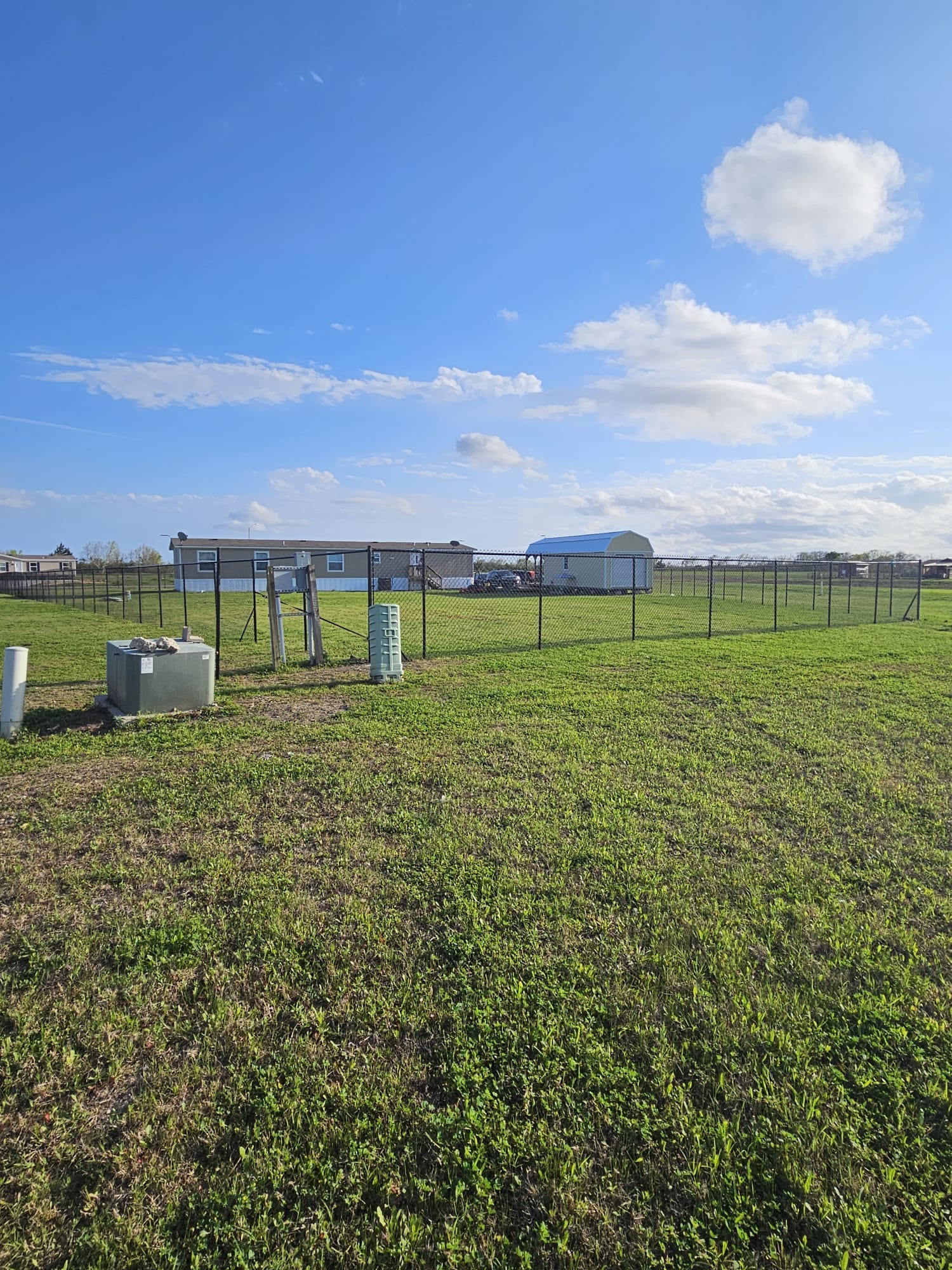
Most warehouse and industrial perimeter fences run 6 to 8 feet, with 8 feet being the frequent standard for a meaningful security barrier rather than just a property-line marker. That 8-foot mark isn’t arbitrary: the CLFMI’s own commercial/industrial/security chain link specification requires a wind-load force-and-strength engineering analysis for post size and spacing on any fence taller than 8 feet using 1-inch mesh or smaller — a real, checkable reason so many sites stop right at that line rather than go taller by default. Higher-risk sites holding high-value equipment or regulated materials sometimes go to 10 feet, often paired with anti-climb toppings. Stock chain link fabric runs 3 to 12 feet in one-piece widths, with custom fabric available up to 20 feet for sites that need it. None of this replaces your local zoning check — height limits for commercial and industrial properties are set locally, and confirming what your specific city or county allows for your zoning classification comes before finalizing any number.
Source: CLFMI Guide for Specifying Commercial/Industrial Chain Link Fence (Section 32 31 13); ASTM security-fence standard scopes (store.astm.org).
Why 8 feet shows up so often as the practical ceiling
Eight feet isn’t a round number chosen for convenience — it’s where the CLFMI’s commercial/industrial/security chain link specification draws a real engineering line. Below 8 feet, standard framework and post-spacing tables apply. Above it (with 1-inch mesh or smaller), the spec requires a wind load force strength analysis to size the posts and set their spacing correctly. On the Gulf Coast specifically, that analysis matters more than in many other regions: CLFMI’s own wind load guide keys its line-post spacing tables to ASCE 7-10 wind speeds from 105 to 170 MPH and the site’s exposure category, and Galveston sits in a higher-wind-speed zone than most of the country.
That’s a cost and planning line, not a hard legal ceiling — a taller fence is still buildable, it just needs that engineering step first. It’s part of why so many warehouse and industrial sites land at or just under 8 feet rather than defaulting to the tallest fence available.
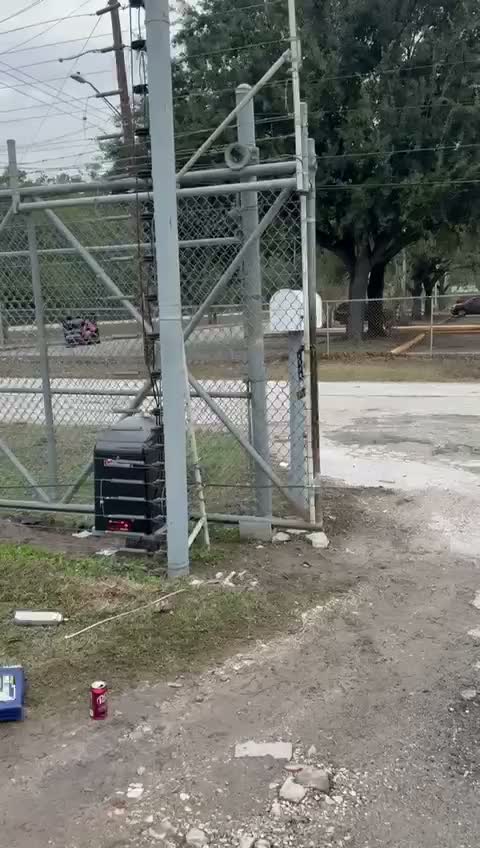
What the CLFMI commercial/industrial spec actually specifies
| Height | What applies |
|---|---|
| 3-12 ft | Off-the-shelf one-piece chain link fabric widths |
| Over 8 ft (1 in. mesh or smaller) | Requires a wind-load force-and-strength analysis for post size and spacing |
| Up to 20 ft | Available as custom-order fabric for higher-security industrial applications |
CLFMI Guide for Specifying Commercial/Industrial Chain Link Fence, Section 32 31 13 (Chain Link Fence Manufacturers Institute).
Height alone isn’t the whole security plan
A tall fence with no lighting, no clear sightlines and no monitoring is still just a tall fence. Height raises the physical barrier but doesn’t address visibility or detection — many facilities pair a solid 8-foot fence with perimeter lighting and camera coverage rather than chasing maximum height on its own, since a well-lit, monitored 8-foot fence line generally deters more effectively than an unlit, unmonitored 10-foot one.
Security-grade chain link design is also its own question, separate from height. ASTM F2611 covers the design and construction of chain link security fencing, and ASTM F2781 covers forced-entry, ballistic and low-impact resistance testing for security fence systems — both exist precisely because a tall fence and a genuinely secure fence aren’t automatically the same thing.
Where does your site land?
Answer three questions about what you’re protecting, the site itself, and what else is in place. This gives a reasoned starting height band to bring to a site visit — it is not a code lookup or a permit.
Reasoning only, built on common industry framing for commercial/industrial/security chain link (CLFMI) and the point that height alone isn’t a full security plan. Not a zoning lookup — confirm against your city or county’s actual fence-height limits for your property’s zoning classification before finalizing a height or ordering materials.

What Galveston customers say
5.091 Google reviews · read them all on Google
had an excellent experience with mustang fencing From the initial consultation to the final installation, the team was professional, punctual, and attentive to detail. They helped me choose the perfect fence style to match my property and ensured everything was installed with precision. The quality of materials is top-notch, and the fence has completely transformed the look and security of my home. I highly recommend mustang services to anyone looking for reliable and high-quality fencing services!
I am so pleased with the fence!! Your solution was exactly the right one and the team did a highly professional job. Frankly, I was amazed at how clean the job site was at the completion of the project. Feel free to list me as a reference and a very happy customer. Thanks again and please let the men know That I appreciate their hard work and quality craftsmanship.
True professionalism is very rare in this day and age, these guys live upto their word and deliver on their service! Our fence was down in the July storm and these guys came and gave a reasonable quote, after confirming I received a time line and they delivered! Will recommend them to everyone I know who needs fencing done.
Reviews shown word for word from the Mustang Fencing Services Google Business Profile (Galveston), captured 2026-10-12.
Questions we get about this
How tall should a warehouse perimeter fence be?
Why is 8 feet such a common cutoff?
Can a chain link fence be built taller than 8 feet?
Does a taller fence automatically mean better security?
Is there a separate standard for security-grade chain link fencing?
Do I need a permit for a tall warehouse fence in Galveston?
Sources
Checked October 15, 2026. Rules change, so confirm with the City before you build.
- CLFMI Guide for Specifying Commercial/Industrial Chain Link Fence (Section 32 31 13) — Stock fabric heights (3-12 ft one-piece, up to 20 ft custom); wind-load force-and-strength analysis requirement over 8 ft with 1 in. mesh or smaller; references CLFMI SFR 2445 and ASTM F2781 for security-grade design.
- ASTM F2611 — Standard Guide for Design and Construction of Chain Link Security Fencing — Scope: material selection, system installation and layout for security chain link fence design, separate from height.
- ASTM F2781 — Testing Forced Entry, Ballistic and Low Impact Resistance of Security Fence Systems — Scope: forced-entry, ballistic (handgun/rifle) and vehicle-impact testing for security fence systems.
- CLFMI Wind Load Guide (WLG 2445, 2018) — Line-post spacing tables keyed to ASCE 7-10 wind speeds (105-170 MPH) and exposure category — basis for why Gulf Coast wind zones make the 8 ft engineering trigger a real consideration.
Planning a warehouse or industrial perimeter fence?
We’ll walk your site, talk through height, mesh and any security-grade requirements, and put it on a written quote. Free on-site estimates across Galveston and Brazoria Counties.