
Two Galvanized Chain-Link Fence Sections for Richard Haase in Angleton, TX
Richard Haase had two separate galvanized chain-link fence sections installed on his Angleton property, with metal posts set in concrete. Here’s what Mustang documented about the job — plus why splitting it into two sections changes the post count, and what the zinc coating class actually resists, with a posts-needed estimator below.
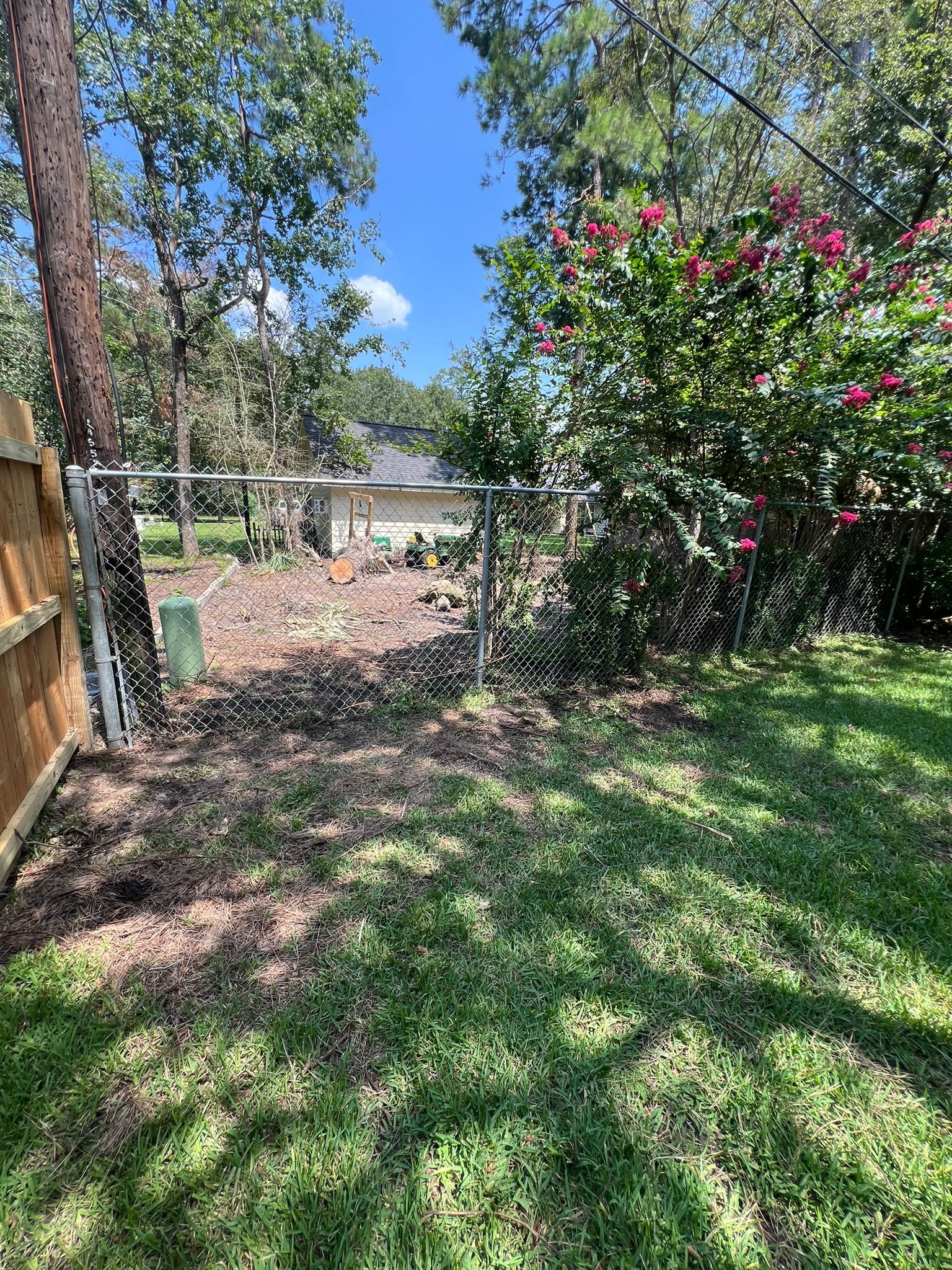
Mustang Fencing installed two separate galvanized chain-link fence sections for Richard Haase in Angleton, TX, with metal posts set in concrete and the fabric attached taut. Splitting the job into two sections — rather than one continuous run — means double the terminal (end) posts.
Sources: this project’s own documented facts and photo; CLFMI Product Manual 32 31 13; Merchants Metals ASTM A392 data sheet. Checked November 9, 2026.
The job: two galvanized chain-link sections, posts set in concrete
Richard Haase asked Mustang Fencing for two sturdy chain-link fence sections to secure specific areas of his Angleton property while keeping an open, clean look elsewhere on the lot. After a site visit to lay out placement, Mustang marked the two sections, dug the post holes, set the metal posts in concrete, and attached the galvanized chain-link mesh taut and secured to the posts.
Choosing galvanized fabric over bare steel was the material decision documented for this job — it’s built to resist rust better than uncoated wire, which matters on the humid upper Texas Gulf Coast.
What “galvanized” actually means here
Galvanized chain-link fabric is zinc-coated steel wire. Per ASTM A392 (the standard governing zinc-coated steel chain-link fence fabric), the coating comes in two minimum weight classes: Class 1 at 1.2 oz/ft² and Class 2 at 2.0 oz/ft² — roughly 67% more zinc. Per Merchants Metals’ own technical data sheet, Class 2 fabric carries a 25-year warranty against failure from rust or corrosion — the manufacturer’s warranty on the material, not a Mustang warranty.
A heavier zinc coating simply has more material to corrode away before bare steel is exposed, which is why coating class matters more in a humid, salt-exposed climate like Angleton’s than it would somewhere dry.
Terminal posts needed: one continuous run vs. two separate sections
Illustrative example at a 100 ft total length — not a measurement of Richard’s actual as-built sections, which weren’t documented.
Chain-link posts-needed estimator
Arithmetic based on the CLFMI Product Manual’s line-post spacing standard (posts no more than 10 ft apart on-center) — not a materials order. Every section start and end is a terminal post; everything between is a line post.
Posts per section = ceil(section length ÷ 10 ft) + 1 (2 terminal + the rest line posts). Source: CLFMI Product Manual 32 31 13 — line posts at intervals not exceeding 10 ft (3.05 m) on-center. Estimate only — confirm with your installer.
What Galveston-area customers say
5.091 Google reviews · read them all on Google
Mustang Fencing Services provides great quality and craftsmanship. Their workforce is competent and efficient, guaranteeing that every project meets the greatest requirements. The materials utilized are strong, and the attention to detail is excellent. Highly suggest to anyone in need of dependable fencing solutions!
"Mustang Fencing Service did an amazing job on my new fence! The team was professional, efficient, and communicative. The quality of the materials is outstanding, and they finished on time and within budget. Highly recommend them for any fencing needs!"
“I had a fantastic experience with Mustang Fencing Services. Their professionalism and commitment to delivering high-quality work were impressive. The team demonstrated excellent time management, completing the project on schedule without compromising on the quality of the materials or craftsmanship. I highly recommend them for anyone looking for reliable and efficient fencing services!”
Reviews shown word for word from the Mustang Fencing Services Google Business Profile (Galveston), captured 2026-11-08.
Questions we get about this
What did Mustang Fencing install for Richard Haase in Angleton?
Two separate galvanized chain-link fence sections, with metal posts set in concrete and the fabric attached taut to the posts.
Why two separate sections instead of one continuous fence?
Per the documented job notes, the two sections were sized to secure specific areas of the property while keeping an open, clean look elsewhere on the lot. The exact placement and lengths weren’t documented.
What does "galvanized" protect against?
It’s a zinc coating on the steel wire. ASTM A392 sets two minimum coating-weight classes (1.2 oz/ft² and 2.0 oz/ft²); per Merchants Metals, the heavier Class 2 coating carries a 25-year manufacturer warranty against rust or corrosion failure. More zinc means more material has to corrode away before bare steel is exposed.
How far apart are the posts on a chain-link fence like this?
The CLFMI Product Manual sets line-post spacing at no more than 10 ft on-center, with a terminal (end) post at the start and finish of every separate run — so two sections need their own pair of terminal posts each.
Does Mustang Fencing install chain-link fencing elsewhere near Angleton?
Sources
Checked November 9, 2026. Rules change, so confirm with the City before you build.
- CLFMI Product Manual 32 31 13, Chain Link Fence and Gates — Line-post spacing (not exceeding 10 ft/3.05 m on-center); terminal/end post distinction from line posts; fabric mesh size and wire gauge table (6/9/11/12 gauge).
- Merchants Metals, Zinc Coated (Galvanized) Steel Chain Link Fence Fabric, technical data sheet — ASTM A392 coating classes: Class 1 minimum 1.2 oz/ft² (366 g/m²), Class 2 minimum 2.0 oz/ft² (610 g/m²); Class 2 fabric’s 25-year warranty against rust/corrosion failure.
Need one or two chain-link sections, not a full perimeter, near Angleton?
We’ll walk the exact areas you want secured and put the layout and coating class on a written estimate.