
Vehicle Detection Loops for Automatic Gates: Shadow, Interrupt and Exit Loops Explained
A buried loop or a surface probe tells an automatic gate that a vehicle is there. It is a different device from the photo eye or edge sensor that UL 325 requires to protect a person, and the three loop types, plus the simpler exit probe, each solve a different problem.
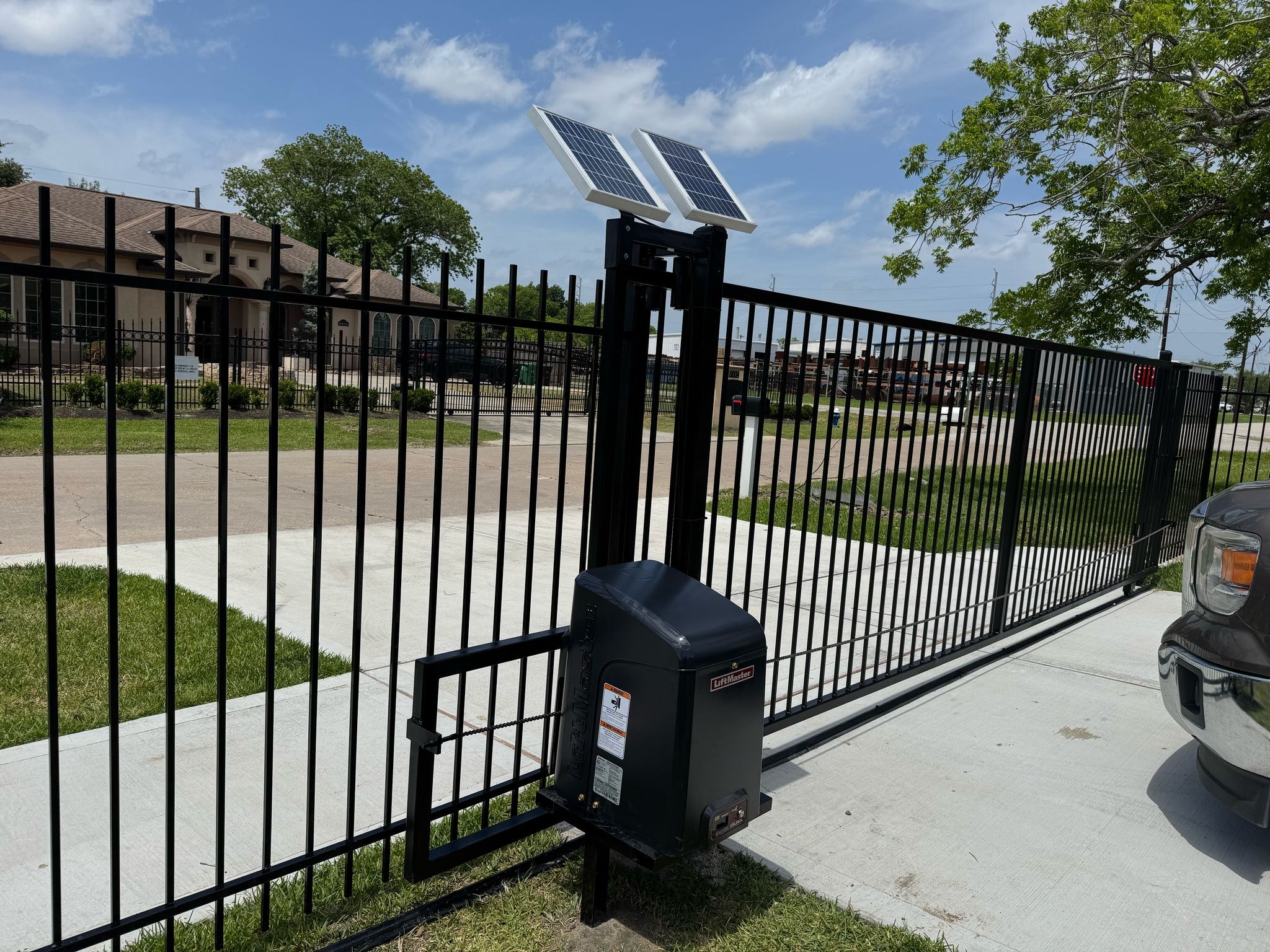
A reversing loop (paired, for slide gates) or shadow loop (for swing gates) keeps the gate from closing on a vehicle that is still in its path. An interrupt loop, placed outside the property, reopens a gate that is already closing on an approaching vehicle. An exit loop, or the simpler no-dig exit probe, opens a closed gate automatically so someone leaving does not have to stop for a code. None of these are a substitute for the photo eye, edge sensor or inherent reversing device that UL 325 requires to protect a person — loops and probes only sense vehicles.
Sources: DoorKing Loop Info-S-5-22; LiftMaster LOOPDETLM manual; EMX VMD202 manual; ApolloGateOpeners’ UL 325 resource (Type A/B1/B2/C/D list).
A vehicle loop and an entrapment sensor solve two different problems
A buried wire loop and a photo eye both sit near an automatic gate, but they are built to catch two different things. A loop detector, or the surface-mounted exit probe that stands in for one, senses a moving or parked vehicle, so the gate can be told to hold open, reopen, or let someone exit. The entrapment-protection devices UL 325 requires are built to keep the gate from closing on a person, or to get the operator itself to stop and reverse. ApolloGateOpeners’ UL 325 resource lists five recognized entrapment-protection device types — Type A (inherent reversing), Type B1 (photoelectric sensor), Type B2 (edge sensor), Type C (inherent force limiting) and Type D (continuous-pressure actuator) — and a vehicle loop detector is not one of them. See our full UL 325 / ASTM F2200 guide for what an operator actually needs to meet that standard.
That does not make loops optional. DASMA’s own installation guidelines list an inherent reversing device, edge sensors and photoelectric eyes as entrapment-protection examples, and expect those to work alongside whatever access-control and detection equipment is already on the gate: the loop or probe keeps the gate from closing on a car that is still in its path; the photo eye or edge sensor keeps it from closing on a person.
Five devices at the gate, compared
| Where it sits | What it does | Typical gate type | |
|---|---|---|---|
| Reversing / safety loop (pair) | Flanking the gate opening, phased to create a dead zone | Holds the gate open, or reopens it, if a vehicle is still in its path | Slide gates (used in pairs) |
| Shadow loop | Inside the swing gate’s own arc | Active only while the gate is open, so it can swing closed over the loop without false-triggering | Swing gates |
| Interrupt loop | Outside the property, on the approach side | Reopens a gate that is already closing when it senses an approaching vehicle | Slide or swing |
| Exit loop | Inside the property | Opens a closed gate automatically so a vehicle can leave | Slide or swing |
| Exit probe | Buried near the edge of the drive, no saw cut | Senses a moving vehicle for free exit; motion-only, not a presence sensor | Slide or swing, where cutting pavement is not practical |
Sources: DoorKing Loop Info-S-5-22; LiftMaster LOOPDETLM manual; EMX VMD202 manual.
Exit probes: the no-saw-cut alternative to a full exit loop
Cutting a loop into existing pavement is not always practical, especially on a driveway that was poured long before the gate went in. EMX Industries’ VMD202, a common example of what the trade calls an exit probe, is a single buried sensor with up to a 12-foot detection range that triggers on a moving vehicle rather than a parked one, and is marketed specifically as a free-exit sensor so a vehicle can leave without a code or fob.
EMX’s own manual is direct about the limit: the device “is not suitable for use as a vehicle presence detector such as a reversing loop for a gate or door.” An exit probe answers the convenience question — letting people leave without stopping — not the safety question of whether a gate should reopen because a car is sitting in its path. If the actual complaint is a gate that starts closing while a vehicle is still there, that calls for a reversing or shadow loop (or a UL 325 entrapment-protection device), not a probe.
Which loop or probe fits your gate?
Answer three questions about the actual problem at your gate. This is a planning aid, not a quote — ask your installer to confirm what your operator already supports.
Planning aid only, based on how each device is designed to be used (DoorKing Loop Info-S-5-22; LiftMaster LOOPDETLM manual; EMX VMD202 manual). It leaves out the interrupt loop, which can be added outside the property on either gate type to reopen a gate that is already closing on an approaching vehicle — ask your installer whether your operator needs one. It does not price hardware or installation — get bids from at least two installers.
What Galveston customers say
5.091 Google reviews · read them all on Google
Very professional and friendly. Gotten automatic gates done and they are done to perfection! Thank you
We just installed iron gate and it looks amazing thank you very much mustang fencing .
chainlink fence installation by mustang fencing, looks really great, thanks.
Reviews shown word for word from the Mustang Fencing Services Google Business Profile (Galveston), captured 2026-11-05.
Sources
Checked November 5, 2026. Rules change, so confirm with the City before you build.
- DoorKing, Underground Loops and Loop Detectors (Loop Info-S-5-22) — how a loop field works; slide gates use two reversing loops wired in series, phased for a pass-through dead zone; optional automatic exit loop.
- LiftMaster, LOOPDETLM Plug-in Loop Detector Instructions — defines Shadow Loop (swing-gate arc, active only while open), Interrupt Loop (outside the property, reopens a closing gate) and Exit Loop (inside the property, opens a closed gate).
- EMX Industries, VMD202 Single-Piece Vehicle Motion Detector manual — 12-ft detection range, motion-only operation, and the manufacturer’s own caution that it is not a substitute for a presence/reversing loop.
- DASMA TDS 352, Automatic Vehicular Gate Operating Systems: Guidelines — lists an inherent reversing device, edge sensors and photoelectric eyes as entrapment-protection examples (already used on our UL 325 guide).
- ApolloGateOpeners, UL 325 Safety Standards resource — the five recognized entrapment-protection device types (A, B1, B2, C, D); vehicle loop detectors are not among them.
Adding or troubleshooting gate loops in Galveston?
We’ll look at what your gate already has, and whether a reversing loop, a shadow loop, an interrupt loop or an exit probe actually fits the problem you’re having. Free on-site estimates across Galveston Island and Galveston County.
Questions we get about this
What is the difference between a shadow loop and an interrupt loop?
A shadow loop sits inside a swing gate’s own arc and is active only while the gate is open, so the gate can close over it without the loop reversing it. An interrupt loop is placed outside the property, on the approach side, and reopens a gate that is already closing when it senses a vehicle coming (LiftMaster LOOPDETLM manual).
Do I need a vehicle loop if my gate already has a photo eye?
Usually yes, for a different reason. A photo eye is one of the UL 325 entrapment-protection devices that keep a moving gate from closing on a person. A vehicle loop or exit probe is a separate device that senses a car, not a person, so the gate can be told to hold open, reopen, or let someone exit. See our UL 325 / ASTM F2200 guide for what the entrapment-protection side requires.
What is an exit probe, and is it the same as an exit loop?
Both trigger a closed gate to open so a vehicle can leave, but an exit loop is a wire coiled into a saw-cut or preformed loop in the pavement, while an exit probe (such as the EMX VMD202) is a single buried sensor that needs no saw cut. The manufacturer’s own manual notes the probe only detects a moving vehicle and is not built to work as a presence/reversing loop.
Does a vehicle detection loop satisfy UL 325 entrapment protection?
No. UL 325 recognizes five entrapment-protection device types (inherent reversing, photoelectric sensor, edge sensor, inherent force limiting, and a continuous-pressure actuator); a vehicle loop detector is not one of them. A loop or probe keeps a gate from closing on a vehicle still in its path; the gate still needs its own UL 325-recognized device to protect a person.