
A Wonderful Wooden Fence Project for Tameka Staten Johnson in Hitchcock, Texas
Tameka wanted a cedar fence for privacy with a natural, attractive look. Here is the fence Mustang built her — posts dug and placed at precise intervals, cedar panels secured with galvanized nails — and the sourced reason galvanized fasteners matter on a tannin-rich wood like cedar.
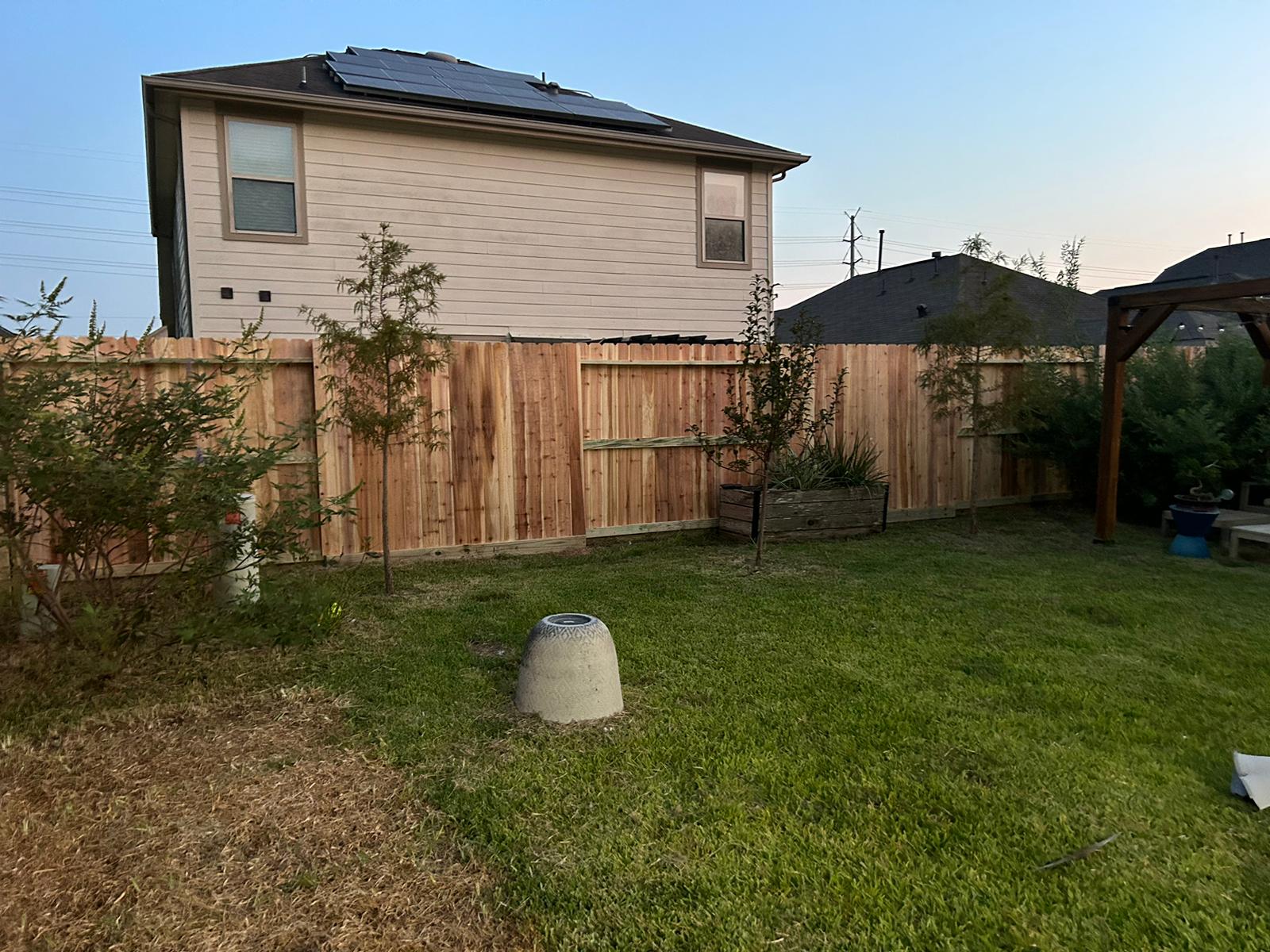
Mustang Fencing built a cedar privacy fence for Tameka Staten Johnson in Hitchcock, TX. Post holes were dug and placed at precise intervals for a sturdy, uniform structure, and the cedar panels were installed one by one, secured with galvanized nails for added durability.
Sources: this project’s own documented facts and photos; USDA Forest Products Laboratory, Wood Handbook FPL-GTR-282 (2021), Ch. 8 & Ch. 16. Checked November 4, 2026.
The job: a cedar privacy fence, set with care
Tameka Staten Johnson wanted a fence for her Hitchcock property that gave her privacy with an attractive, natural look. Mustang Fencing recommended cedar for its durability against weather and its rich, natural tones.
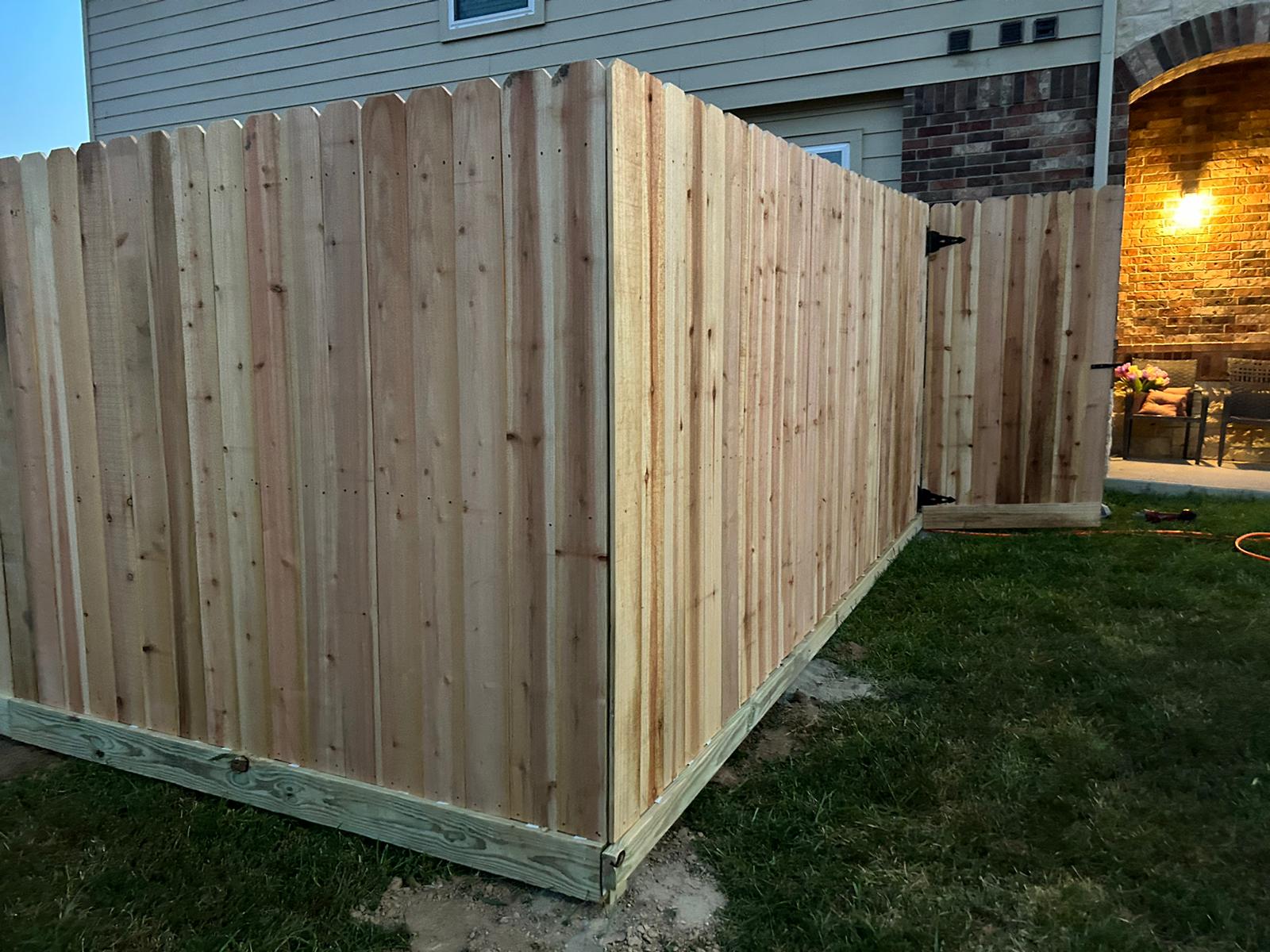
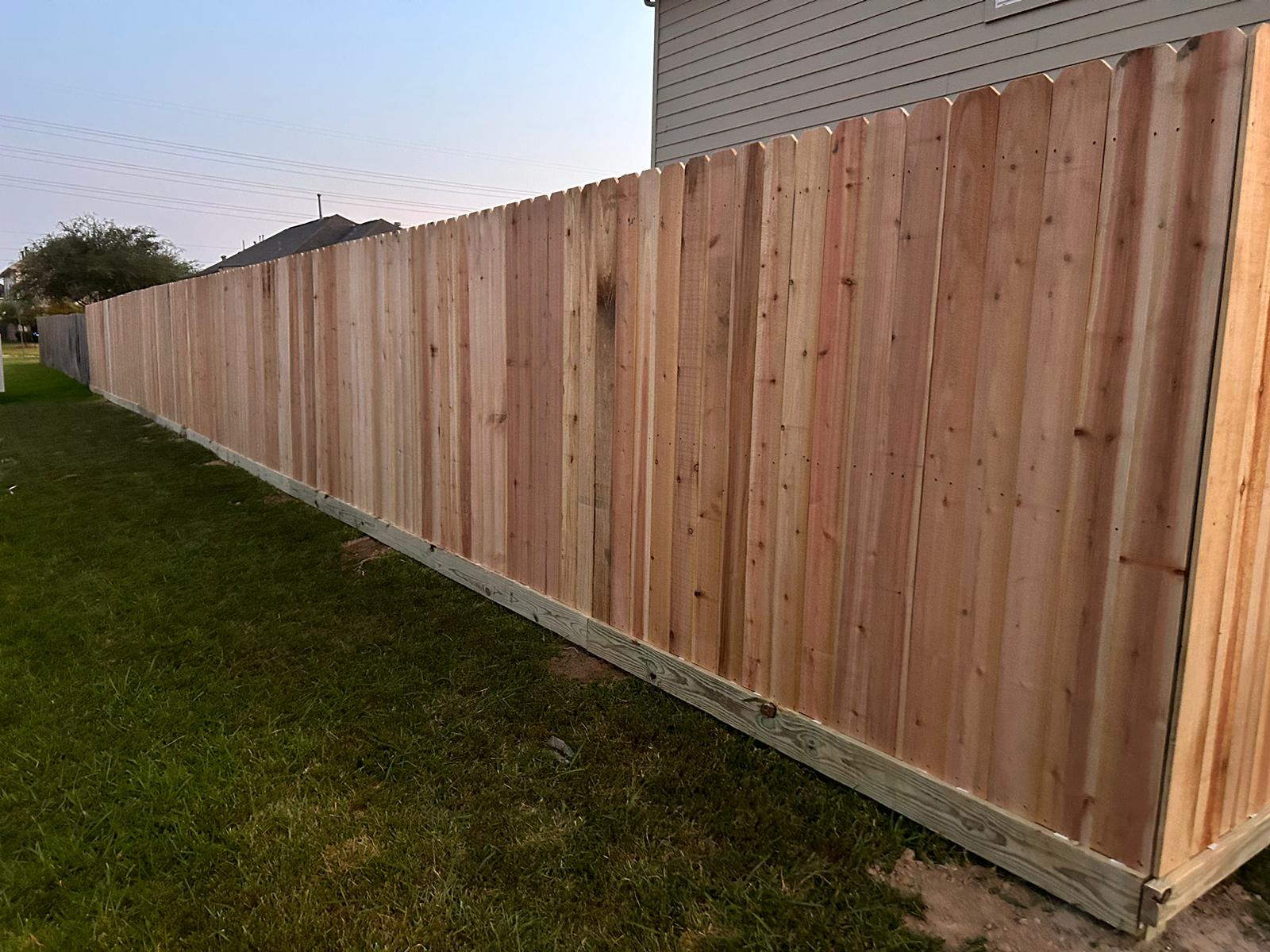
Post holes were dug and placed at precise intervals to keep the structure sturdy and uniform along the run. The cedar panels went up one by one, each secured with galvanized nails for added durability. The job photos show a privacy-style fence with the boards set tight against each other — not a gapped picket style.
Why galvanized nails matter on a wood like cedar
Cedar looks great left natural, but it is high in tannins — and tannins react with plain steel in the presence of moisture. USDA’s Forest Products Laboratory names cedar directly: iron stain from rusting fasteners is “common… even when contractors do the work” on tannin-rich species “such as western redcedar, redwood, and oak.” The fix is the fastener, not the wood — hot-dip galvanized nails meeting a standard such as ASTM A153/A are, in USDA’s words, “far less likely to cause iron stain than plain carbon steel.” That is the sourced reason galvanized nails are the documented fastener on this fence, not just a generic durability upgrade.
Fastener choice and iron-stain risk on tannin-rich wood
| Fastener | Iron/tannin stain risk on cedar | Source |
|---|---|---|
| Stainless steel | Safe, to USDA’s knowledge | Ch. 16, iron stain |
| Hot-dip galvanized (ASTM A153/A) | Far less likely than plain carbon steel | Ch. 16, iron stain |
| Plain carbon steel | Common, even with careful installation | Ch. 16, iron stain |
USDA Forest Products Laboratory, Wood Handbook FPL-GTR-282 (2021), Ch. 16 (iron stain) and Ch. 8 (Corrosion and Staining).
Fence post spacing calculator
Straight-line arithmetic for even post spacing across a run: enter the total length and your target maximum spacing to see how many posts are needed and the actual even spacing that results. Not a quote — corners, gates and terrain are not included.
Arithmetic: sections = ceiling(run length / target max spacing); posts = sections + 1; actual spacing = run length / sections (always ≤ target, kept even across the run).
What customers say on Google
5.091 Google reviews · read them all on Google
Amazing work will go ahead and recommend everyone in friends and family We installed 8ft tall double sided stained cedar wood fence in our backyard, it’s really looks great, installed perfectly nice finishing and cost effective, thanks mustang fencing.
Installed Stained cedar wood fence yesterday by mustang fencing, thanks for the beautiful work.
I have hired Mustang fencing services to fix my backyard fencing. Good wood to used. I really like theirs work. Best of luck
Reviews shown word for word from the Mustang Fencing Services Google Business Profile (Galveston), captured 2026-11-02.
Questions we get about this
What did Mustang Fencing build for Tameka Staten Johnson?
Is this a picket fence?
Why does the fastener matter on a cedar fence?
Why was cedar chosen for this fence?
Does Mustang Fencing serve Hitchcock, TX?
Sources
Checked November 4, 2026. Rules change, so confirm with the City before you build.
- USDA Forest Products Laboratory, Wood Handbook FPL-GTR-282 (2021), Ch. 16 (Finishing, iron stain) — Iron/tannin stain is common on western redcedar, redwood and oak with plain carbon steel fasteners; hot-dip galvanized fasteners (e.g. ASTM A153/A) are far less likely to cause it.
- USDA Forest Products Laboratory, Wood Handbook FPL-GTR-282 (2021), Ch. 8 (Fastenings, Corrosion and Staining) — Stainless steel, aluminum or hot-dipped galvanized nails can alleviate staining caused by wood extractives reacting with steel in the presence of moisture.
Want a cedar privacy fence built with the right fasteners?
We’ll talk through post spacing and fastener choice before any order goes on a written estimate.