
Straight answers from a local fence and gate contractor serving Galveston and Brazoria Counties.
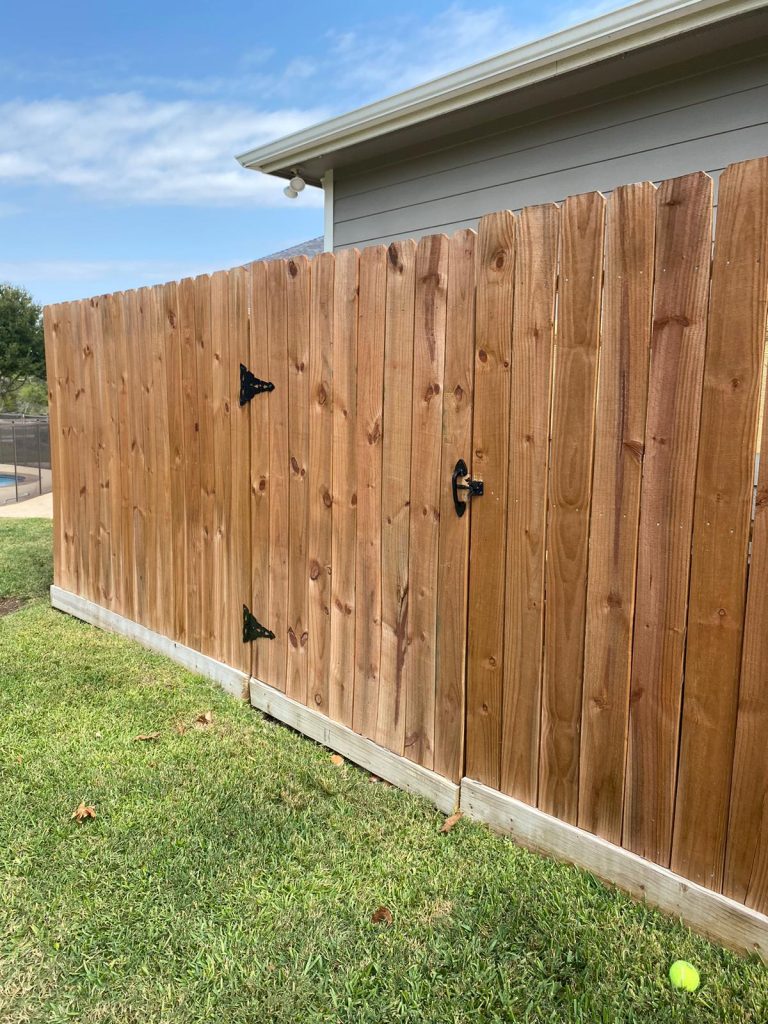
A gate takes more mechanical stress than any other part of a fence system — it’s the one section that moves, gets pushed, pulled, and swung open and closed constantly. That’s exactly why gates are usually the first thing to fail, and why the repair-or-replace decision comes up so much more often for gates than for the rest of a fence.
The 50% Rule
A common rule of thumb in the fencing and gate industry: if the cost of repairing a gate approaches or exceeds roughly half the cost of a full replacement, replacement is usually the smarter move. That threshold accounts for the fact that a gate old enough or damaged enough to need a repair that expensive is also likely to need another expensive repair again soon.
Signs That Point Toward Replacement
- Foundational problems. If the gate leans heavily, drags or scrapes the ground constantly, or the posts themselves have visibly shifted, the issue usually isn’t the gate — it’s the foundation underneath it. A new or repaired gate can’t stay aligned on a failing post or footing, so that has to be addressed first, and often it’s more cost-effective to replace the whole system at that point.
- Rust that’s reached the frame. Surface rust on hardware is a repair item. Rust that’s compromised the structural frame of the gate itself is a replacement item — a weakened frame is a safety issue, not just a cosmetic one.
- A pattern of repeat repairs. One service call for a bad hinge is normal wear and tear. Multiple service calls over the past year or two for different issues on the same gate is a pattern worth stepping back and evaluating as a whole, rather than approving each repair individually as it comes up.
- It won’t stay closed or latched. A gate that won’t close and lock properly is a security issue first and a convenience issue second. That’s a non-negotiable fix, and if the underlying hardware or frame can’t reliably hold a latch anymore, replacement is usually the safer call than a series of stopgap repairs.
When Repair Is the Right Call
Repair works well when the problem is isolated and the gate’s structure is still sound — a bad sensor on an automated gate, a worn hinge on an otherwise straight and solid frame, a latch that needs adjustment. These are inexpensive, quick fixes that can extend a good gate’s life significantly, and there’s no reason to replace a structurally sound gate over a small mechanical issue.
The honest answer to “repair or replace” almost always comes down to whether the problem is in the gate itself or in what’s holding it up. A gate problem is often repairable. A post or foundation problem usually means the gate needs to come down regardless of how good the gate itself still looks.
Ready for a real number for your property? Request a free on-site estimate from Mustang Fencing Services.