
A 6-Foot Treated Pine Privacy Fence for Arturo Roque in Pearland, TX
Arturo Roque asked Mustang Fencing for a backyard privacy fence his family could enjoy without being exposed to neighbors. Here’s what was documented about the job — a 6-ft treated pine privacy fence, posts set in concrete, built around a slight slope and preserved mature trees. No job photos are on file for this specific project, so the photos below show other recent Mustang privacy-fence work, clearly captioned as such — plus how a sloped yard and the treatment standard behind concrete-set posts actually work, with an estimator below.
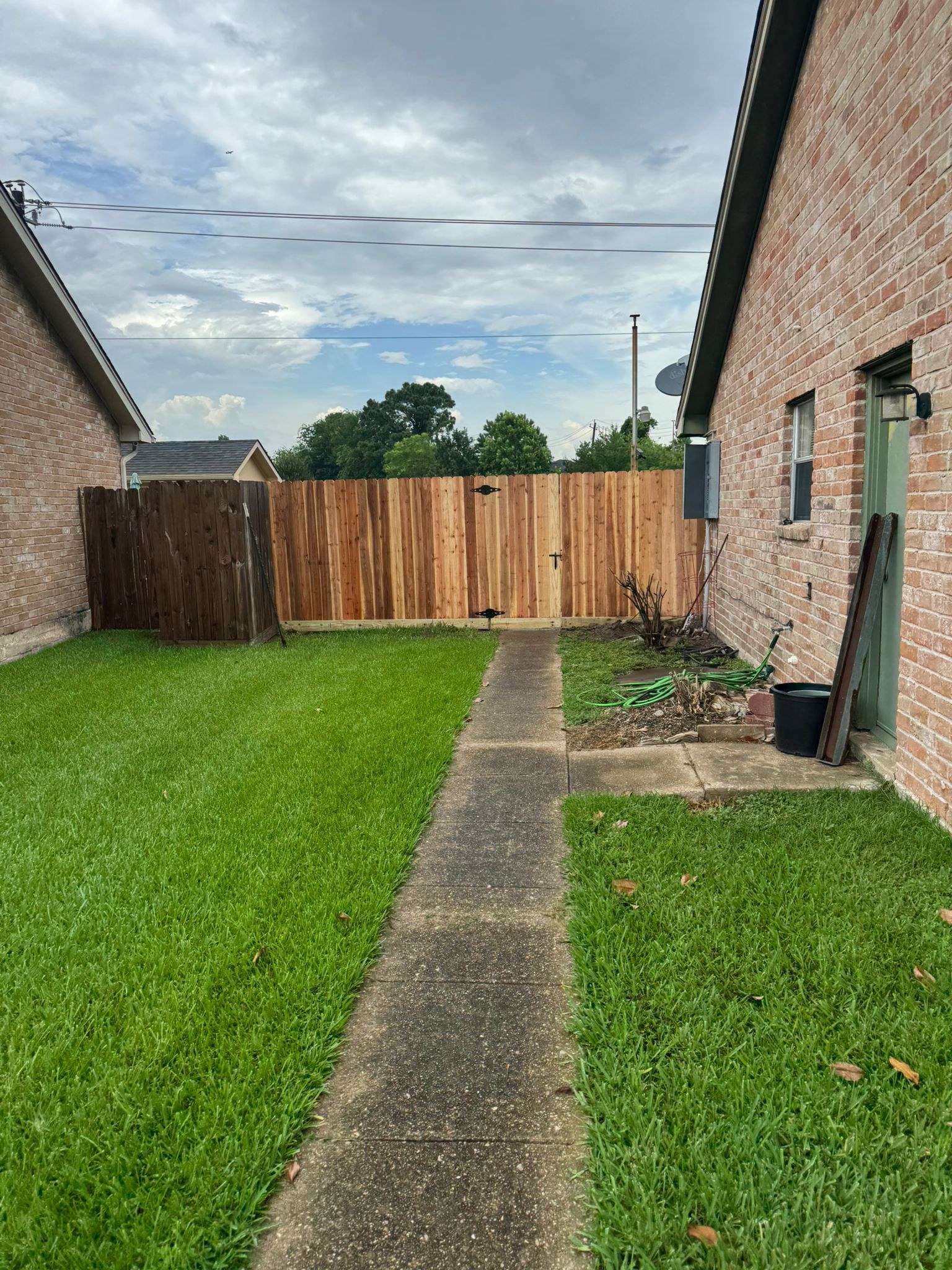
Mustang Fencing built a 6-foot treated pine privacy fence for Arturo Roque in Pearland, TX, with the posts set in concrete. The job was built around a slight slope in the yard — panel heights were adjusted to avoid gaps — and around mature trees near the property line that Arturo wanted kept intact.
Sources: this project’s own documented facts (no job photo on file); SFPA Pressure-Treated Southern Pine (2019). Checked November 9, 2026.
The job: a 6-ft treated pine privacy fence, built around a slope and mature trees
Arturo Roque wanted his backyard turned into a private space his family could use without being visible to neighbors or passersby, while keeping the mature trees near his property line intact. After discussing materials and styles, Mustang recommended a 6-foot wooden privacy fence in treated pine — a material chosen for Pearland’s weather, since treated pine resists rot and insect damage better than untreated wood. The crew laid out the fence line, dug post holes, and set the posts in concrete for a stable base.
The yard had a slight slope, so panel heights were adjusted along the run to keep the fence line consistent and avoid gaps at the bottom — rather than running one flat top rail straight across a sloped grade. No job photos of this specific installation are on file; the photos below are other recent Mustang privacy-fence jobs, captioned to say so.
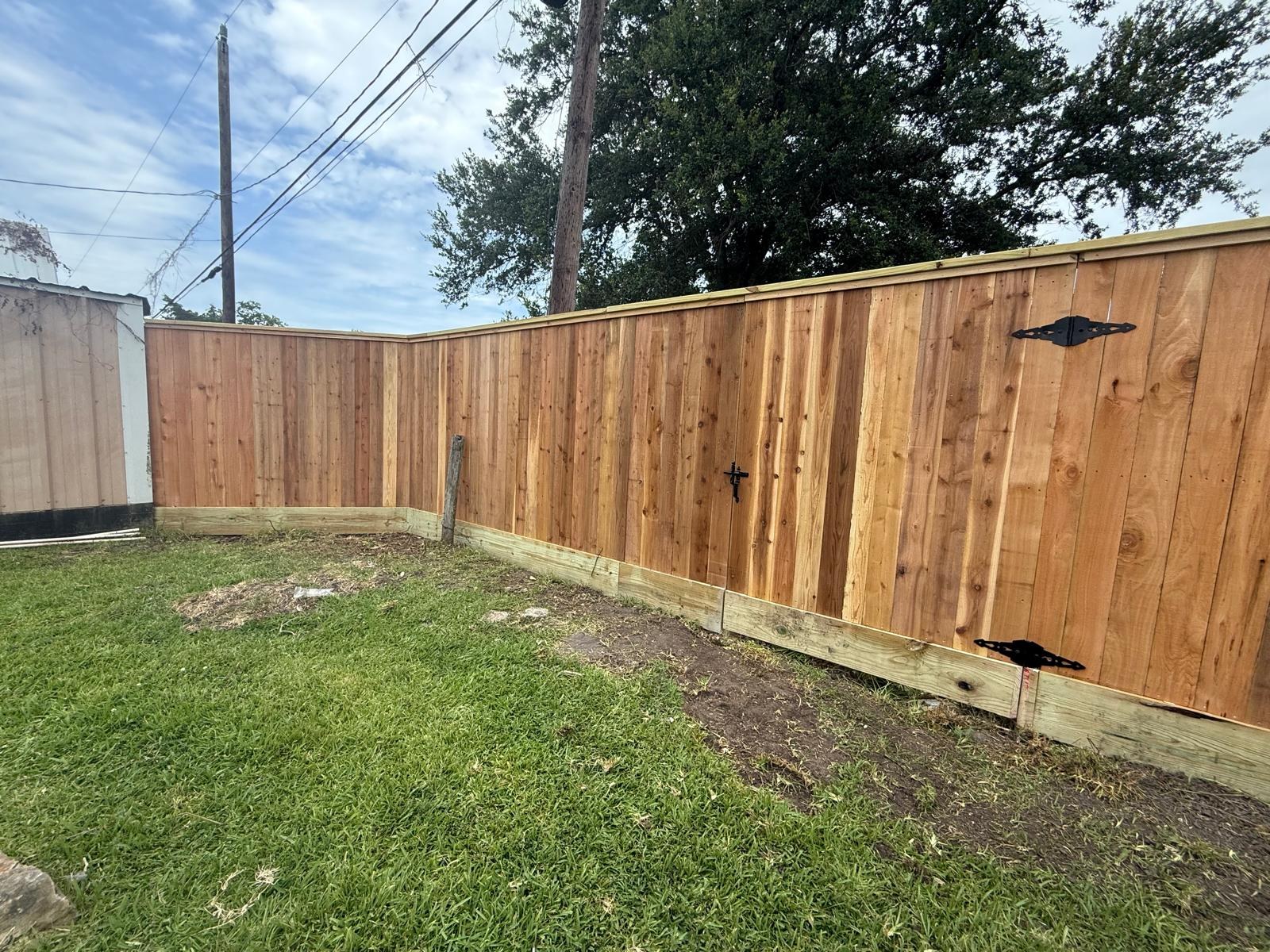
Why Arturo’s posts needed a different treatment than the pickets
Treated pine isn’t treated the same way everywhere on the fence. Per the Southern Forest Products Association’s Pressure-Treated Southern Pine guide, the industry standard splits fence lumber into use categories: pickets, rails and trim stay above ground, treated to UC3A (if coated or painted) or UC3B (if left uncoated), while posts set in the ground — like Arturo’s, set in concrete — are treated to UC4A, Ground Contact, General Use, regardless of coating. Ground-contact lumber requires a higher minimum preservative retention than above-ground lumber, because the posts stay wet longest and are the part most exposed to rot and insect damage over time.
Minimum preservative retention for ground-contact fence posts, by chemical
UC4A (Ground Contact, General Use), in pounds per cubic foot (pcf).
Working around mature trees on the property line
Arturo asked that several mature trees near the property line be preserved. The documented job notes say the crew routed the fence line to respect the existing landscaping rather than removing or damaging the trees — a routine accommodation on wooded lots, where the fence line sometimes bends slightly around a trunk or root flare rather than running arrow-straight.
Privacy-fence pickets & posts estimator
Arithmetic for a straight run of butted (no-gap) privacy pickets on a treated-pine fence — not a materials order. Confirm picket width and post spacing with your installer before buying.
Pickets = run length ÷ picket width, butted edge to edge (zero gap, the full-privacy layout). Posts = ceil(run length ÷ post spacing) + 1. 8 ft on-center is a common residential post spacing, not a code minimum — Arturo’s own post spacing wasn’t documented. Estimate only.
What Pearland-area customers say
5.091 Google reviews · read them all on Google
A family friend recommends this company to me they were very fast, reliable, and cost officiant! I highly recommend them for the best fencing company ever!
Excellent service and quality! Professional, on time, and great craftsmanship. Highly recommend!
Great work and really nice people, got everything done really fast and well done, i highly reccomended.
Reviews shown word for word from the Mustang Fencing Services Google Business Profile (Galveston), captured 2026-11-08.
Questions we get about this
What did Mustang Fencing build for Arturo Roque in Pearland?
A 6-foot treated pine privacy fence, with posts set in concrete, built around a sloped yard and mature trees near the property line.
Are there photos of Arturo’s actual fence?
No job photo of this specific installation is on file. The photos on this page show other recent Mustang privacy-fence jobs, captioned to say so.
Why do fence posts need a different wood treatment than the pickets?
Posts set in the ground stay wet longest, so the industry standard (SFPA/AWPA use categories) requires a higher minimum preservative retention for ground-contact posts (UC4A) than for above-ground pickets, rails and trim (UC3A/UC3B).
How do you build a wood fence on a sloped yard without gaps?
Two common methods: stepped, where the fence is built as separate level sections that step down the slope (each section keeps a constant height), or racked/raked, where the top rail follows the slope continuously and each picket is trimmed to fit. The documented notes on Arturo’s job describe adjusting panel heights to avoid gaps, consistent with the stepped method.
Does Mustang Fencing install wood privacy fences elsewhere near Pearland?
Sources
Checked November 9, 2026. Rules change, so confirm with the City before you build.
- Southern Forest Products Association, Pressure-Treated Southern Pine (2019 edition) — Use category definitions (UC3A/UC3B above ground, UC4A ground contact); Table 3-1 fence end-use categories and minimum retention by preservative chemical for ground-contact posts (PTI 0.018 pcf, EL2 0.019 pcf, MCA-C 0.060 pcf).
Want a backyard privacy fence built around your own slope or trees, near Pearland?
We’ll walk the yard, work around what’s already there, and put the material, post spacing and treatment class on a written estimate.