
A Wonderful Collaboration with Erica Mitchell: Wooden Fence Installation in Rosharon, Texas
Erica wanted a sturdy, classic wooden fence that held its own privacy height while keeping some open view. Here is the documented, photo-confirmed scope — new pressure-treated wood sections and a Z-braced gate tied into her existing fence line — plus the sourced reason cut ends get field-treated.
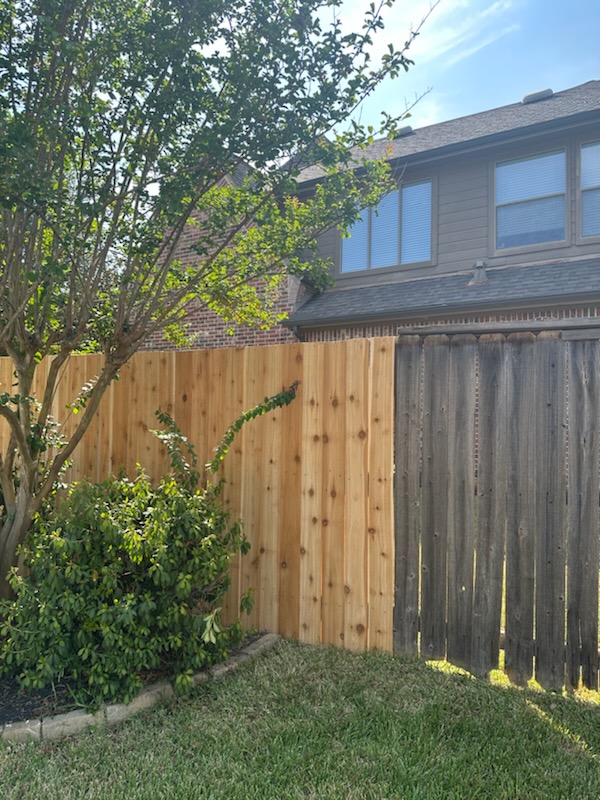
Mustang Fencing tied new pressure-treated wood fence sections and a Z-braced gate into Erica Mitchell’s existing fence line in Rosharon, TX. The vertical-board sections were sealed to protect against the elements, built to a height Erica specified to balance privacy with keeping some open view.
Sources: this project’s own documented facts and photos; American Wood Council FAQ citing AWPA Standard M4. Checked November 4, 2026.
The job: new sections and a Z-braced gate tied into Erica’s existing fence
Erica Mitchell wanted a sturdy, classic wooden fence for her Rosharon property — one that gave her privacy while keeping some open view of her surroundings. Mustang recommended pressure-treated wood with vertical boards, sealed at completion to protect against the elements, built to the height Erica specified. Erica was closely involved throughout, giving feedback as the work progressed.
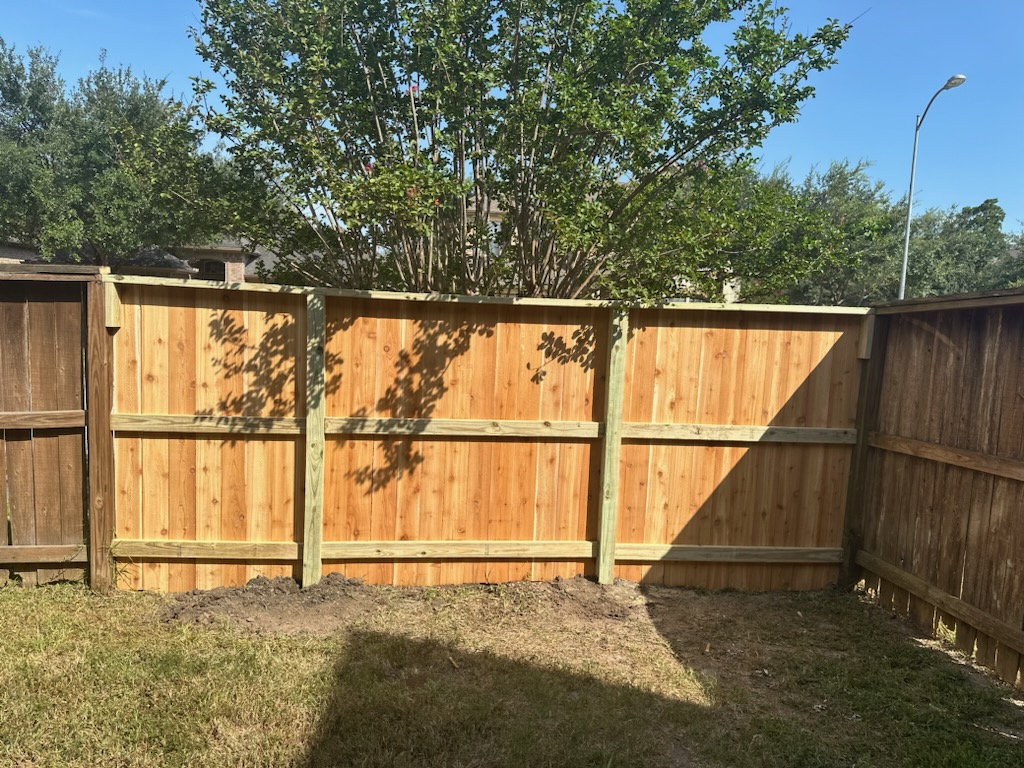
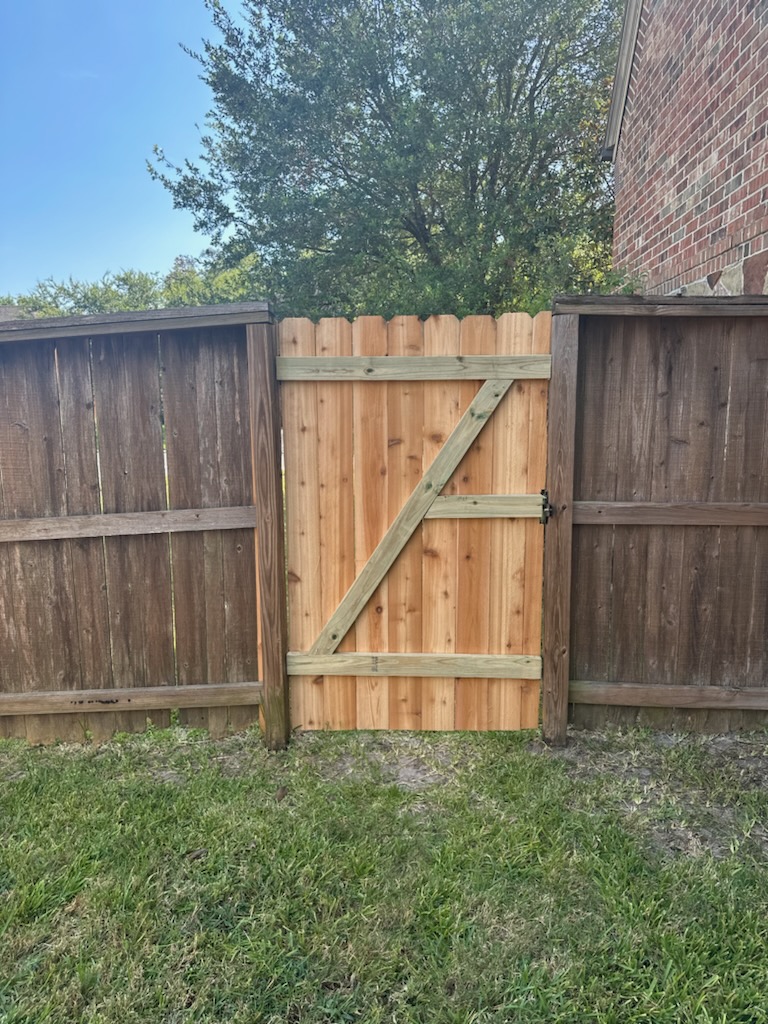
The project’s own photos show the documented scope precisely: new pressure-treated sections tied directly into Erica’s existing, older fence line, plus a new gate framed with a diagonal Z-brace built into that same line — rather than a full-perimeter rebuild. That tie-in work is exactly where cut ends of pressure-treated lumber need field treatment, covered below.
Why field-treating a cut end matters
Tying new sections into an existing fence line means cutting pressure-treated lumber on site, for both the fence boards and the gate frame. That matters because preservative treatment is deepest at the outer shell of a treated board and lower at its core — cutting a board exposes that lower-retention core. The American Wood Council, citing AWPA Standard M4, specifies that field-cut ends, notches and drilled holes in pressure-treated wood be re-treated with copper naphthenate at a minimum 2% copper concentration to reseal the exposed core. That field treatment is the documented mechanism behind this project’s own claim that the wood was “sealed to protect against the elements” — every cut made to tie the new sections and gate into Erica’s existing fence needed it.
Gate diagonal (Z-brace) length estimator
Right-triangle arithmetic for how long a gate’s diagonal brace needs to be, based on the gate’s width and height. Not a quote — actual brace length depends on the frame and cut angle. Defaulted to a typical single walk gate; change any field.
Arithmetic: diagonal = √(width² + height²), the hypotenuse of the gate frame. Convention: run the brace from the bottom hinge-side corner to the top latch-side corner, so it works in compression as the gate ages.
What customers say on Google
5.091 Google reviews · read them all on Google
My new fence looks fantastic and has added both privacy and style to my yard. Highly recommend their services for anyone in need of fencing!
I had an incredible experience with Mustang Fencing Services! From start to finish, their professionalism, attention to detail, and commitment to quality truly stood out.
Mustang Fencing Services was dependable and honest from start to finish. They stuck to our timeline and budget, and the fence looks fantastic. I appreciate their hard work and would recommend them to anyone.
Reviews shown word for word from the Mustang Fencing Services Google Business Profile (Galveston), captured 2026-11-02.
Questions we get about this
What did Mustang Fencing do for Erica Mitchell?
Was this a full fence replacement?
What is a Z-brace, and why does the gate have one?
Why field-treat the cut ends of pressure-treated wood?
Why seal pressure-treated wood at all?
Sources
Checked November 4, 2026. Rules change, so confirm with the City before you build.
- American Wood Council, FAQ on treating cut ends of pressure-treated wood (citing AWPA Standard M4) — Field-cut ends, notches and drilled holes in pressure-treated wood must be re-treated with copper naphthenate (min. 2% copper) because the preservative concentration is lower at the core than the treated outer shell.
Tying new fencing into an existing line?
We’ll look at what’s there, match the work to it where it makes sense, and put the scope on one written estimate before any work starts.