
Boom Barriers (Barrier-Arm Gates) in Galveston: How They Work and Which Size Fits
A boom barrier controls a lane by raising and lowering an arm, not by rolling or swinging a gate panel out of the way. That makes it a different piece of equipment from the fence gates most of this site covers — closer to what you’d see at a parking garage or a gated lot entrance. Here’s how one is actually built, and how a single-lane operator differs from a wide-lane one.
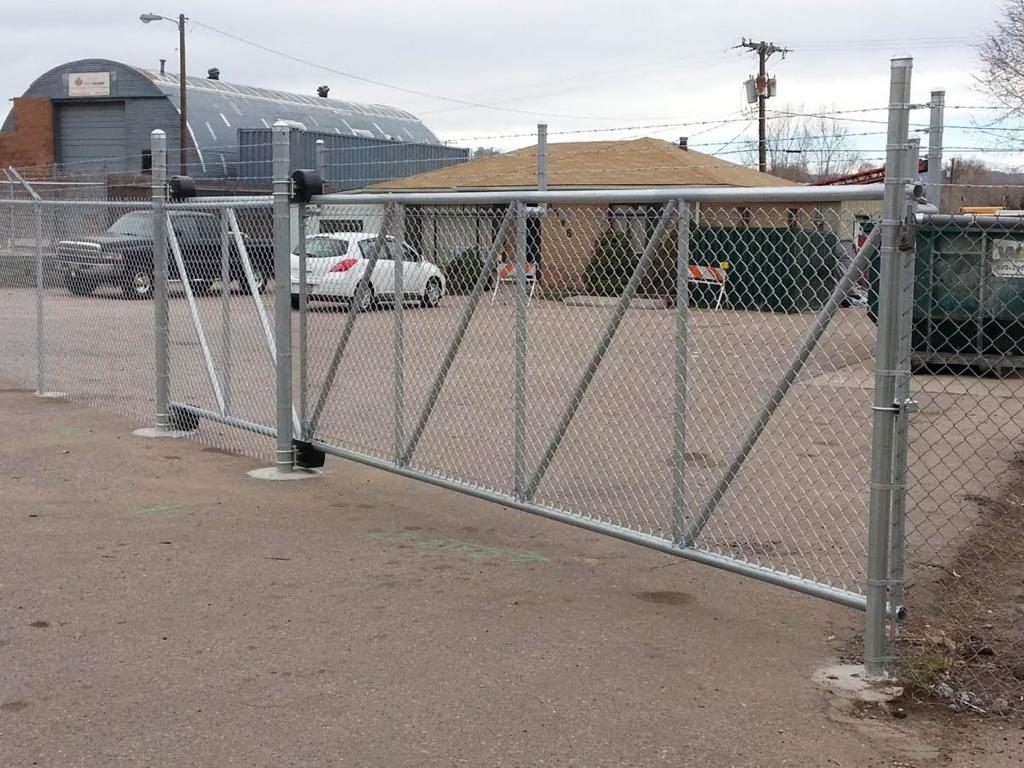
A boom barrier (also called a barrier-arm gate) is a vehicle-lane control made of a pedestal cabinet, a motor, and a long arm that pivots up out of the way instead of sliding or swinging a solid gate panel. Single-lane operators are built for lanes up to about 14 ft and high-cycle use (apartment gates, parking lots, self-storage); wide-lane operators trade cycle speed for reach, up to about 27 ft on a multi-piece arm, for industrial yards and loading docks. Either way, it still needs the same vehicle-detection and pedestrian-safety devices any automatic gate does.
Sources: DoorKing 1601 and 1602 barrier gate operator product pages; DASMA TDS 353 (reprinting UL 325, Classes I-IV).
What a boom barrier actually is, versus a swing or slide gate
Most of the gates on this site — wrought iron, aluminum, chain link — are panels that swing on hinges or roll along a track. A boom barrier skips the panel entirely: a motorized cabinet pivots a single arm up and out of the vehicle’s path, then back down to block it again. That’s a narrower job than a fence gate (it controls a lane, not a perimeter opening), which is why boom barriers show up most at parking facilities, apartment and gated-community entrances, self-storage sites, and industrial loading docks — places managing vehicle flow more than a property line.
It still runs on the same kind of gate automation most of this site already covers: an electric operator, a power run to the cabinet, and the entrapment-protection devices UL 325 requires for any vehicular gate operator. The difference is entirely in the arm-and-cabinet mechanism, not in the code that governs it.
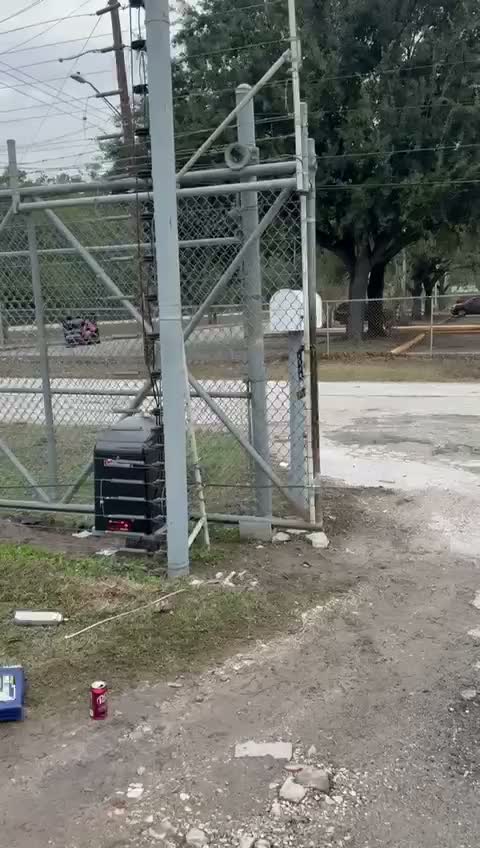
Single-lane versus wide-lane: a different cabinet, not a stronger motor
DoorKing’s product line illustrates the trade-off clearly. The 1601 is built for a single lane up to 14 ft (on an aluminum arm; 12 ft on plastic or wood) and is rated for continuous, high-cycle duty — the apartment-gate or parking-lot use case where the arm might cycle dozens of times an hour. The 1602 is built for wide lanes, up to 27 ft, using a three-piece “wishbone” arm assembly to span the extra distance — but the manufacturer rates it for limited cycles, “not for use in high cycle applications.” A wider lane doesn’t just need a longer arm; it needs a cabinet designed around a slower duty cycle to carry that length safely.
Single-lane vs. wide-lane boom barrier operators, compared
| Arm length | Arm material options | Duty cycle | Typical sites | |
|---|---|---|---|---|
| Single-lane (DoorKing 1601) | Up to 12 ft (plastic/wood) or 14 ft (aluminum) | Plastic, wood, aluminum round or octagonal | High-cycle commercial/industrial | Apartment complexes, gated communities, parking facilities, self-storage |
| Wide-lane (DoorKing 1602) | Up to 20, 24 or 27 ft (wishbone) | Aluminum wishbone, aluminum octagonal single (17 ft max), wood (20 ft max) | Limited cycles — not for high-cycle use | Industrial sites, loading docks, apartment and mixed-use entrances |
DoorKing 1601 and 1602 barrier gate operator product pages.
Maximum published arm length, by operator class
Longest arm option each operator is sold with, in feet.
UL 325 classes line up with where a boom barrier actually gets used
UL 325 sorts vehicular gate operators into four use-based classes (reprinted in DASMA TDS 353): Class I is a one-to-four-family residential garage or parking area; Class II is a commercial location serving the general public, including a five-or-more-unit multi-family building; Class III is an industrial location not accessible to the general public, such as a factory or loading dock; Class IV is a guarded industrial or restricted-access location, like an airport security area. DoorKing’s own published locations for its two barrier models — apartment complexes and self-storage for the high-cycle 1601, industrial sites and loading docks for the limited-cycle 1602 — map almost directly onto Classes II and III. Whichever class applies decides which entrapment-protection and monitoring rules the installed operator has to meet; see UL 325 and ASTM F2200 for automatic gates for what those rules actually require.
A barrier-arm operator also needs a separate pedestrian access point, the same as any other automatic vehicle gate — people shouldn’t be walking through, or standing under, the arm’s own path. DoorKing pairs its barrier operators with what it calls a Pedestrian Protection System: a vehicle loop detector plus a photo-beam, so the arm doesn’t come down on something still in the lane. That is in addition to, not instead of, a nearby walk gate.
Which boom-barrier class fits this lane?
Answer three questions about the lane and how it’s used. This is a planning aid, not a quote — an installer still needs to see the actual lane width, power run and pavement.
Planning aid only, based on DoorKing’s published 1601 (single-lane, up to 14 ft, high-cycle) and 1602 (wide-lane, up to 27 ft, limited-cycle) barrier gate operators. Other manufacturers publish different ranges — get bids from at least two installers before buying.
A few things worth confirming before you buy
The cabinet is a floor-mounted pedestal with its own footing and power run — on Galveston Island, that means the same flood-zone placement questions that apply to any gate opener in a flood zone apply here too, worth raising with the City before the concrete goes in. And because a boom barrier’s arm, by itself, doesn’t close off a perimeter, it almost always sits inside or beside a fence line doing that job — ask whether you need matching commercial fencing or a chain link gate alongside it, not instead of it.
What Galveston customers say
5.091 Google reviews · read them all on Google
chainlink fence installation by mustang fencing, looks really great, thanks.
We just installed iron gate and it looks amazing thank you very much mustang fencing .
Mustang’s team installed iron fence for me and did an absolutely incredible job! I would recommend this company to anyone I know!
Reviews shown word for word from the Mustang Fencing Services Google Business Profile (Galveston), captured 2026-11-08.
Sources
Checked November 8, 2026. Rules change, so confirm with the City before you build.
- DoorKing, “1601 Parking Control Barrier Gate Operator” — single-lane arm length and material options (up to 14 ft aluminum, 12 ft plastic/wood), G90 galvanized cabinet dimensions, continuous-duty motor and 90° rotation time, high-cycle rating, typical locations, and Pedestrian Protection System (loop detector plus photo-beam).
- DoorKing, “1602 Parking Control Barrier Gate Operator” — wide-lane wishbone arm lengths (up to 27 ft), limited-cycle rating, cabinet dimensions, and typical industrial/loading-dock locations.
- DASMA Technical Data Sheet 353, “Vehicular Gate Operators and the ANSI/CAN/UL 325 Standard” — UL 325 operator use Classes I-IV, quoted directly, which define which locations each class of vehicular gate operator — including a barrier-arm operator — is intended for.
Figuring out whether a boom barrier fits your entrance?
We’ll look at the lane width, how often it needs to cycle, and whether you need a single-lane or wide-lane operator alongside the fencing or gate already there. Free on-site estimates across Galveston Island and Galveston County.
Questions we get about this
What is a boom barrier, exactly?
A vehicle-lane control built around a motorized pedestal cabinet and a single arm that pivots up to clear the lane and back down to block it — as opposed to a gate panel that swings or slides. It’s also called a barrier-arm gate.
How is a boom barrier different from a swing or slide gate?
A swing or slide gate moves a solid or open panel out of the opening. A boom barrier never has a full panel — it raises a narrow arm, which controls the lane but doesn’t close off a perimeter the way a fence gate does. Most installations still pair a boom barrier with fencing or a separate gate to handle the perimeter itself.
How long can a boom barrier arm be?
Published ranges from DoorKing run up to about 12-14 ft on a single-lane operator (plastic/wood or aluminum arm) and up to about 20-27 ft on a wide-lane operator using a multi-piece “wishbone” arm. Other manufacturers publish their own ranges.
Does a boom barrier need a vehicle loop or photo-eye?
Yes. A buried vehicle loop or surface sensor tells the operator a vehicle is present, and a photo-eye or similar monitored device is part of the entrapment protection UL 325 requires so the arm doesn’t come down on a vehicle or person still in its path.
Does a boom barrier still need a separate gate for pedestrians?
Yes — the same as any other automatic vehicle gate, people shouldn’t be using or standing in the arm’s own path. A nearby walk gate handles pedestrian access.