
A 6-ft Pine Neighbor-Sectional Privacy Fence for Sayes Hussain in Galveston, TX
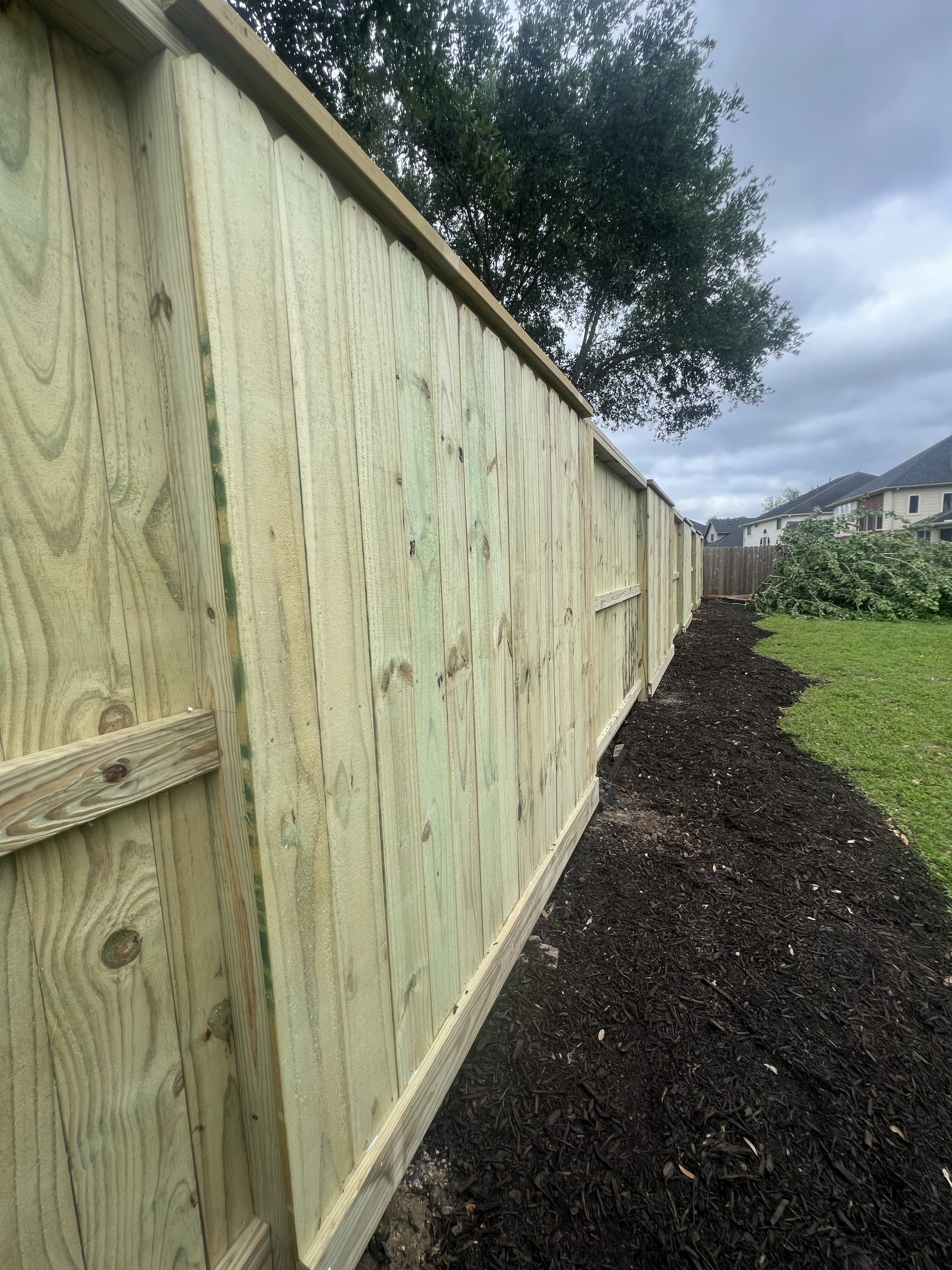
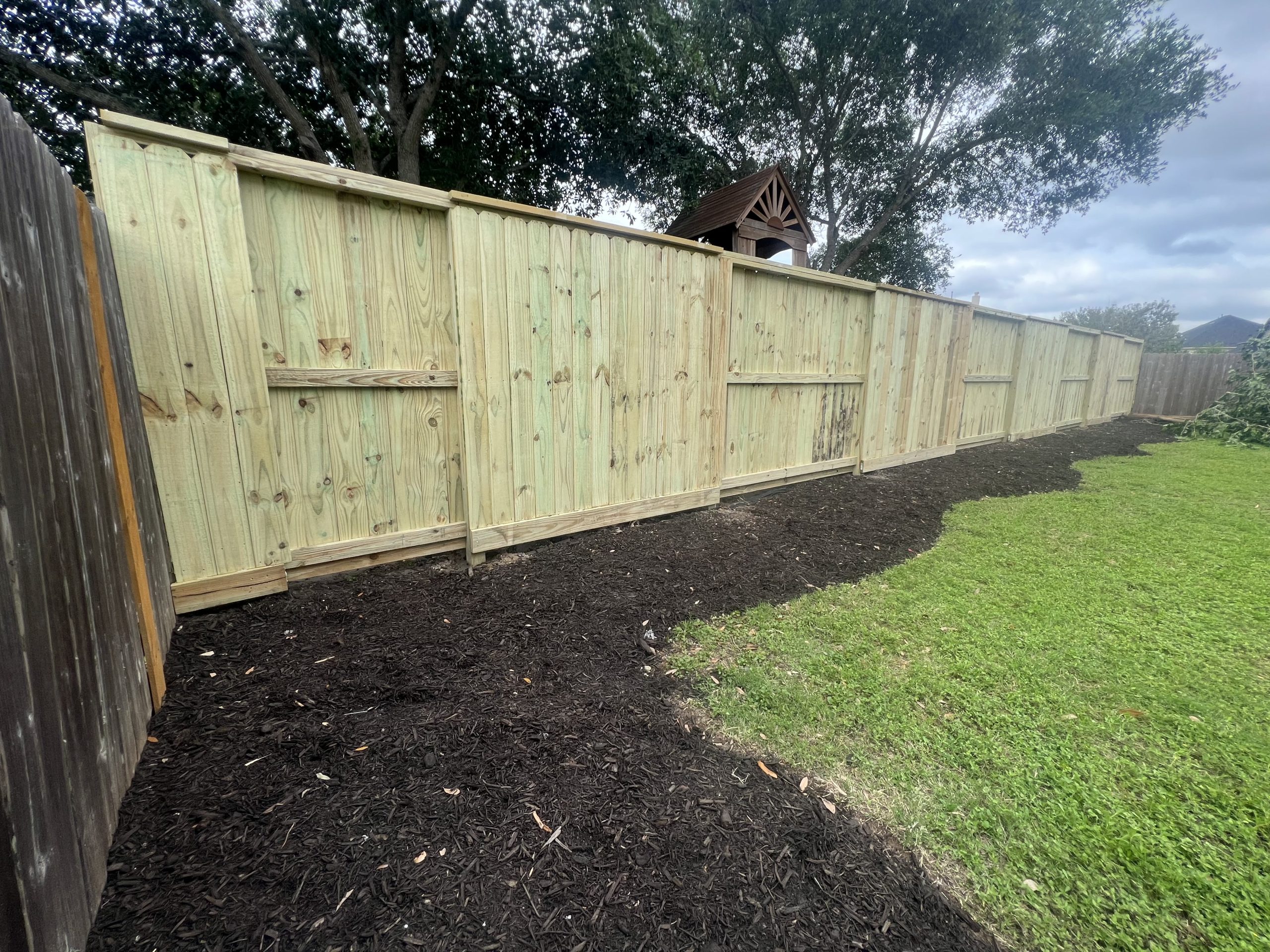
Sayes wanted a privacy fence that looked just as good from his neighbor’s side as his own. Here is the fence Mustang built — a 6-ft pine neighbor-sectional design with a top cap — and what that cap actually does to how the fence holds together.

Mustang Fencing built a 6-foot pine privacy fence for Sayes Hussain in Galveston, TX, in the neighbor-sectional style — meaning the panels look the same and symmetrical from both sides — with a top cap and posts set at consistent intervals.
Sources: this project’s own documented facts; Southern Forest Products Association, Pressure-Treated Southern Pine (2019), Table 3-1. Checked November 3, 2026.
The job: a 6 ft pine fence that looks the same on both sides
Sayes Hussain wanted a privacy fence for his Galveston property that balanced function, elegance and durability — and that stayed neighbor-friendly, so it would look equally good from the other side of the property line. Mustang Fencing built a 6-foot Pine Privacy Neighbor Sectional fence with a top cap: premium pine wood, posts set at consistent intervals, and panels in the neighbor-sectional style, where both faces of the fence look symmetrical instead of showing a finished side and a structural side.
The top cap was added as the final piece — a board that runs along the top of the pickets, adding a polished look while reinforcing the structure.
What the top cap actually does to the fence
Sayes’s fence has a top cap — the post described it as adding “structural strength and a touch of sophistication,” without saying how. A cap rail is a standard framing detail: it is a continuous board that runs along the top of the pickets and ties their tops together into one member, instead of leaving each picket free to move on its own. That is the structural part. The “touch of sophistication” is the finished, uniform top edge it leaves behind.
Because this fence is also neighbor-sectional — pickets on both faces of the rails, so the fence looks the same from either side — it already uses more lumber per linear foot than a single-faced privacy fence. The pine itself follows the same pressure-treatment standard as any other fence-grade pine: ground-contact treatment for the posts, lighter above-ground treatment for the cap and pickets.
Neighbor-sectional picket estimator
A neighbor-sectional (good-neighbor) fence uses a picket layer on both sides of the rails, so it takes roughly double the picket lumber of a single-faced fence for the same run. Straight arithmetic only — not a quote.
Arithmetic: pickets per side = ceil(run length x 12 / (picket width + gap)); neighbor-sectional doubles that for both faces. A 0-in gap models a butted privacy fence like the one pictured on this page.
Which treatment category applies where
| Part of this fence | Service condition | Use category (SFPA Table 3-1) |
|---|---|---|
| Posts | Set at consistent intervals in the ground | UC4A, ground contact |
| Top cap rail | Above ground, exposed to weather | UC3B (UC3A only if painted/coated) |
| Neighbor-sectional pickets | Above ground, exposed to weather, both faces | UC3B (UC3A only if painted/coated) |
Southern Forest Products Association, Pressure-Treated Southern Pine (2019), Table 3-1 (fences). This fence’s own treatment level was not re-verified on site; shown as the published standard for each part.
What customers say on Google
5.091 Google reviews · read them all on Google
Amazing work will go ahead and recommend everyone in friends and family We installed 8ft tall double sided stained cedar wood fence in our backyard, it’s really looks great, installed perfectly nice finishing and cost effective, thanks mustang fencing.
Installed Stained cedar wood fence yesterday by mustang fencing, thanks for the beautiful work.
I have hired Mustang fencing services to fix my backyard fencing. Good wood to used. I really like theirs work. Best of luck
Reviews shown word for word from the Mustang Fencing Services Google Business Profile (Galveston), captured 2026-11-02.
Questions we get about this
What did Mustang Fencing build for Sayes Hussain?
What does "neighbor-sectional" mean?
What does the top cap do?
Was the pine pressure-treated?
Does Mustang Fencing serve Galveston, TX?
Sources
Checked November 3, 2026. Rules change, so confirm with the City before you build.
- Southern Forest Products Association, Pressure-Treated Southern Pine (2019 edition) — Table 3-1 fence use categories: UC4A ground contact for posts, UC3B for uncoated pickets and rails/caps.
Want a privacy fence that looks good from both sides?
We’ll walk through neighbor-sectional vs single-faced styles and cap options before any order goes on a written estimate.