
Delivering a Custom Fencing Gate for Derrick Chaney in San Leon, TX
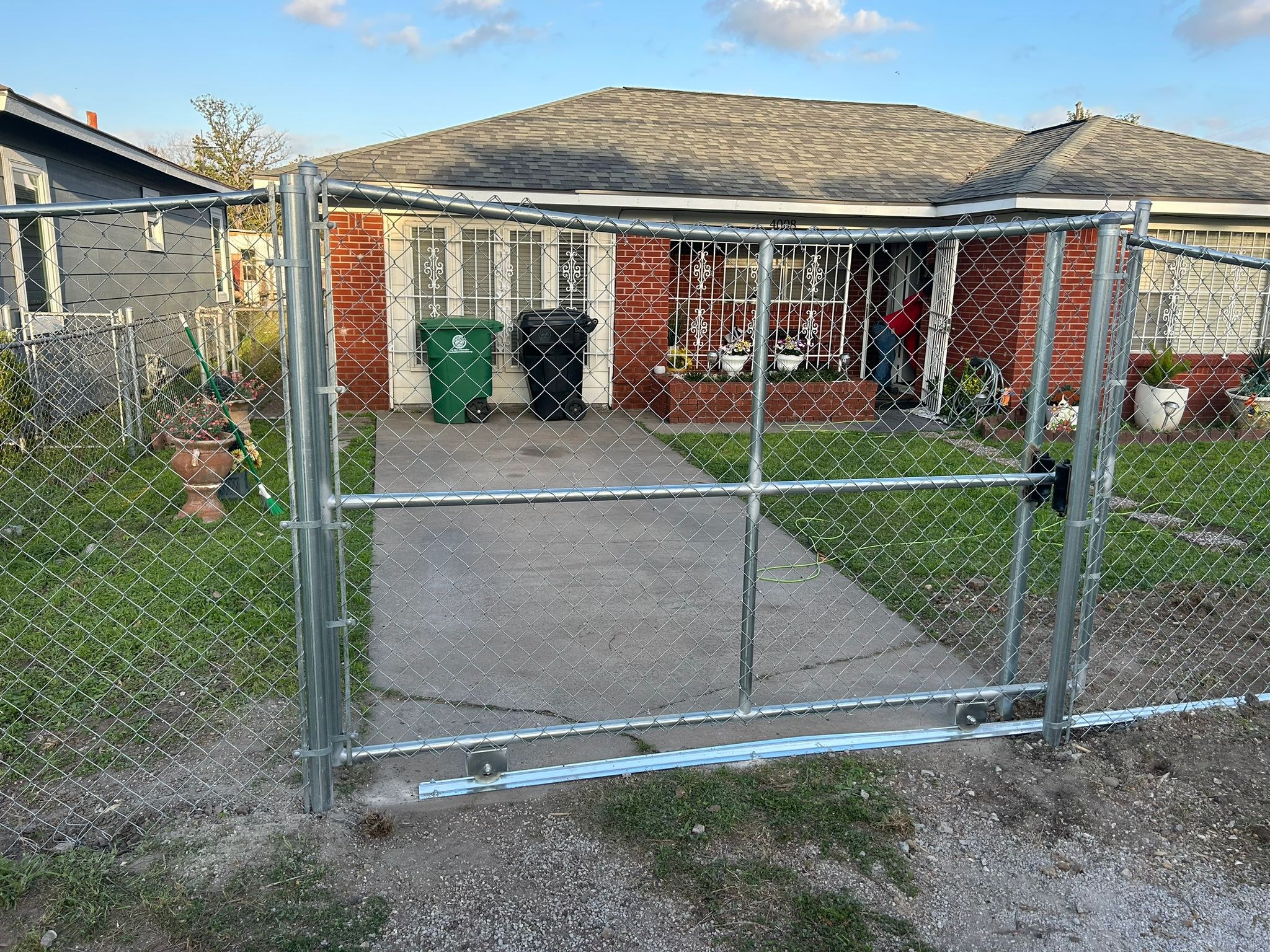
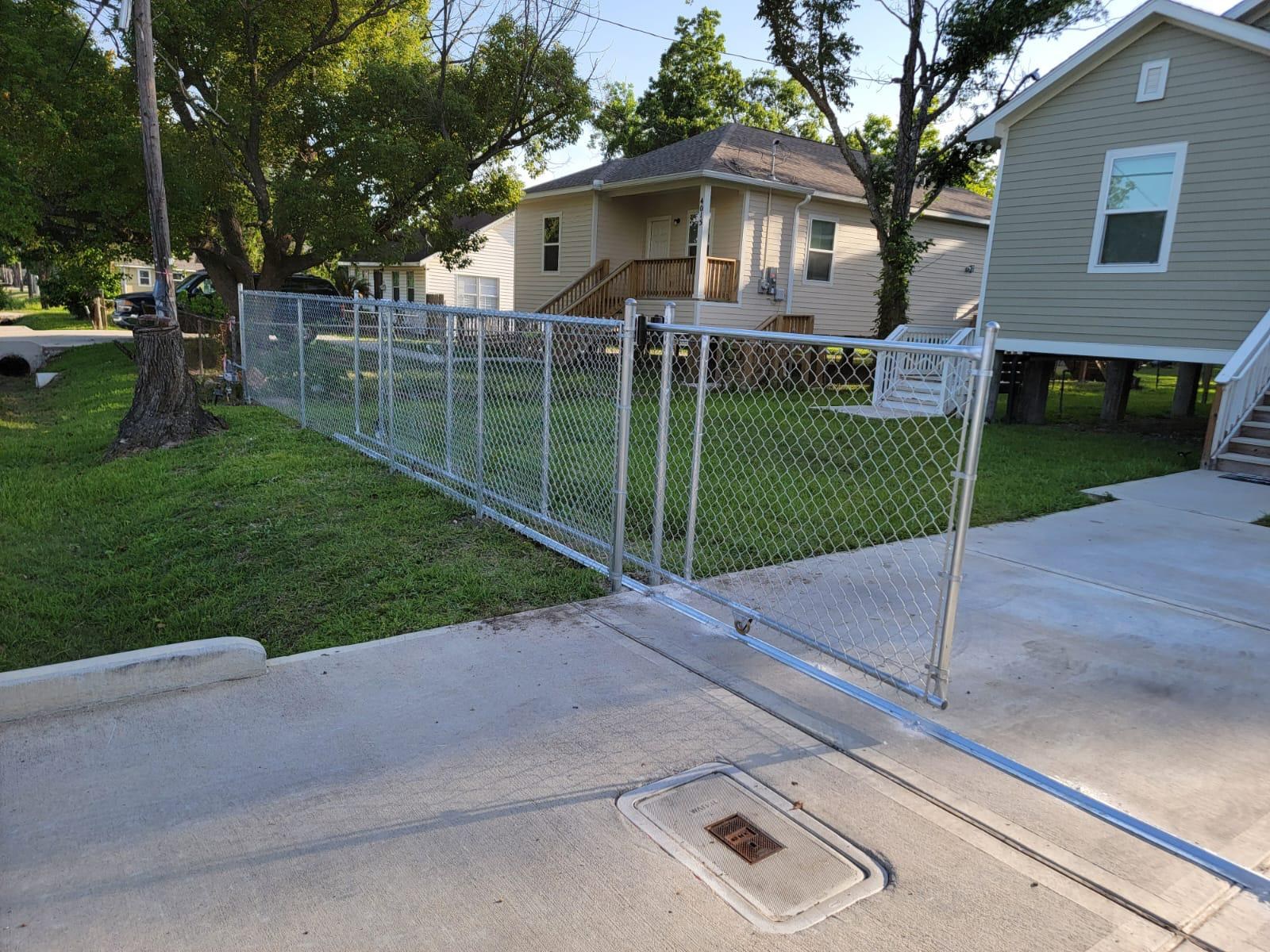
Derrick wanted a gate for his San Leon property that would stand up to the coastal air without a lot of upkeep. Here’s the custom galvanized steel gate Mustang built him, and the real metallurgy behind why galvanized steel holds up the way it does.
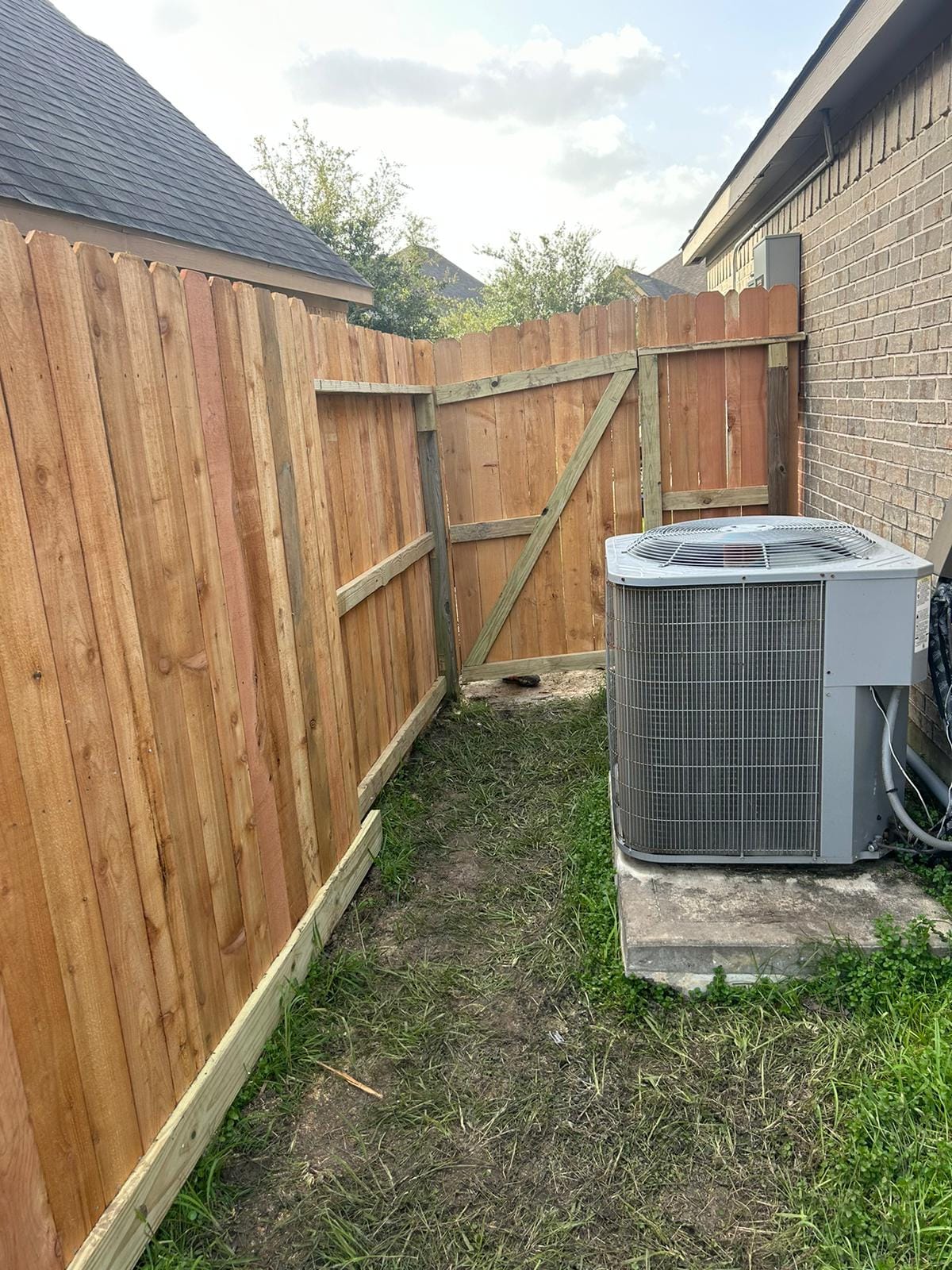
Mustang Fencing built Derrick Chaney a custom galvanized steel gate for his property in San Leon, TX, designed to blend with his existing fence while standing up to the coastal air. San Leon is unincorporated Galveston County, so there is no City of Galveston fence permit involved — see our San Leon fencing page for what does apply there.
Sources: American Galvanizers Association, “Galvanized Steel with Aluminum Parts” and “Stainless Steel in Contact with Galvanized Steel.” Checked November 2, 2026.
The job: a custom galvanized steel gate
Derrick Chaney wanted a custom fencing gate for his San Leon property that would hold up to daily use and the coastal air without a lot of upkeep. Mustang Fencing recommended galvanized steel: it resists corrosion better than bare steel in a humid, coastal environment, needs little maintenance, and can be built to match the look of an existing fence rather than standing out from it.
The crew set the gate posts and dug the post holes deep enough to keep the gate stable through changing weather, then selected hinges and latches built to handle daily opening and closing. The finished gate was designed to blend with the rest of Derrick’s fence line rather than read as a mismatched add-on.
Why the size of the hardware matters as much as the metal
Putting two different metals in contact doesn’t automatically cause a problem. The American Galvanizers Association (AGA) explains that a bimetallic couple needs an electrical potential difference between the metals and a conductive liquid (an electrolyte, like salty condensation or rainwater) bridging them. Plain rainwater and dew are weak electrolytes; salt air and marine moisture are much better ones — which is exactly the environment a San Leon gate sits in.
The detail most people miss is surface area. AGA’s own example uses a rivet: a zinc rivet set into a large stainless steel plate corrodes quickly, because a large cathode paired with a small anode accelerates the reaction. Flip it around — a stainless rivet set into a large zinc (galvanized) plate — and the reaction barely matters, because the zinc anode’s surface area is large relative to the small stainless cathode.
That second case is exactly what a galvanized gate’s hardware normally looks like: a large galvanized frame with comparatively small stainless hinges, bolts or a latch. If ever in doubt, AGA’s own fix works regardless of size — an insulating barrier (a plastic or rubber washer or bushing) between the two metals breaks the electrical path entirely.
Gate hardware pairing checker
General corrosion-science guidance, not a materials spec for this specific gate. Based on American Galvanizers Association guidance on dissimilar metals in contact.
Based on American Galvanizers Association, “Galvanized Steel with Aluminum Parts” and “Stainless Steel in Contact with Galvanized Steel.” An insulating barrier (plastic or rubber) between dissimilar metals is the universal fix whenever unsure. Checked November 2, 2026.
What customers say on Google
5.091 Google reviews · read them all on Google
Very professional and friendly. Gotten automatic gates done and they are done to perfection! Thank you
Fenomenal job, really nice guy. Contacted them after hurricane knocked down my fence facing the street and got it done really quickly.
Seems to have helped out a after hurricane beryl we all appreciate it thank you!
Reviews shown word for word from the Mustang Fencing Services Google Business Profile (Galveston), captured 2026-11-02.
Questions we get about this
What gate did Mustang Fencing build for Derrick Chaney?
Why is galvanized steel a good choice for a gate near the coast?
Is it safe to pair stainless hinges or bolts with a galvanized gate frame?
What about aluminum hardware on a galvanized gate?
Does Mustang Fencing serve San Leon, TX?
Sources
Checked November 2, 2026. Rules change, so confirm with the City before you build.
- American Galvanizers Association, “Galvanized Steel with Aluminum Parts” — Electrode-potential table for metals in seawater; finding that zinc/aluminum contact carries only a slight chance of a galvanic reaction due to the small potential gap and aluminum’s oxide film.
- American Galvanizers Association, “Stainless Steel in Contact with Galvanized Steel” — Requirements for a bimetallic couple to corrode; the cathode/anode surface-area-ratio principle illustrated with a rivet example; an insulating barrier as the universal fix.
- American Galvanizers Association, “Performance of Galvanized Steel in Different Environments” — Zinc patina formation stages and observed atmospheric corrosion rates across environments, including marine/coastal.
Planning a custom gate of your own?
We’ll walk the site, talk through material and hardware, and put it on a written estimate before any gate order.