
Transforming Prince Singh Dhoat’s Property in Rosharon, TX
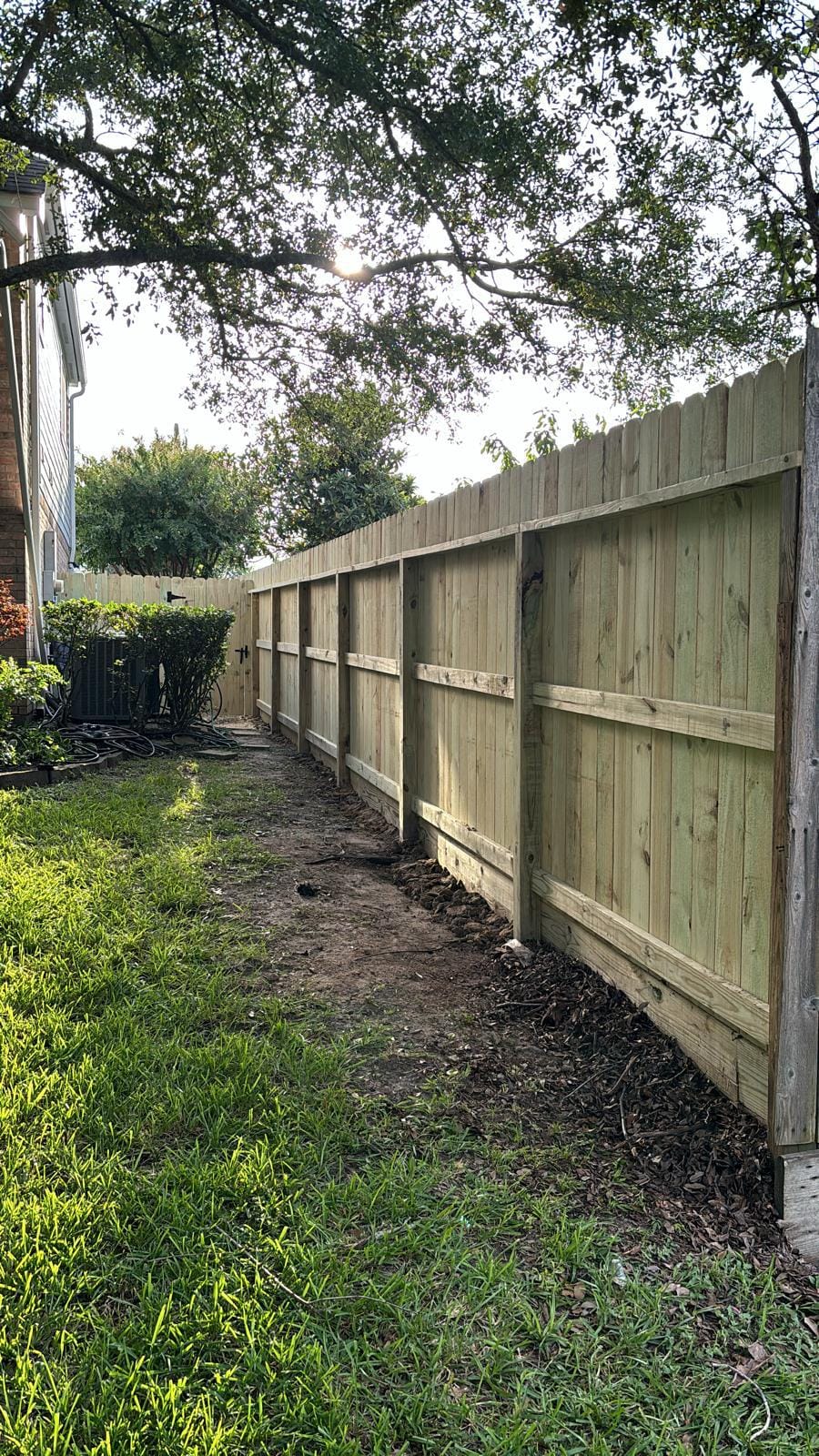
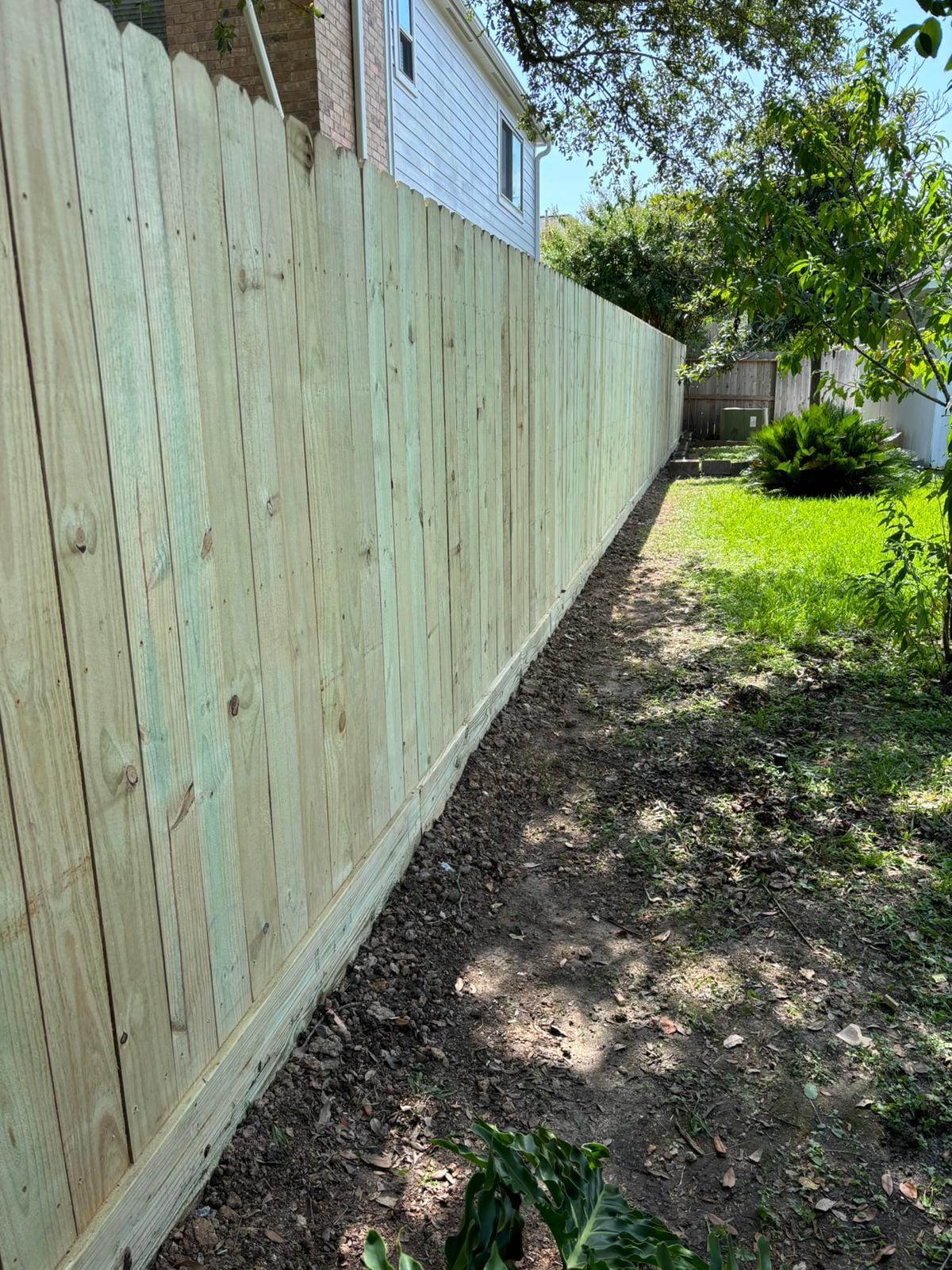
A new 75-foot pine rot-board fence section blended with the existing line, both stained to match, plus 175 feet of solar lighting along the perimeter.
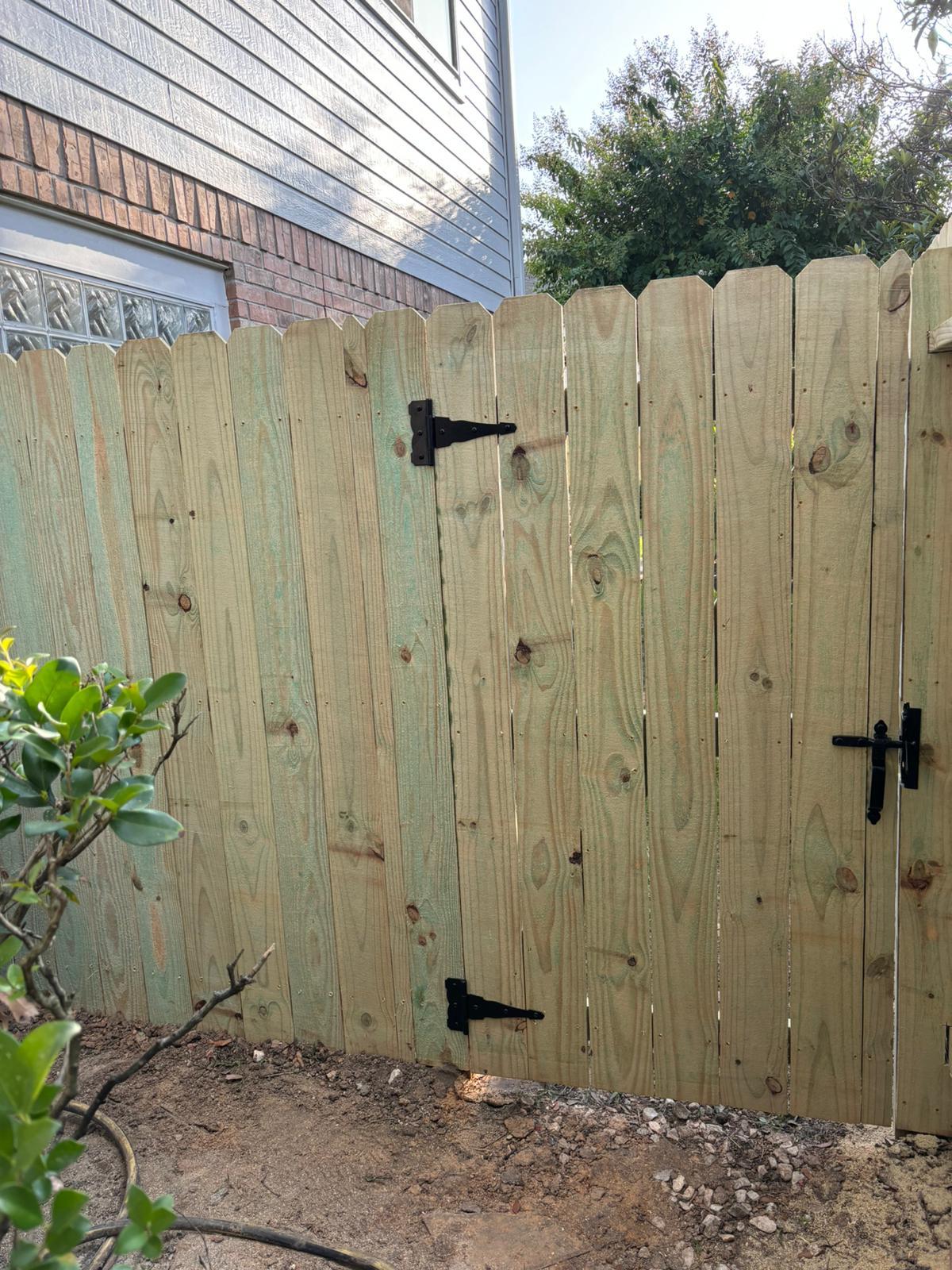
This project added a 75-foot new pine rot-board fence section, blended into an existing section that was cleaned and stained to match, plus 175 feet of solar lighting run along the perimeter. “Rot board” isn’t one fixed spec — it depends on which AWPA use-category the lumber was actually treated to: a higher category for posts in ground contact than for the boards and rails above it. Stain adds a surface layer on top of that treatment; it doesn’t replace it.
Sources: Southern Forest Products Association, Pressure-Treated Southern Pine (2019 ed.), Table 3-1; Texas Utilities Code Ch. 251; Texas811 homeowner pages. Checked October 24, 2026. This job sits outside the Galveston program’s service-area allowlist, so no city or county ordinance is cited for it.
Blending a new section into an existing fence line
Prince Singh Dhoat’s property in Rosharon had an existing fence section that needed attention, plus a gap to close with new material. The work covered both: the existing section was cleaned and prepped, a new 75-foot pine rot-board section was installed to extend the line, and both old and new were stained together for a consistent look rather than a visible seam between “old” and “new.”
175 feet of solar lighting was also run along the fence perimeter — standalone fixtures that charge from sunlight during the day and light up at night, not wired into the property’s electrical system.
What “pine rot board” treatment actually means
“Rot board” describes intent, not a single spec — the actual protection comes from which AWPA use-category the lumber was pressure-treated to. The Southern Forest Products Association’s treatment tables set a UC3A (coated) or UC3B (uncoated) minimum for above-ground, exposed fence boards and rails, and a higher UC4A minimum for posts that sit in ground contact — a harsher decay exposure than the boards face.
Staining — the finish applied across both the new and existing sections here — adds a surface-level moisture and UV barrier on top of whichever treatment category the lumber already has. It’s a maintenance layer, not a substitute for the underlying treatment.
Pine fence & solar light spacing estimator
Two calculators, defaulted to this project’s own numbers: a 75 ft new pine rot-board section, and 175 ft of solar lights along the perimeter. Both are arithmetic, not manufacturer specs.
Board/post math: linear feet × 12 ÷ board width, rounded up; posts = run ÷ spacing + 1. Fixture count: run ÷ spacing, rounded up. All arithmetic, not manufacturer figures. Treatment categories: AWPA use-category system via Southern Forest Products Association, Pressure-Treated Southern Pine (2019 ed.), Table 3-1.
Planning a pine fence repair or extension
- Extending an existing wood fence? See wood fence installation for how material and treatment choices fit together.
- Digging new post holes? See calling 811 before a fence goes in — it applies statewide.
- In the Galveston area? See every area we serve — this particular project was outside that area.
What customers say on Google
5.091 Google reviews · read them all on Google
We just installed iron gate and it looks amazing thank you very much mustang fencing .
I am so pleased with the fence!! Your solution was exactly the right one and the team did a highly professional job. Frankly, I was amazed at how clean the job site was at the completion of the project. Feel free to list me as a reference and a very happy customer. Thanks again and please let the men know That I appreciate their hard work and quality craftsmanship.
had an excellent experience with mustang fencing From the initial consultation to the final installation, the team was professional, punctual, and attentive to detail. They helped me choose the perfect fence style to match my property and ensured everything was installed with precision. The quality of materials is top-notch, and the fence has completely transformed the look and security of my home. I highly recommend mustang services to anyone looking for reliable and high-quality fencing services!
Reviews shown word for word from the Mustang Fencing Services Google Business Profile (Galveston), captured 2026-10-19.
Questions we get about this
What does "pine rot board" actually mean?
Does staining replace the pressure treatment?
How do solar fence lights get power?
Do new fence post holes need an 811 call even for a small addition?
Does Mustang Fencing serve Rosharon?
Sources
Checked October 24, 2026. Rules change, so confirm with the City before you build.
- Southern Forest Products Association, Pressure-Treated Southern Pine (2019 ed.) — Table 3-1, AWPA use categories: UC3A/UC3B for above-ground fence boards and rails vs. UC4A for posts in ground contact.
- Texas811, Homeowner / DIYer — Statewide one-call requirement: notify 811 at least 48 hours before digging, including new fence post holes.
- Texas Utilities Code, Chapter 251 (Underground Facility Damage Prevention) — 48-hour minimum, 14-day maximum advance notice before excavation (251.151); civil penalty for noncompliance (251.201).
Repairing or extending a pine fence?
We’ll look at what’s there, tell you honestly whether a stain refresh or a new section makes more sense, and give you a written estimate before any material is ordered.