
Does a Cedar Fence Need to Be Sealed in Galveston’s Humid Climate?
Cedar’s natural oils genuinely resist rot and insects without any help. Here is what Galveston’s humidity and salt air change about that, backed by USDA Forest Products Laboratory finish-life data, plus a tool to estimate how long your planned finish should last.
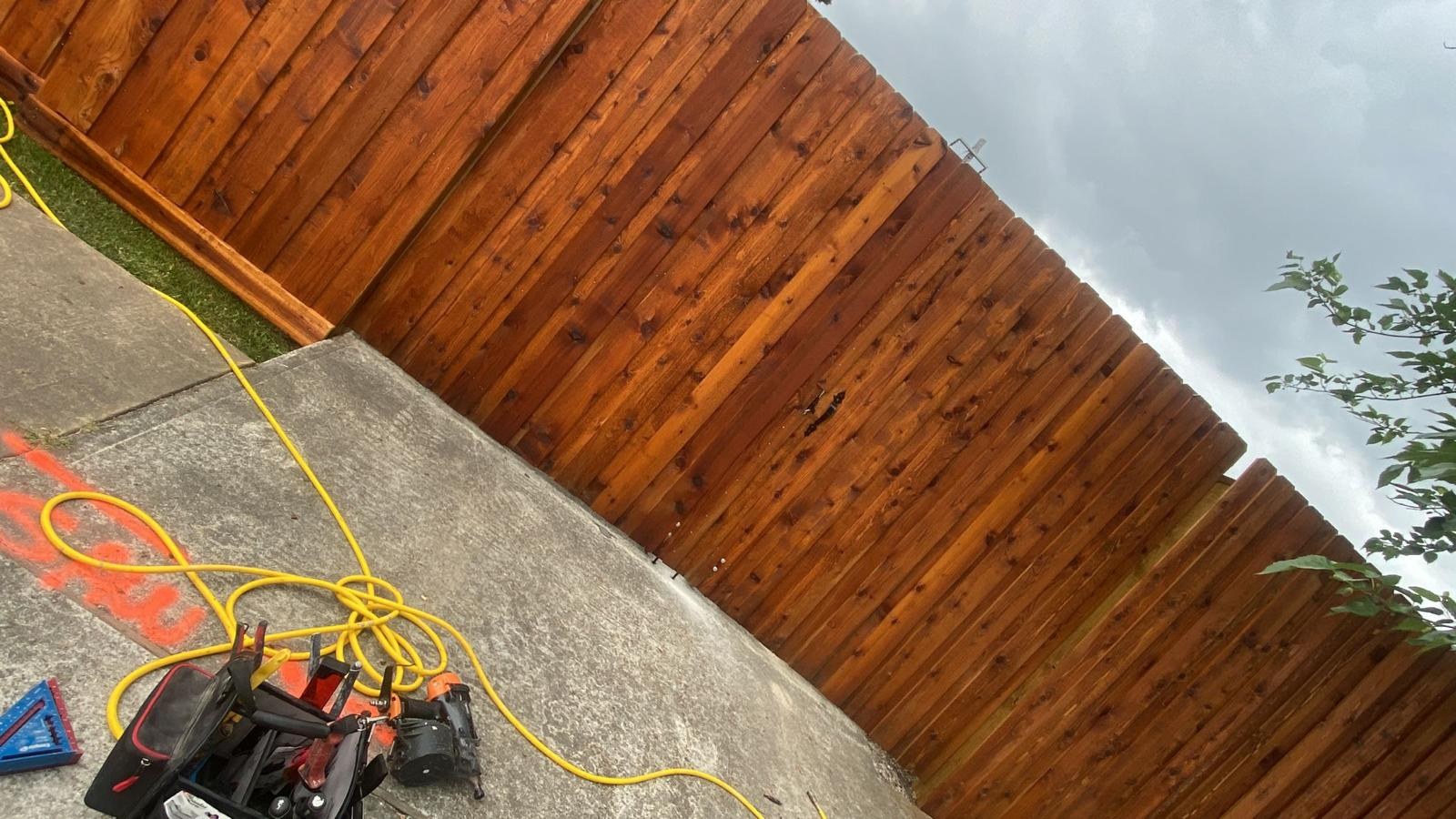
No — cedar does not need to be sealed to survive. Its natural oils resist rot and insects well enough that an unsealed fence simply weathers to a silvery-gray patina, which is cosmetic, not a sign of failure. But Galveston’s humidity and salt air add two things a dry climate rarely deals with — surface mildew and faster graying — so whether to seal is mostly a look-and-interval decision, not a survival one.
Sources: USDA Forest Products Laboratory, Wood Handbook FPL-GTR-282 (2021); Mustang Fencing Services field experience in Galveston. Checked November 5, 2026.
What cedar resists on its own
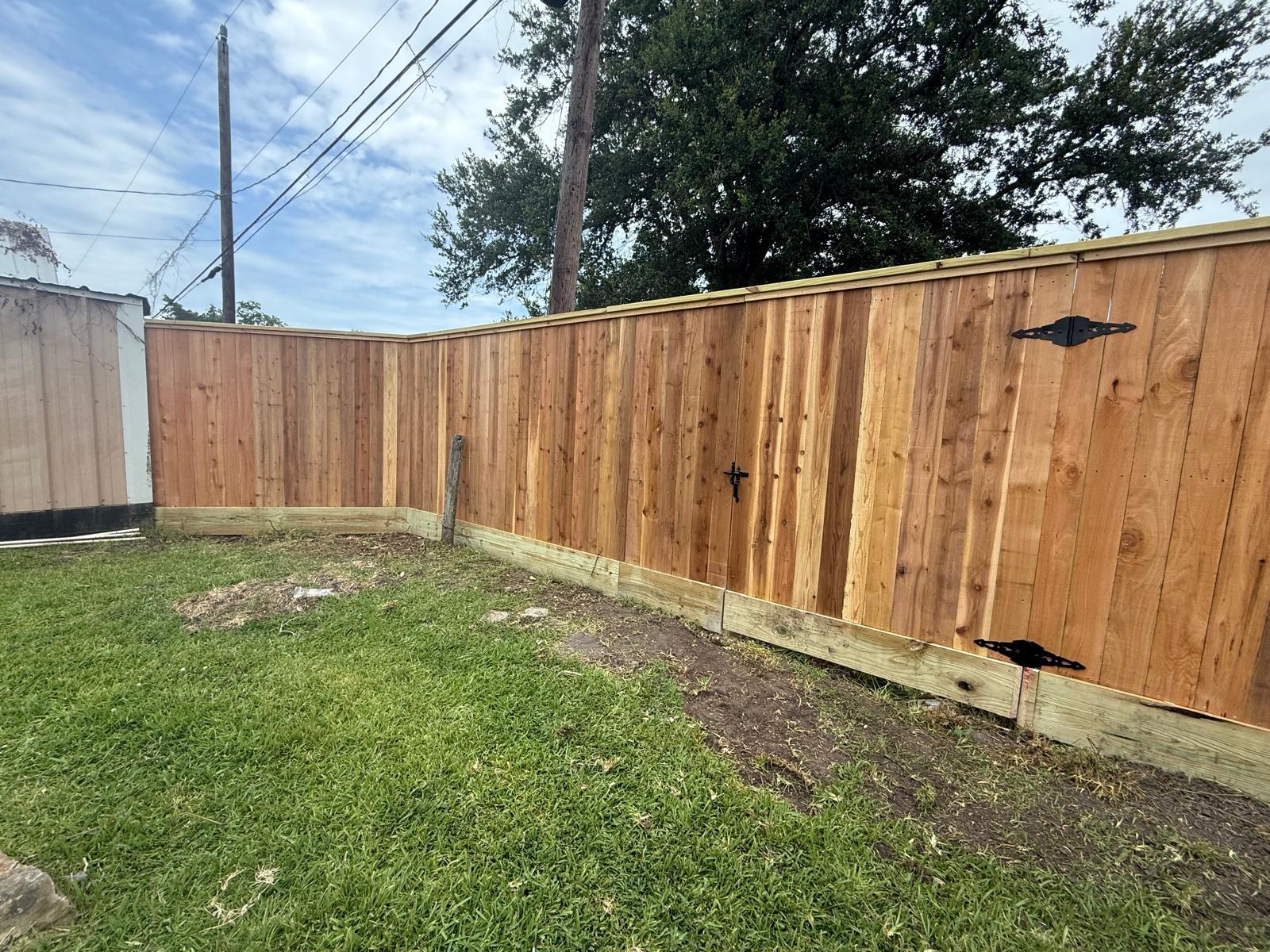
Cedar is naturally rot- and insect-resistant thanks to oils in the heartwood, which is why a lot of homeowners ask whether it needs to be sealed at all — especially in a climate as humid as Galveston’s. Left completely alone, an unsealed cedar fence will weather to a silvery-gray patina over time. That is a cosmetic color change, not a sign the fence is failing, and plenty of homeowners like that look.
Why coastal humidity changes the calculus
The natural oils that protect cedar from rot don’t do much to stop moisture absorption itself. In a climate with Galveston’s humidity and frequent rain, unsealed cedar takes on more ambient moisture than it would inland. That can lead to two things a dry-climate cedar fence rarely deals with: surface mildew (cosmetic and cleanable, not structural) and a faster fade to gray, since UV plus moisture breaks down the surface oils more quickly. Salt air adds a mild abrasive and corrosive element that speeds up both effects.
There’s also a specific finish problem unique to cedar and redwood: because their heartwood contains water-soluble extractives, water that gets behind a paint film can carry those extractives back out to the surface as it evaporates, leaving a reddish-brown stain on the paint itself — a different mechanism from ordinary graying, and the reason stain-blocking primers exist for these species.
Expected finish life on smooth cedar siding (USDA data)
Table 16-2, “Cedar and redwood, smooth (flat grain)” row — the typical surface on a dog-eared or flat-board cedar privacy fence. Bars show the upper end of each USDA range; see the full ranges and climate caveat below.
Should you seal it or not
If you want cedar to hold its warm reddish-brown color, a water-repellent sealant or semi-transparent stain will meaningfully slow both graying and surface mildew — USDA data estimates 2–4 years of service life for a semi-transparent stain on smooth cedar siding, and Mustang generally recommends the shorter end of that in Galveston rather than waiting it out. If you’re fine with the natural silvering look and just want the wood to last, sealing is optional: cedar will still resist rot well without it, though periodic washing to remove mildew and salt residue is still worth doing.
For properties closer to the water — Galveston Island, Bacliff, San Leon and similar salt-heavy areas — we generally recommend sealing on the shorter end of the interval and rinsing the fence occasionally with a garden hose to clear salt buildup between applications. See our cedar wood fence and coastal fence durability pages for more on how cedar fences are built and finished for this climate.
Cedar fence finish service-life estimator
Expected years before a finish needs renewing on cedar or redwood siding, per USDA Forest Products Laboratory data. Figures are averages for the contiguous USA — Galveston’s humidity and salt air generally land you at the shorter end of a range, not the longer one.
Source: USDA Forest Products Laboratory, Wood Handbook FPL-GTR-282 (2021), Table 16-2, “Siding — Cedar and redwood” rows. A 2-coat paint system (no separate primer) cuts the paint figure to roughly half (Table 16-2, footnote d). Mildew on the surface is the table’s own signal that refinishing is due (footnote b).
What customers say on Google
5.091 Google reviews · read them all on Google
Installed Stained cedar wood fence yesterday by mustang fencing, thanks for the beautiful work.
Love the quality and service. Totally recommend this for people who are looking for some nice finishings and top quality.
Excellent service and quality! Professional, on time, and great craftsmanship. Highly recommend!
Reviews shown word for word from the Mustang Fencing Services Google Business Profile (Galveston), captured 2026-11-05.
Questions we get about this
Does a cedar fence need to be sealed to survive?
How can I tell if my cedar fence has mildew or actual rot?
What’s the best type of finish for cedar in a humid climate?
Why does a reddish stain sometimes bleed through paint on a cedar fence?
How often should cedar fencing be resealed near the Gulf Coast?
Sources
Checked November 5, 2026. Rules change, so confirm with the City before you build.
- USDA Forest Products Laboratory, Wood Handbook FPL-GTR-282 (2021), Table 16-2 — Finish suitability and expected service life for cedar/redwood siding, by surface texture and finish type.
- USDA Forest Products Laboratory, Wood Handbook FPL-GTR-282 (2021), Ch.16 — Water-soluble extractives mechanism in cedar/redwood heartwood, and why stain-blocking primers are recommended.
Want a cedar fence sealed, stained, or installed for your Galveston property?
We’ll walk the property, talk through finish options and intervals for your spot, and put the scope on one written estimate before any work starts.