
A 52′ Cedar Fence Installation for Jeanna Smith in Dickinson, TX
Jeanna wanted a 52-foot cedar fence built entirely with screws, no nails — plus her yard had some uneven ground to work around. Here’s that fence, and the two standard methods installers use to keep a fence level on a slope.
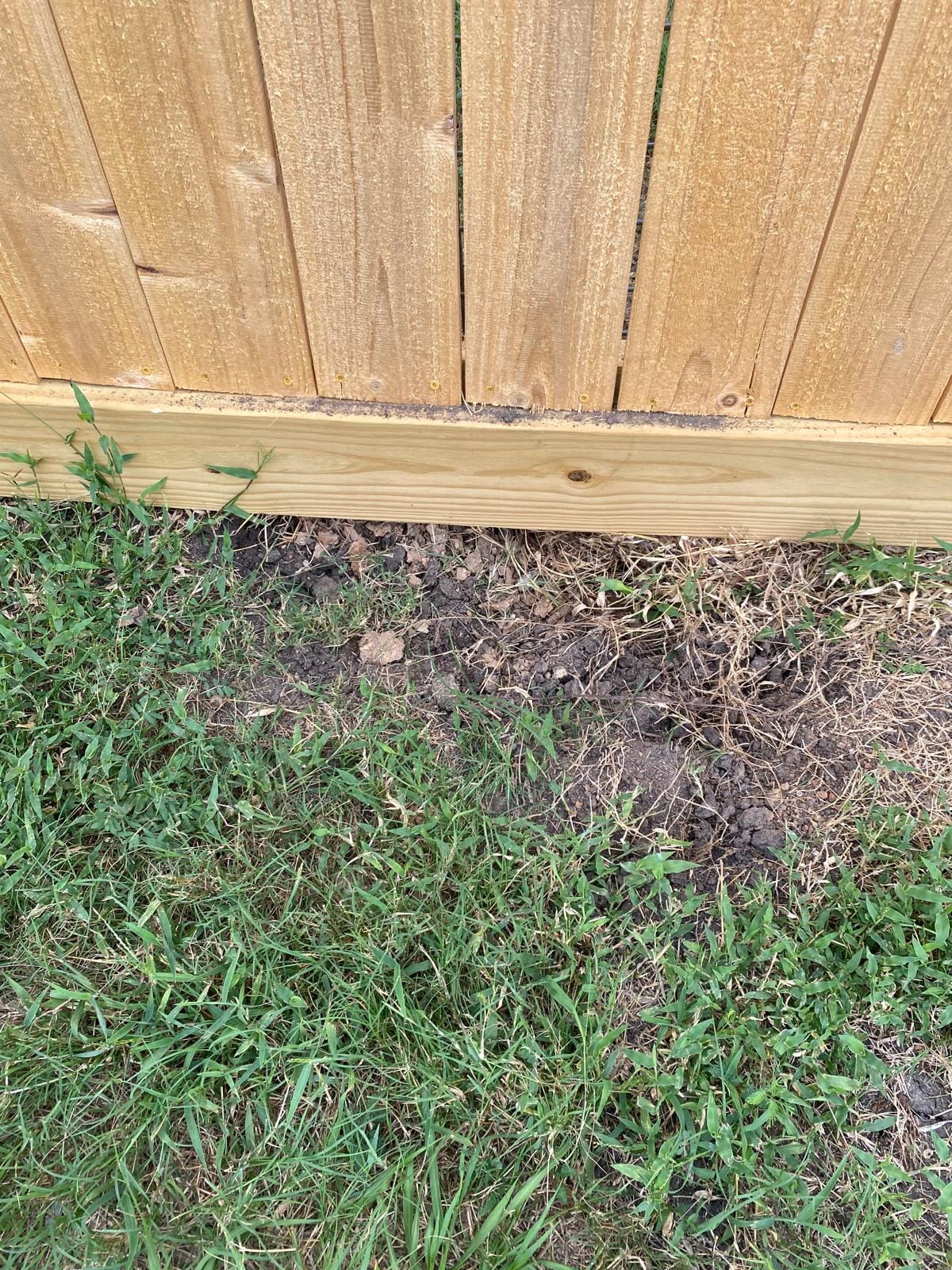
Jeanna’s Dickinson fence is a 52-foot cedar run with top trim, three rails, a single gate and a rot board, built entirely with screws at her request — no nails. Her yard also had some uneven ground that the crew adjusted and leveled for. That’s a common situation on a long fence run, and installers generally handle it one of two ways: stepping or racking.
Source: Bufftech/CertainTeed, Molded and Extruded Fence Installation Guideline.
The job: a 52-foot all-screw cedar fence
Jeanna wanted a 52-foot cedar fence for her Dickinson property, specified with top trim, three rails, a single gate and a rot board along the bottom. Her one firm requirement: the entire fence built with screws, no nails.
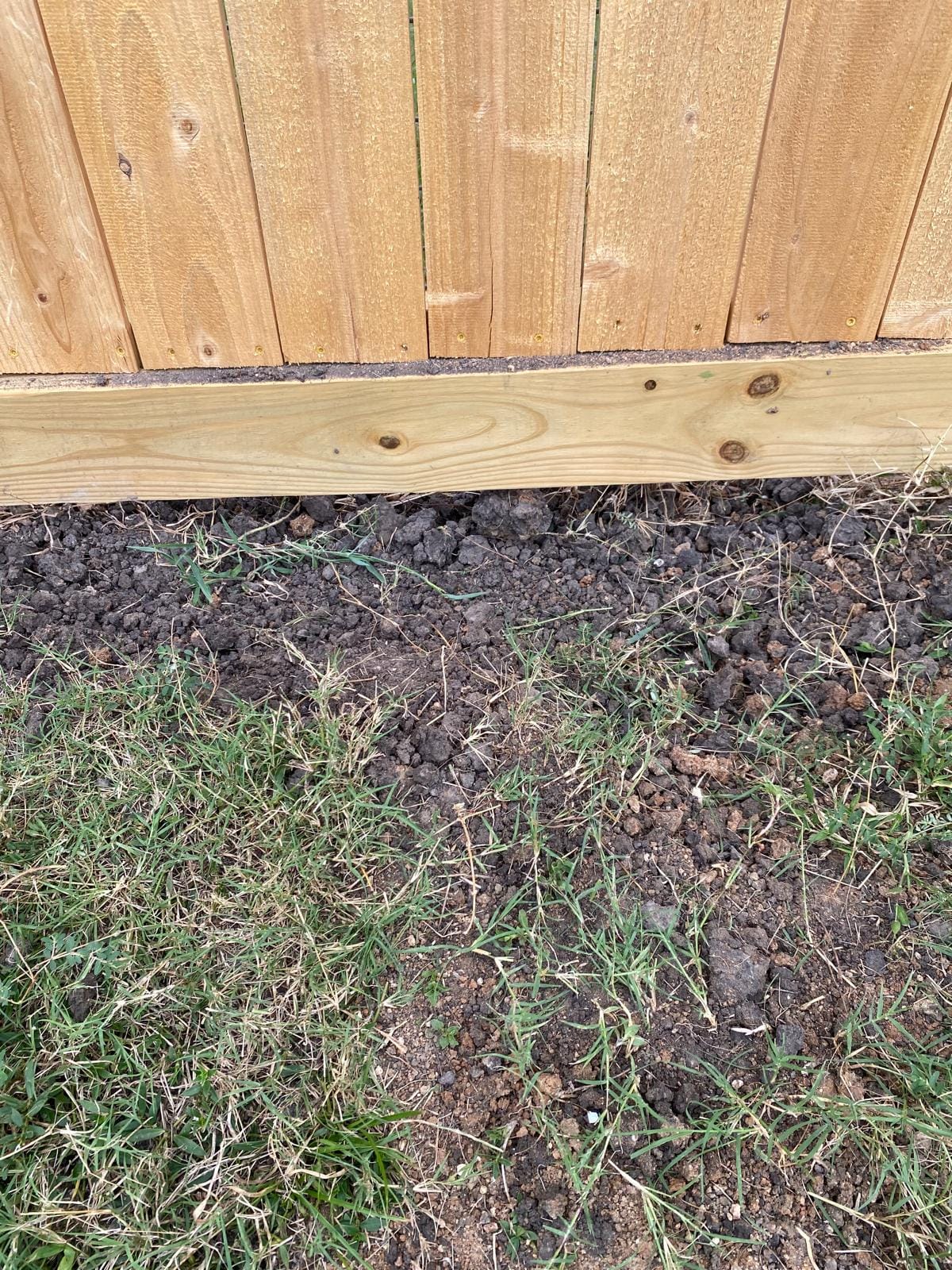
The crew set pressure-treated cedar posts in concrete. The job photos on file are close-up, ground-level shots of the finished fence: vertical cedar boards over a pressure-treated kickboard at grade, on soil that had clearly just been worked.
The post also notes that “the terrain of Jeanna’s yard had some uneven areas,” and the crew “adjusted and leveled the fence accordingly.” That’s the one detail on this job not shared by any other project post in this program — and it has a real construction answer, covered below.
Building a straight fence on uneven ground: two standard methods
When a fence line crosses a yard that isn’t perfectly flat, installers generally choose between two documented approaches. Per a fence manufacturer’s installation guide: “two methods exist for installing a fence on variable sloping terrain — stepping and racking.”
Stepping: “the rails remain horizontal and the posts are extended to accommodate the variance in terrain.” Each section stays level, and the fence steps down (or up) the slope in stages.
Racking: “the horizontal rails will follow the sloping terrain” — documented for slopes of about 10 degrees or less. Per the glossary: “fence posts and pickets are plumb, but the rails are secured at an angle so they parallel the grade.” On a steeper rack, “post centers may need to be decreased.”
The post about Jeanna’s project doesn’t say which method her crew used for the uneven ground on her property — so this page explains both rather than guessing.
Sloped yard: stepping or racking?
General information on the two standard methods fence installers use on uneven ground, based on a manufacturer’s installation guide. Not a claim about which method was used on any specific job — your installer will assess your yard in person.
Bufftech/CertainTeed, Molded and Extruded Fence Installation Guideline: stepping (horizontal rails, extended posts) works regardless of slope; racking (angled rails following the grade) is the documented method for slopes of about 10 degrees or less, and post centers may need to be decreased as the rack gets steeper.
What customers say on Google
5.091 Google reviews · read them all on Google
Installed Stained cedar wood fence yesterday by mustang fencing, thanks for the beautiful work.
I have hired Mustang fencing services to fix my backyard fencing. Good wood to used. I really like theirs work. Best of luck
had an excellent experience with mustang fencing From the initial consultation to the final installation, the team was professional, punctual, and attentive to detail. They helped me choose the perfect fence style to match my property and ensured everything was installed with precision. The quality of materials is top-notch, and the fence has completely transformed the look and security of my home. I highly recommend mustang services to anyone looking for reliable and high-quality fencing services!
Reviews shown word for word from the Mustang Fencing Services Google Business Profile (Galveston), captured 2026-10-26.
Questions we get about this
What did Jeanna’s fence include?
How do installers keep a fence level on a sloped yard?
Which method did Jeanna’s crew use for her uneven yard?
Does this page give the exact slope or terrain measurements for Jeanna’s yard?
Sources
Checked November 1, 2026. Rules change, so confirm with the City before you build.
- Bufftech (a CertainTeed brand), Molded and Extruded Fence Installation Guideline — Documents the two standard fence-industry methods for sloped terrain: stepping (horizontal rails, extended posts) and racking (plumb posts, angled rails, documented for slopes of about 10 degrees or less, with post spacing possibly needing to decrease as the rack steepens).
Planning a cedar fence on uneven ground?
We’ll walk the property, talk through stepping vs. racking for your slope, and put it on a written quote.