
A 551.5-Foot Pine Rail Fence for Joe Blackmon in Baytown, TX
Joe Blackmon needed a long run of fencing across a wooded Baytown property. Here is the 551.5-foot, three-rail pressure-treated pine fence Mustang built him, with woven-wire field fencing behind the rails and posts set in concrete — plus why the posts and rails are treated to different levels, and which fastener keeps that treatment from corroding.
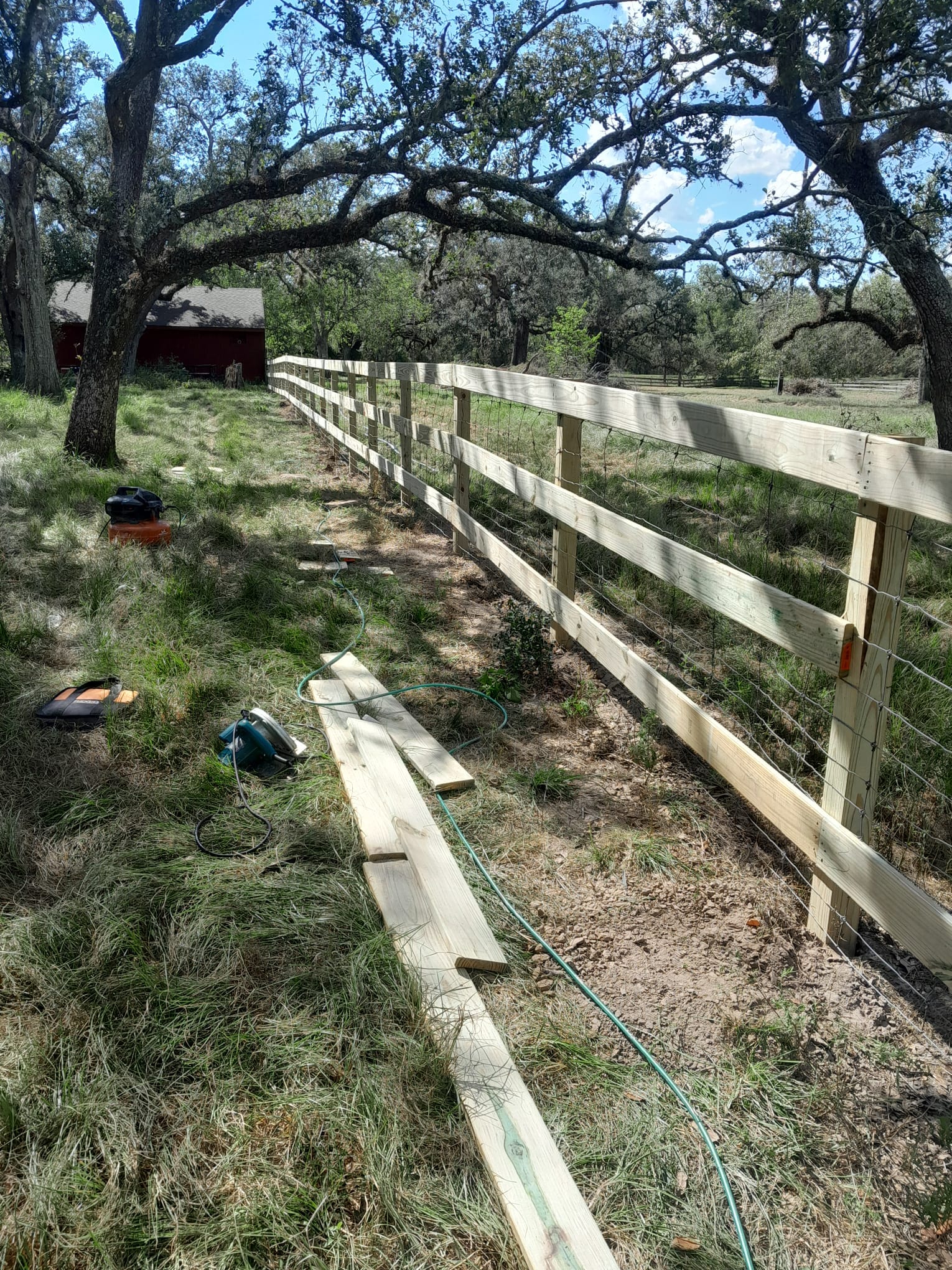
Mustang Fencing built a 551.5-foot, three-rail pressure-treated pine fence for Joe Blackmon on a wooded property in Baytown, TX. Woven-wire field fencing runs behind the rails, the posts are set in concrete, and post heights were adjusted along a sloped section of the property to keep the line smooth.
Sources: this project’s own documented facts and photos; Southern Forest Products Association, Pressure-Treated Southern Pine (2019). Checked November 8, 2026.
The job: a long run of three-rail pine fencing
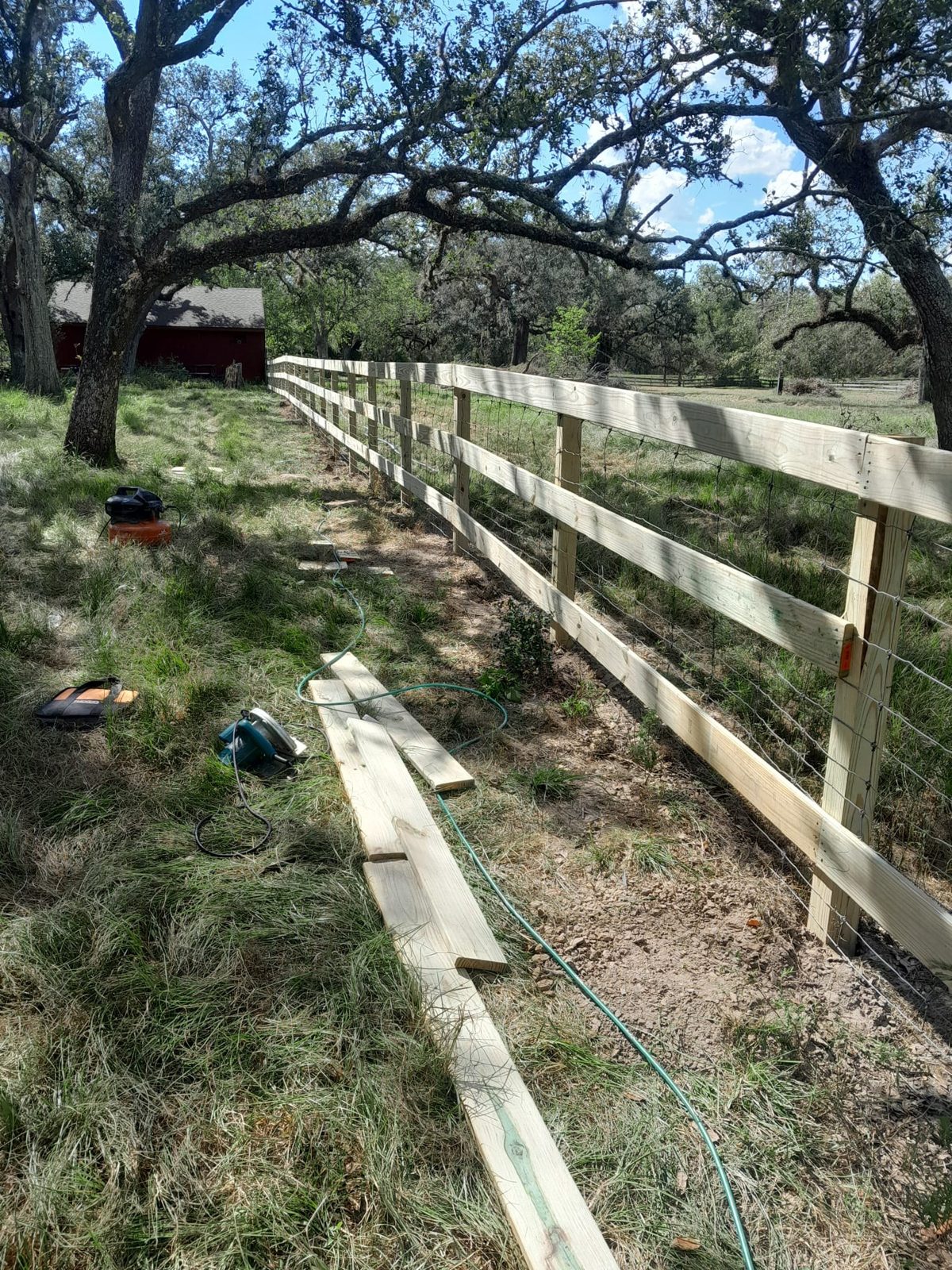
Joe Blackmon’s Baytown property needed a long stretch of fencing — 551.5 feet in total — run under a line of mature oaks. Mustang built it as a three-rail pressure-treated pine fence, with woven-wire field fencing strung behind the rails, the style visible in both job photos below.
The posts were set into the ground and anchored in concrete, then left to cure before the rails went on. One section of the property had a noticeable slope, which meant adjusting post heights along that stretch so the rail line stayed smooth instead of stair-stepping down the grade.
Why the posts and rails are treated to different levels
Pressure-treated pine isn’t treated to one single standard — the American Wood Protection Association’s Use Category System sets different treatment tiers depending on how a piece of lumber is actually exposed. The three rails on this fence sit above ground and never touch soil, which falls under UC3B. The posts, buried and set in concrete, sit in ground contact, which requires the higher UC4A tier.
The fastener matters too
Pressure-treated pine is typically treated with copper-based preservatives, which can corrode plain carbon-steel hardware faster than untreated wood would. Building codes address this directly: the 2018 International Building Code and International Residential Code require fasteners used with treated wood to be hot-dipped, zinc-coated galvanized steel, type 304 or 316 stainless steel, silicon bronze, or copper — not plain, uncoated steel.
Pine rail fence post-count calculator
Straight arithmetic: how many posts a run needs at a given spacing. Not a quote — corners, gates and terrain changes add posts beyond this count.
Arithmetic: run length ÷ post spacing, rounded up, plus one end post. Add more for corners, gates and grade changes.
What Galveston-area customers say
5.091 Google reviews · read them all on Google
Amazing work will go ahead and recommend everyone in friends and family We installed 8ft tall double sided stained cedar wood fence in our backyard, it’s really looks great, installed perfectly nice finishing and cost effective, thanks mustang fencing.
Installed Stained cedar wood fence yesterday by mustang fencing, thanks for the beautiful work.
I have hired Mustang fencing services to fix my backyard fencing. Good wood to used. I really like theirs work. Best of luck
Reviews shown word for word from the Mustang Fencing Services Google Business Profile (Galveston), captured 2026-11-08.
Questions we get about this
What did Mustang Fencing build for Joe Blackmon?
A 551.5-foot, three-rail pressure-treated pine fence on his Baytown, TX property, with woven-wire field fencing behind the rails and posts set in concrete.
Is this a privacy fence?
No. The job photos show an open, three-rail ranch/pasture-style fence with wire-mesh backing, not a solid privacy fence — it marks the property line rather than blocking the view through it.
Why are the posts and rails treated differently?
The posts sit in ground contact, which the AWPA Use Category System rates UC4A and requires a higher preservative-retention tier than the rails, which stay above ground (UC3B) and never touch soil.
What kind of hardware does a pressure-treated pine fence need?
The 2018 IBC and IRC require fasteners used with treated wood to be hot-dipped galvanized steel, type 304/316 stainless, silicon bronze or copper — not plain carbon steel, which corrodes faster against the wood’s preservatives.
Does Mustang Fencing build ranch-rail pine fences in the Galveston area?
Sources
Checked November 8, 2026. Rules change, so confirm with the City before you build.
- Southern Forest Products Association, Pressure-Treated Southern Pine (2019 edition) — AWPA Use Category System definitions (UC3B above-ground exposed vs. UC4A ground contact) and fastener/connector corrosion guidance, including the 2018 IBC 2304.10.5.1 / IRC R317.3 fastener requirements.
Planning a long run of fencing on acreage near Baytown or Galveston?
We’ll talk through rail style, wire-mesh backing and post treatment before any order goes on a written estimate.