
A 68-Foot Wood Privacy Fence Repair for Joe Dirico in Kemah, TX
Two posts on Joe Dirico’s 68-foot wood privacy fence had rotted at the base, leaning sections of the fence toward collapse. Here is the repair Mustang did — temporary braces to hold the fence during the work, new treated posts set in concrete — plus why ground-contact posts need a higher treatment tier than the rest of the fence.
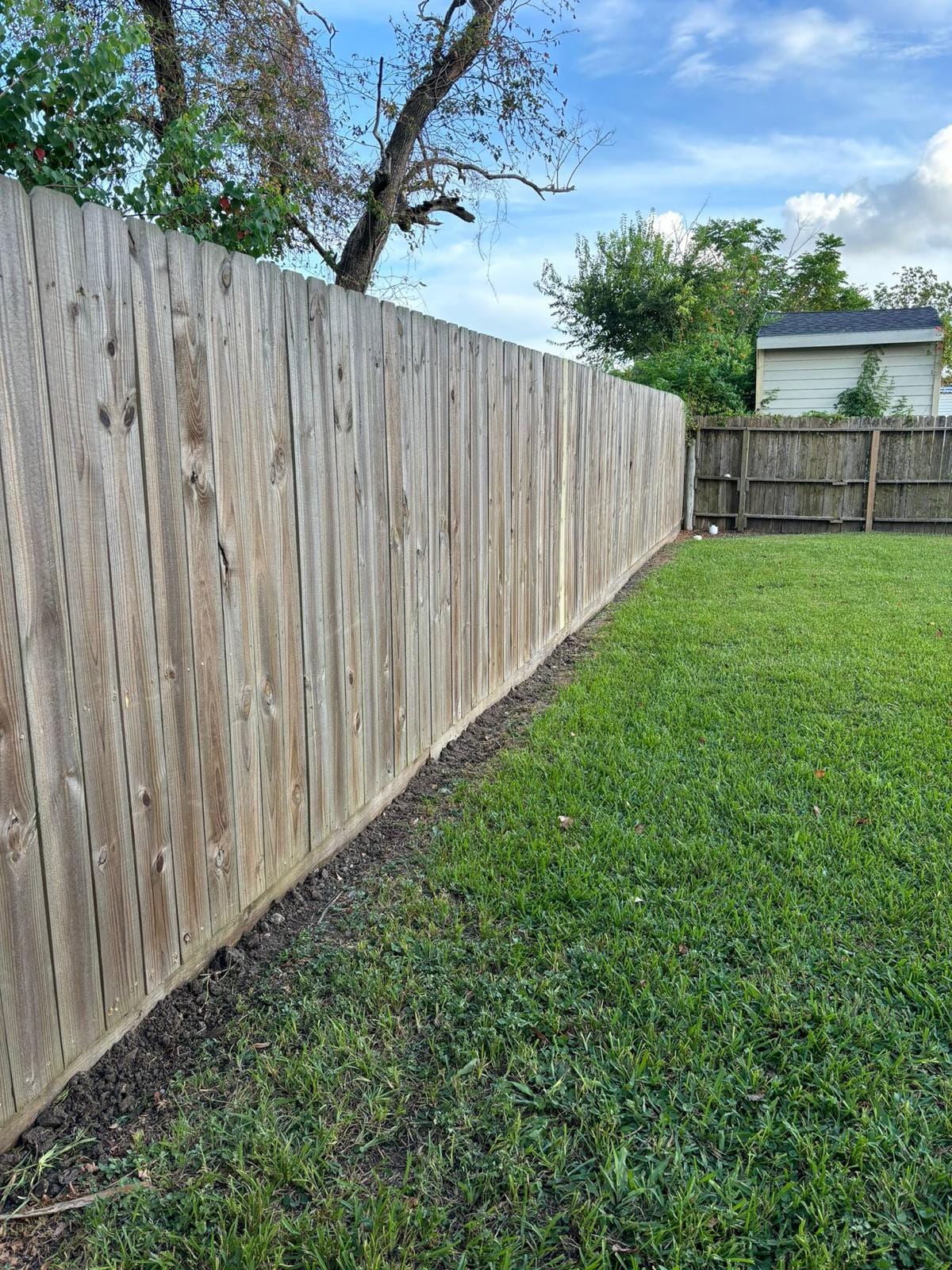
Mustang Fencing repaired a 68-foot wood privacy fence for Joe Dirico in Kemah, TX after two posts rotted at the base and caused sections to lean. Temporary braces held the fence stable during the work, and the new posts are treated wood set in concrete.
Sources: this project’s own documented facts and photos; Southern Forest Products Association, Pressure-Treated Southern Pine (2019). Checked November 8, 2026.
The job: two rotted posts on a 68-foot privacy fence
Joe Dirico’s 68-foot wood privacy fence in Kemah had served him well for years, but two fence posts had rotted at the base, causing part of the fence to lean. Kemah’s coastal moisture and weather had weakened the wood at ground level over time, and Joe wanted a lasting fix rather than a temporary patch.
Mustang’s team inspected the fence on site: the panels themselves were in decent shape, but the two damaged posts were critical to the structural integrity of the run and needed full replacement.
Replacing the posts without taking the fence down
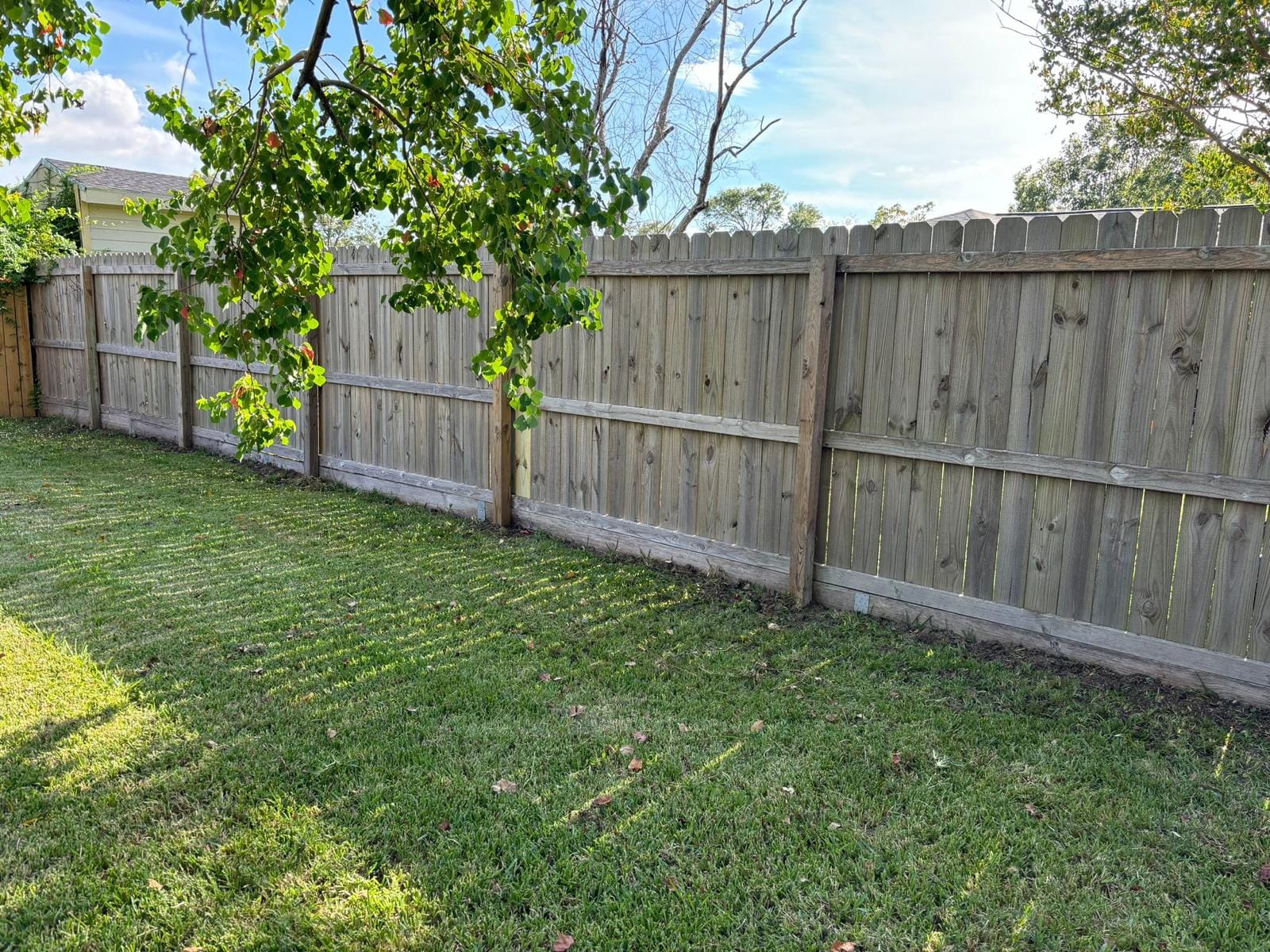
Removing two broken posts without disturbing the rest of an otherwise sound 68-foot run takes care. Mustang’s team used temporary braces to hold the remaining fence sections stable while the old posts came out, then dug deeper holes for the new ones.
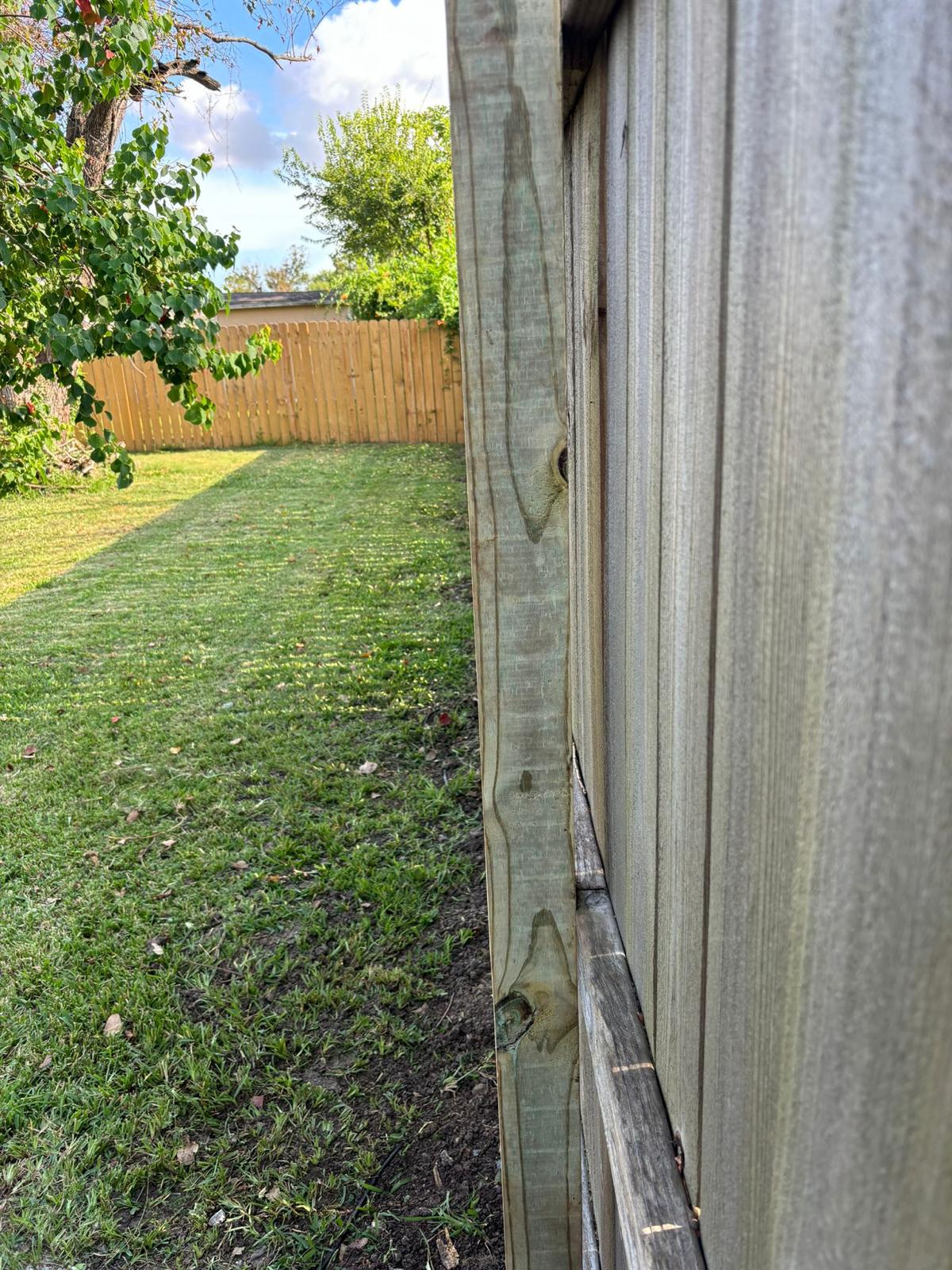
The new posts are treated wood, set and anchored in concrete, then left to cure before the fence panels were reattached — keeping the repaired sections aligned with the rest of the run.
Why ground-contact posts need a higher treatment tier
Pressure-treated wood isn’t treated to one single standard. The American Wood Protection Association’s Use Category System rates lumber differently depending on how it’s actually exposed. Fence pickets and rails that stay above ground fall under the lighter UC3A/UC3B categories. Posts set in the ground, by contrast, are rated UC4A (Ground Contact) and require a higher preservative-retention tier.
The Southern Forest Products Association notes that the most common misapplication is lumber treated for “Above Ground Use Only” being used where the real condition is ground contact — exactly the kind of mismatch that lets moisture reach the wood fiber at the base of a post and start decay.
Wood fence post-count calculator
Straight arithmetic: how many posts a fence run needs at a given spacing. Not a quote — Joe’s repair only replaced the 2 posts that had rotted, not the whole run.
Arithmetic: run length ÷ post spacing, rounded up, plus one end post. Add more for corners, gates and grade changes.
What Galveston-area customers say
5.091 Google reviews · read them all on Google
I have hired Mustang fencing services to fix my backyard fencing. Good wood to used. I really like theirs work. Best of luck
True professionalism is very rare in this day and age, these guys live upto their word and deliver on their service! Our fence was down in the July storm and these guys came and gave a reasonable quote, after confirming I received a time line and they delivered! Will recommend them to everyone I know who needs fencing done.
Fenomenal job, really nice guy. Contacted them after hurricane knocked down my fence facing the street and got it done really quickly.
Reviews shown word for word from the Mustang Fencing Services Google Business Profile (Galveston), captured 2026-11-08.
Questions we get about this
What did Mustang Fencing repair for Joe Dirico?
A 68-foot wood privacy fence in Kemah, TX, where two posts had rotted at the base and caused sections to lean.
What caused the fence posts to rot?
Moisture at ground level, typical of Kemah’s coastal conditions, weakened the wood at the base of the posts over time.
How did Mustang keep the fence stable during the repair?
Temporary braces held the remaining fence sections in place while the two damaged posts were removed and replaced.
Why do fence posts need a different treatment than the rest of the fence?
Posts set in the ground are rated AWPA Use Category UC4A (Ground Contact), which requires a higher preservative-retention tier than above-ground pickets and rails (UC3A/UC3B). Lumber treated only for above-ground use can rot faster if used as a post.
Does Mustang Fencing repair wood privacy fences in Kemah?
Sources
Checked November 8, 2026. Rules change, so confirm with the City before you build.
- Southern Forest Products Association, Pressure-Treated Southern Pine (2019 edition) — AWPA Use Category System definitions (UC3A/UC3B above-ground vs. UC4A ground contact) and the TIP box warning that lumber treated for above-ground use only is commonly misapplied where the real condition is ground contact.
Got a wood fence post rotting at the base near Kemah or Galveston?
We’ll walk the fence line with you and talk through what a post-only repair versus a fuller rebuild looks like before any written estimate.