
A Rewarding Project with Jason Phillip: Installing a Wooden Fence in Rosharon, Texas
Jason wanted a 6-foot pressure-treated pine privacy fence with a horizontal board design and a decorative top trim. Here’s that fence, and what determines when a pressure-treated fence is actually dry enough to seal.
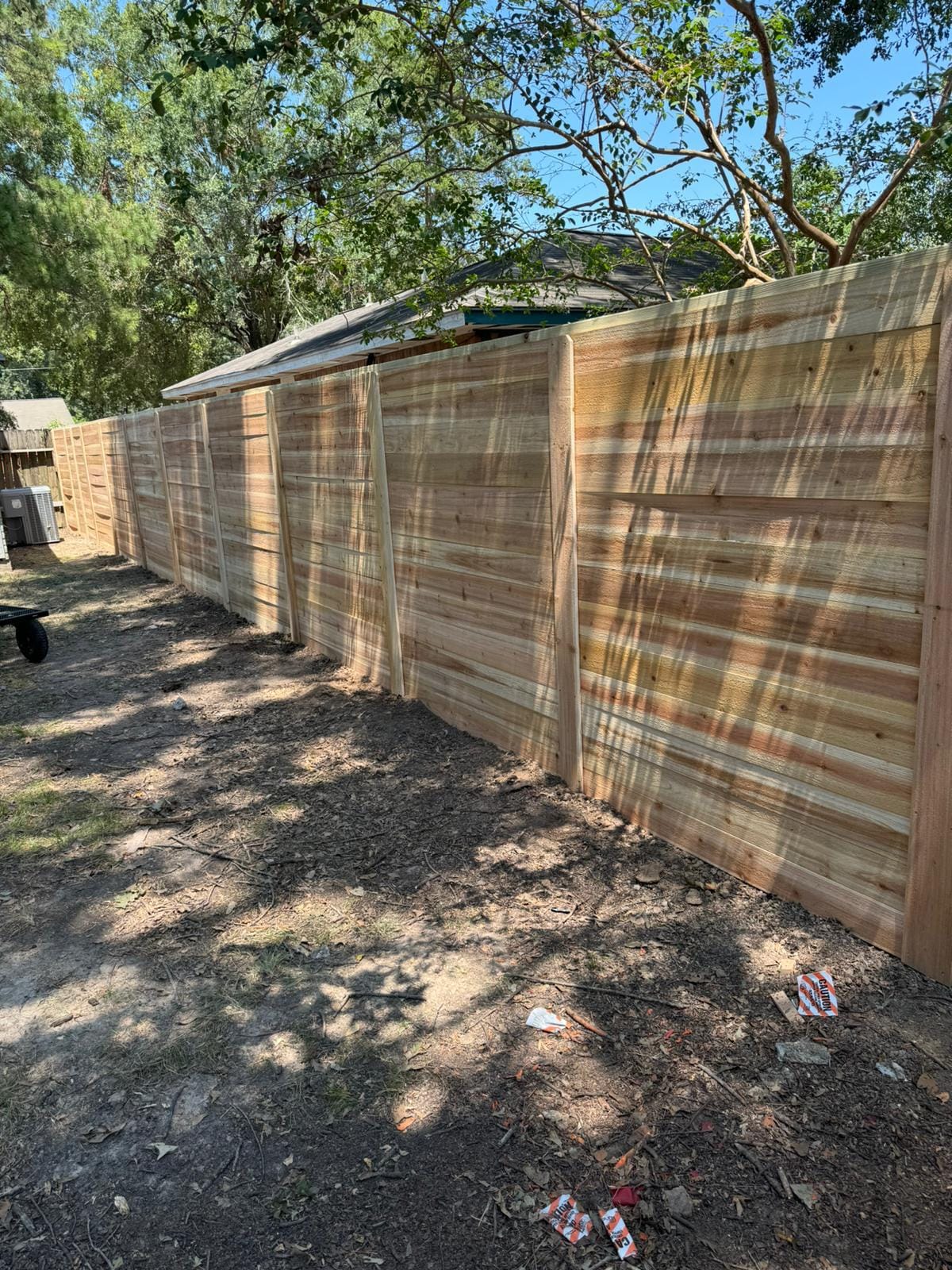
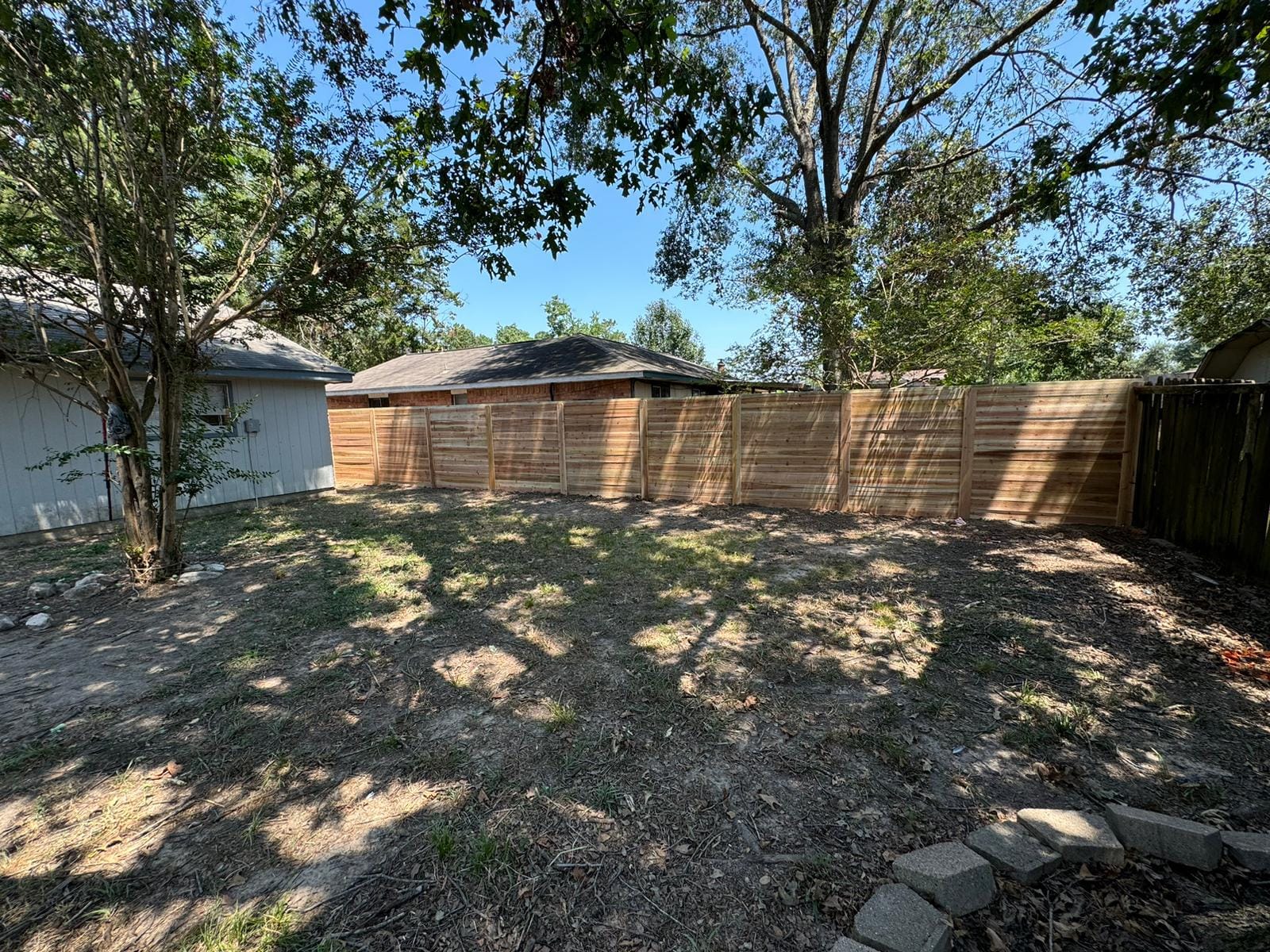
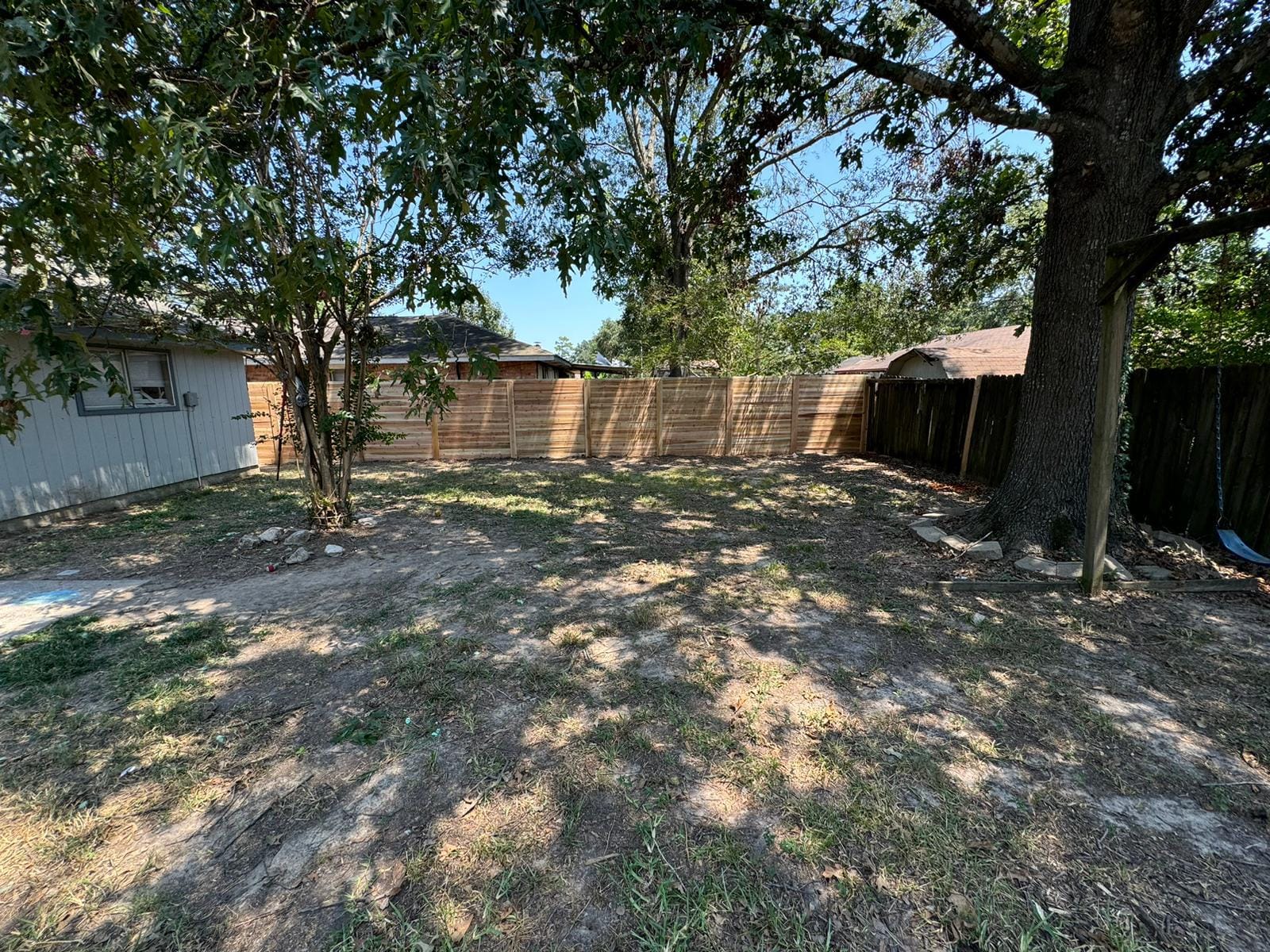
Jason’s Rosharon fence is a 6-foot pressure-treated pine privacy fence, built with a horizontal board design and a decorative top trim, with posts anchored in concrete. Part of the property had uneven terrain, so the crew adjusted the fence’s height and alignment to follow it. As a final step, a protective sealant was applied to the wood.
Source: USDA Forest Products Laboratory, Wood Handbook FPL-GTR-282 (2021).
The job: a 6-foot pressure-treated pine privacy fence
Jason wanted a 6-foot pressure-treated pine privacy fence for his Rosharon property, built with a horizontal board design and a decorative top trim for a smooth, finished look. The crew anchored each post in concrete for long-term stability.
Part of the property had uneven terrain, so the fence’s height and alignment were adjusted along the way to keep a consistent line. As a last step, a protective sealant was applied to the wood.
That sealant step raises a real question worth answering properly: pressure-treated wood isn’t the same as kiln-dried lumber fresh off the shelf, and the Handbook has specific guidance on when it’s actually ready to finish.
Pressure-treated pine needs to dry before it will take a finish
Treating lumber with a waterborne preservative pushes a lot of extra moisture into the wood. Per USDA Forest Products Laboratory: “wood treated with waterborne preservatives…can be painted or stained if the wood is clean and dry. Bleed of preservative through finishes…can occur if wood is still wet from the preservative treatment.”
The fix is simply patience: “one week should be sufficient to allow wood surfaces to dry enough to finish.” Finishing sooner “increases the risk of blistering and peeling.”
Once it is dry enough, a water-repellent sealant is a one-coat job. “When WR or WRP is applied after installation, apply only a single coat; a second coat will not penetrate the wood.” A sealant that still looks shiny an hour after application hasn’t soaked in — per the Handbook, that excess should be wiped off, or “thin films may crack and peel within a year or two.”
Sealing pressure-treated pine: is it dry enough yet?
General guidance from a USDA Forest Products Laboratory handbook on finishing pressure-treated wood. Not an inspection of any specific fence — check your own boards before finishing.
USDA Forest Products Laboratory, Wood Handbook FPL-GTR-282 (2021), Ch.16: treated wood can be painted or stained once it is clean and dry; finishing it while still wet from treatment risks bleed-through, blistering and peeling. A water-repellent preservative needs only a single coat — a second will not penetrate.
What customers say on Google
5.091 Google reviews · read them all on Google
We just installed iron gate and it looks amazing thank you very much mustang fencing .
Mustang’s team installed iron fence for me and did an absolutely incredible job! I would recommend this company to anyone I know!
White PVC fence. Beautifully done! Thanks Mustang it’s really looks perfect.
Reviews shown word for word from the Mustang Fencing Services Google Business Profile (Galveston), captured 2026-10-26.
Questions we get about this
What does Jason’s fence include?
Why does pressure-treated wood need to dry out before it’s sealed?
Does a water-repellent sealant need more than one coat?
Does this page confirm exactly how the sealant on Jason’s fence was applied?
Sources
Checked November 1, 2026. Rules change, so confirm with the City before you build.
- USDA Forest Products Laboratory, Wood Handbook: Wood as an Engineering Material, FPL-GTR-282 (2021) — Chapter 16 (Treated Wood Products / Finishing of Wood): why treated wood needs to be clean and dry before finishing, the roughly one-week drying guideline, and the single-coat rule for water-repellent preservatives.
Planning a pressure-treated pine privacy fence?
We’ll walk the property, talk through board layout and finish timing, and put it on a written quote.