
Crafting a Stunning Wooden Fence for Jason Deyo in Pasadena, Texas
Jason Deyo wanted a 6-foot cedar privacy fence with a clean, modern look for his Pasadena, Texas property. Here is that job in photos, plus the USDA Forest Products Laboratory facts behind why the fasteners holding a cedar fence together matter as much as the wood, and why sapwood is not the same as heartwood even on the same board.
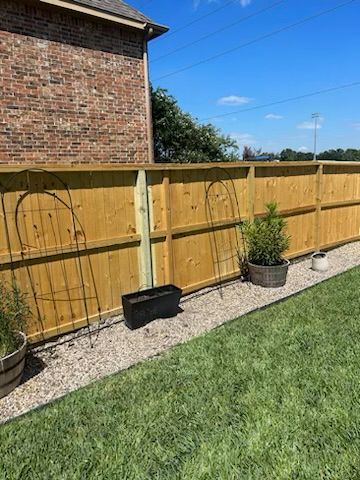
Cedar held up Jason Deyo’s promise of a fence that looks clean and modern for years, but the USDA Forest Products Laboratory’s Wood Handbook is clear that the species alone is not the whole story: the wrong fastener metal can stain cedar black, and a board’s decay resistance depends on whether it is heartwood or sapwood, not just its species.
Source: USDA Forest Products Laboratory, Wood Handbook: Wood as an Engineering Material, FPL-GTR-282 (2021).
The job: a 6-foot cedar fence with a clean, modern look
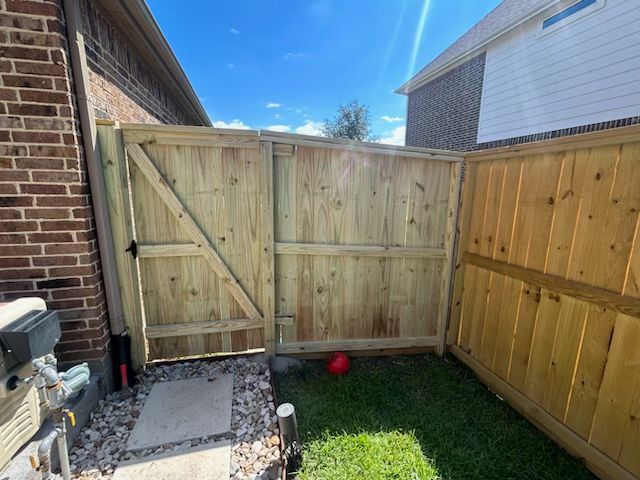
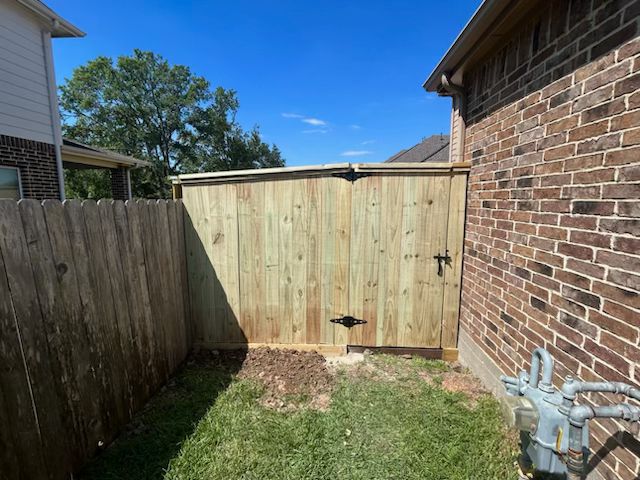
Jason Deyo wanted to upgrade the perimeter of his Pasadena, Texas property with a 6-foot-tall cedar privacy fence. He chose cedar for its timeless appearance and its natural resistance to rot and insects, and asked for a clean design that would match the architectural style of his home rather than feel like a plain wall of pickets.
The photos below are from that job.
The fastener choice matters as much as the wood
Cedar’s decay resistance is only half of what decides whether a fence still looks “clean and modern” a few years in. Western redcedar carries high amounts of natural tannin, and the USDA Forest Products Laboratory’s Wood Handbook is direct about what that means for fasteners: “Expect iron stain if using plain carbon steel fasteners on naturally finished exterior wood containing high amounts of tannin, such as western redcedar.” The Handbook adds that this is “common, even when contractors do the work.”
The fix is the metal, not the wood. Stainless steel fasteners are, to the Handbook’s knowledge, safe from iron stain. Where stainless isn’t used, high-quality hot-dip galvanized fasteners meeting ASTM A153/A are far less likely to cause iron stain than plain carbon steel. Pine and other low-tannin woods don’t have this problem the same way — plain steel there just rusts and leaves an ordinary brown stain, not the dark streak cedar produces.
Where above-ground cedar pickets sit in the AWPA use-category system
| Use category (USDA Wood Handbook Table 15-6) | Service conditions | Typical applications |
|---|---|---|
| UC3A | Exterior construction, above ground, coated and rapid water runoff | Coated millwork, siding and trim |
| UC3B | General above-ground use, fully exposed to weather | Decking, fence pickets and rails, guardrail posts |
| UC4A | General ground contact, or above-ground uses that are structurally critical | Fence and deck posts, deck beams and supports |
USDA Forest Products Laboratory Wood Handbook, Table 15-6 (American Wood Protection Association use-category system). A naturally decay-resistant species like cedar can still be specified against these categories; they describe exposure, not just whether preservative treatment is required.
Heartwood vs. sapwood: not every board performs the same
Cedar’s “very resistant” decay rating describes its heartwood — the darker wood from the center of the tree. The Wood Handbook is equally clear about the lighter wood at the outer edge of the same log: “Untreated sapwood of essentially all species has low resistance to decay.” A board cut mostly from sapwood does not get cedar’s usual decay advantage, regardless of species.
Even heartwood-to-heartwood, performance varies: “Considerable differences in service life can be obtained from pieces of wood cut from the same species, even the same tree, and used under apparently similar conditions.” That’s part of why a visual check of the boards going up — not just the species on the invoice — is worth doing on a privacy fence meant to look clean for years.
Cedar fence fastener & board-grade checklist
Pick the fastener metal and how much sapwood shows on the boards. Based on the USDA Forest Products Laboratory’s own notes on tannin staining and sapwood decay resistance. No prices.
Fasteners: USDA Wood Handbook Ch.16 (western redcedar’s tannins react with plain carbon steel; stainless is, to the Handbook’s knowledge, safe from iron stain; ASTM A153/A hot-dip galvanized is far less likely to stain than plain carbon steel). Grade: Ch.14 (untreated sapwood of essentially all species has low decay resistance; the heartwood carries the species rating). A checklist, not a lumber-grading inspection.
What customers say on Google
5.091 Google reviews · read them all on Google
Amazing work will go ahead and recommend everyone in friends and family We installed 8ft tall double sided stained cedar wood fence in our backyard, it’s really looks great, installed perfectly nice finishing and cost effective, thanks mustang fencing.
had an excellent experience with mustang fencing From the initial consultation to the final installation, the team was professional, punctual, and attentive to detail. They helped me choose the perfect fence style to match my property and ensured everything was installed with precision. The quality of materials is top-notch, and the fence has completely transformed the look and security of my home. I highly recommend mustang services to anyone looking for reliable and high-quality fencing services!
I recently hired Mustang Fencing Services for a fence installation, and I couldn’t be happier with the results. The team was professional, punctual, and very knowledgeable. They provided a detailed estimate and completed the job on time and within budget. Overall highly recommended Mustang fencing services
Reviews shown word for word from the Mustang Fencing Services Google Business Profile (Galveston), captured 2026-10-26.
Questions we get about this
Why do some cedar fences get black streaks under the nails or screws?
Does stainless steel stop cedar from staining?
Is sapwood as decay-resistant as heartwood on a cedar board?
What AWPA use category applies to above-ground cedar fence pickets?
Why might two cedar fences from the same species age differently?
Sources
Checked October 28, 2026. Rules change, so confirm with the City before you build.
- USDA Forest Products Laboratory, Wood Handbook: Wood as an Engineering Material, FPL-GTR-282 (2021) — Decay resistance of heartwood vs. sapwood and service-life variability (Ch. 14, Table 14-1); AWPA use-category system (Ch. 15, Table 15-6); iron stain from fasteners on high-tannin wood (Ch. 16).
Planning a wood fence or gate?
We’ll walk the property, talk through wood choice, fastening and finishing, and put it on a written quote.