
A Fulfilling Project Experience with Gloria Holland in Danbury, Texas
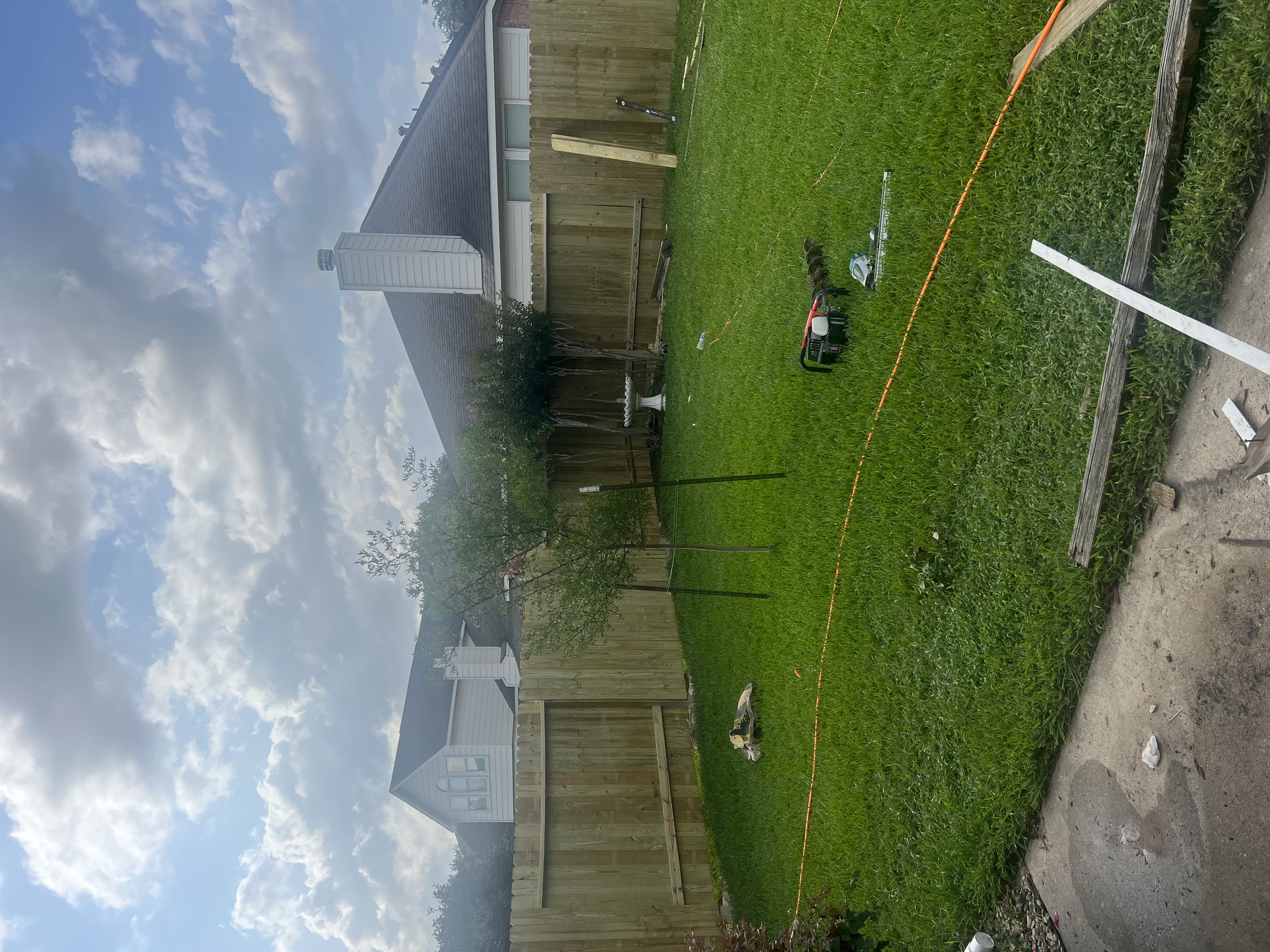
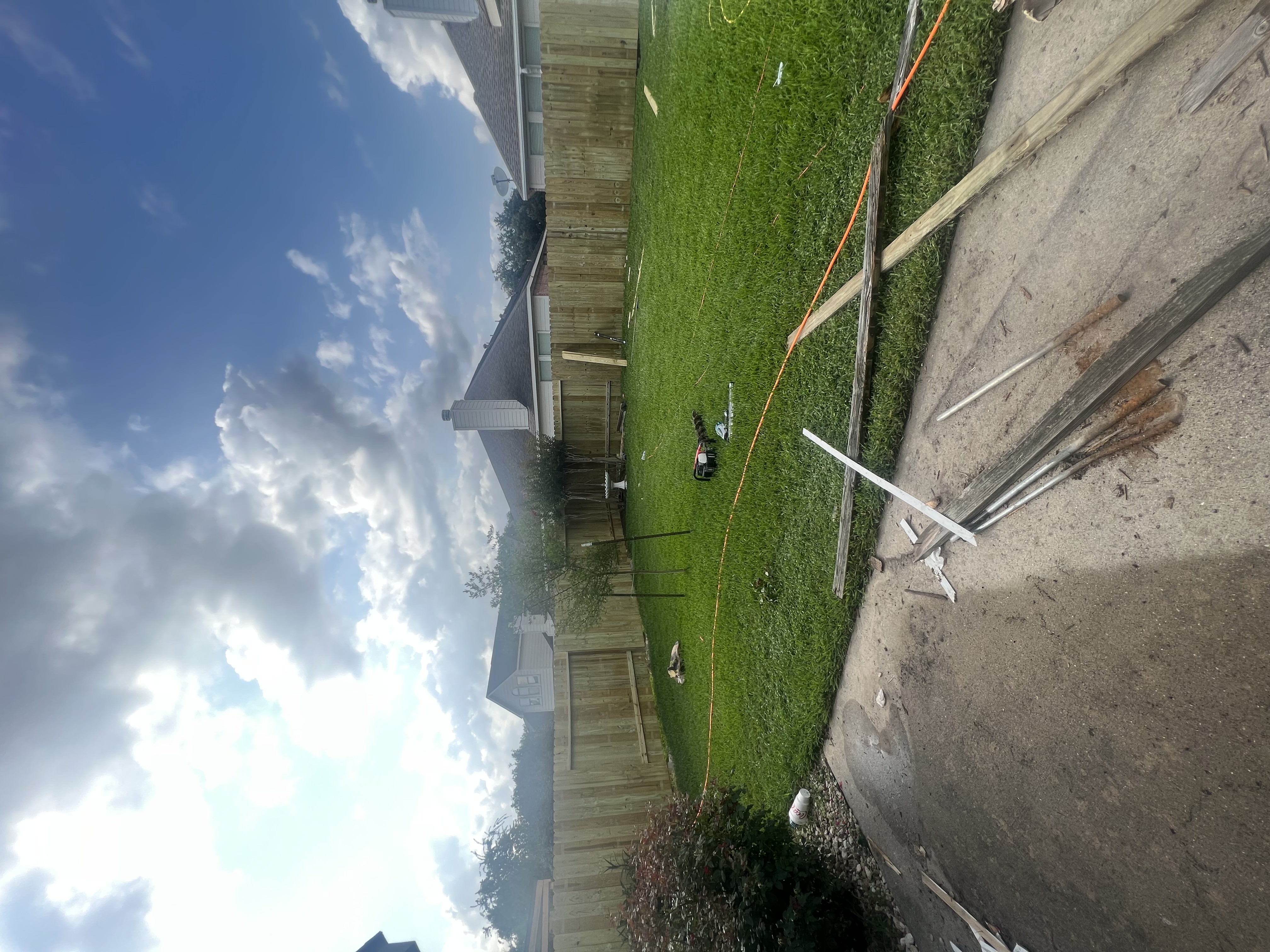
These photos document a fence replacement in progress at Gloria’s Danbury property: an old wood fence coming down and a new 6-foot treated pine privacy fence going up, with rocky ground along the way. Here is what the photos show, and what the new fence’s treatment rating means.
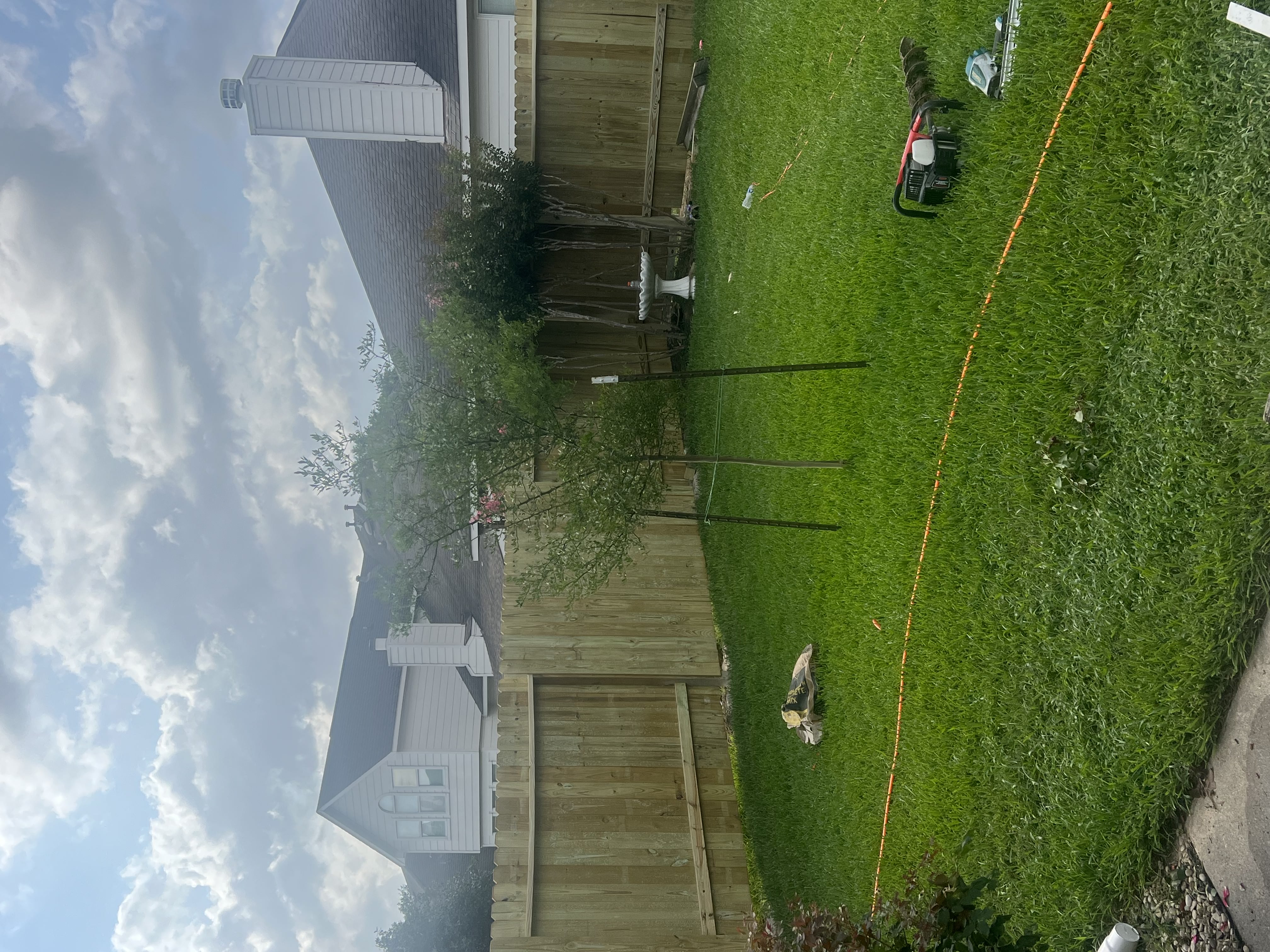
These photos document a fence replacement at Gloria Holland’s Danbury, TX property, not new-lot construction: an old wood fence coming down, with a new 6-foot treated pine privacy fence going up in its place. The crew hit rocky soil while setting posts and worked through it with specialized tools. This job sits outside the Galveston program’s service-area allowlist (Danbury is in Brazoria County), so no local ordinance is cited here — the facts below are general, sourced wood-fence information.
Source: Southern Forest Products Association, Pressure-Treated Southern Pine (2019 ed.), Table 3-1. This job sits outside the Galveston program’s service-area allowlist, so no city or county ordinance is cited for it.
The job: an old fence comes down, a new one goes up
The three photos attached to this project show a fence replacement in progress: old fence material piled on the patio during cleanup, a new 6-foot treated pine privacy fence going up at a backyard corner with installation tools still on the lawn, and a wider view where old material is still visible on the patio while the new run continues. None of the three photos show a finished, cleared yard, so that is not claimed here.
Digging for the new posts hit rocky soil, described in the original job account as not uncommon in that part of Texas. For the engineering reason tougher digging does not by itself mean a weaker fence, see our project with Hope Courser, a separate job where the same question came up.
What “treated pine” actually means for this fence
The new fence’s decay resistance comes from which AWPA use-category the pine lumber was pressure-treated to. The Southern Forest Products Association’s treatment tables set a UC3A (coated) or UC3B (uncoated) minimum for above-ground, exposed boards and rails, and a higher UC4A minimum for posts that sit in ground contact — a harsher decay exposure than the boards face.
That rating is about ground contact, not about how hard the ground was to dig. Rocky soil made digging the post holes slower, but it does not change which treatment category the posts need once they are set.
Replacing an old fence? Rough debris estimate
Plain arithmetic from the run length and fence height you enter — not a measurement of Gloria’s own job, and not a hauler’s actual load count. Assumes solid 1×6 boards edge to edge, 2 rails, for the volume estimate.
Volume = run (ft) × height (ft) × assumed 0.5 ft board-and-rail thickness, loosely stacked (not compacted), converted to cubic yards. Arithmetic only, not a manufacturer or hauler figure.
What customers say on Google
5.091 Google reviews · read them all on Google
had an excellent experience with mustang fencing From the initial consultation to the final installation, the team was professional, punctual, and attentive to detail. They helped me choose the perfect fence style to match my property and ensured everything was installed with precision. The quality of materials is top-notch, and the fence has completely transformed the look and security of my home. I highly recommend mustang services to anyone looking for reliable and high-quality fencing services!
I have hired Mustang fencing services to fix my backyard fencing. Good wood to used. I really like theirs work. Best of luck
Amazing work will go ahead and recommend everyone in friends and family We installed 8ft tall double sided stained cedar wood fence in our backyard, it’s really looks great, installed perfectly nice finishing and cost effective, thanks mustang fencing.
Reviews shown word for word from the Mustang Fencing Services Google Business Profile (Galveston), captured 2026-11-02.
Questions we get about this
Was this a new fence or a replacement?
What does the new fence’s AWPA rating mean?
Did rocky soil affect the fence’s strength?
Does Mustang Fencing serve Danbury, TX?
Sources
Checked November 2, 2026. Rules change, so confirm with the City before you build.
- Southern Forest Products Association, Pressure-Treated Southern Pine (2019 ed.) — Table 3-1, AWPA use categories: UC3A/UC3B for above-ground fence boards and rails vs. UC4A for posts in ground contact.
Replacing an old wood fence?
We’ll walk the property, talk through removal and the new material’s treatment rating, and put it on a written estimate.