
A Successful Wooden Fence Installation for Kyle Toms in Hitchcock, Texas
Kyle wanted a cedar privacy fence for his Hitchcock property, with posts set deep to handle the area’s occasional strong winds. Here is that fence in photos, plus why a solid privacy panel leans on its posts more than an open-style fence does.
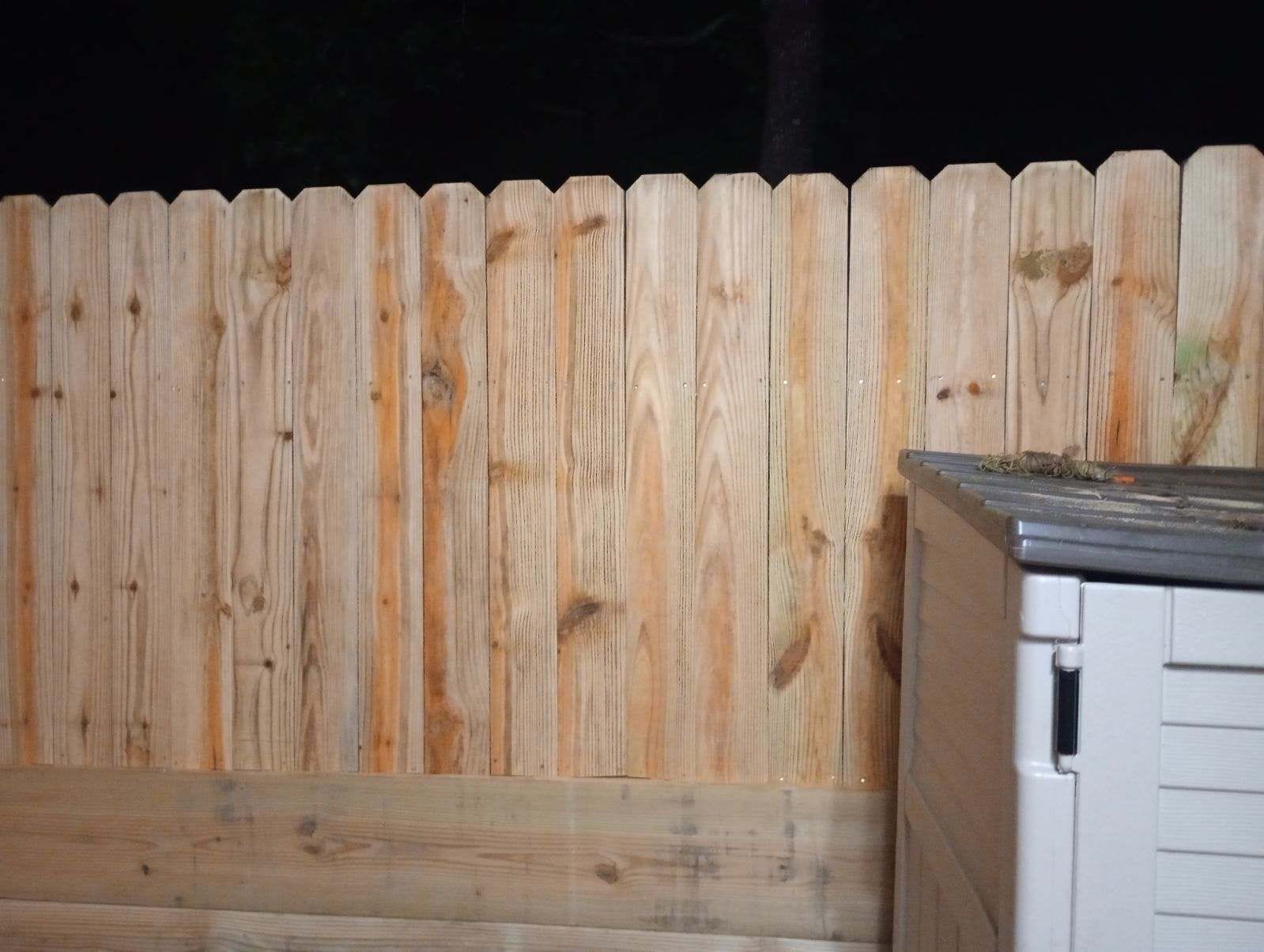
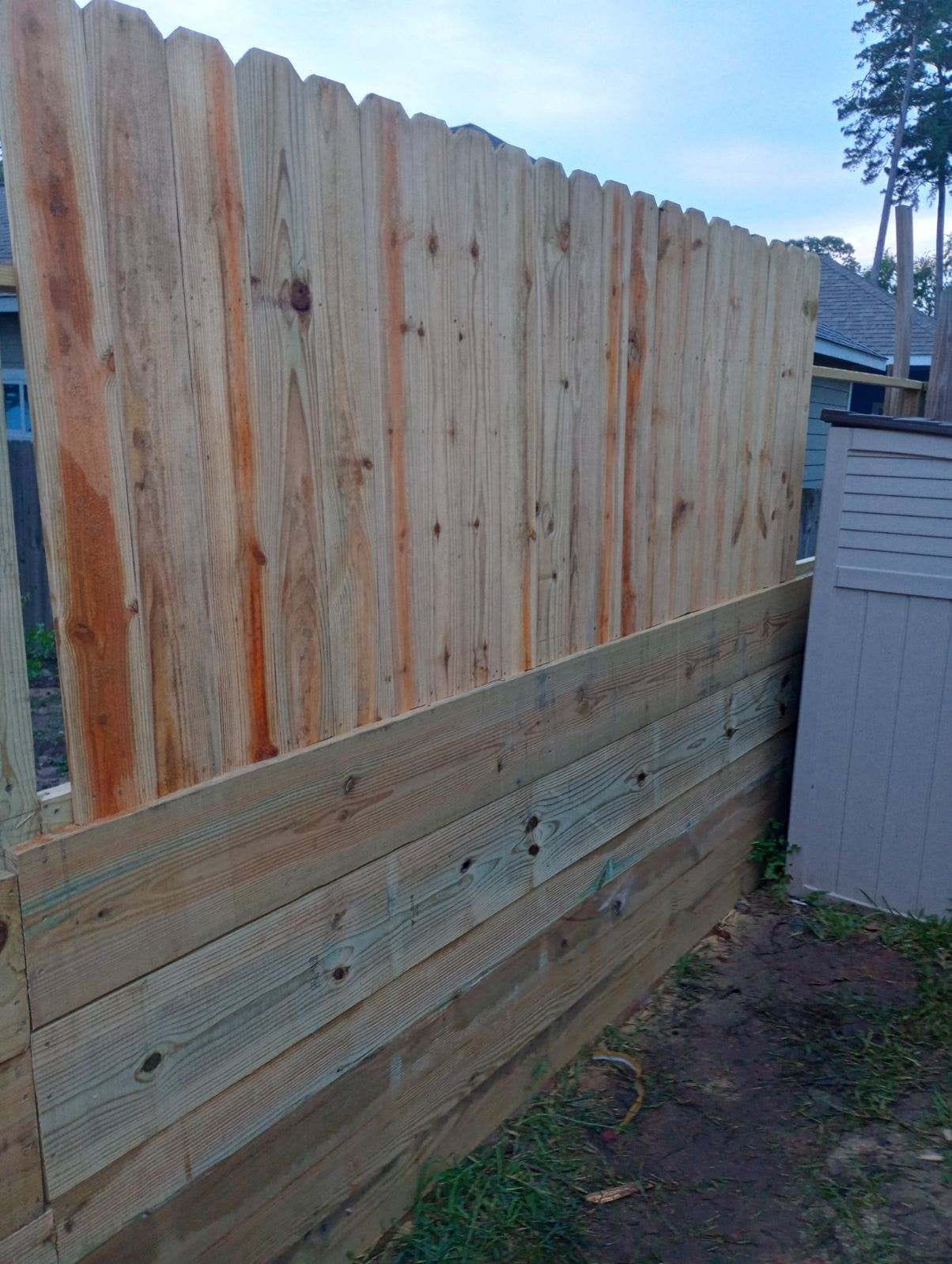
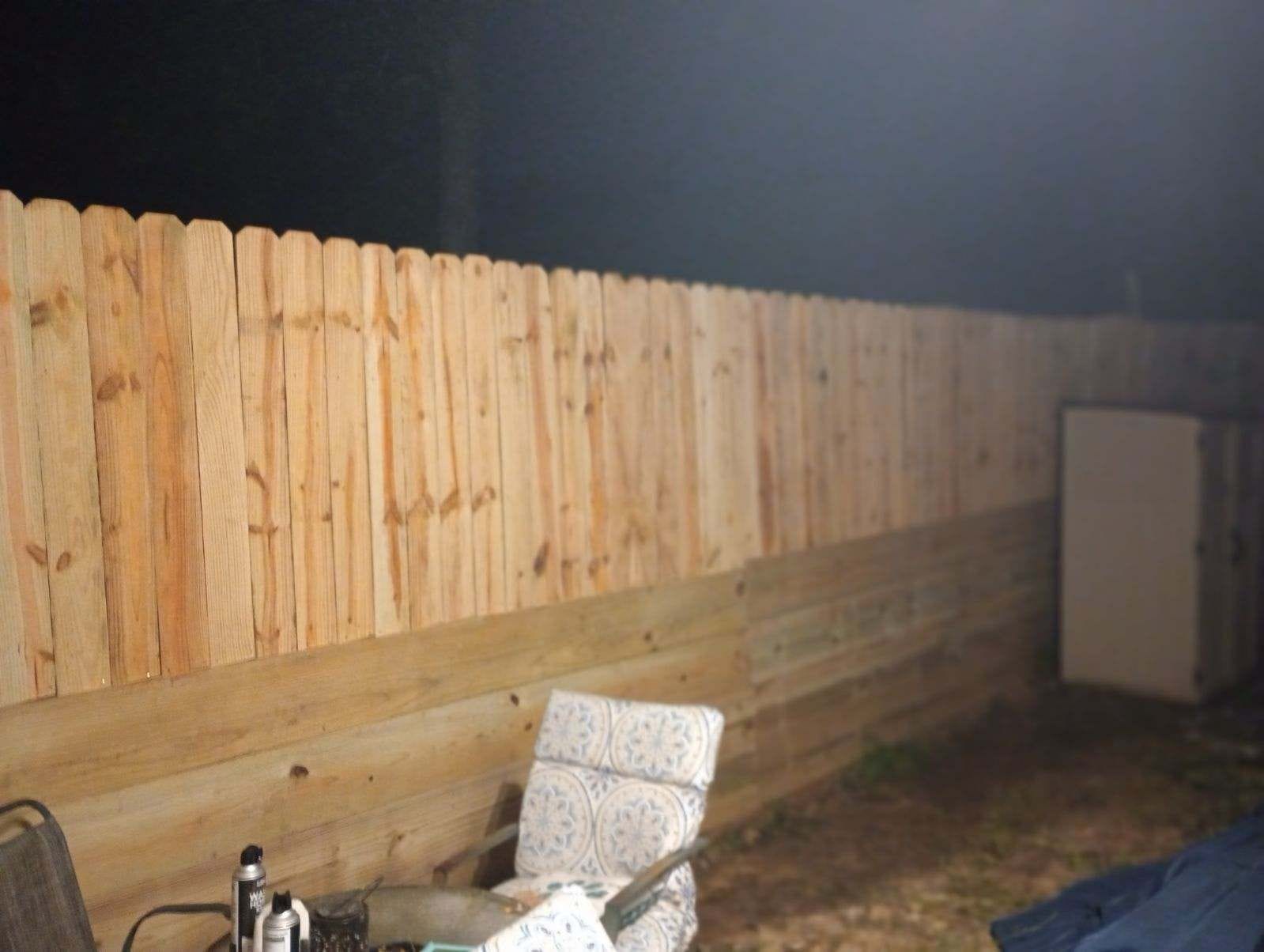
Kyle’s cedar privacy fence in Hitchcock is 6 feet tall with a natural, unstained finish, and the crew set the posts deep specifically to handle the area’s occasional strong winds. That design choice lines up with the fencing industry’s own Wind Load Guide: a solid panel like a privacy fence catches far more wind than an open-style fence, so post size, spacing and footing depth all end up carrying more load on this kind of fence than on a fence with gaps.
Source: CLFMI Wind Load Guide WLG 2445-2018 (wind pressure, net fence area, and post sizing).
The job: a 6-foot cedar privacy fence, built with wind in mind
Kyle wanted a wooden fence for his Hitchcock property that would add privacy without closing the yard in. The team recommended a 6-foot cedar privacy fence with a smooth, natural finish left unstained — cedar that’s allowed to weather naturally develops a patina over time rather than needing a film-forming coating from day one.
Because Hitchcock sees occasional strong winds off the coast, the crew set the posts deep into the ground as part of the installation, and finished by fitting the gate so it stays aligned for easy, everyday access.
Why a solid panel leans on its posts more than an open fence
Setting posts deep for wind resistance is not a generic precaution — it tracks directly with how fence engineering treats a solid panel. Per the Chain Link Fence Manufacturers Institute’s Wind Load Guide: “Wind pressure is the most dominant factor that influences the post size and spacing since it is the only force that can reasonably be predicted and will be acting on the posts under normal conditions.”
The force a post has to resist is calculated from the net area of the fence exposed to the wind: “Applied Force ‘P’ = (1/Cf1) x Net Area of Fence x Wind Pressure.” A solid privacy panel — no gaps between boards — presents close to its full area to the wind. An open-style fence of the same footprint lets wind pass through the gaps, which lowers the net area and, with it, the force each post has to resist.
Post size, spacing, and footing depth work together
Fence engineering does not rely on just one fix for wind load. The Wind Load Guide sizes post size, post spacing, and footing embedment depth together against the applied force on the panel — setting the posts deeper, as the crew did on Kyle’s job, is one of the three levers available, alongside using a sturdier post or spacing posts closer together.
Panel style and wind exposure (general guide)
Pick a fence style to see how much of the panel typically catches the wind. Based on the net-area concept in the CLFMI Wind Load Guide. General guidance, not a load calculation for your property.
CLFMI Wind Load Guide WLG 2445-2018: applied wind force on a post is Net Area of Fence multiplied by wind pressure (adjusted by a mesh/fabric coefficient for open styles) — a lower-porosity panel presents more net area and a larger applied force at the same wind pressure.
What customers say on Google
5.091 Google reviews · read them all on Google
Amazing work will go ahead and recommend everyone in friends and family We installed 8ft tall double sided stained cedar wood fence in our backyard, it’s really looks great, installed perfectly nice finishing and cost effective, thanks mustang fencing.
Installed Stained cedar wood fence yesterday by mustang fencing, thanks for the beautiful work.
I have hired Mustang fencing services to fix my backyard fencing. Good wood to used. I really like theirs work. Best of luck
Reviews shown word for word from the Mustang Fencing Services Google Business Profile (Galveston), captured 2026-10-26.
Questions we get about this
Why did the crew set Kyle’s fence posts deep?
Why does a solid privacy fence need sturdier posts than an open fence?
What finish is on Kyle’s fence?
How tall is Kyle’s fence?
Does this page give an exact wind-engineering calculation for my fence?
Sources
Checked October 30, 2026. Rules change, so confirm with the City before you build.
- Chain Link Fence Manufacturers Institute (CLFMI), Wind Load Guide WLG 2445-2018 — Wind pressure is the dominant factor sizing post size and spacing; applied post force equals the net area of the fence multiplied by wind pressure, so lower-porosity (more solid) fence styles produce a larger applied force at the same wind pressure than open styles.
Planning a wind-ready privacy fence?
We’ll walk the property, talk through post sizing and spacing, and put it on a written quote.