
A Custom Wooden Fence Installation for Kyle Toms in Galveston, Texas
Kyle wanted a cedar privacy fence for his Galveston property that wouldn’t block the view. Here’s that fence in photos, plus why even cedar’s natural decay resistance gets a boost from treatment, and why the sandy coastal soil called for deeper-set posts.
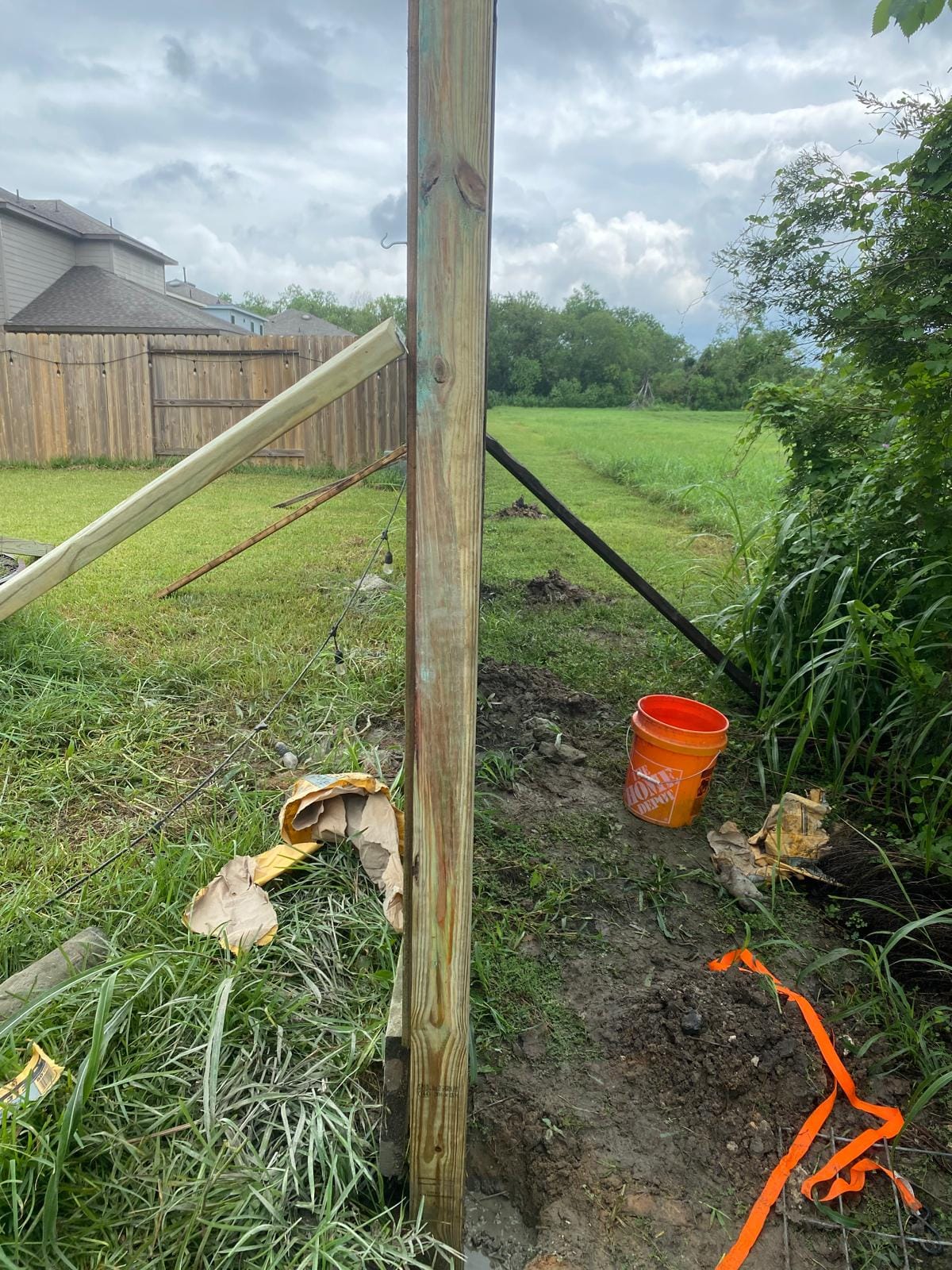
Kyle’s Galveston fence is treated cedar, built in a classic vertical picket style, tall enough for privacy without closing off the view. Cedar’s natural decay resistance lands it in the Wood Handbook’s “Resistant” tier — good for aboveground boards, but treatment still matters for posts in the ground. And because Galveston’s soil is sandy and the site sits close to the coast, the crew set the posts deep.
Sources: USDA Forest Products Laboratory Wood Handbook (2021); USDA NRCS Fence Specification (Code 382, TX).
The job: a treated cedar privacy fence, built for the coast
Kyle wanted a wooden fence for his Galveston property that would add privacy and security without closing the yard in or blocking the surrounding view. After walking the property and talking through the options, the crew recommended treated cedar wood in a classic vertical picket style — a clean, classic look suited to the coastal setting.
Cedar was the material call specifically because of Galveston’s coastal climate: salt air and humidity are hard on untreated wood, and cedar holds up better than most softwoods against rot, insects and warping even before any treatment is applied.
Why even a naturally decay-resistant wood like cedar still gets treated
Cedar’s reputation for durability is real, but it’s worth being precise about what that means. The USDA Forest Products Laboratory’s Wood Handbook ranks wood species by natural decay resistance, and most cedar species — Atlantic white, Eastern red-, Incense, Northern white, Port-Orford, Western red- and Yellow cedar — land in the second tier, “Resistant,” one step below the top “Very Resistant” category.
That distinction matters for where the wood ends up on a fence. Per the Wood Handbook: “heartwood of a species in the resistant category generally gives satisfactory service for wood used aboveground, whereas those in the very resistant category generally give satisfactory performance in contact with the ground.” The Handbook also notes that “even the very decay-resistant species may require preservative treatment for important structural uses.” That’s the gap treated cedar closes — the natural resistance plus a preservative treatment, rather than relying on either alone.
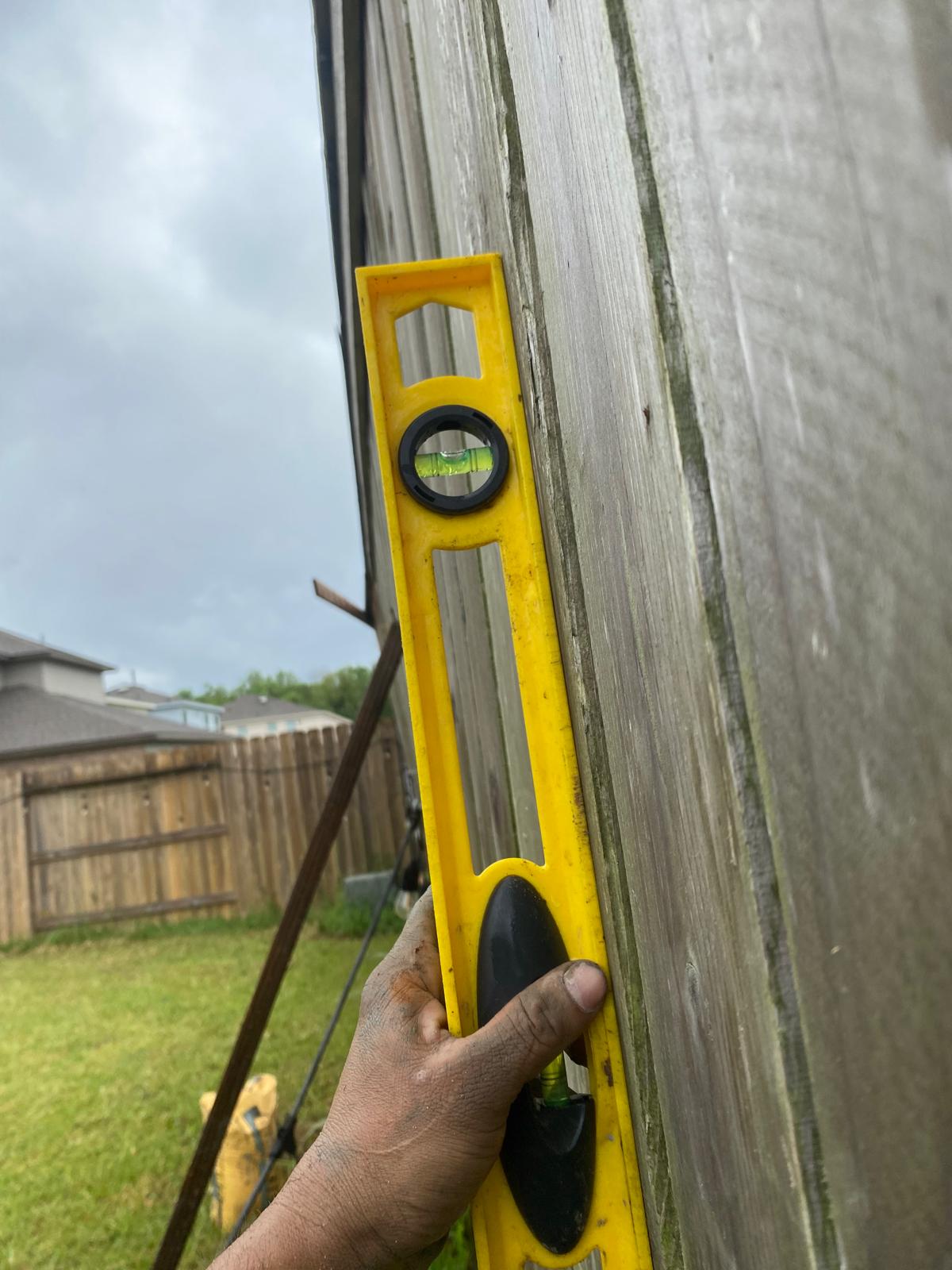
Why the posts went deep: Galveston’s sandy, coastal soil
Installing a fence close to the Gulf Coast adds a planning step most inland jobs skip: Galveston’s soil is sandy, and the site’s proximity to the coast means it holds more moisture than firmer inland soils. The crew set Kyle’s posts deep to give the fence the support it needs to stay put through everyday use and Galveston’s occasional harsh weather.
That approach lines up with general fence-post guidance: the USDA Natural Resources Conservation Service’s fence specification sets a standard minimum post-embedment depth, then carves out an exception — “Sandy soils and consistently wet soils require additional depth.” Loose, sandy soil holds a post less firmly per foot of depth than denser soil does, so the post needs to go further down to get the same grip.
Decay resistance and treatment (general guide)
Pick a Wood Handbook decay-resistance category to see how it’s generally treated for a fence. Based on USDA Forest Products Laboratory guidance; not a recommendation for a specific tree or job.
USDA Forest Products Laboratory, Wood Handbook (2021), Ch. 14: heartwood in the “resistant” category generally gives satisfactory service aboveground, while “very resistant” species generally perform in ground contact; species in the other two categories usually need some form of preservative treatment, and even very decay-resistant species may need treatment for important structural uses.
What customers say on Google
5.091 Google reviews · read them all on Google
Amazing work will go ahead and recommend everyone in friends and family We installed 8ft tall double sided stained cedar wood fence in our backyard, it’s really looks great, installed perfectly nice finishing and cost effective, thanks mustang fencing.
My new fence looks fantastic and has added both privacy and style to my yard. Highly recommend their services for anyone in need of fencing!
I am so pleased with the fence!! Your solution was exactly the right one and the team did a highly professional job. Frankly, I was amazed at how clean the job site was at the completion of the project. Feel free to list me as a reference and a very happy customer. Thanks again and please let the men know That I appreciate their hard work and quality craftsmanship.
Reviews shown word for word from the Mustang Fencing Services Google Business Profile (Galveston), captured 2026-10-26.
Questions we get about this
What wood did Mustang use for Kyle’s fence?
If cedar naturally resists rot, why treat it too?
Why were the posts set deep on this job?
What style fence did Kyle choose?
Does this page give the exact post depth used on Kyle’s property?
Sources
Checked October 30, 2026. Rules change, so confirm with the City before you build.
- USDA Forest Products Laboratory, Wood Handbook FPL-GTR-282 (2021), Ch. 14 — Table 14-1 groups domestic wood species by natural heartwood decay resistance; most cedar species fall in the “Resistant” tier. Resistant-category heartwood generally suits aboveground use, while very-resistant species generally suit ground contact, and even very decay-resistant species may need preservative treatment for important structural uses.
- USDA NRCS, Practice Specification Fence (Code 382), Texas, March 2021 — States that posts are generally set to a standard minimum embedment depth, with sandy soils and consistently wet soils requiring additional depth.
Planning a cedar fence built for the coast?
We’ll walk the property, talk through wood choice and post depth, and put it on a written quote.