
A Rewarding Project with Krystal Thomas: Wooden Fence Installation in Galveston, Texas
Krystal wanted a taller wood fence for privacy that would hold up to Galveston’s coastal weather. Here’s that fence, plus which fastener metals are code-accepted for treated wood, why mixing metals causes problems, and how long the wood needs to dry before the stain she discussed will actually hold.
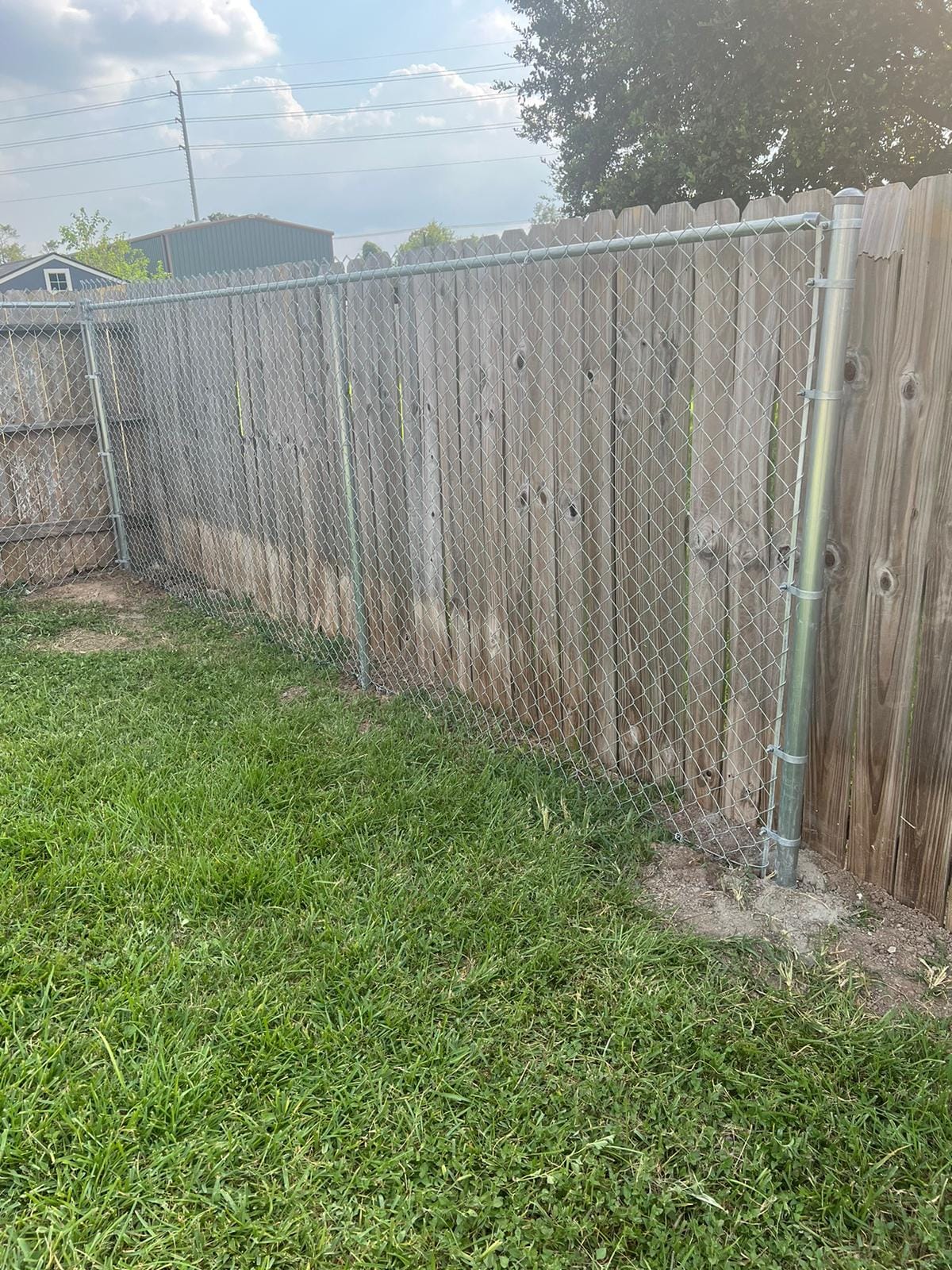
Krystal’s Galveston fence is treated wood, built taller for privacy, with weather-resistant fasteners and hardware, and set to follow the natural slope of her yard. Treated wood needs fasteners and connectors that can stand up to the preservative and the coastal climate — that’s a code question with a specific answer, and it’s also why the stain she considered needs the wood to dry out first.
Sources: Southern Forest Products Association, Pressure-Treated Southern Pine (2019); USDA Forest Products Laboratory Wood Handbook (2021).
The job: a taller, treated wood fence for privacy
Krystal wanted a wooden fence for her Galveston property that would add privacy without sacrificing the look of her yard. After an initial consultation, the crew recommended a sturdy wood type able to stand up to Galveston’s moisture and occasional strong winds, built taller than a standard boundary fence for the privacy Krystal was after.
The wood selected was treated, chosen specifically for resistance to rot and insects — important for a property this close to the coast. The crew also used weather-resistant fasteners and hardware, and built the fence to follow the natural slope of the yard rather than stepping it, so the line reads as one continuous run along the property’s own contours.
Why fastener metal is its own decision on a treated-wood fence
“Weather-resistant fasteners and hardware” is a simple-sounding line item, but on treated wood it has a specific, code-driven answer. The preservative in treated lumber can be corrosive to some metals, so building codes generally spell out which fastener metals are accepted for exterior treated-wood framing.
Per the Southern Forest Products Association’s guidance: “the codes require fasteners to be of hot-dipped, zinc-coated galvanized steel in accordance with ASTM B695, type 304 or 316 stainless steel, silicon bronze or copper.” By contrast, “electroplated galvanized fasteners and connectors are typically not accepted for use in exterior applications, regardless of the preservative system.” Below grade or in other severe environments, stainless steel specifically is called for.
The staining question: why treated wood needs to dry out first
During planning, staining came up as an option for Krystal’s fence — a way to add a richer hue while helping protect the wood. Treated wood can generally be stained, but timing matters. Per the USDA Forest Products Laboratory’s Wood Handbook: “wood treated with waterborne preservatives, such as copper-based systems, can be painted or stained if the wood is clean and dry… one week should be sufficient to allow wood surfaces to dry enough to finish.”
There’s also a simple way to tell if a stain job is holding: “if the finish appears shiny an hour after application, the finish has not penetrated the wood.” Excess stain left on the surface like that can form a thin film that cracks and peels within a year or two, so it generally gets wiped off rather than left to dry on top of the wood.
Is this fastener metal accepted for exterior treated wood?
Pick a fastener/connector metal to see how it’s generally treated under code guidance for exterior, treated-wood framing. General information only — not a substitute for your installer’s or inspector’s call on a specific job.
Southern Forest Products Association, Pressure-Treated Southern Pine (2019), p.16-17: codes generally require hot-dip galvanized (ASTM B695), 304/316 stainless, silicon bronze or copper fasteners for treated wood; electroplated galvanized is typically not accepted for exterior use; stainless steel is required below grade and in other severe environments; fasteners used together should match in metal to avoid galvanic corrosion.
What customers say on Google
5.091 Google reviews · read them all on Google
Amazing work will go ahead and recommend everyone in friends and family We installed 8ft tall double sided stained cedar wood fence in our backyard, it’s really looks great, installed perfectly nice finishing and cost effective, thanks mustang fencing.
Installed Stained cedar wood fence yesterday by mustang fencing, thanks for the beautiful work.
had an excellent experience with mustang fencing From the initial consultation to the final installation, the team was professional, punctual, and attentive to detail. They helped me choose the perfect fence style to match my property and ensured everything was installed with precision. The quality of materials is top-notch, and the fence has completely transformed the look and security of my home. I highly recommend mustang services to anyone looking for reliable and high-quality fencing services!
Reviews shown word for word from the Mustang Fencing Services Google Business Profile (Galveston), captured 2026-10-26.
Questions we get about this
What kind of fence did Krystal get?
Which fastener metals are accepted for a treated wood fence?
Why does the fastener metal matter so much?
How long should treated wood dry before staining?
Does this page give the exact wood species or fence height used on Krystal’s property?
Sources
Checked November 1, 2026. Rules change, so confirm with the City before you build.
- Southern Forest Products Association, Pressure-Treated Southern Pine (2019 edition) — Pages 16-17 cover fastener and connector corrosion for treated wood: accepted metals (hot-dip galvanized ASTM B695, 304/316 stainless, silicon bronze, copper), electroplated galvanized typically not accepted for exterior use, stainless required below grade/severe environments, and matching metals to avoid galvanic corrosion.
- USDA Forest Products Laboratory, Wood Handbook FPL-GTR-282 (2021), Ch. 16 — Covers finishing treated wood: waterborne-preservative-treated wood can be painted or stained once clean and dry (about a week), and how to tell when a penetrating stain has not soaked in.
Planning a treated wood privacy fence?
We’ll walk the property, talk through wood and hardware choices, and put it on a written quote.