
Restoring a Wooden Fence in Galveston, Texas
Kenneth’s wooden fence had partly come down after years of Galveston’s salt air and wind. Here’s how it was repaired and reinforced — new posts in concrete footings, extra rails, and screws instead of nails — in photos, plus why threaded fasteners hold up better than nails in a wetting-and-drying climate.
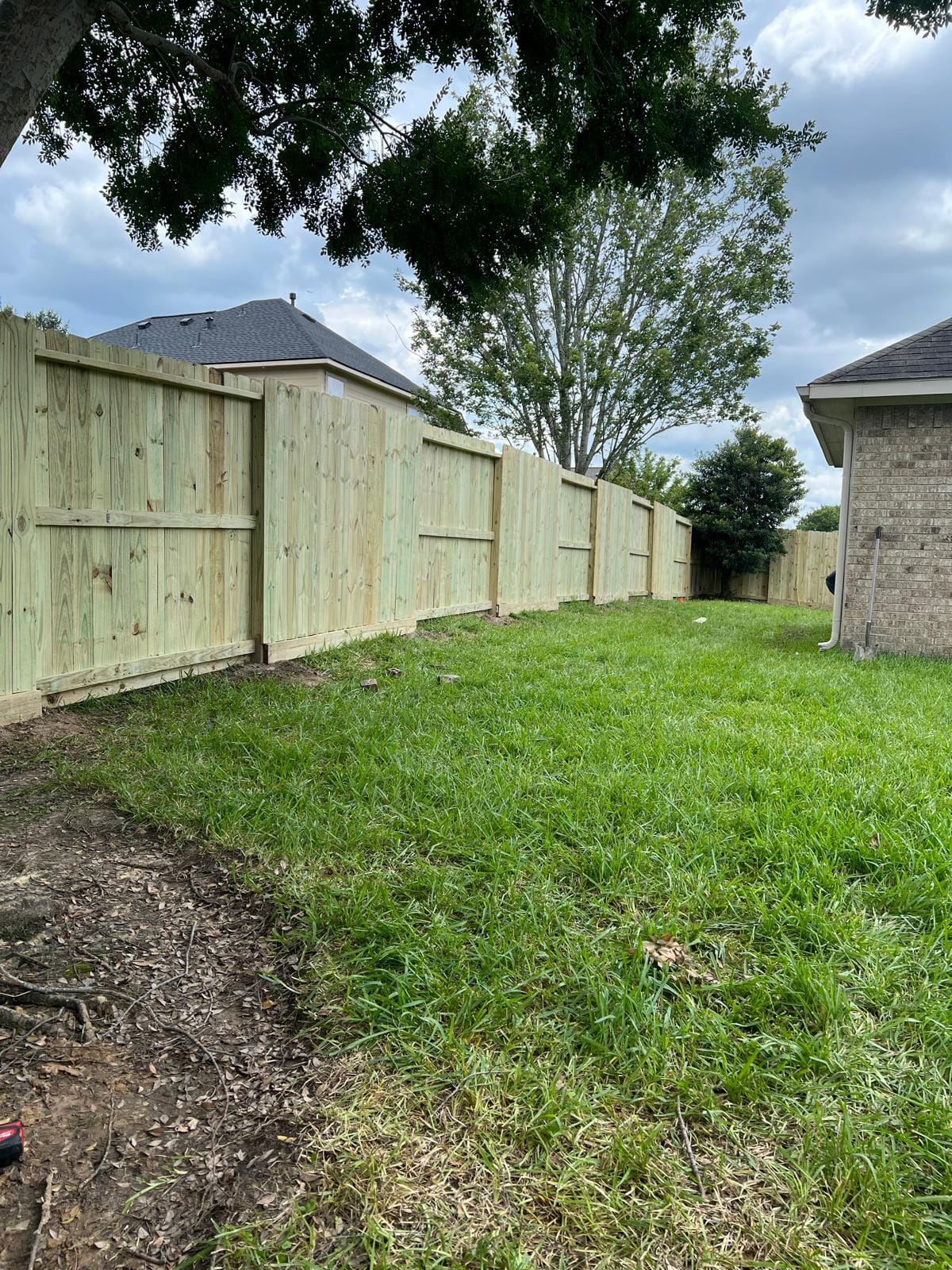
Part of Kenneth’s wooden fence came down after years of Galveston’s salty air and wind weakened the posts and rails. The crew replaced the damaged sections with new pressure-treated wood and cedar matching the original design, reinforced the standing sections with new posts set in concrete footings sized for high winds and extra rails, and used screws instead of nails. Both choices track general wood-engineering principles: footing depth resists a post trying to overturn in the wind, and threaded fasteners hold their grip far better than smooth nails once wood starts cycling through wet and dry.
Sources: USDA Forest Products Laboratory Wood Handbook (2021); CLFMI Wind Load Guide WLG 2445-2018.
The job: repairing a fence weakened by salt air and wind
Kenneth’s wooden fence had stood for years, but Galveston’s coastal weather — salty air and strong winds — had weakened the posts and rails enough that part of the fence came down. The crew inspected the whole run, not just the collapsed section, before starting work.
The repair removed the old, damaged posts and rails and replaced those sections with new pressure-treated wood and cedar, matched to the original design so the repair wouldn’t stand out from the rest of the fence.
Reinforcing the standing sections against the next storm
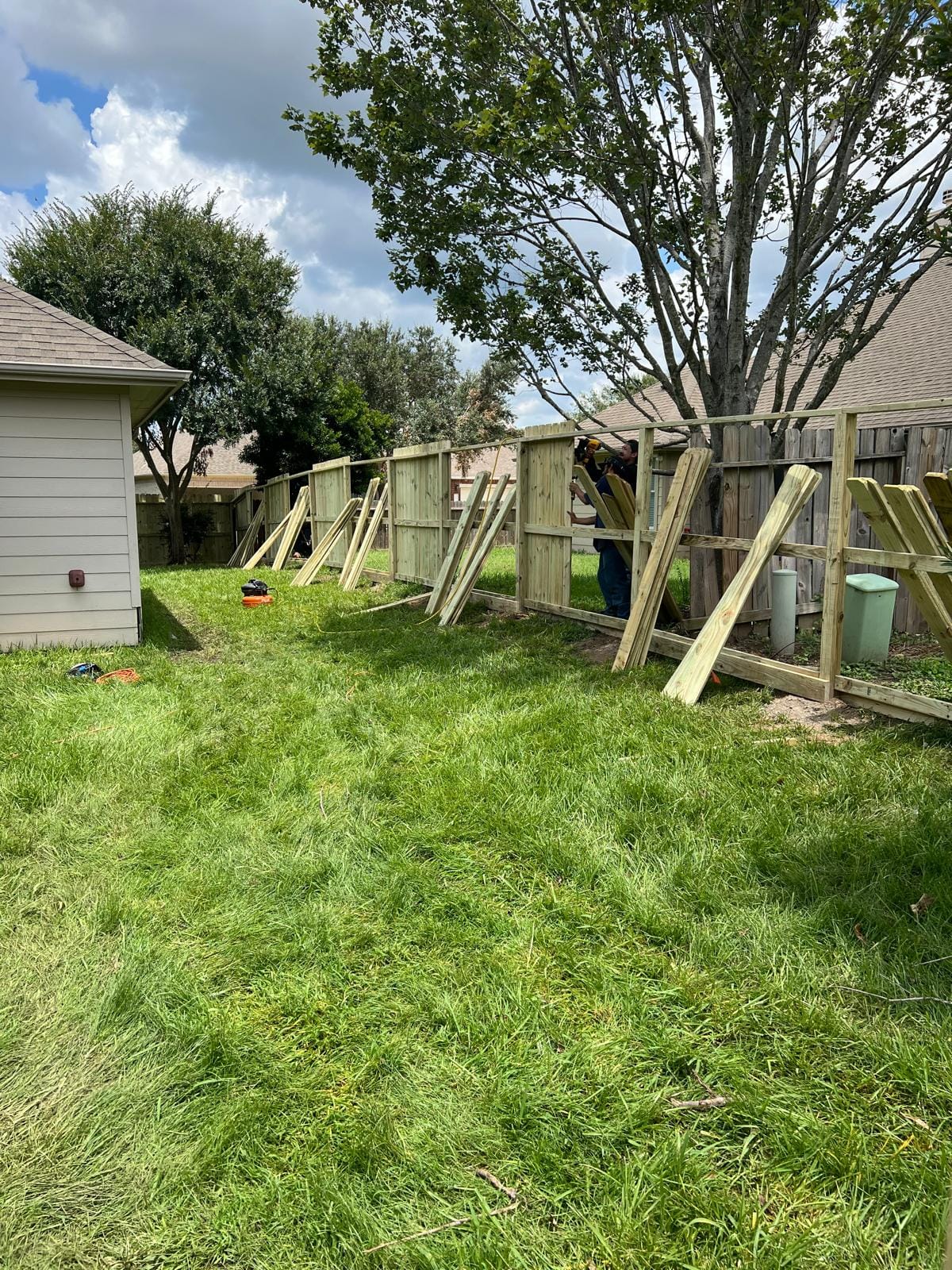
Beyond repairing the collapsed section, the crew reinforced the sections still standing: new posts were set and secured with concrete footings sized to help the fence withstand high winds, and extra rails were added for overall stability.
A concrete footing does its work below grade. The fencing industry’s own guidance on post engineering — the CLFMI Wind Load Guide — lists soil and footing conditions as one of the core factors in post design: “the passive soil pressures … can reasonably be expected to resist the tendency for the line posts to overturn and also to remain in an essentially plumb position after the wind event.” A wider, deeper footing gives the surrounding soil more to push back with when wind tries to tip a post over.
Why screws instead of nails, and what the wood science says
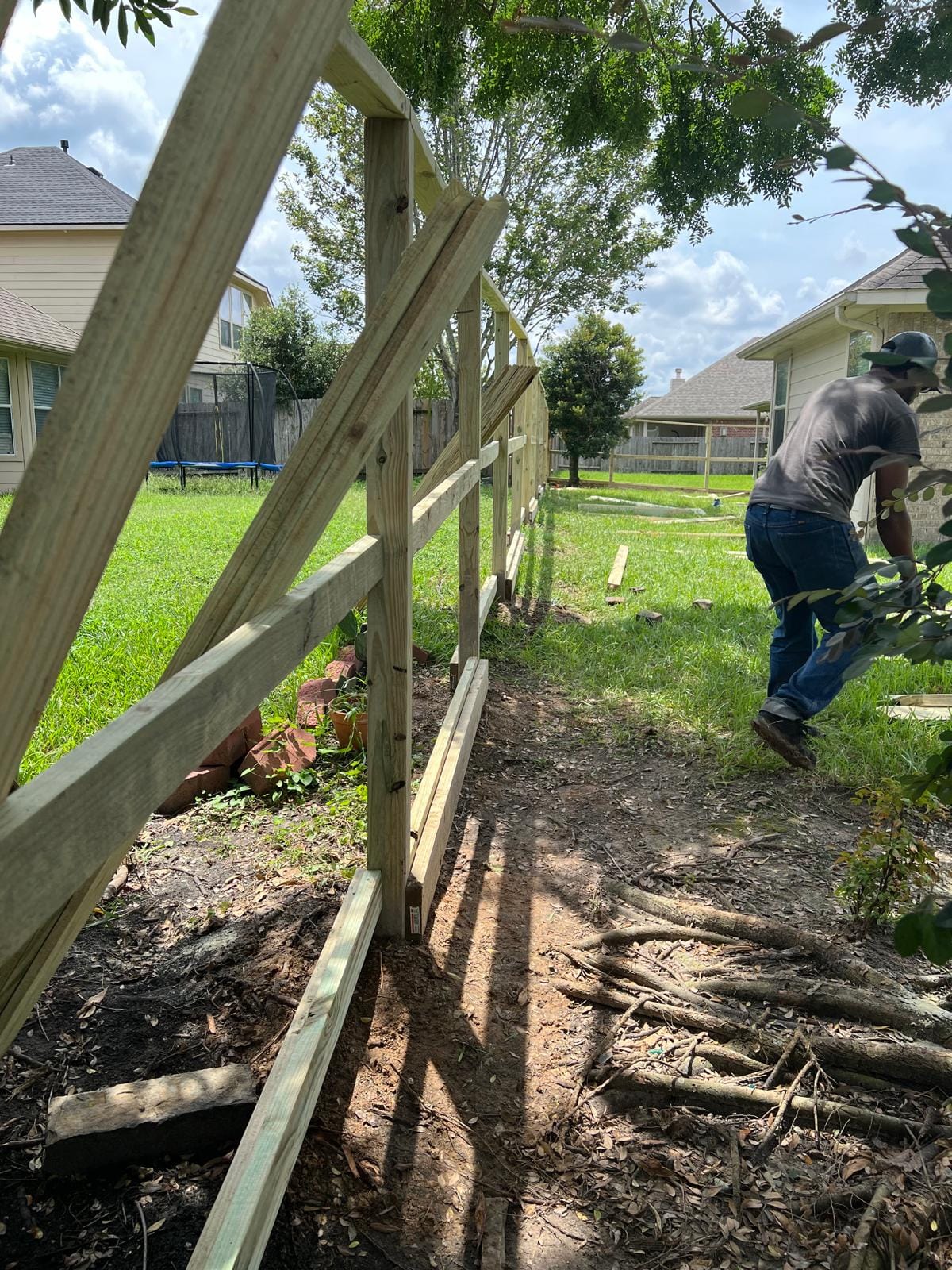
Kenneth’s project also used screws instead of nails, which added strength and kept the wood from loosening over time — and that matches a documented property of fasteners under moisture cycling. The USDA Forest Products Laboratory’s Wood Handbook explains that common smooth-shank nails lose a major part of their grip once the wood around them goes through repeated wetting and drying: “The withdrawal resistance for nails driven into wood that is subjected to changes in moisture content may be as low as 25% of the values for nails tested soon after driving.”
Threaded fasteners hold up better under those same conditions. Per the Handbook, “some special nail forms provide considerably greater withdrawal resistance than the common wire nail — about four times greater for annularly and helically threaded nails of the same diameter.” A screw’s continuous thread works on the same general principle: more surface locked into the wood fiber, which is harder for repeated swelling and shrinking to work loose than a smooth shank.
Fastener choice in a wetting/drying climate (general guide)
Pick a fastener type to see how its grip on wood tends to hold up through repeated wetting and drying, based on USDA Wood Handbook fastener data. General guidance, not a test of the exact screws used on any one job.
USDA Forest Products Laboratory Wood Handbook (2021), Ch. 8: nails subjected to wetting/drying cycles may retain as little as 25% of their initial withdrawal resistance; annularly/helically threaded fasteners sustain roughly four times greater withdrawal resistance than common smooth wire nails under the same conditions.
What customers say on Google
5.091 Google reviews · read them all on Google
I have hired Mustang fencing services to fix my backyard fencing. Good wood to used. I really like theirs work. Best of luck
Fenomenal job, really nice guy. Contacted them after hurricane knocked down my fence facing the street and got it done really quickly.
True professionalism is very rare in this day and age, these guys live upto their word and deliver on their service! Our fence was down in the July storm and these guys came and gave a reasonable quote, after confirming I received a time line and they delivered! Will recommend them to everyone I know who needs fencing done.
Reviews shown word for word from the Mustang Fencing Services Google Business Profile (Galveston), captured 2026-10-26.
Questions we get about this
Why did part of Kenneth’s fence come down?
What materials were used in the repair?
Why concrete footings for the new posts?
Why screws instead of nails?
Does this page give the exact footing depth used on Kenneth’s fence?
Sources
Checked October 30, 2026. Rules change, so confirm with the City before you build.
- USDA Forest Products Laboratory, Wood Handbook FPL-GTR-282 (2021), Ch. 8 — Nails subjected to wetting/drying cycles may retain as little as 25% of their initial withdrawal resistance; annularly/helically threaded nails sustain roughly four times greater withdrawal resistance than common smooth wire nails under the same conditions.
- Chain Link Fence Manufacturers Institute (CLFMI), Wind Load Guide WLG 2445-2018 — Soil type and footing conditions are listed as a core factor in post design: passive soil pressure around a footing resists a post’s tendency to overturn under wind load.
Dealing with storm or salt-air fence damage?
We’ll assess what can be reinforced versus replaced and put the repair on a written quote.