Project case study · Pearland, TX

Charlene Silva’s 170’ Pine Fence with Gate Installation in Pearland, TX

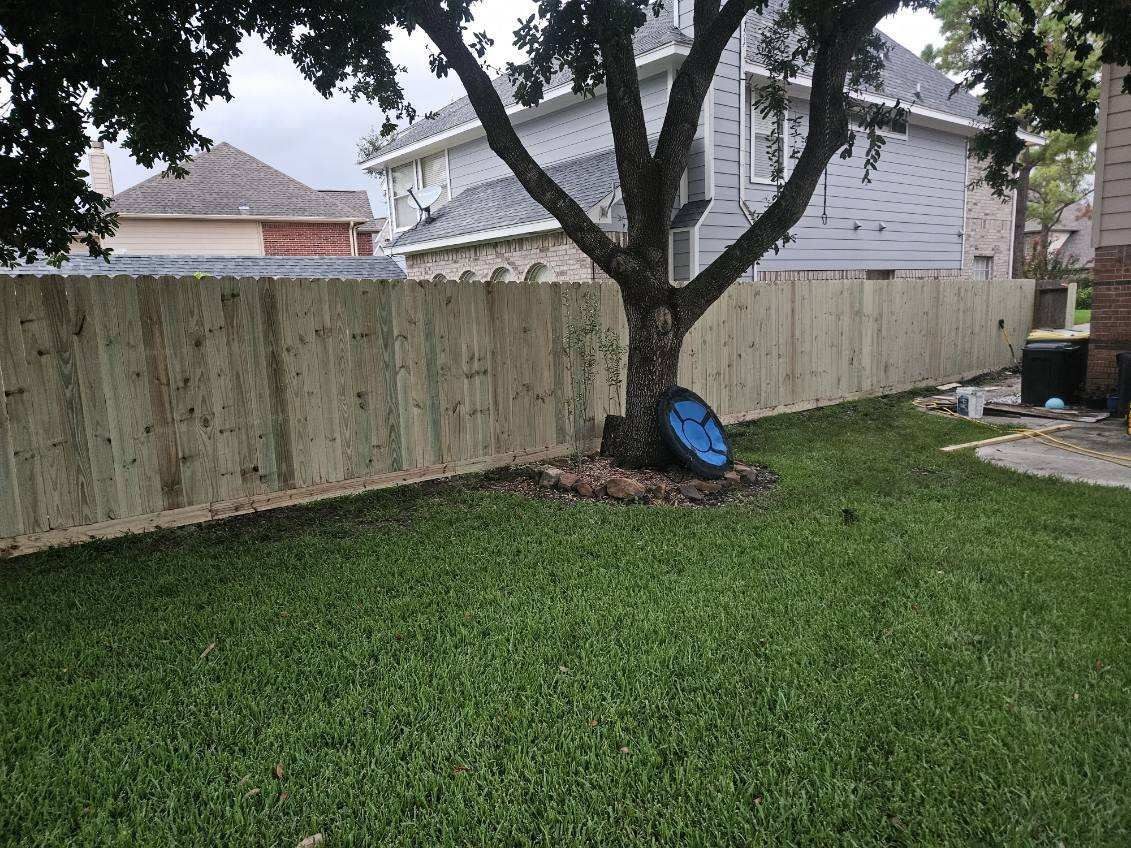
A 170-foot pressure-treated pine privacy fence with one gate, attached with screws rather than nails. Here it is in photos, plus the SFPA treatment-category and fastener rules a job like this is built to.
  • Reviewed Nov 7, 2026
  • Source: SFPA Pressure-Treated Southern Pine
  • 4 job photos
Finished pressure-treated pine privacy fence along a green backyard lawn with a mature oak tree
The finished pine privacy fence along the back of the property, Pearland, TX.
The short answer

Charlene Silva’s Pearland property was fenced with 170 feet of pressure-treated pine privacy fence and one gate, attached with screws rather than nails. Industry standard (SFPA) rates a fence post set in the ground to a different category than the pickets above it, and sets rules for which fastener and hinge metals are meant to be used together outdoors.

170 ftLength of pine privacy fence installed for this job, per the published job title
1 gateBuilt to match the fence, screw-attached hardware
UC4ASFPA Use Category for a fence post set in the ground (Ground Contact, General Use)
Matched metalSFPA’s own rule for pairing a fastener with its connector (e.g. hinge)

Source: Southern Forest Products Association, Pressure-Treated Southern Pine (2019), Table 3-1 and p.16-17.

The job: a 170-foot pine fence with one gate

Charlene Silva’s property in Pearland was fenced with 170 feet of pressure-treated pine privacy fence and one gate, built with screws rather than nails. The gate hardware — black strap hinges — was attached with wood screws, visible in the photos below.

The photos below are from that job.
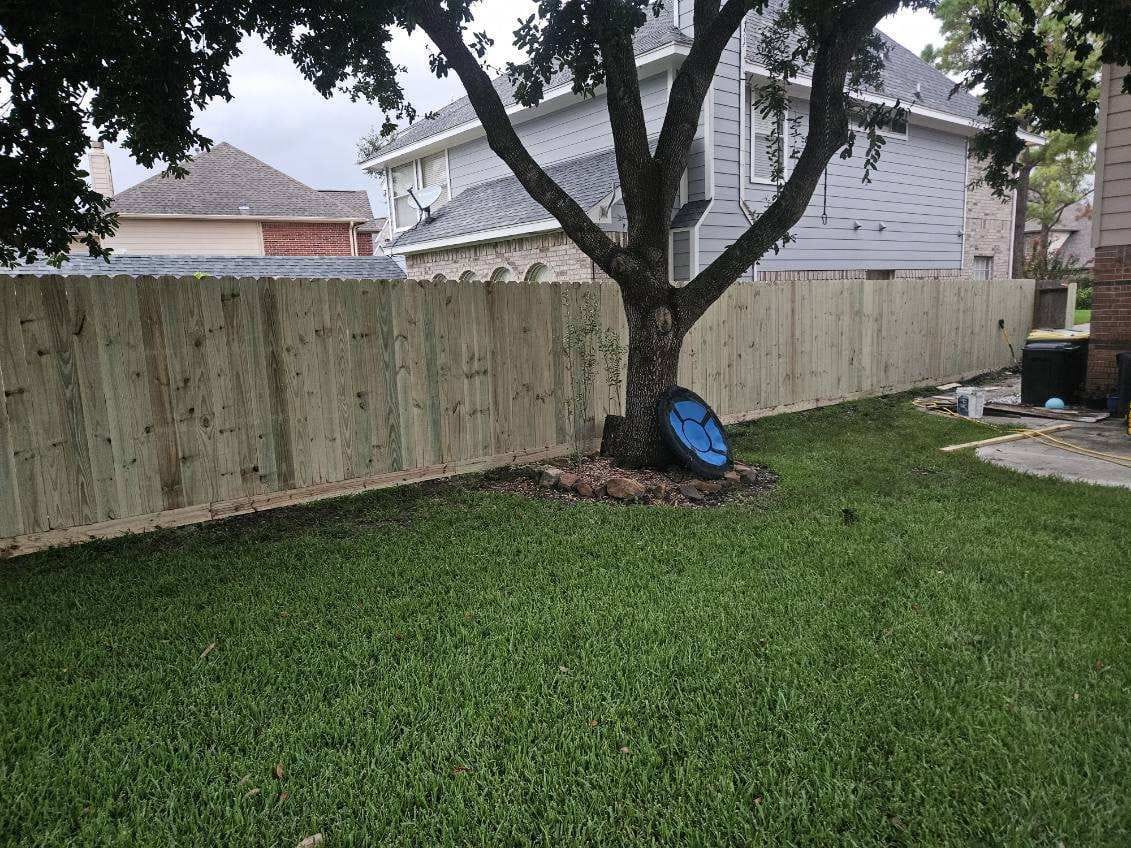
New pressure-treated pine privacy fence around a backyard lawn with a mature tree
The pine privacy fence along the yard, Pearland, TX.

Why a post and a picket are treated differently

The Southern Forest Products Association (SFPA) publishes a Use Category system for pressure-treated Southern Pine. A fence post set in the ground is rated UC4A (Ground Contact, General Use) — the same rating applies to every post along a 170-foot run, not just a few. Pickets, rails and trim that stay above grade are a lighter category, UC3A if coated or sealed, UC3B if uncoated.
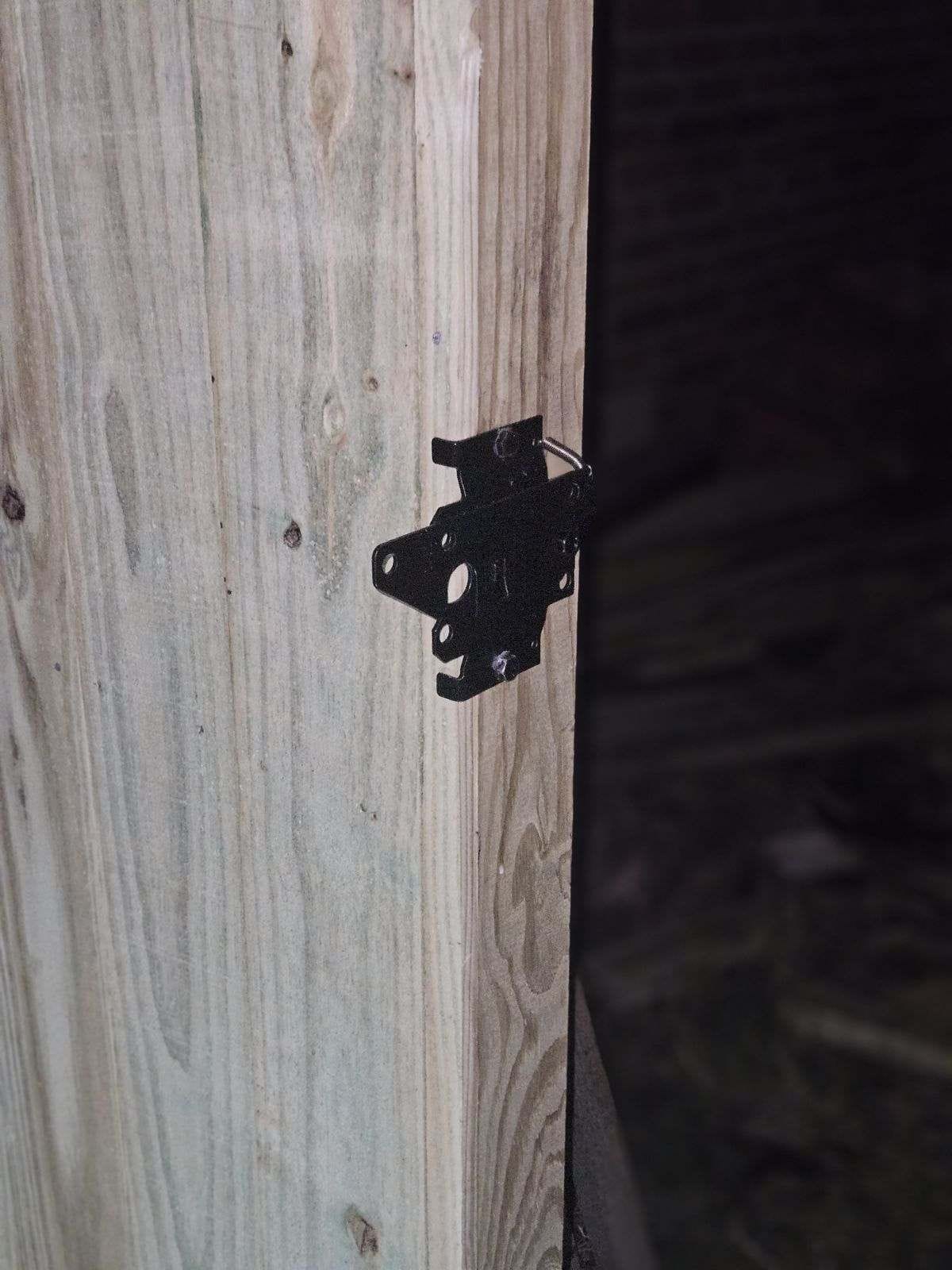
Diagram of a wood privacy fence cross-section showing the post below grade labeled Ground Contact UC4A and pickets above grade labeled Above Ground UC3A or UC3B. pickets / trimUC3A (coated) or UC3B (uncoated)Above Ground post, in the groundUC4A — Ground Contact, General Use Every post along 170 feet of fence carries the same ground-contact rating SFPA Table 3-1 (Fences): posts set in the ground are rated UC4A (Ground Contact, General Use), the samecategory whether the run is 10 feet or 170. Pickets, rails and trim above grade stay in the lighterUC3A/UC3B Above Ground category.
S-1
DrawingEvery post along 170 feet of fence carries the same ground-contact rating
BasisSFPA, Pressure-Treated Southern Pine (2019), Table 3-1 “Fences”
ScaleNot to scale
SFPA’s own Use Category breakdown for a treated Southern Pine fence post and picket.
Close-up of a black strap hinge attached to a pressure-treated pine gate post with wood screws
Gate hardware attached with screws, Pearland, TX.

Why the gate hardware and its screws need to match

Charlene’s gate was built with screws, and the hinges attaching it are metal hardware in direct, outdoor contact with pressure-treated pine. SFPA’s own guidance on fasteners and connectors is specific about what that combination needs: codes generally require hot-dip galvanized steel (ASTM B695), type 304/316 stainless, silicon bronze or copper for exterior fasteners on treated wood, and electroplated galvanized hardware is typically not accepted outdoors. Just as important, a fastener and the connector it’s paired with — a screw and a hinge, for example — should share the same metallic composition, or the two metals can corrode each other.
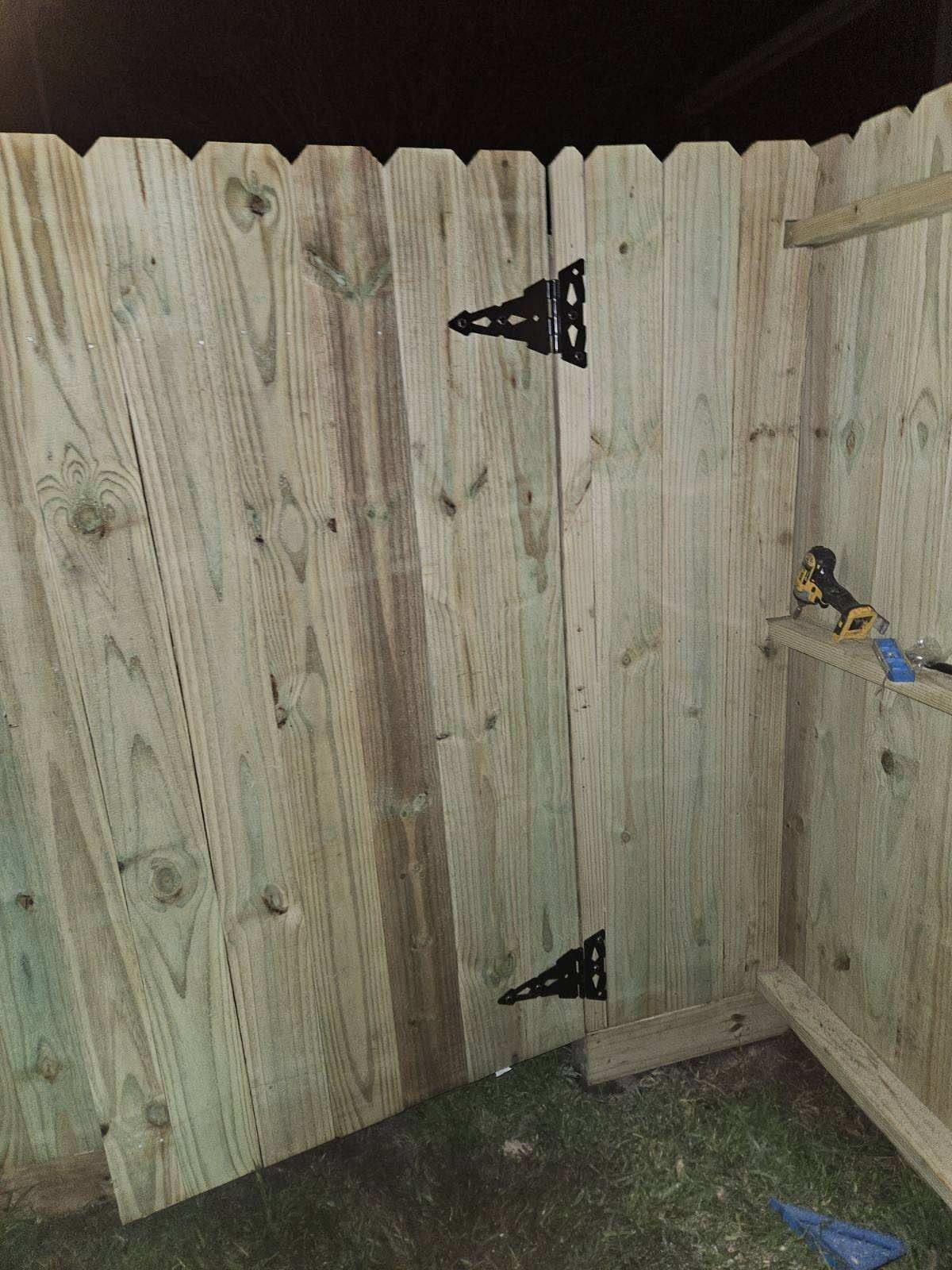
Chart comparing a hot-dip galvanized screw paired with a hot-dip galvanized hinge as an accepted matched pairing, against an electroplated galvanized fastener typically not accepted outdoors. Why screws and gate hardware need matching metal hot-dip galvanized screw+ hot-dip galvanized hingematching metal — OK electroplated galvanizedfastener on treated woodtypically not accepted outdoors fasteners + connectors in direct contact should share the same metal SFPA, Pressure-Treated Southern Pine (2019), p.16-17: codes generally require hot-dip galvanizedsteel (ASTM B695), type 304/316 stainless, silicon bronze or copper for fasteners and connectors ontreated wood. Electroplated galvanized is typically not accepted outdoors, and fasteners used withconnectors (like gate hinges) should share the same metallic composition to avoid galvaniccorrosion.
S-2
DrawingWhy screws and gate hardware need matching metal
BasisSFPA, Pressure-Treated Southern Pine (2019), p.16-17 “Fasteners & Connectors”
ScaleNot to scale
The metal in a gate’s screws and its hinges is meant to match, not just be weatherproof on its own.
New pressure-treated pine gate with black strap hinges, a latch, and a cordless drill left on the top rail
The finished gate, attached with screws, Pearland, TX.

Is this fastener right for treated-wood gate hardware?

Pick a fastener/connector material. Based on SFPA’s own guidance for fasteners used on pressure-treated Southern Pine, the material behind the fence and gate in these photos.

Typically accepted outdoors?
Pairing ruleFasteners and connectors used together (like a screw and a hinge) should share the same metallic composition to avoid galvanic corrosion.

Source: SFPA, Pressure-Treated Southern Pine (2019), p.16-17 “Fasteners & Connectors”.

★★★★★
Amazing work will go ahead and recommend everyone in friends and family We installed 8ft tall double sided stained cedar wood fence in our backyard, it’s really looks great, installed perfectly nice finishing and cost effective, thanks mustang fencing.
Muqeet Mohammed Abdul · Google review · a year ago
★★★★★
Installed Stained cedar wood fence yesterday by mustang fencing, thanks for the beautiful work.
Shahrukh Abdul · Google review · a year ago
★★★★★
I have hired Mustang fencing services to fix my backyard fencing. Good wood to used. I really like theirs work. Best of luck
Zaidbin Saif · Google review · a year ago

Reviews shown word for word from the Mustang Fencing Services Google Business Profile (Galveston), captured 2026-11-07.

Questions we get about this

What kind of fence was installed for Charlene Silva’s property?
170 feet of pressure-treated pine privacy fence with one gate, built for a property in Pearland, TX, with the boards attached using screws rather than nails.
Why use screws instead of nails on a wood fence?
The job title for this project specifies screws rather than nails; the gate hardware photos on this page show screw-attached hinges. This page does not independently test screw-versus-nail holding power.
Why does a fence post need a different treatment rating than the pickets?
A post set in the ground is rated UC4A (Ground Contact, General Use) by SFPA’s Use Category system, which requires higher preservative retention than the UC3A/UC3B Above Ground rating used for pickets, rails and trim that stay above grade.
What metal should gate hinges and screws be on a treated-pine fence?
SFPA guidance generally accepts hot-dip galvanized steel (ASTM B695), type 304/316 stainless, silicon bronze or copper for exterior fasteners on treated wood, and recommends the fastener and its connector (like a hinge) share the same metal to avoid galvanic corrosion.
Where is this fence located?
Pearland, TX, per the project title; a specific street address isn’t published.

Sources

Checked November 7, 2026. Rules change, so confirm with the City before you build.

  1. Southern Forest Products Association, Pressure-Treated Southern Pine (2019 edition) — Table 3-1 “Fences”: Use Category assignment for posts (UC4A, Ground Contact) versus pickets/rails/slats/trim (UC3A coated, UC3B uncoated, Above Ground); p.16-17 “Fasteners & Connectors”: accepted exterior fastener metals on treated wood and the same-metal pairing rule for fasteners and connectors.
Free on-site estimate

Planning a long fence run or a new gate?

We’ll walk the property line, talk through pine versus cedar, fastener choice and gate hardware, and put it on a written quote.

Page reviewed November 7, 2026 by Mustang Fencing Services, Galveston. Next review due May 2027.