
How Often Should You Maintain a Fence in Galveston’s Coastal Climate?
Most owners only think about fence maintenance after something breaks — a board falls, a gate stops latching, a post starts leaning. A small amount of routine attention catches a $30 hinge before it becomes a full section replacement, and on a barrier island that routine needs to run a little tighter than a generic guide assumes: sites near the Gulf sit in a measurably higher atmospheric-corrosion category than most of the country, per the American Galvanizers Association’s own ISO 9223 data.
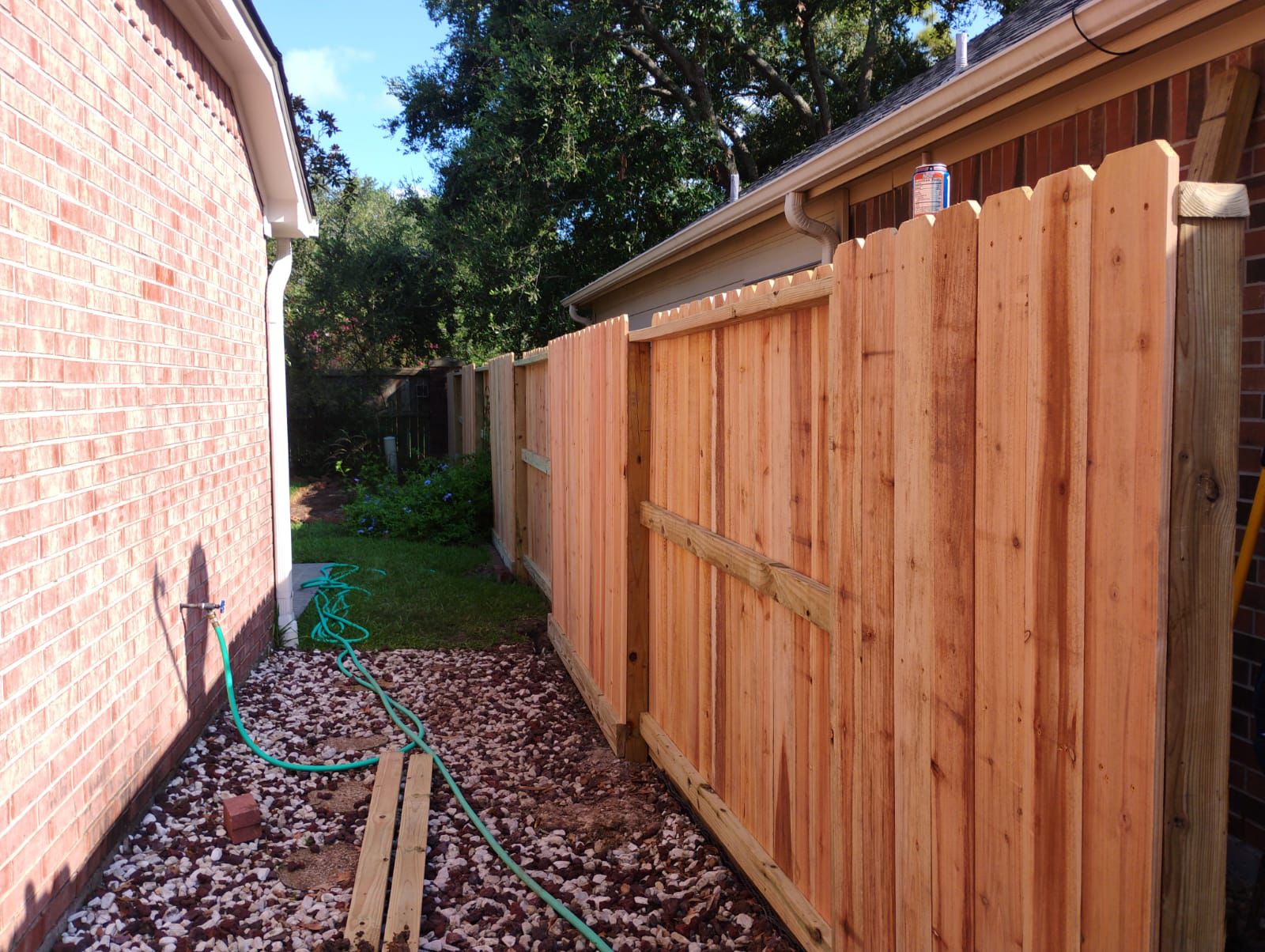
There’s no single national interval that fits every fence, but a practical floor for Galveston is a monthly look at gate hinges, latches and exposed fasteners, a quarterly full walk of boards, rails and posts, and a twice-yearly deep clean and finish check. The reason to run tighter than a generic guide is measurable: under the ISO 9223 atmospheric-corrosion system, sites within about a kilometer of open Gulf or bay water fall into category C4 or C5, several times the zinc corrosion rate of the C3 category most of the country’s fence hardware is designed around. Catching a problem at this stage is cheap — a $30 hinge or a leaning post reset — compared to a rotted post or a fully corroded gate.
Sources: American Galvanizers Association, “Performance of Galvanized Steel in Different Environments” (2012) and “HDG Corrosion Rates for ISO Categories C1-C5/X” (2021), summarizing ISO 9223:2012.
Why a routine beats a reactive fix
A fence rarely fails all at once. A hinge starts to bind, a fastener starts to rust, a post leans a degree or two — and each of those is inexpensive to fix on its own. Left alone, the same small problems compound: a sagging gate puts more stress on its remaining hardware, a leaning post lets water pool at its base, a popped fastener lets a board move and work itself looser. None of that requires anything but attention on a schedule. The schedule below is a practical floor, not a code requirement — and it runs tighter than most generic fence-care guides because Galveston’s coastal air measurably accelerates the one failure mode (hardware corrosion) that most guides assume happens slowly.
Hardware is the first thing to fail — and the easiest to make worse
Whatever the fence is made of, the hinges, latches and fasteners holding it together are mechanical parts under constant stress, and they’re usually the first thing to show wear. Two things are worth knowing before reaching for a quick fix:
On a wood fence, plain carbon-steel fasteners can cause iron stain on tannin-rich species like cedar and redwood where moisture sits against the metal; pine has no appreciable tannins, so it just rusts. Stainless steel fasteners avoid this, and high-quality hot-dip galvanized fasteners (ASTM A153) are far less likely to cause it than plain carbon steel (USDA Wood Handbook, Ch. 8 and 16).
On a metal fence or gate, mixing fastener metals needs a second look. A bimetallic couple only corrodes in the presence of an electrolyte — plain rainwater is a weak one, but salt air and road salt are strong ones — and the size relationship matters: a small zinc-coated fastener set against a large stainless fixture corrodes quickly, while a stainless fastener set into a zinc panel does not fail the same way (American Galvanizers Association). If a repair used a different hardware finish than the original, it’s worth checking that pairing.
What to check, and how often
| Check | Frequency | What you’re looking for |
|---|---|---|
| Gate hinges, latches, fasteners | Monthly (every material) | Binding, sagging, rust bloom, a latch that no longer catches cleanly |
| Hardware and fabric near the water | Monthly, in addition to the above | Salt residue — a rinse-down knocks deposits off before they sit (ISO C4/C5 zone) |
| Boards, rails, pickets, posts | Quarterly | Popped fasteners, cracking, leaning posts, sagging rails |
| Debris at the fence line | Twice a year | Trapped leaves and clippings holding moisture against wood or metal |
| Finish — stain, paint or coating | Twice a year | Loss of water-beading or visible wear; recoat on the product’s own labeled interval |
Sources: American Galvanizers Association (corrosion categories and bimetallic guidance); USDA Wood Handbook FPL-GTR-282 (fastener staining).
Build your fence’s maintenance schedule
Pick your fence material and roughly how close the property sits to open Gulf or bay water. This assembles the routine described above into a short checklist — it doesn’t invent a new schedule or a product recoat interval.
Baseline for any material: a monthly look at gate hinges, latches and exposed fasteners, a quarterly full walk, and a twice-yearly deep clean. The material and distance answers add to that baseline; they don’t replace it.
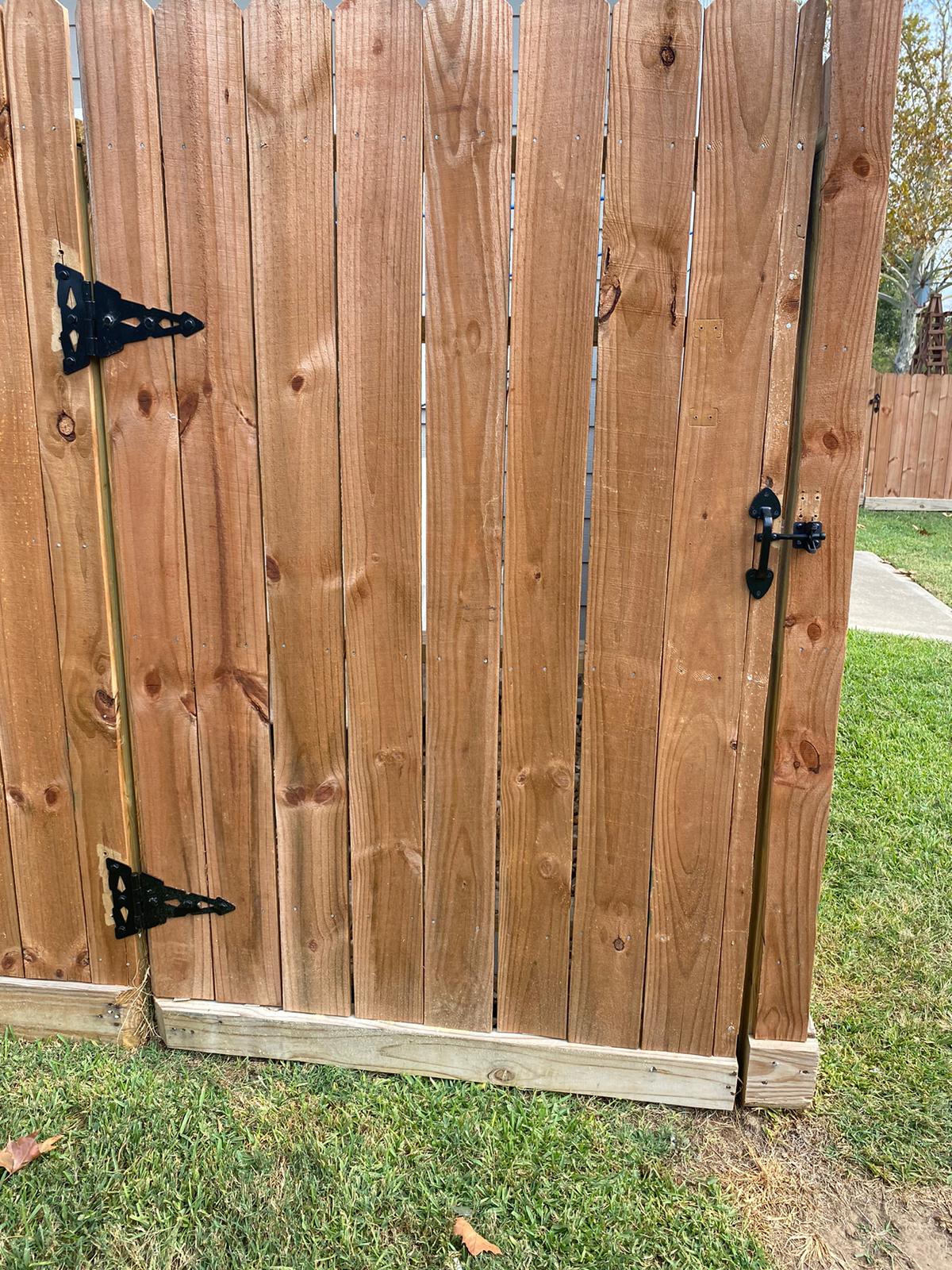
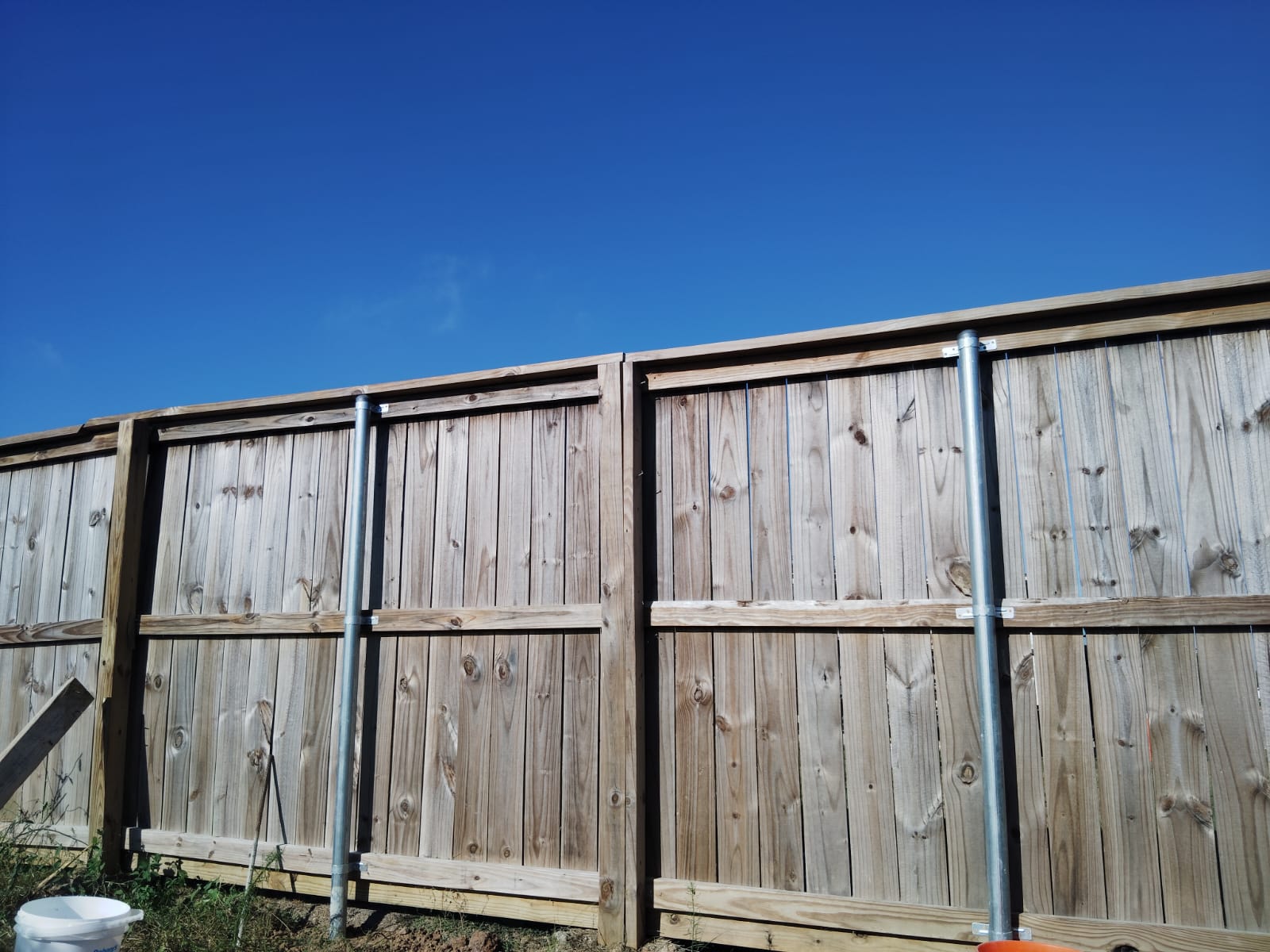
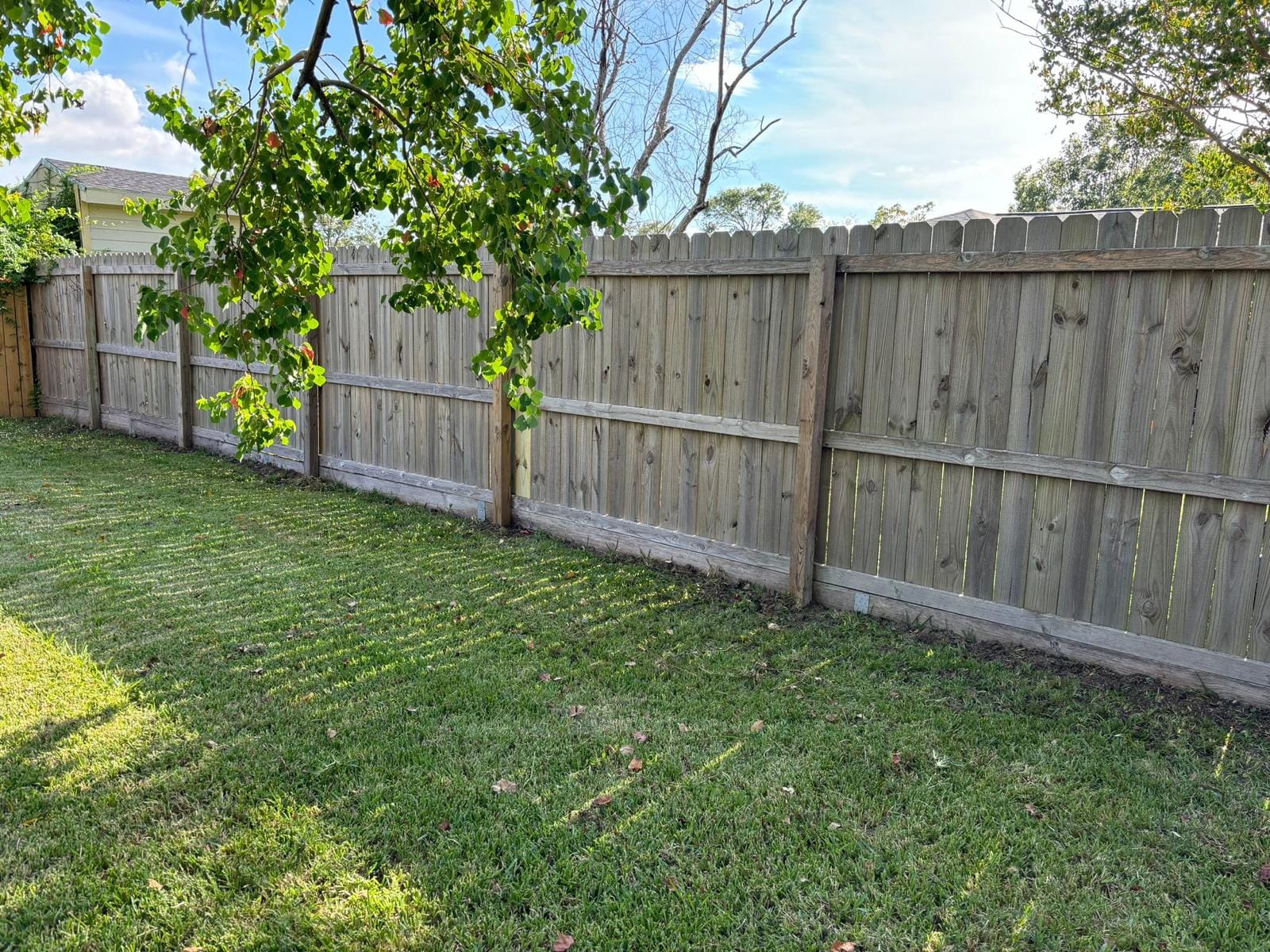
What Galveston customers say
5.091 Google reviews · read them all on Google
I have hired Mustang fencing services to fix my backyard fencing. Good wood to used. I really like theirs work. Best of luck
True professionalism is very rare in this day and age, these guys live upto their word and deliver on their service! Our fence was down in the July storm and these guys came and gave a reasonable quote, after confirming I received a time line and they delivered! Will recommend them to everyone I know who needs fencing done.
Fenomenal job, really nice guy. Contacted them after hurricane knocked down my fence facing the street and got it done really quickly.
Reviews shown word for word from the Mustang Fencing Services Google Business Profile (Galveston), captured 2026-10-19.
Questions we get about this
How often should I inspect my fence in Galveston?
Does salt air really change how often I need to check my fence?
What’s usually the first part of a fence to fail?
Can mixing different metal fasteners cause a problem?
Does a wood fence need a different maintenance schedule than a metal one?
Sources
Checked October 25, 2026. Rules change, so confirm with the City before you build.
- USDA Forest Products Laboratory, Wood Handbook: Wood as an Engineering Material (FPL-GTR-282, 2021) — Ch. 8 and 16: fastener corrosion and iron staining on tannin-rich wood species; stainless and ASTM A153 hot-dip galvanized fasteners avoid it.
- American Galvanizers Association, “Performance of Galvanized Steel in Different Environments” (2012) — Atmospheric corrosion mechanism and real-world observed rates (rarely exceeding 0.3 mils/year) across 5 environment classifications.
- American Galvanizers Association, “Stainless Steel in Contact with Galvanized Steel” (2015) — Bimetallic corrosion requirements (electrolyte, anode/cathode size ratio) relevant to mixed-metal fasteners and hardware.
- American Galvanizers Association, “HDG Corrosion Rates for ISO Categories C1-C5/X” (2021) — ISO 9223:2012 corrosivity category definitions and zinc corrosion rate ranges (C3 through C5) by distance from the coastline.
Want a real inspection of your specific fence?
A photo checklist only goes so far. Request a free on-site estimate and we’ll walk your fence and tell you exactly what needs attention now versus what can wait.