
How Much Does an Iron Fence Cost to Install?
There’s no single honest number for “iron fence cost” — the finish tier, the picket style and weld count, whether it’s factory tube or custom solid bar, the height, and gate hardware each change what a foot of fence actually costs to build. Here is exactly what each factor changes and why, backed by NPS, AGA and ASTM sources, plus a calculator that checks your own written quote’s real per-foot rate. For how iron compares to aluminum and steel feature-by-feature, see the metal fence comparison.
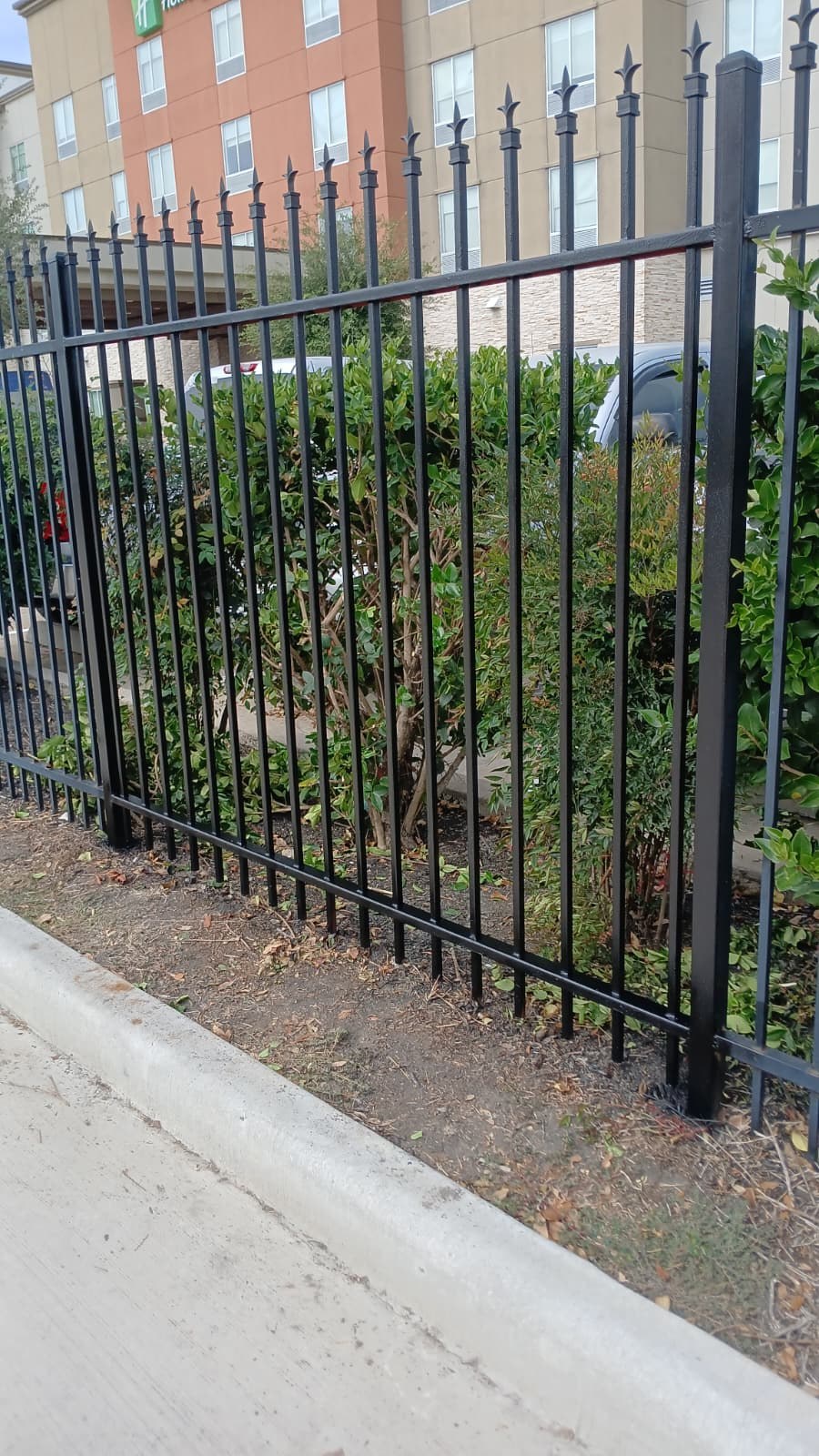
Iron fence cost depends on five things that each change independently: the finish tier, the picket style and weld count, whether the fence is factory tube or custom solid bar, the height, and the gate hardware. A batch hot-dip galvanized finish (ASTM A123, at least 3.9 mils of zinc on ¼″ steel) under the paint costs more upfront than bare steel that’s only primed and painted, but adds a layer most paint-only systems don’t have. Factory tube panels (ASTM F2408, F2589) are standardized products; solid-bar and historic-match work has no such ASTM spec, so the written quote itself is the specification. A double-picket or puppy-picket style roughly doubles the weld count of a single-row style over the same run. We don’t publish a generic $/ft range here because none of the ones circulating online cite a source — request a free on-site estimate for an exact number for your style, finish and height.
Sources: American Galvanizers Association, Time to First Maintenance chart (ASTM A123); ASTM F2408-16 and F2589-16(2021) scopes; City of Galveston LDR §2.501; 2021 ISPSC §305.
Why there’s no single honest price per foot
Search “iron fence cost per foot” and you’ll find national ranges with no source attached. The real answer is that several independent factors each change the number: the finish tier (galvanized under the paint or not), the picket style (which decides the weld count), whether the panel is a standardized factory tube product or custom solid-bar fabrication, the height, and the gate hardware. Site conditions — old-fence removal, sloped ground, extra corners, mounting to brick or stone columns — add labor cost on top of all of that, the same as with any fence type. Rather than repeat an unsourced national figure, this page breaks down what each factor actually changes and why.
Factory tube vs. custom solid bar: why one has a spec and the other doesn’t
Two ASTM standards exist for factory ornamental steel fence: F2408 (galvanized tube) and F2589 (black steel tube). Both standards say in their own scope that they do not apply to solid-bar or wrought-iron systems. That means a standardized factory tube panel has a published spec to build to and compare against, while a custom solid-bar fence — the kind used for scrollwork, estate frontages and matching an existing historic fence — has no ASTM product standard at all. For that work, the written quote is the specification: ask what the bar size, the finish and the fasteners are, because there’s no outside standard to check it against.
What drives the price within a quote
| Factor | What changes | Why |
|---|---|---|
| Finish tier | Hot-dip galvanized (ASTM A123) under paint costs more upfront than bare steel, primed and painted | Galvanizing adds at least 3.9 mils of zinc on ¼″ steel as a shop step most paint-only finishes skip (AGA) |
| Picket style | Double-picket and puppy-picket use noticeably more welds than a single-row style | A second offset row or added short pickets roughly double the weld count over the same run |
| Tube vs. solid bar | Custom solid-bar/historic-match work is priced from the written quote alone | ASTM F2408/F2589 cover factory tube only; no ASTM spec exists for solid bar, so there’s no outside standard to check a quote against |
| Height | Taller sections need larger posts set deeper and more steel per foot | Galveston caps residential fences at 8 ft generally, 4 ft solid / 5 ft at 60%+ transparent in a front yard (LDR §2.501); 8 ft nonresidential (§2.601) |
| Gates & hardware | Pool gates add self-closing, self-latching hardware; any gate needs a heavier or doubled post to carry the swing | Required by the 2021 ISPSC (§305) for a pool barrier, which Galveston’s pool permit applies |
| Historic district work | A certificate-of-appropriateness review step, and photos of the existing fence plus the proposed design, go into the permit | City of Galveston LDR §10.106 and the fence permit application; in-kind repair of a landmark is exempt |
Sources: NPS Preservation Brief 27; AGA Time to First Maintenance chart (ASTM A123); ASTM F2408-16/F2589-16(2021) scopes; City of Galveston LDR §2.501, §2.601, §10.106; 2021 ISPSC §305.
Check your own quote’s real per-foot rate
This does arithmetic on numbers YOU enter from your own written quote — it does not look up or suggest a price. Useful for comparing two quotes with different footage, height or gate counts.
Gates (especially self-closing pool gates) are typically quoted separately from the linear per-foot fence price — entering a gate amount removes it before dividing by footage. The per-square-foot figure divides that rate by height, so a 4 ft front-yard quote can be compared to a 6 ft or 8 ft quote on the same basis. Planning aid only.
Height is a code question before it is a material one
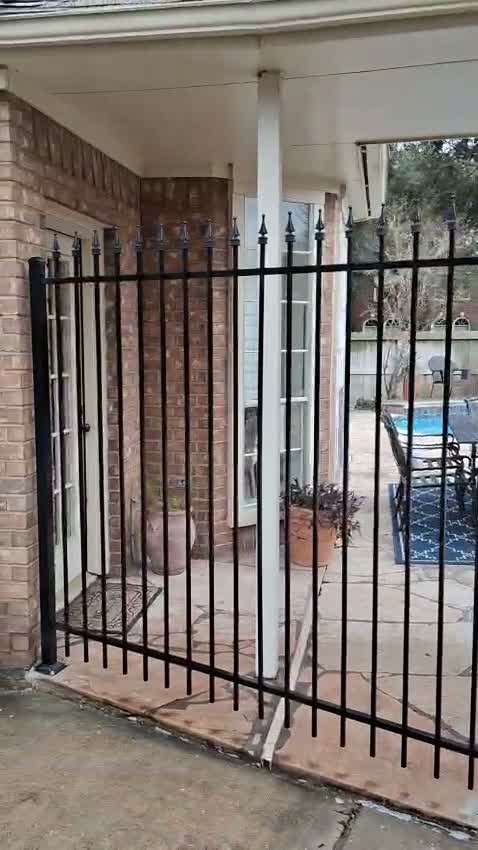
The City of Galveston caps a residential fence at 8 ft, except in a front yard, where a solid fence or wall is limited to 4 ft, or 5 ft if it is at least 60% transparent (LDR §2.501). Nonresidential fences can run up to 8 ft too, but sharp points are banned on top where the fence is visible from a public street (LDR §2.601). A taller fence doesn’t just use more steel — it typically needs a larger post set deeper, which is priced into the per-foot rate along with the finish and style above.

What Galveston customers say
5.091 Google reviews · read them all on Google
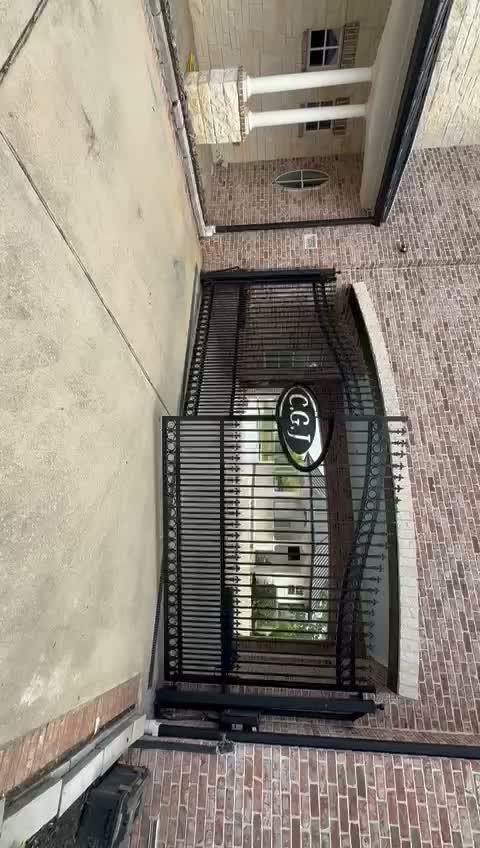
We just installed iron gate and it looks amazing thank you very much mustang fencing .
had an excellent experience with mustang fencing From the initial consultation to the final installation, the team was professional, punctual, and attentive to detail. They helped me choose the perfect fence style to match my property and ensured everything was installed with precision. The quality of materials is top-notch, and the fence has completely transformed the look and security of my home. I highly recommend mustang services to anyone looking for reliable and high-quality fencing services!
My new fence looks fantastic and has added both privacy and style to my yard. Highly recommend their services for anyone in need of fencing!
Reviews shown word for word from the Mustang Fencing Services Google Business Profile (Galveston), captured 2026-10-19.
Questions we get about this
Does an iron fence cost more than aluminum or steel?
Does galvanizing really add to the cost?
Why do pool gates cost more than a regular walk gate?
Is custom solid-bar iron fencing priced differently from factory tube panels?
Does building in a historic district add cost or time?
Sources
Checked October 25, 2026. Rules change, so confirm with the City before you build.
- National Park Service, Preservation Brief 27: The Maintenance and Repair of Architectural Cast Iron — Crevices and joints that trap water; concrete-in-voids corrosion; primer/paint system guidance.
- American Galvanizers Association, Time to First Maintenance chart — ASTM A123 requires at least 3.9 mils of zinc on ¼″ steel.
- ASTM F2408-16 (scope) — Galvanized steel tubular picket fences; does not apply to solid bar or wrought iron.
- ASTM F2589-16(2021) (scope) — Black steel tubular picket fences; does not apply to solid bar or wrought iron.
- City of Galveston Land Development Regulations, §2.501, §2.601 and §10.106 — Residential and nonresidential fence heights; sharp points; certificate of appropriateness.
- City of Galveston fence permit application — Historic district or landmark: photos of existing fences and the proposed design.
- 2021 International Swimming Pool and Spa Code, Section 305 — 48″ height, 4″ sphere, self-closing and self-latching pool gates.
Want a real per-foot number for your fence?
Tell us the style, finish and height you’re considering and we’ll quote the real number for your run — no generic national range, no guessing.