
Farm & Ranch Gates in Hitchcock and Santa Fe
Larger lots in Hitchcock and Santa Fe call for a different gate than a city driveway: a tube gate, a bump gate, or a wide ranch entry gate, hung on posts set deep enough for the sandy, often-wet ground that runs through both towns. Here is how the three styles compare, and what that ground actually asks of the posts holding them.
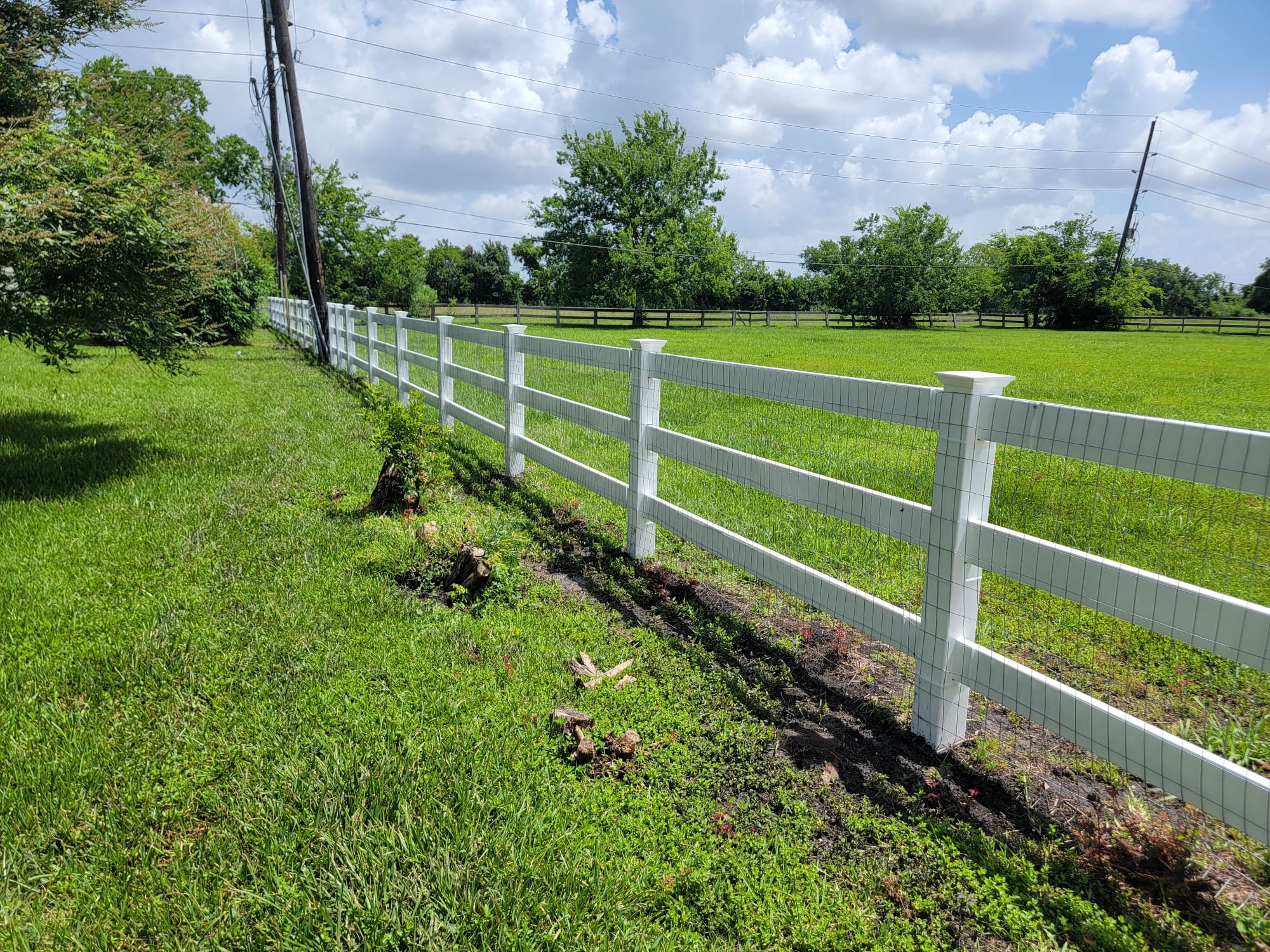
Hitchcock and Santa Fe’s larger mainland lots call for a gate built for farm and ranch use, not a residential driveway gate. The three common styles are a tube gate (a single swinging leaf of galvanized tube steel), a bump gate (gravity-closing, opened by a vehicle nosing it, no motor or lock), and a ranch entry gate (a wide double leaf, often under an arch, sized for the largest load that will ever pass). Whichever style fits, the posts holding it have to go deeper in Hitchcock and Santa Fe’s sandy and often wet ground than the standard minimum calls for — that is a named exception in the region’s own fence-building standard, not a guess.
Sources: USDA NRCS, Texas Practice Specification Fence (Code 382), March 2021; University of Georgia Extension Bulletin 1192, “Fences for Horses”; Tarter Farm & Ranch Equipment tube-gate dimensions (retailer listings, checked Oct. 2026).
Two mainland towns, the same sandy ground
Hitchcock and Santa Fe sit on Galveston County’s mainland, where lots run larger than on the island and a property is more likely to need a farm or ranch gate than a residential driveway gate. Both towns already have their own pages covering fences generally — see fencing in Hitchcock and fencing in Santa Fe — and our farm & ranch gates section already names the three styles below. This page is the deeper dive those pages point to: which style fits what has to pass through, how wide it needs to be, and what the actual ground in Hitchcock and Santa Fe asks of the posts holding it up.
Three gate styles, sorted by what has to pass
- Tube gate. A single swinging leaf built from galvanized tube steel — the most common farm gate. Manufacturers such as Tarter build them a standard 50 in. tall, in 1⅝ to 2 in. tube diameter, in stock widths from about 4 ft up to 20 ft. See farm gate vs. ranch gate for how it differs from the other two styles.
- Bump gate. A gravity-closing gate a vehicle noses open from the driver’s seat, with no motor and no lock. It needs a true bumper to work safely and a hinge post sized for the gate’s length. See what is a bump gate for the full mechanism and where it does and doesn’t fit.
- Ranch entry gate. The gate at the road — often a double leaf, sometimes under an arch, sized for the tallest and widest load that will ever need to pass. A wide double leaf needs a drop rod and center stop where the leaves meet, and can be automated; see automatic gate installation.
A cattle guard is sometimes used instead of any hand-opened gate on a county road; we do not install cattle guards, but cattle guard vs. farm gate compares the two.
The three styles, at a glance
| Style | How it opens | Typical width | Best suited for |
|---|---|---|---|
| Tube gate | Swings on a hinge post; hand-latched | 4–20 ft stock widths | A single pasture, pen or yard opening |
| Bump gate | Nosed open by a vehicle; closes by gravity | Sized to the opening, up to 20 ft (hinge post rated for it) | A drive used often, where stopping to open a gate by hand gets old |
| Ranch entry gate | Double leaf, drop rod + center stop at the join | Often 14–16 ft total for equipment | The gate at the road, sized for the largest load |
UGA Extension B1192; Tarter Farm & Ranch Equipment spec (retailer listings); Bump N’ Drive installation guide.
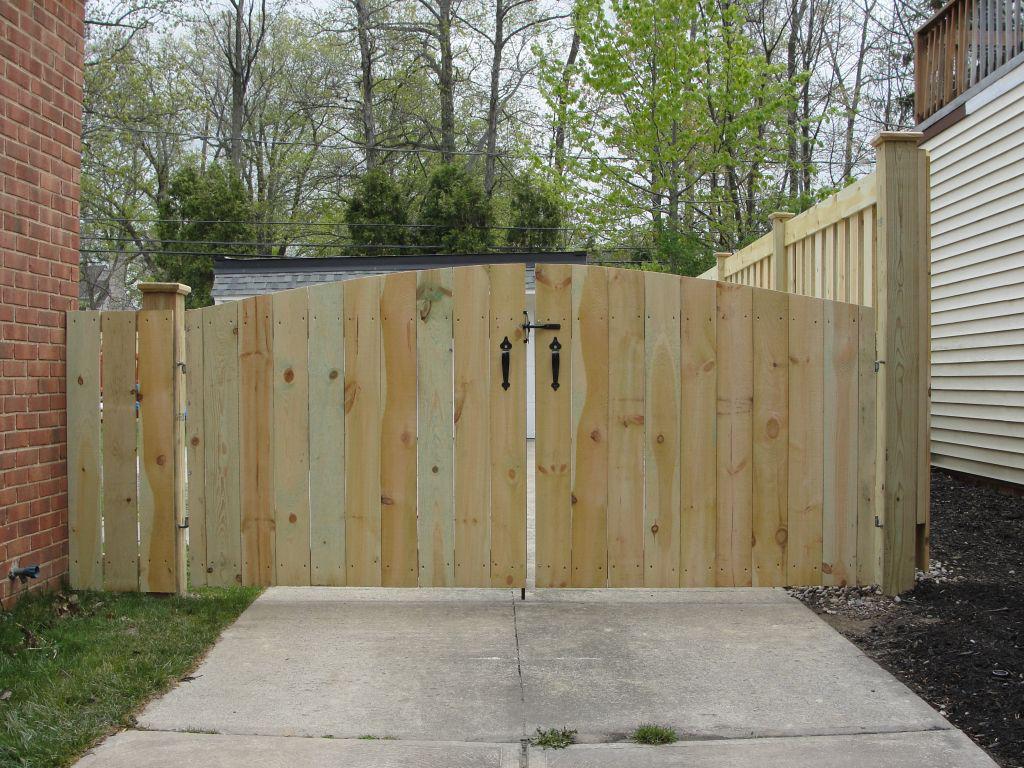
Setting the posts: Galveston County’s sandy and often wet ground
Every one of these gate styles rides on its hinge post, and the standard most Texas fence and gate work is built to — USDA NRCS’s Texas Practice Specification Fence, Code 382 (2021) — sets a floor, then names an exception that applies directly to Hitchcock and Santa Fe’s ground:
“All posts will be buried no less than three (3) feet deep. EXCEPTIONS: … Sandy soils and consistently wet soils require additional depth.”
University of Georgia Extension’s “Fences for Horses” bulletin says the same thing in plain language: “Use deeper settings for sand or wet soil.” Neither source gives one replacement number for the sandy-soil case — NRCS’s practice specification says to contact the Zone conservationist for the figure that applies to a specific site — so the honest way to plan a gate post in loose or consistently wet ground is to treat 3 ft as a floor, not a target, and expect the hole to go deeper or the post to be driven rather than backfilled.
Diameter matters as much as depth. NRCS’s minimums for a corner, end or gate post are 2⅜ in. for steel (3 ft deep if backfilled, or 5 ft if driven without concrete) and 6 in. for wood set 3 ft deep. UGA’s guide, written for rail fences and horse gates where every post carries real load, goes further: corner and gate posts at least 8 in. in top diameter, with brace posts at 5 in. or more. A 50 in.-tall tube gate or a double-leaf ranch entry gate puts real, repeated leverage on its hinge post every time it swings — which is exactly the case these heavier figures were written for.
Call 811 before any post hole goes in
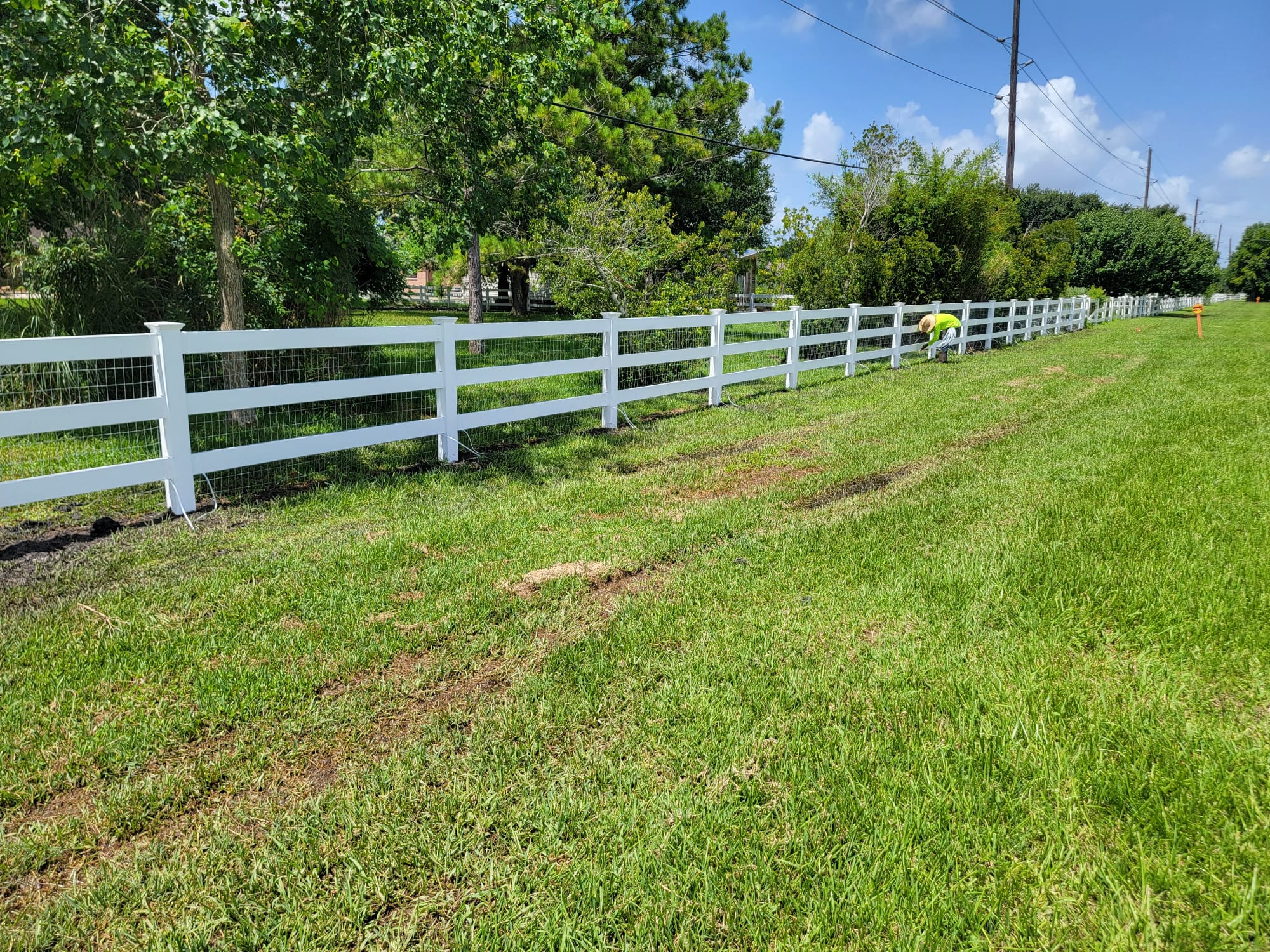
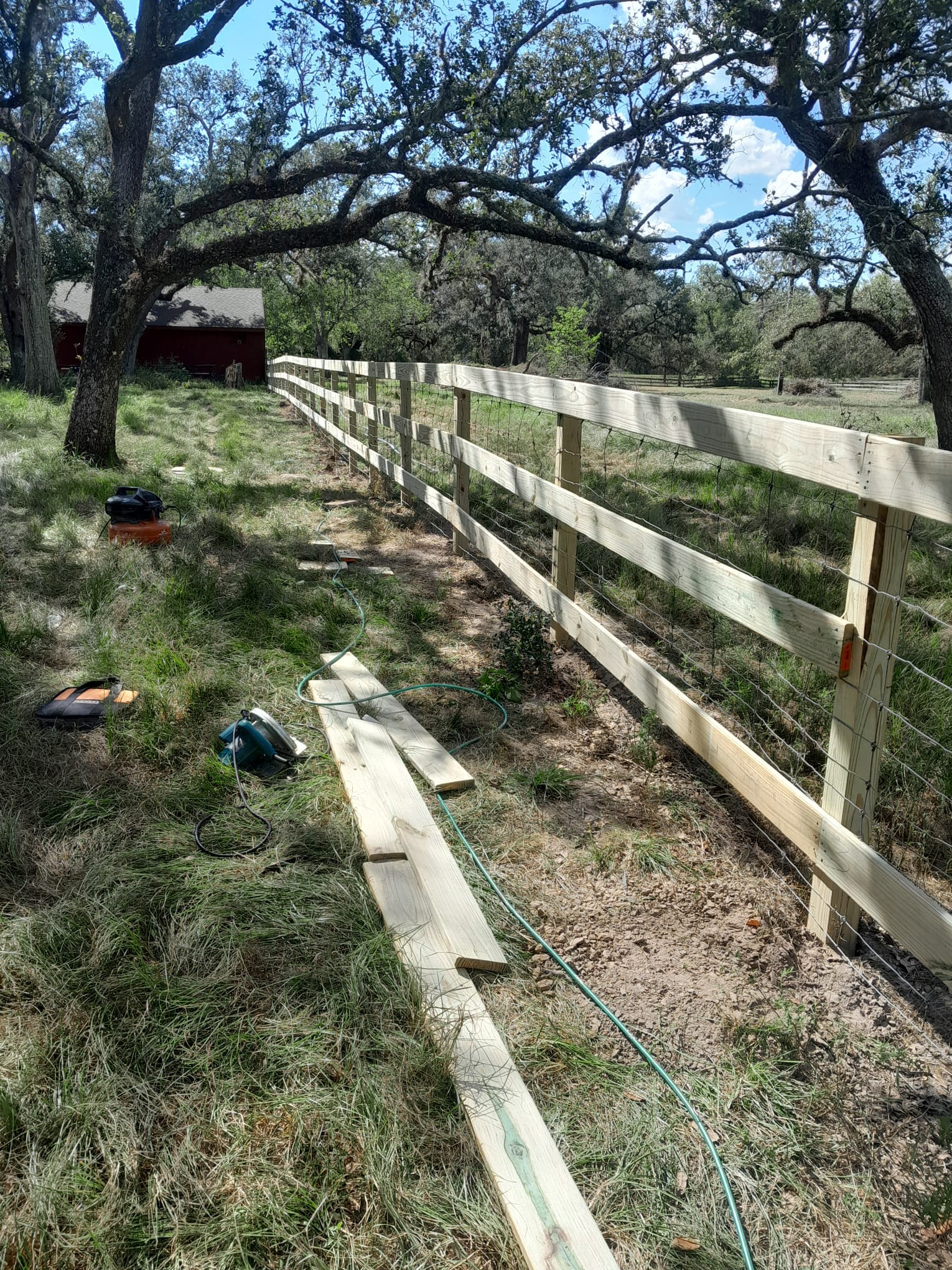
Setting a gate post deeper than standard — which is exactly what sandy or wet soil in Hitchcock or Santa Fe may call for — means digging deeper than the 16 in. threshold that triggers Texas’s one-call law. See our full 811 before installing a fence guide for who files the ticket, how long the wait is, and which lines won’t be marked by a locate.

Which gate style and post setting fit your opening?
Answer three questions about the opening and the ground. This points to a gate style and a minimum width from extension and manufacturer figures, plus the post-depth rule for the soil — it is not a design and gives no price. A free on-site estimate turns this into an actual plan.
Width and post-diameter basis: UGA Extension B1192, “Fences for Horses” (corner/gate posts ≥ 8 in. top diameter; gates ≥ 4 ft, ≥ 8 ft if equipment may pass, 14-16 ft for tractors/wagons/trailers). Depth basis: NRCS Texas Practice Specification 382 (posts ≥ 3 ft; sandy/wet soils need additional depth) and UGA B1192 (“use deeper settings for sand or wet soil”). Tube-gate dimensions: Tarter Farm & Ranch Equipment, as published on retailer listings. Bump-gate post sizes: Bump N’ Drive installation guide. A planning aid, not a design or a quote.
Planning a farm or ranch gate in Hitchcock or Santa Fe?
We’ll walk the opening, confirm what has to pass through it, and check the ground before we set a single post. Free on-site estimates across Galveston County.
What Galveston customers say
5.091 Google reviews · read them all on Google
Very professional and friendly. Gotten automatic gates done and they are done to perfection! Thank you
We just installed iron gate and it looks amazing thank you very much mustang fencing .
had an excellent experience with mustang fencing From the initial consultation to the final installation, the team was professional, punctual, and attentive to detail. They helped me choose the perfect fence style to match my property and ensured everything was installed with precision. The quality of materials is top-notch, and the fence has completely transformed the look and security of my home. I highly recommend mustang services to anyone looking for reliable and high-quality fencing services!
Reviews shown word for word from the Mustang Fencing Services Google Business Profile (Galveston), captured 2026-10-12.
Questions we get about this
How deep do farm or ranch gate posts need to be set in Hitchcock or Santa Fe’s sandy soil?
What’s the difference between a tube gate, a bump gate and a ranch entry gate?
How wide does a farm or ranch gate need to be?
Does Hitchcock or Santa Fe have rules for farm and ranch gates?
Can a farm gate post go straight into sandy soil without concrete?
What size post do I need for a wide tube or ranch entry gate?
Sources
Checked October 18, 2026. Rules change, so confirm with the City before you build.
- USDA NRCS, Texas Practice Specification Fence (Code 382), March 2021 — Post-setting depth minimum (3 ft), the sandy/wet-soil exception requiring additional depth, and corner/end/gate post diameter minimums.
- University of Georgia Cooperative Extension, Bulletin 1192, “Fences for Horses” — “Use deeper settings for sand or wet soil”; corner/gate post top-diameter minimum (8 in.); gate width minimums by use.
- Tarter Farm & Ranch Equipment tube gate, as listed by Do it Best — Manufactured tube-gate height (50 in.), tube diameter (1⅝–2 in.) and stock width range, checked against multiple retailer listings.
- City of Hitchcock, Texas, Code of Ordinances, Title XV, Ch. 150, Art. IX, Sec. 150.101 & 150.105 — General residential fence/barrier height, corner-visibility and FEMA flood-zone rules.
- City of Santa Fe, Texas, Code of Ordinances — Confirms no general residential fence rule; only pool-fence (Ch. 3, Sec. 10) and mobile-home-park-boundary (Ch. 3, Sec. 28(A)(1)) provisions.
- Texas Agriculture Code, Chapter 143 — Sec. 143.002 (unlocked gate per 3 miles of cultivated-land fence) and Sec. 143.003 (cattle guards on county roads) for unincorporated county land.
Ready to plan your gate?
We’ll measure the opening, talk through tube, bump or ranch entry styles, and check the soil before we quote the posts. Free on-site estimates across Galveston County.