
A Pine Fence with Rot Board Installation for Bart Duval in Rosharon, Texas
Bart’s fence is a 68-foot pine run with a rot board and one gate, built with a small gap between the boards. Here’s that fence, and why pressure-treated pine specifically keeps shrinking for a while after it goes up.

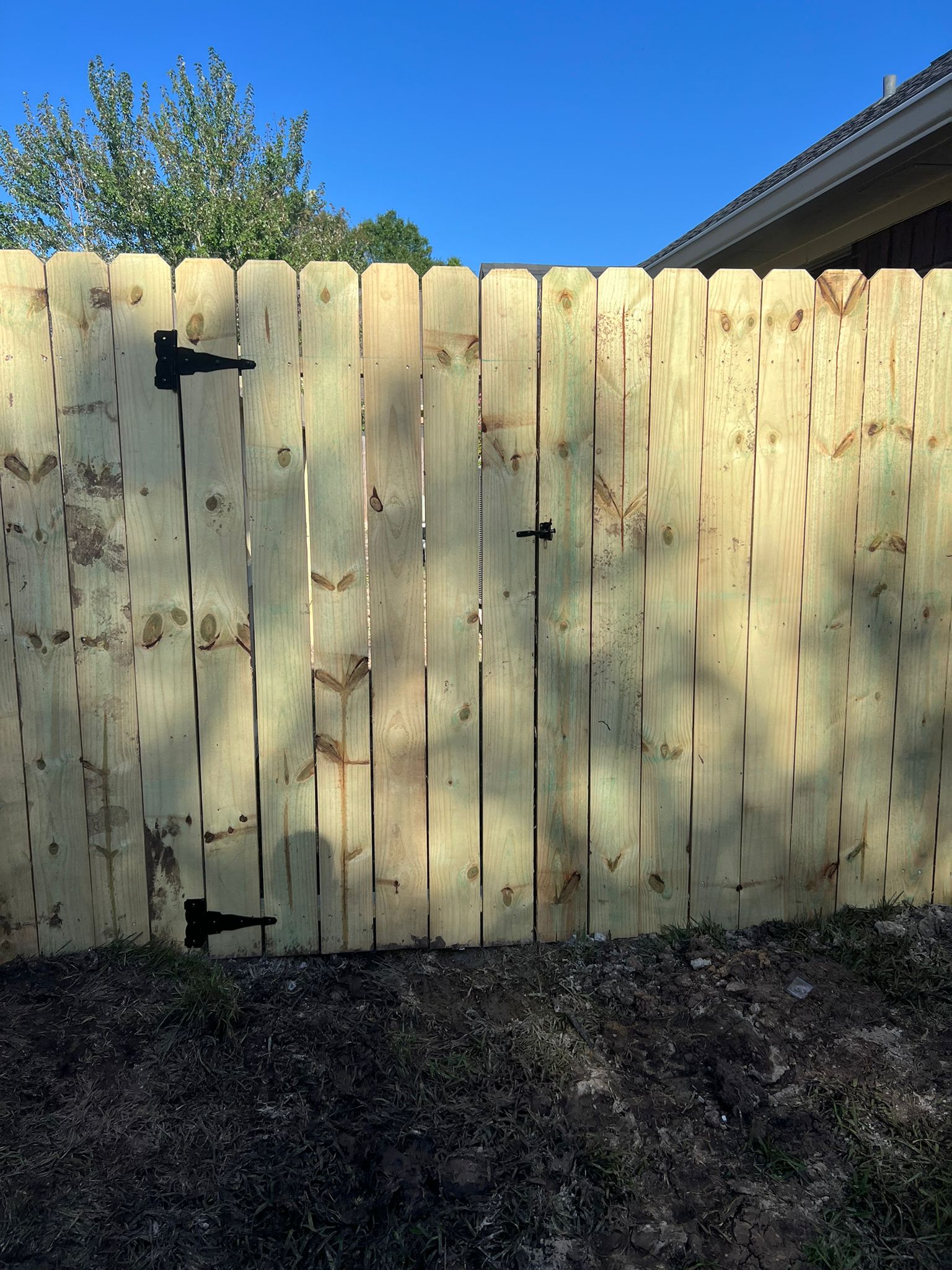
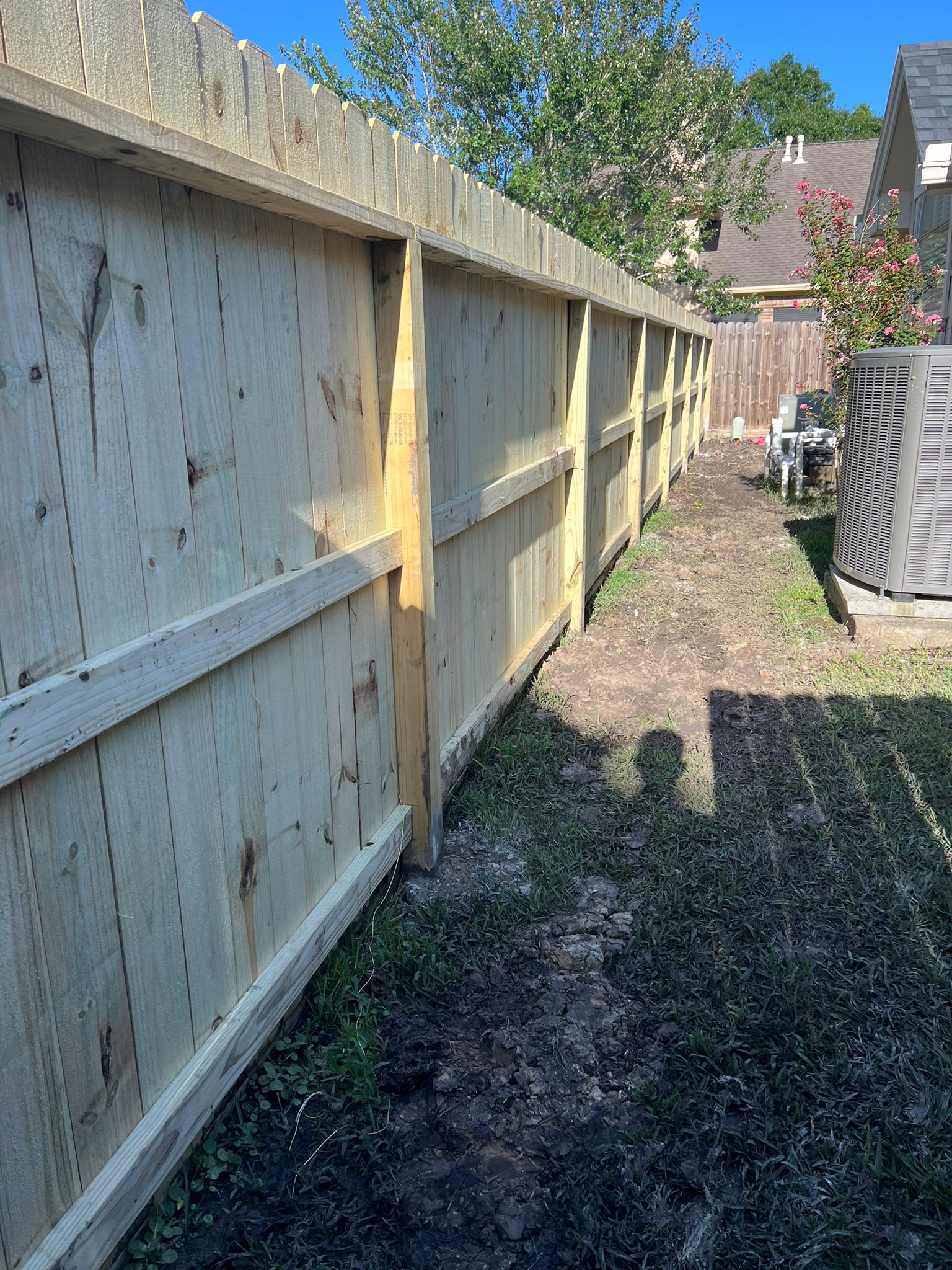
Bart’s Rosharon fence is a 68-foot pine run with a rot board and one gate. The posts were set in concrete, the boards were aligned with a small gap between them, and the rot board at the base is treated pine for moisture resistance. The custom gate has sturdy hinges and a secure latch.
Source: USDA Forest Products Laboratory, Wood Handbook FPL-GTR-282 (2021).
The job: a 68-foot pine fence with a rot board
Bart’s Rosharon property got a 68-foot pine fence with one gate. The crew set the posts in concrete, then installed a treated-pine rot board along the bottom before attaching the pine planks above it. Each plank was aligned for a consistent look, with a small gap left between boards.
The custom gate was built with sturdy hinges and a secure latch to match the rest of the fence.
That board gap is worth a closer look. The original job notes point to temperature changes as the reason for it — and seasonal moisture swings do move wood over time. But this fence’s rot board is specifically called out as treated pine, and treated lumber has its own, separate reason to shrink a bit right after it goes up.
Why pressure-treated pine keeps moving after it goes up
Treating lumber with a waterborne preservative pushes extra water into the wood. Per USDA Forest Products Laboratory: “because water is added to the wood in the treatment process, some drying and shrinkage will occur after installation unless the wood is kiln-dried after treatment.”
That’s not a small effect. The Handbook is specific about it: “injecting waterborne preservatives puts large amounts of water into the wood, and considerable shrinkage is to be expected as subsequent seasoning takes place.” For best results on wood where that movement matters, the Handbook recommends drying the wood down before it’s put into place — not always practical on a job site, which is exactly why a small gap between boards is good practice on treated lumber, independent of any seasonal temperature swing.
The original post doesn’t say whether Bart’s pine was kiln-dried after treatment, so this page isn’t claiming how much movement his specific fence has seen — only that a gap between boards is sound practice on pressure-treated pine for this documented reason.
Pressure-treated pine fence: how long before it stops moving?
General guidance from a USDA Forest Products Laboratory handbook on pressure-treated wood. Not an inspection of any specific fence.
USDA Forest Products Laboratory, Wood Handbook FPL-GTR-282 (2021), Ch.15: waterborne preservative treatment adds water to the wood, and unless it was kiln-dried after treatment, “considerable shrinkage is to be expected as subsequent seasoning takes place” after installation.
What customers say on Google
5.091 Google reviews · read them all on Google
Very professional and friendly. Gotten automatic gates done and they are done to perfection! Thank you
Seems to have helped out a after hurricane beryl we all appreciate it thank you!
chainlink fence installation by mustang fencing, looks really great, thanks.
Reviews shown word for word from the Mustang Fencing Services Google Business Profile (Galveston), captured 2026-10-26.
Questions we get about this
What did Bart’s fence include?
Why did the crew leave a gap between the boards?
Does pressure-treated lumber keep shrinking after it’s installed?
Does this page know exactly how wide the gap on Bart’s fence is, or whether the lumber was kiln-dried?
Sources
Checked November 1, 2026. Rules change, so confirm with the City before you build.
- USDA Forest Products Laboratory, Wood Handbook: Wood as an Engineering Material, FPL-GTR-282 (2021) — Chapter 15 (treated wood, handling and seasoning after treatment): waterborne preservative treatment adds water to wood, and unless kiln-dried after treatment, considerable shrinkage occurs as the wood seasons in place after installation.
Planning a pine fence with a rot board?
We’ll walk the property, talk through board spacing and the rot board, and put it on a written quote.