
A Satisfying Wooden Fence Installation for Mike Diaz in Galveston, TX
Mike Diaz wanted a cedar privacy fence for his Galveston patio that could stand up to salt air and sandy soil. Here is that 152-foot fence in photos, plus what the rot board at its base is actually doing.
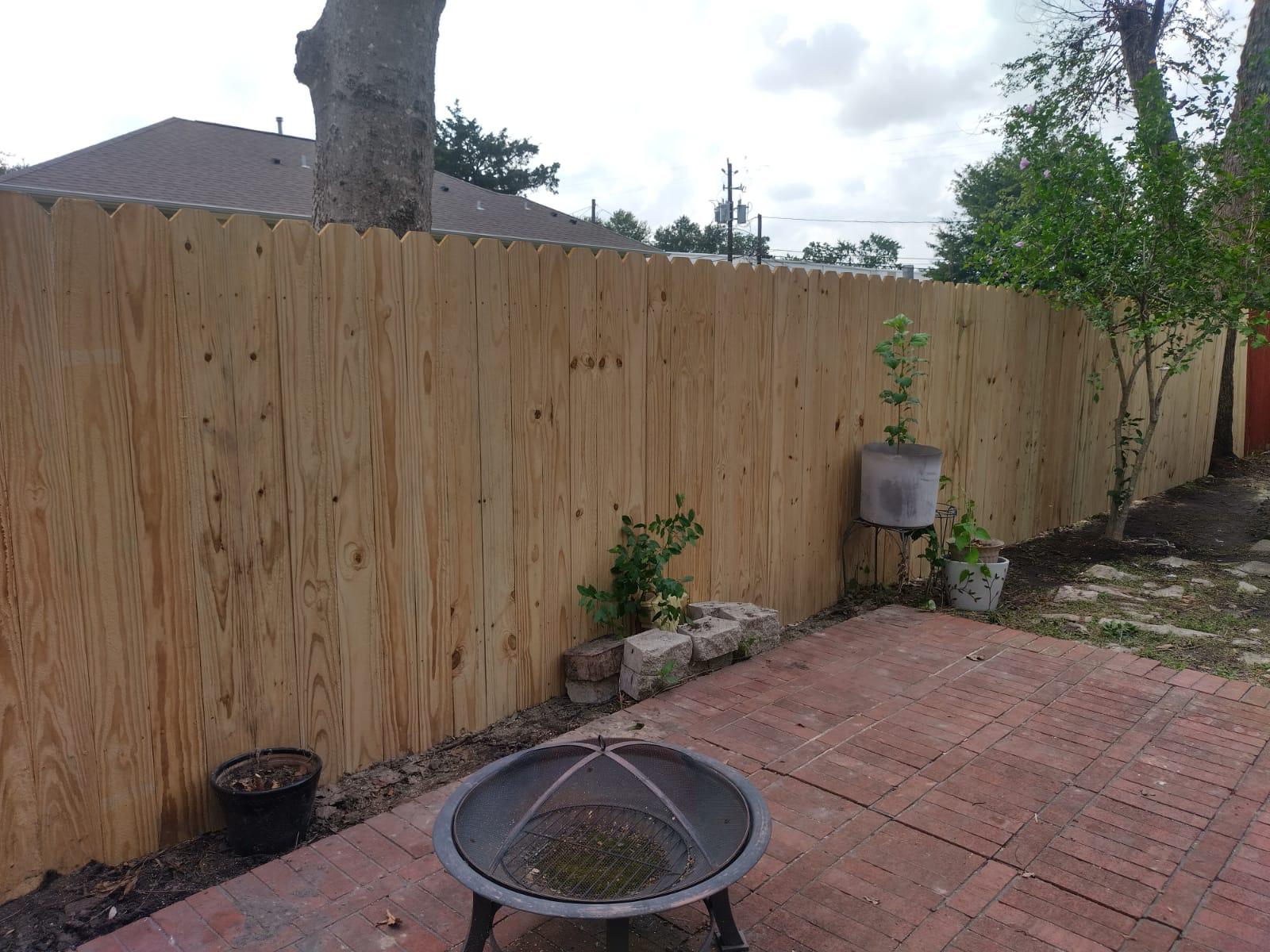
Mike Diaz’s cedar privacy fence in Galveston is 6 feet tall, 152 feet long, and sits on a dedicated rot board at the base. That rot board matters because, per USDA Forest Products Laboratory guidance, the ground-contact portion of a fence is its single highest-decay-risk zone — and the rot board is the piece built to take that exposure instead of the pickets.
Source: USDA Forest Products Laboratory, Wood Handbook FPL-GTR-282 (2021), Ch.16 (Treated Wood Products, p.398).
The job: a 152-foot cedar privacy fence with a rot board and decorative caps
Mike Diaz wanted a wood privacy fence for his Galveston property that could hold up to salt air and strong coastal wind while enclosing his patio and fire pit. The team settled on cedar for its natural resistance to decay and insects, built to a 6-foot height for privacy, and ran it 152 feet along the property line.
Because Galveston’s ground can be sandy and loose, each post was set in a concrete footing for stability. A rot board was installed along the base of the fence, and each post was finished with a decorative cap.
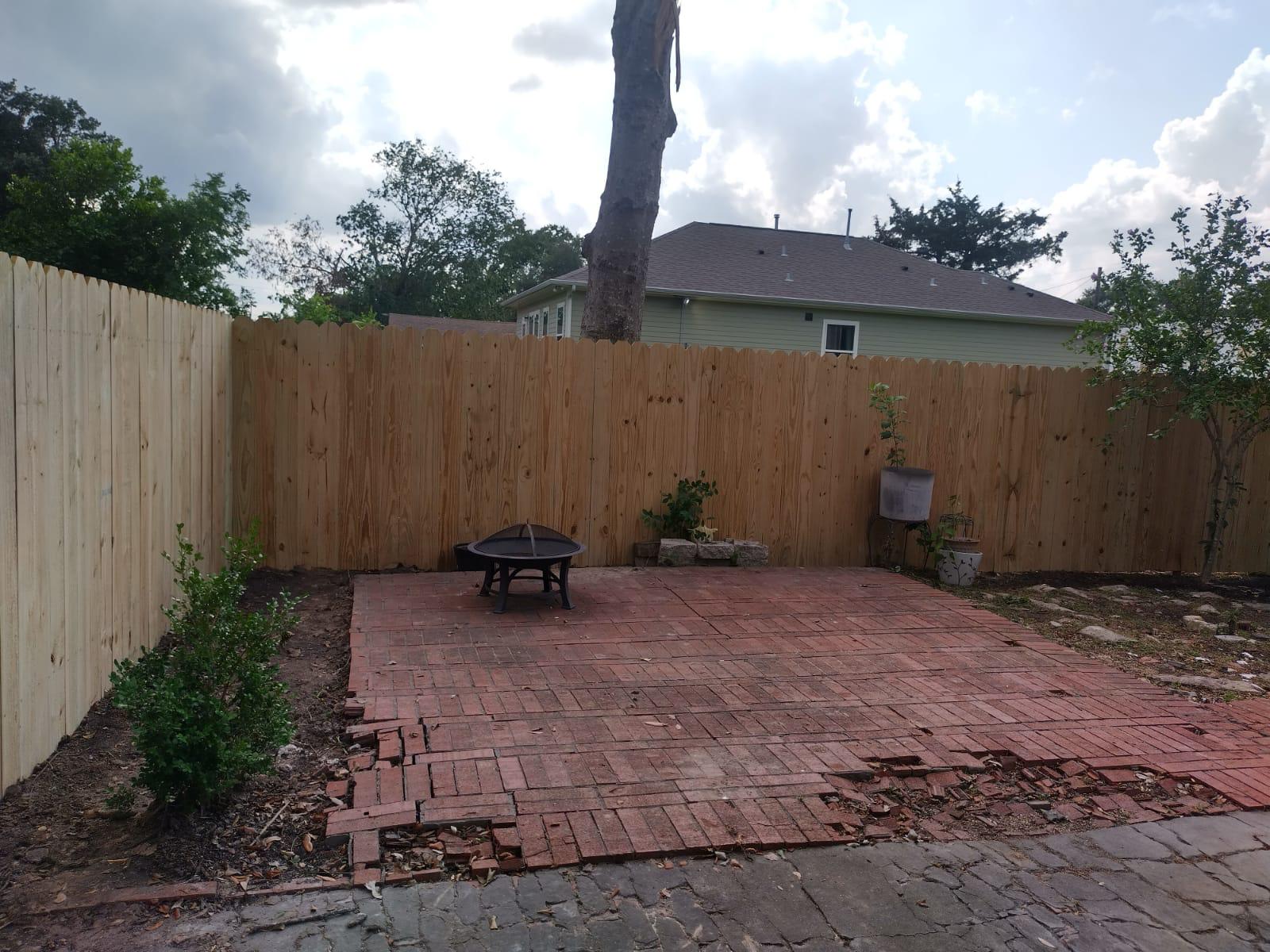
Why a wood fence’s worst exposure is at the bottom, not the top
Most of a privacy fence sheds water and dries out between rains. The exception is the strip closest to the ground. USDA Forest Products Laboratory’s Wood Handbook is specific about this: “Wood used in structures fully exposed to the weather, such as in decks and fences (particularly those portions of the structure in ground contact), needs preservative treatment to protect it from decay (rot) and termites if they are not naturally decay resistant.” Ground contact keeps wood damp longer than any other part of the fence, which is exactly where decay and termites do the most damage.
What the rot board is actually doing
A rot board is a separate horizontal board installed along the base of the fence, below the pickets. Instead of the bottom edge of every picket sitting in the ground-contact zone, the rot board sits there on their behalf. If moisture or insects eventually damage that one board, it can be replaced on its own — the pickets above it never had to take that exposure in the first place.
Anatomy of Mike Diaz’s cedar privacy fence
Put together, the fence built for Mike Diaz runs decorative caps at the top of each post, cedar pickets for privacy through the mid-section, a rot board along the base, and posts set in concrete footings below grade — for the full 152-foot run.
Ground-contact treatment check
Pick where a board sits on the fence and whether the species is naturally decay-resistant heartwood (like cedar or redwood). Based on USDA Forest Products Laboratory Wood Handbook Ch.16. General guidance, not a spec for your project.
USDA Forest Products Laboratory, Wood Handbook FPL-GTR-282 (2021), Ch.16: wood in ground contact on decks and fences needs preservative treatment against decay and termites if it is not naturally decay resistant.
What Galveston customers say on Google
5.091 Google reviews · read them all on Google
We took the services to replace our decade-old rotten fence with a modern one. The Services were Professional, completed the job on time, and the fence looked great, giving a new look to our house and they left the yard spotless. Highly recommend!
I chose Mustang Fencing for my backyard due to their reputation for quality and security. Their wood fencing exceeded my expectations, durable and visually appealing. The customer service was top-notch, and the installation was quick and efficient.
I recently hired Mustang Fencing Services for a fence installation, and I couldn’t be happier with the results. The team was professional, punctual, and very knowledgeable. They provided a detailed estimate and completed the job on time and within budget. Overall highly recommended Mustang fencing services
Reviews shown word for word from the Mustang Fencing Services Google Business Profile (Galveston), captured 2026-10-26.
Questions we get about this
Why does Mike Diaz’s fence have a rot board?
Why is ground contact the riskiest part of a wood fence?
Does cedar still need a rot board if it naturally resists decay?
How tall and how long is the fence built for Mike Diaz?
Why were the posts set in concrete?
Sources
Checked October 29, 2026. Rules change, so confirm with the City before you build.
- USDA Forest Products Laboratory, Wood Handbook FPL-GTR-282 (2021), Chapter 16: Finishing of Wood (Treated Wood Products, p.398) — Ground-contact portions of decks and fences need preservative treatment against decay and termites if the species is not naturally decay resistant — the basis for why a fence uses a dedicated rot board at its base.
Planning a wood fence or gate?
We’ll walk the property, talk through wood choice, rot boards and post footings, and put it on a written quote.