
Crafting the Perfect Wooden Fence for Mike Valverde in Galveston, TX
Mike Valverde wanted a 6-foot cedar privacy fence for his Galveston property, built board-on-board with no gaps, and was upfront about his concern for the coastal wind and storms. Here is that job in photos, plus what Galveston’s own fence rules actually require at this height — and the IRC’s own definition of why a coastal lot takes wind seriously in the first place.

Mike Valverde’s 6-foot cedar fence was built board-on-board for full privacy, which also means the panel has no gaps for wind to pass through. Galveston’s own rules don’t require a wind-engineering review for a fence this height — but the city’s own code definitions explain why a coastal lot like his is a legitimate wind concern anyway.
Sources: City of Galveston Ordinance No. 23-012 (2021 IRC adoption); City of Galveston Fence Permit Application (Rev. 03/2023); 2021 International Residential Code, Section R301.2.1.4.
The job: a 6-foot cedar privacy fence, board-on-board
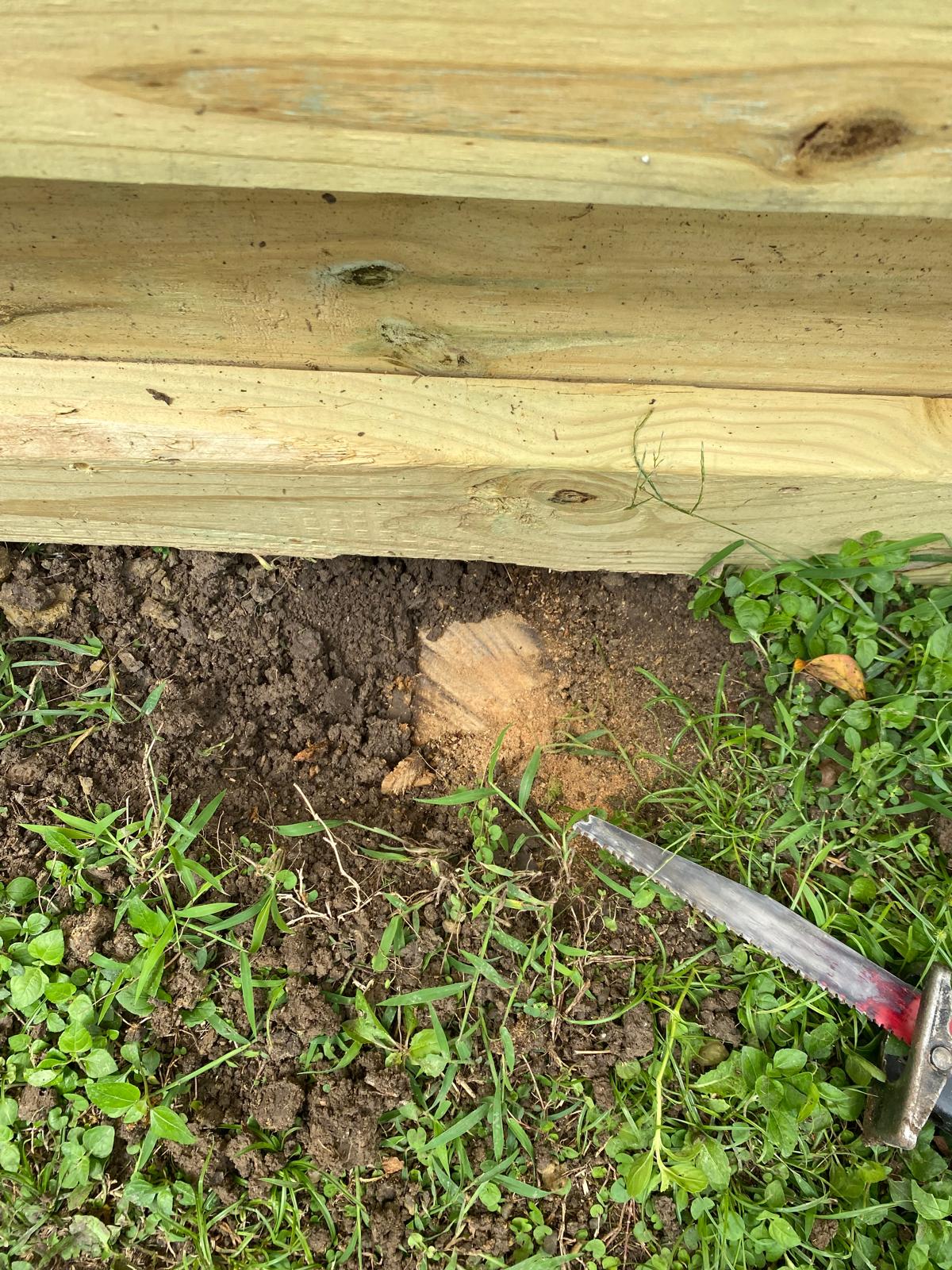
Mike Valverde wanted a 6-foot-tall cedar privacy fence for his Galveston property — built board-on-board with horizontal rails so there were no gaps between boards, and framed with a rot board at the base to keep ground moisture off the main boards. The posts were set deep into the ground, and the finished wood was treated with a protective sealant. Mike raised the coastal climate specifically: salt air, humidity, and the risk of strong wind and rain.
The photos below are from that job.
What Galveston’s own rules actually require at 6 feet
Galveston adopted the 2021 International Residential Code by Ordinance No. 23-012. That ordinance amends the permit-exemption section to read: “Fences not over 7 feet (2134mm) high” are exempt from a building permit. Mike’s fence, at 6 feet, falls under that exemption.
There is still a separate step: the city’s Planning and Development Division requires its own Fence Permit Application for the fence itself, which asks for the total height, the fence material, and whether the fence sits within 1,000 feet of the Mean High Tide (a coastal-resources check). What that form does not ask for, at any height, is wind speed, an engineer’s review, or anything describing structural design against wind. For a fence like Mike’s, whatever wind resistance it has comes down to how it was built — post depth, concrete, and fastening — not a code-mandated design.
Why a coastal lot takes wind seriously anyway
The 2021 IRC — the same code Galveston adopted — defines site wind exposure categories that explain why location matters, independent of what a permit form asks. Exposure B is “urban and suburban areas, wooded areas or other terrain with numerous closely spaced obstructions having the size of single-family dwellings or larger.” Exposure D is the opposite: “flat, unobstructed areas exposed to wind flowing over open water, smooth mud flats, salt flats and unbroken ice for a distance of not less than 5,000 feet (1524 m).”
These definitions are written for buildings, not fences, and a fence permit doesn’t require classifying a lot this way. But they describe a real site condition: a property with a long, open stretch of water or flat coastal terrain nearby is closer to the Exposure D description than a lot boxed in by neighboring houses. That is the kind of site Mike was describing when he raised concerns about wind and storms.
Fence-style wind check for a coastal Galveston lot
Pick the fence style and how open the site is to wind. Based on the IRC’s own site wind-exposure category definitions and what Galveston’s fence permit process does and doesn’t require. Not a wind-engineering calculation.
Fence style: basic physics — a panel with no gaps has no path for wind to pass through. Site: IRC Section R301.2.1.4 Exposure B/D definitions. Permit: Galveston Ordinance No. 23-012, R105.2 (fences 7 ft or under exempt from a building permit) and the city’s own Fence Permit Application (Rev. 03/2023), which does not ask for wind or engineering information at any height.
What Galveston customers say on Google
5.091 Google reviews · read them all on Google
Mustang Fencing Services provides great quality and craftsmanship. Their workforce is competent and efficient, guaranteeing that every project meets the greatest requirements. The materials utilized are strong, and the attention to detail is excellent. Highly suggest to anyone in need of dependable fencing solutions!
Mustang Fencing Services was dependable and honest from start to finish. They stuck to our timeline and budget, and the fence looks fantastic. I appreciate their hard work and would recommend them to anyone.
I chose Mustang Fencing for my backyard due to their reputation for quality and security. Their wood fencing exceeded my expectations, durable and visually appealing. The customer service was top-notch, and the installation was quick and efficient.
Reviews shown word for word from the Mustang Fencing Services Google Business Profile (Galveston), captured 2026-10-26.
Questions we get about this
Does Galveston require a wind-engineering review for a 6-foot wood fence?
Does a board-on-board fence take more wind load than an open picket fence?
What is a wind “exposure category,” and does it apply to a coastal Galveston lot?
What does a rot board do on a wood fence?
What kind of fence did Mike Valverde build in Galveston, TX?
Sources
Checked October 28, 2026. Rules change, so confirm with the City before you build.
- City of Galveston, Ordinance No. 23-012 (2021 IRC adoption, Chapter 10 Art. III, adopted 1-26-2023) — R105.2 permit exemption for fences not over 7 feet high.
- City of Galveston Fence Permit Application (Rev. 03/2023) — Required fields (height, material, Mean High Tide proximity) and the absence of any wind/engineering field.
- 2021 International Residential Code, Section R301.2.1.4 (Exposure category) — Verbatim definitions of Exposure B and Exposure D, used here to describe site wind exposure, not as a fence design requirement.
Planning a wood fence or gate?
We’ll walk the property, talk through wood choice, fastening and finishing, and put it on a written quote.